Artwork
The Sacred Monogram
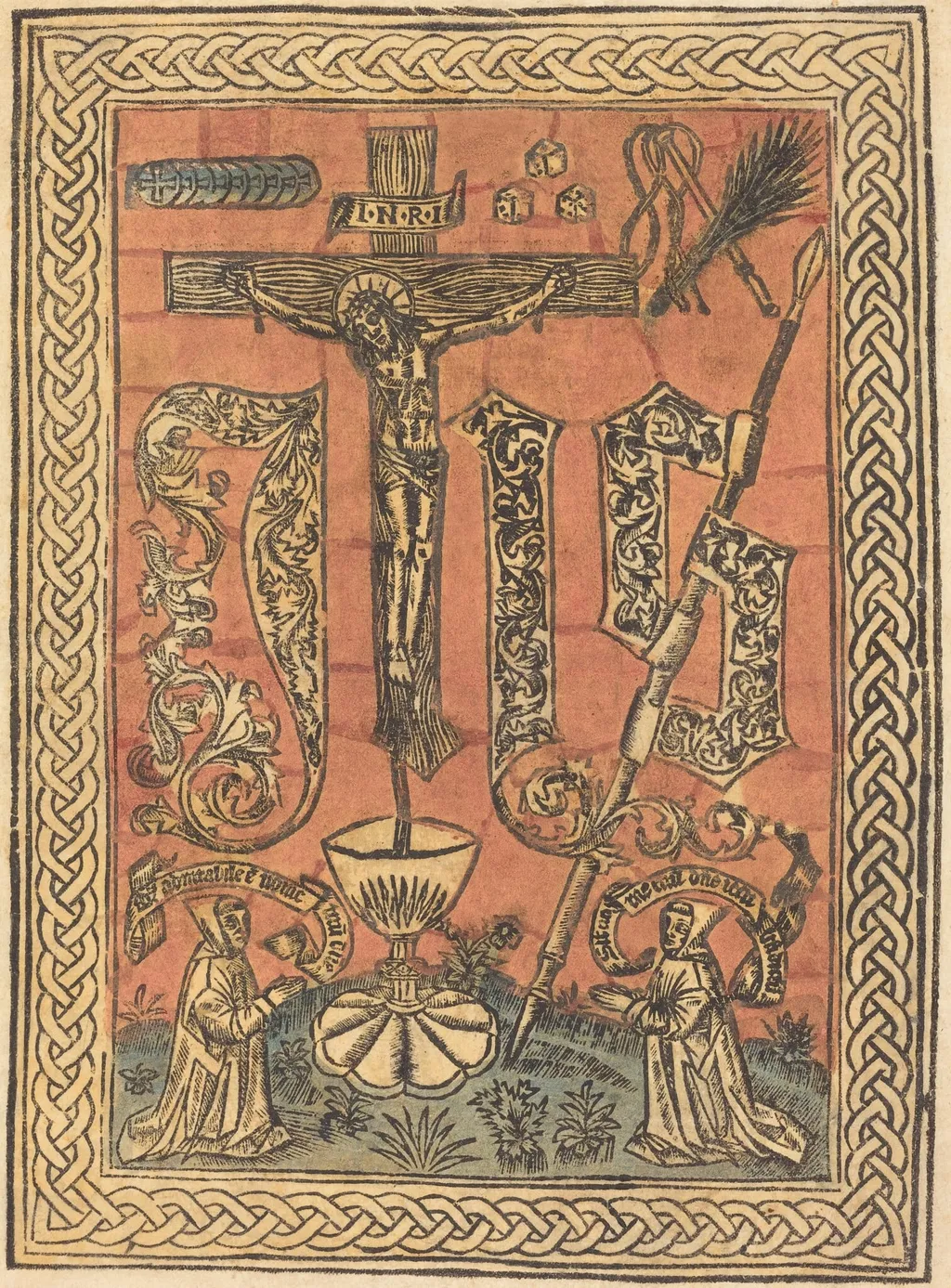
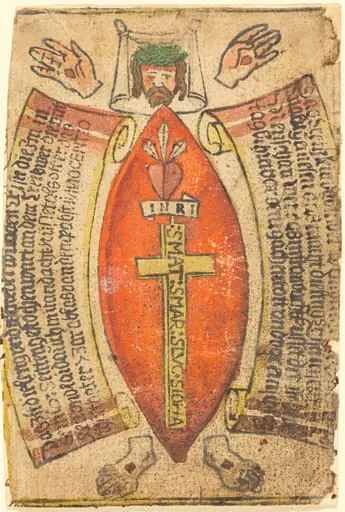
The Sacred Monogram is an ink print by the Renaissance artist French 15th Century. It dates from 1500 and is held in the collection of the National Gallery of Art.
About this work
Overview
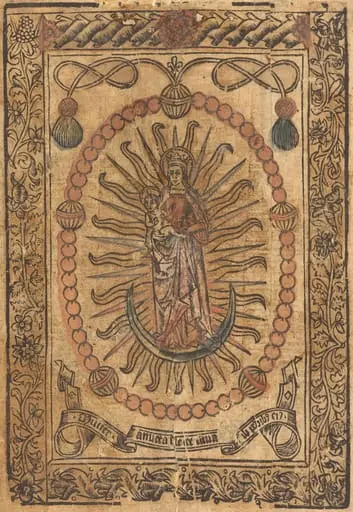
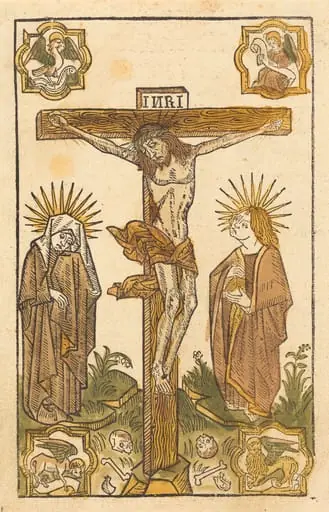
A surrounding field of swirling motifs and a secondary cross inscribed with the letters INRI frame the scene, while a black‑lined woven border defines the edge.
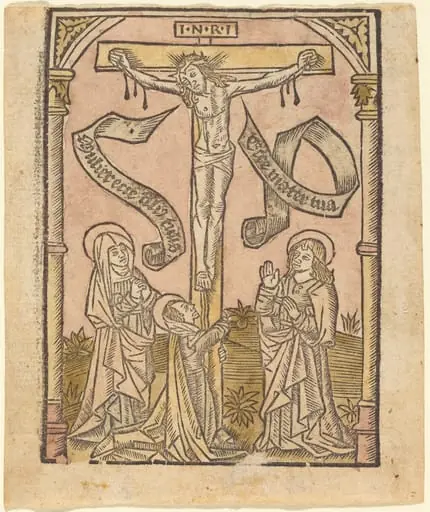
The Sacred Monogram is a hand‑colored woodcut on laid paper, employing orange‑red and gray‑blue pigments against a white ground. The composition centers on a cross bearing a small nailed figure, flanked below by two kneeling figures—one holding a chalice, the other a bundle of sticks. A surrounding field of swirling motifs and a secondary cross inscribed with the letters INRI frame the scene, while a black‑lined woven border defines the edge.
Subject & Meaning
The central crucifixion motif, with the inscription INRI, identifies the work as a devotional image of Christ’s passion. The kneeling figures, one with a chalice and the other with a bundle of sticks, may represent the faithful offering sacramental wine and the tools of a ritual, suggesting themes of worship, sacrifice, and the intertwining of liturgical elements.
Technique & Style
Executed as a woodcut, the image was carved in relief, producing bold outlines and simplified forms that accommodate the small scale of the figures. After printing, the artist applied hand‑coloring in limited hues—orange‑red and gray‑blue—creating a striking contrast. The use of a woven black border and swirling decorative patterns reflects a late medieval to early Renaissance aesthetic common in devotional prints.
Context
Woodcut prints with hand coloring were popular for personal devotion and the dissemination of religious imagery in the pre‑modern period. The inclusion of the INRI monogram and the emphasis on sacramental objects align the work with Catholic visual culture, likely intended for private contemplation or small‑scale liturgical use.
Legacy
While specific provenance is not recorded, The Sacred Monogram exemplifies the intersection of printmaking technology and devotional practice, illustrating how portable, affordable images contributed to the spread of religious iconography beyond the walls of churches.
Artist & collection

Artist
This artist hid their best work inside old travel trunks. They glued vivid woodcuts into the lids of wooden boxes meant to be carried on horseback, like secret postcards from God. If you’ve ever pried open a cracked lid…

![The Last Judgment [right], by Master of St. Erasmus](https://artifactworldgallery.com/img/master-of-st-erasmus--the-last-judgment-right--dcbf9c950423ddb7-w320.webp)