Artwork
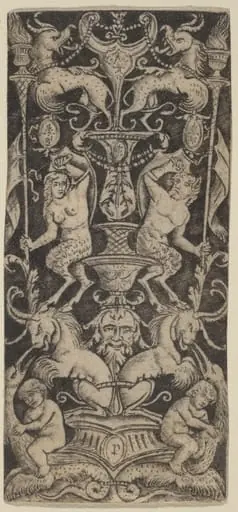
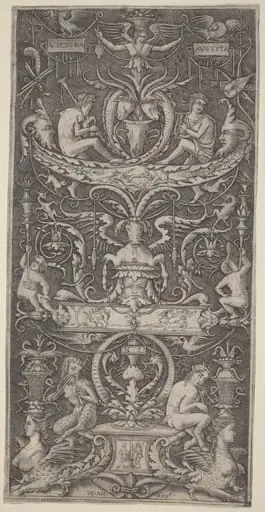
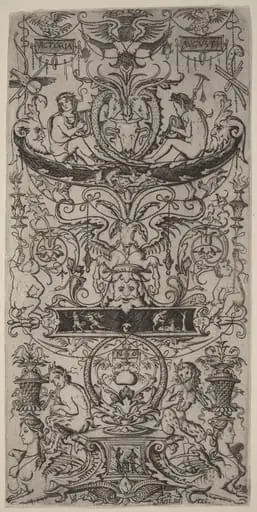
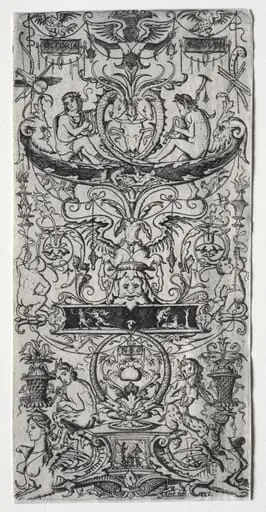
Panel of Ornament with a Satyress Feeding Two Children
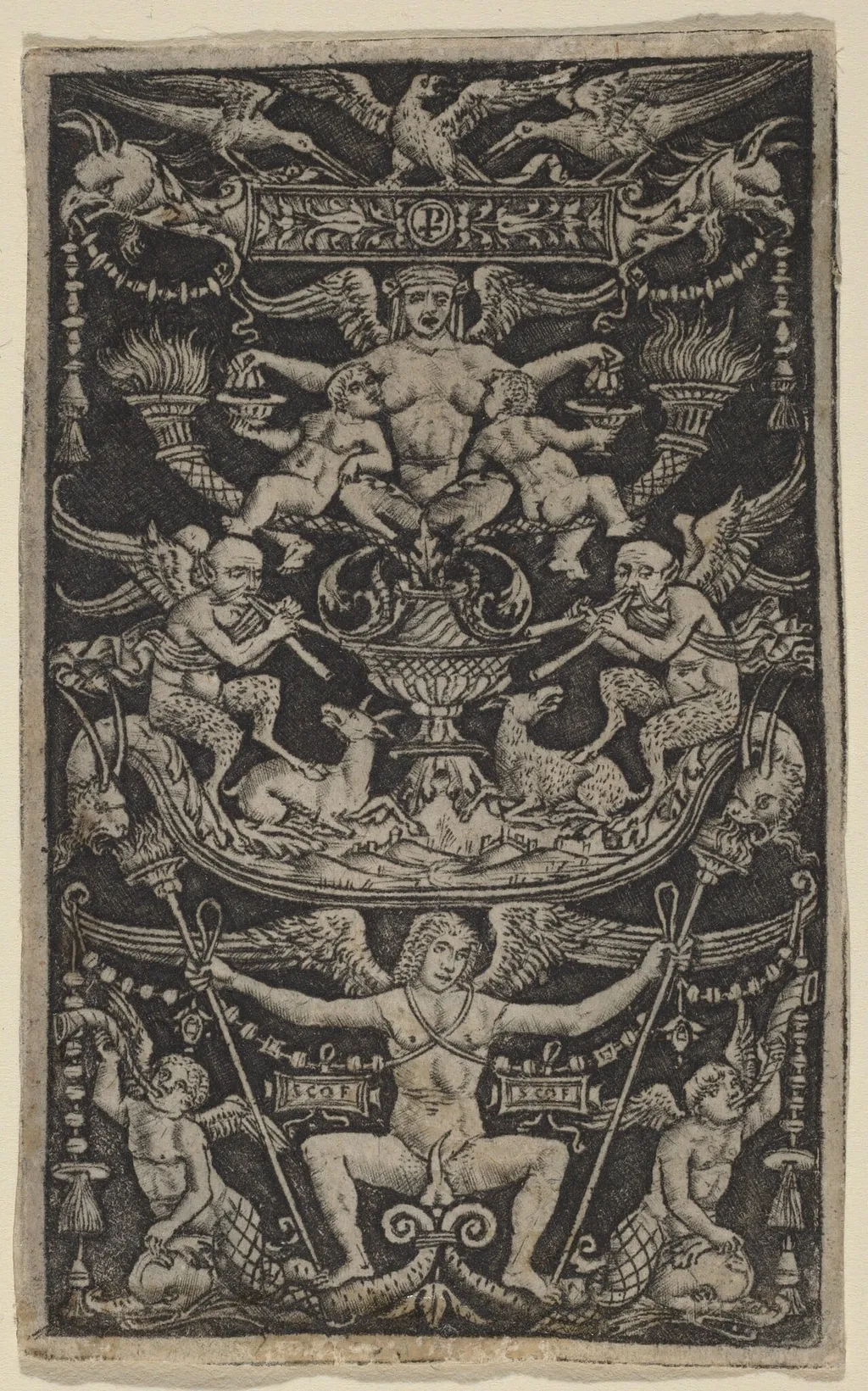
Panel of Ornament with a Satyress Feeding Two Children is a print by the Renaissance artist Peregrino da Cesena. It is held in the collection of the National Gallery of Art.
About this work
Overview
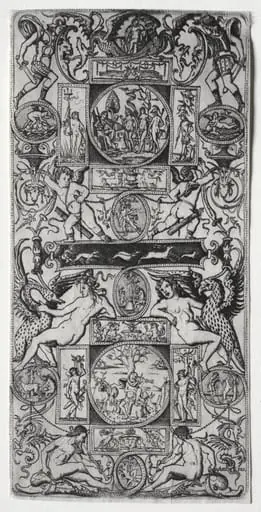
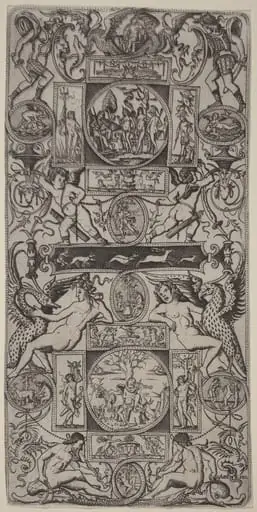
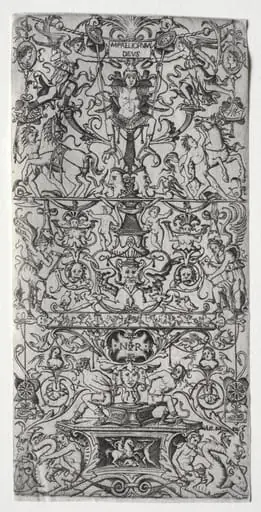
Panel of Ornament with a Satyress Feeding Two Children is a niello print executed around 1512 by the Italian artist Peregrino da Cesena. The work consists of a single panel in which a dense arrangement of figures and decorative motifs is incised into a dark metal surface, producing a stark, shadowy effect typical of the technique.
Subject & Meaning
At the upper part of the composition a robust female figure, identified as a satyress, dominates the scene, surrounded by nude children and assorted animals.
At the upper part of the composition a robust female figure, identified as a satyress, dominates the scene, surrounded by nude children and assorted animals. Beneath her, a kneeling woman holds a staff and offers food to two infants. The surrounding space is filled with birds, vines, and a basket of fruit, suggesting an allegorical narrative that may convey themes of nourishment, fertility, or moral instruction.
Technique & Style
The print was created using niello, a process that involves engraving a design into metal and filling the incised lines with a blackened alloy. This method yields a high-contrast, matte black surface that emphasizes the intricate, swirling forms and the dense ornamental background. The style reflects the late‑Renaissance fascination with complex, symbolic ornamentation.
History & Provenance
Peregrino da Cesena, active in the early sixteenth century, is known for his work in metal and print media. The panel’s date, circa 1512, places it within the artist’s mature period. Documentation of its ownership history is limited, but the work is catalogued among surviving examples of early niello prints in European collections.
Context
The image combines classical mythological elements, such as the satyress, with domestic motifs like feeding infants, a blend common in Renaissance art that sought to merge pagan iconography with contemporary moral themes. The dense ornamental framework aligns with the period’s decorative tastes, especially in courtly and manuscript illumination.
Artist & collection