Artwork
The Young Eastern Woman
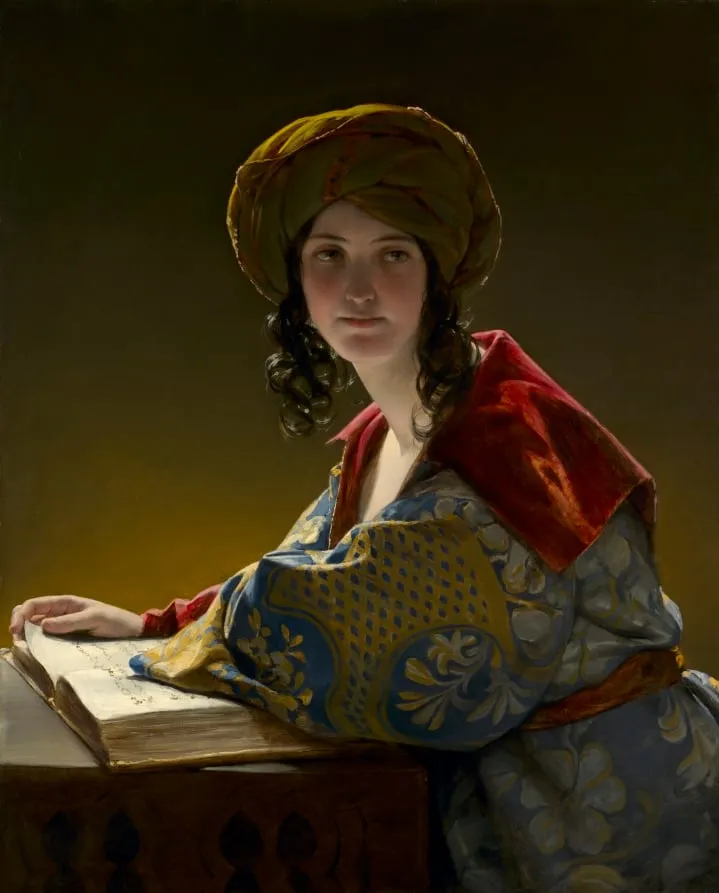
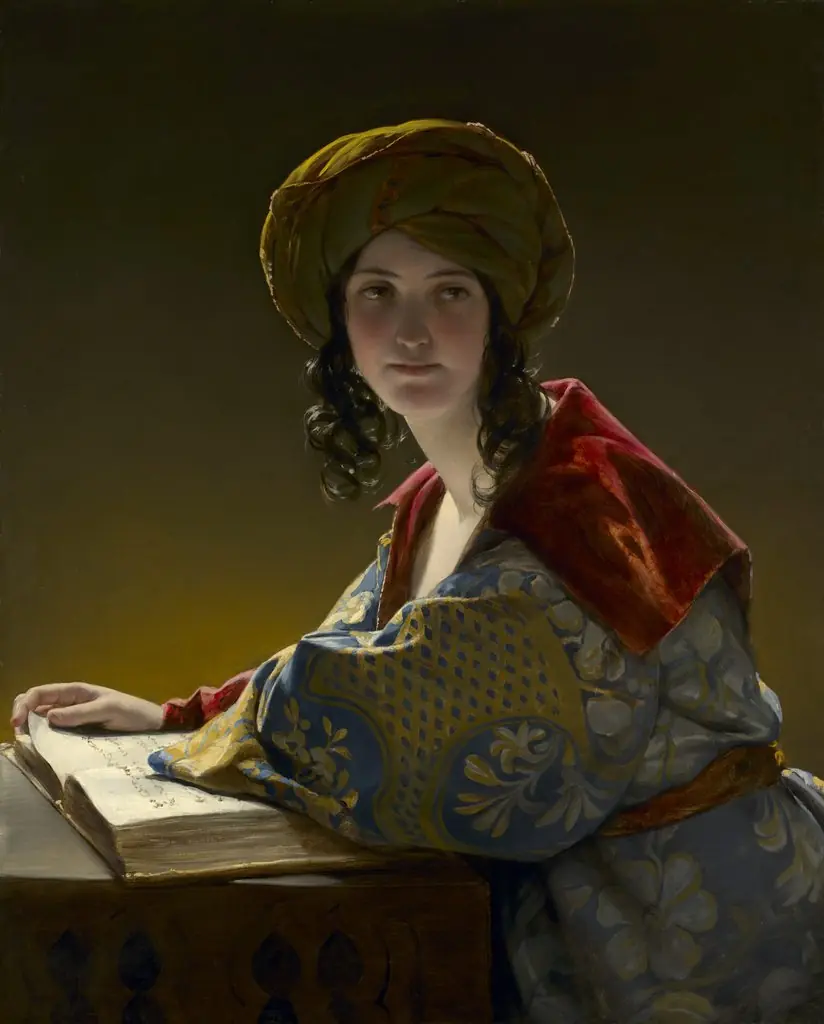
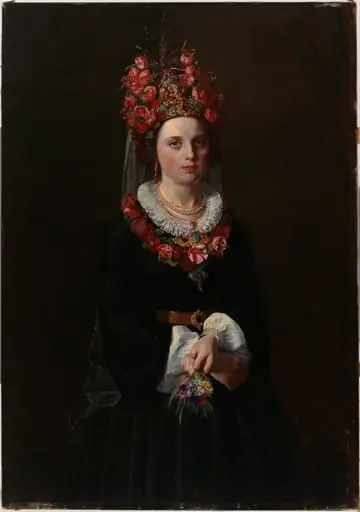
The Young Eastern Woman is an unspecified painting by the Biedermeier artist Friedrich von Amerling. It dates from 1838 and is held in the collection of the Cleveland Museum of Art. This painting depicts a young woman seated in a dim interior, draped in a richly textured red-and-gold robe and wearing a white turban.
About this work
Overview
Though labeled 'Young Eastern Woman' by the artist, the subject is not of Eastern origin but a local model dressed in stylized Turkish attire.
This painting depicts a young woman seated in a dim interior, draped in a richly textured red-and-gold robe and wearing a white turban. Though labeled 'Young Eastern Woman' by the artist, the subject is not of Eastern origin but a local model dressed in stylized Turkish attire. The composition emphasizes fabric and light to evoke an imagined exoticism, typical of 19th-century European Orientalist conventions.
Subject & Meaning
The figure’s identity remains anonymous, her ethnicity unconnected to the costume she wears. Her stillness and direct gaze invite contemplation, yet the attire is a theatrical construct rather than cultural representation. The work reflects a Western tendency to project fantasy onto the East, using costume as a symbol of mystery rather than authenticity, revealing more about European imagination than actual Eastern cultures.
Technique & Style
The artist employs soft, directional lighting to highlight the woman’s face and hands, contrasting with the deep shadows of the background. Rich textures in the robe are rendered with careful brushwork, emphasizing silk and embroidery. The palette is warm and restrained, focusing attention on the interplay of fabric, light, and skin tone to heighten the sense of tactile luxury and quiet intimacy.
History & Provenance
Painted by Friedrich Amerling in the mid-19th century, the work emerged during a period when Austrian artists frequently engaged with Orientalist themes. It was likely created in Vienna, where such subjects were popular among collectors. The painting’s title and imagery align with broader European trends, though no record confirms the model’s identity or the costume’s origin beyond local theatrical sources.
Context
In 19th-century Central Europe, depictions of 'Oriental' figures were common in academic and salon art, often based on secondhand sources rather than firsthand experience. Artists like Amerling drew from travel literature, stage costumes, and ethnographic collections to construct idealized visions of the East. These works satisfied a cultural appetite for the exotic without requiring direct engagement with non-European societies.
Legacy
The painting exemplifies a widespread artistic practice that prioritized aesthetic fantasy over cultural accuracy. While it reflects technical skill and sensitivity to light and texture, its legacy is tied to the colonial-era framing of non-Western cultures as decorative, static, and other. Today, it serves as a historical artifact of how identity and difference were visually constructed in European art.
Artist & collection
Artist
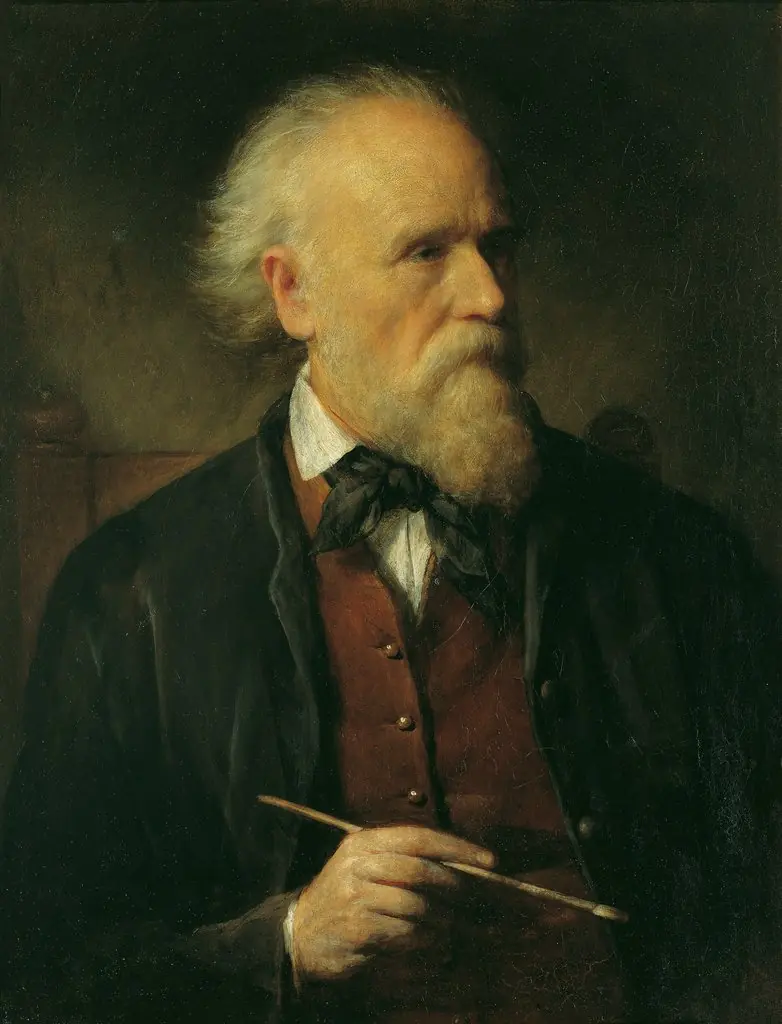
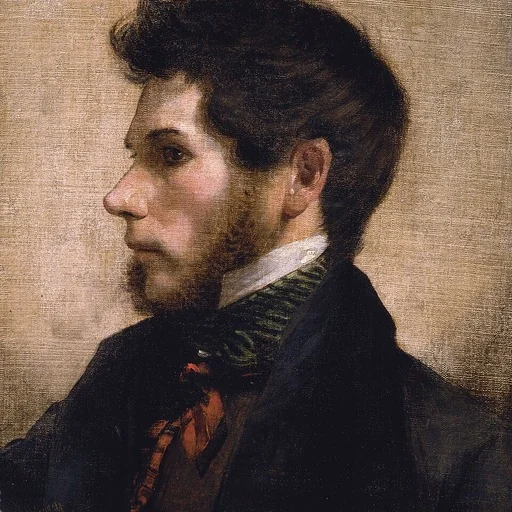
Friedrich Ritter von Amerling (14 April 1803 – 14 January 1887) was an Austrian portrait painter in the court of Franz Josef.