Artwork
Opstilling. Allegori på forkrænkeligheden
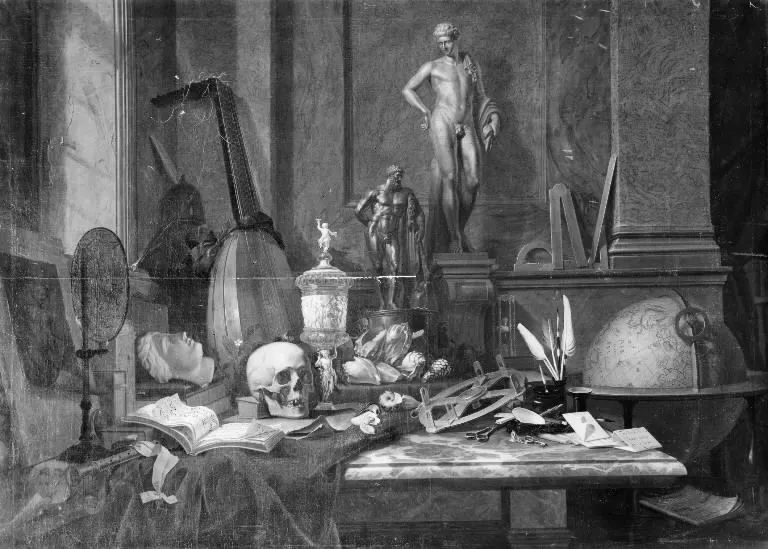
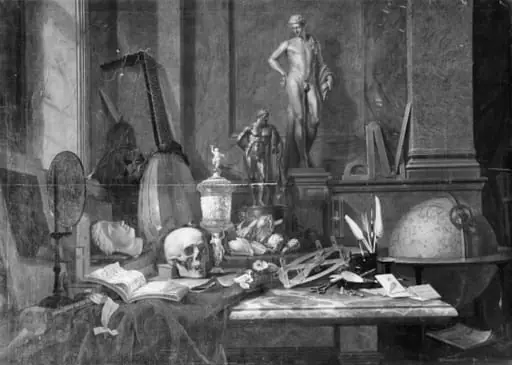
Opstilling. Allegori på forkrænkeligheden is an oil painting by the Barbizon school artist Friedrich Wilhelm Boehme. It dates from 1704 and is held in the collection of the Statens Museum for Kunst.
About this work
Overview
Its subdued palette and careful lighting suggest a meditative tone, characteristic of Northern European vanitas traditions of the early 18th century.
Painted in 1704 by Friedrich Wilhelm Boehme, Opstilling. Allegori på forkrænkeligheden is a still life in oil on canvas, currently held by the Statens Museum for Kunst in Copenhagen. The composition arranges symbolic objects on a tabletop beneath a plain wall bearing a statuette. Its subdued palette and careful lighting suggest a meditative tone, characteristic of Northern European vanitas traditions of the early 18th century.
Subject & Meaning
The painting presents a collection of objects—skull, book, globe, and other artifacts—as memento mori symbols. The skull signifies mortality, the book represents human knowledge, and the globe alludes to worldly ambition. Together, they form an allegory of transience, urging reflection on the futility of earthly pursuits. The statue on the wall, partially obscured, may symbolize enduring ideals or the silence of history.
Technique & Style
Boehme employs oil paint with subtle chiaroscuro to model forms and create spatial depth. Light falls gently across the objects, emphasizing texture—parchment, stone, metal—while shadows recede into muted tones. The composition is tightly controlled, with no extraneous detail, directing attention to the arrangement’s symbolic weight. Brushwork is restrained, favoring clarity over flourish, aligning with Danish academic conventions of the period.
History & Provenance
The painting entered the collection of the Statens Museum for Kunst in the 19th century, likely acquired through state or institutional channels. Its attribution to Boehme, a lesser-known Danish painter active in the early 1700s, is based on stylistic analysis and archival records. No earlier provenance is documented, suggesting it remained in Denmark since its creation, possibly commissioned by a private patron interested in moral allegory.
Context
Created during a period when Danish art was influenced by Dutch and German vanitas traditions, the work reflects broader European preoccupations with mortality and the limits of human achievement. While grand historical or religious themes dominated official commissions, smaller-scale still lifes like this one catered to private contemplation. Boehme’s approach aligns with quiet, introspective Northern European painting rather than theatrical Baroque styles.
Legacy
Though Boehme’s oeuvre is limited and largely overlooked outside Denmark, this painting remains a representative example of early 18th-century Danish moral still life. It contributes to the understanding of how vanitas themes were adapted in regional contexts, away from the flamboyance of southern Europe. Its preservation in a national collection underscores its role as a quiet artifact of Enlightenment-era introspection.
Artist & collection

 Still Life with a Bird of Paradise and Other Things
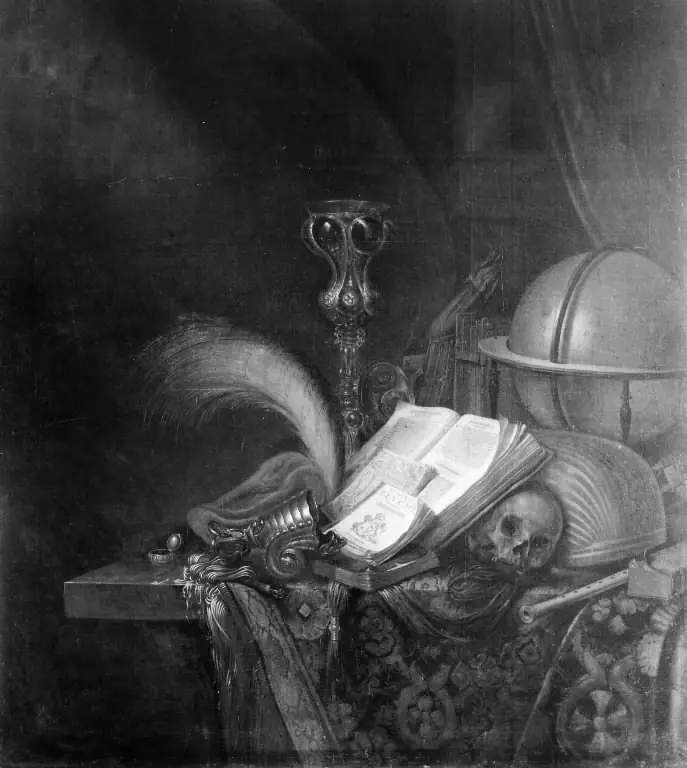 Still Life with a Bird of Paradise and Other Things
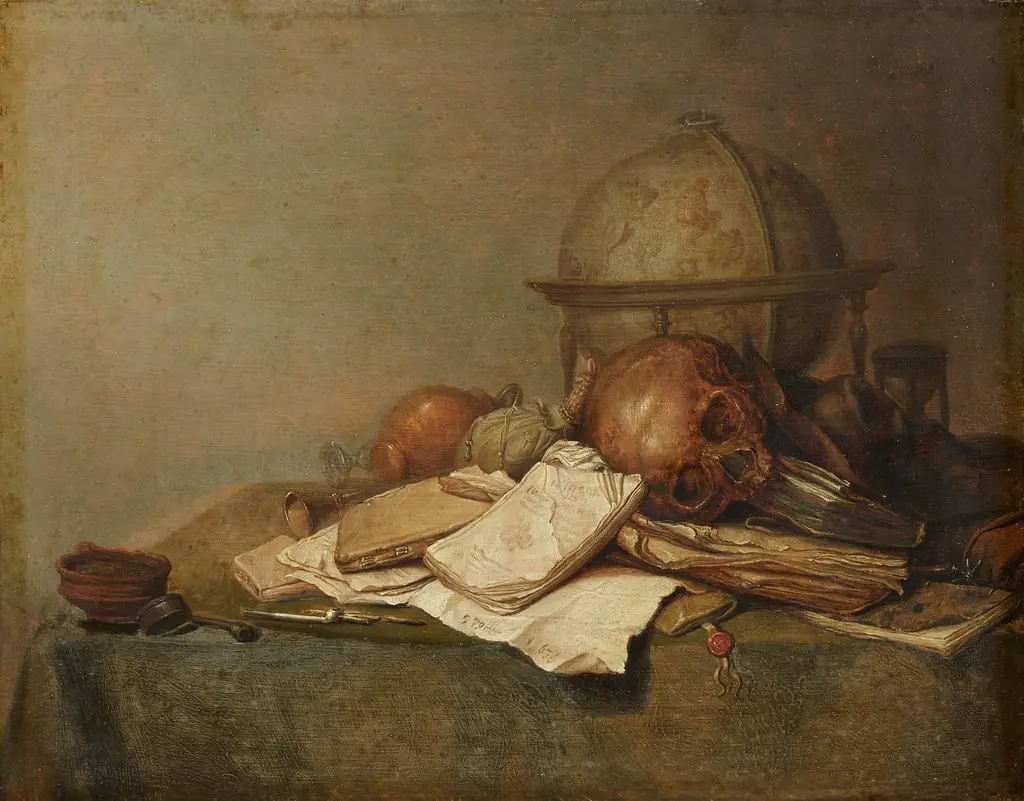 Vanitas Still Life
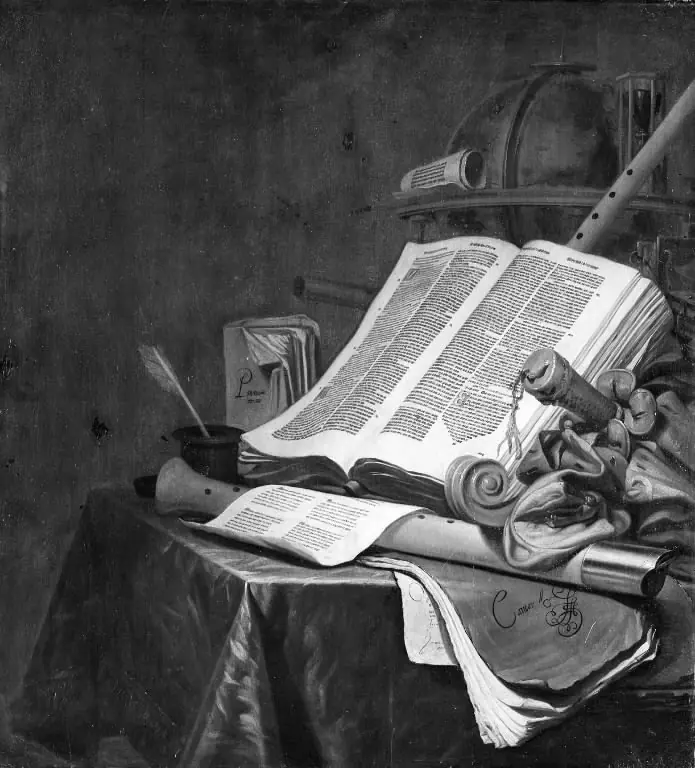 Still Life with Books and Musical Instruments
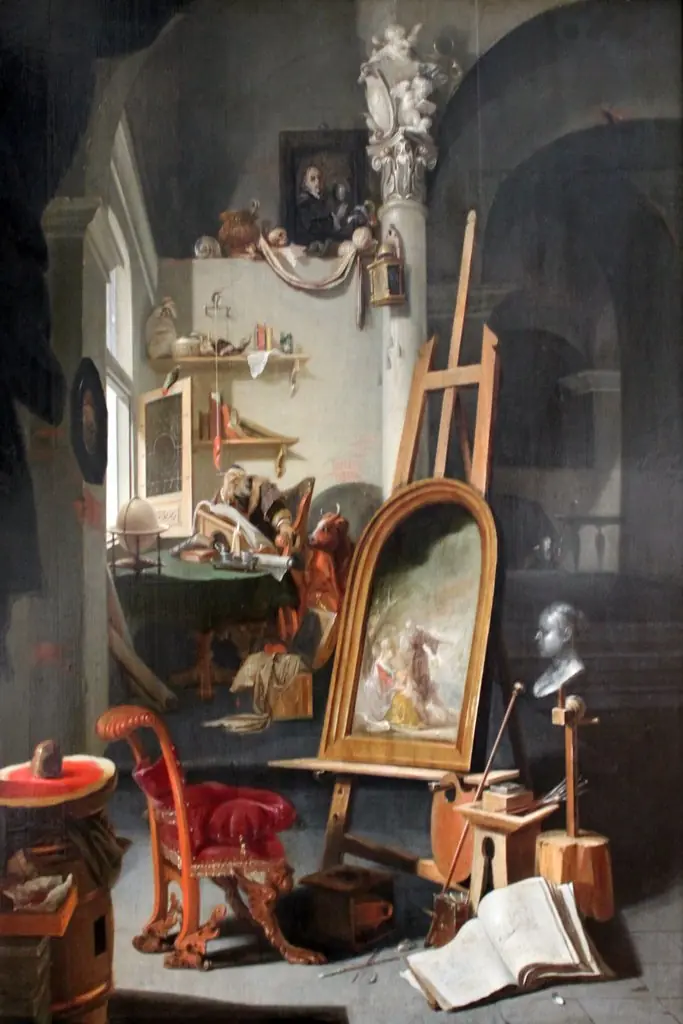 The Workshop of the Evangelist Luke
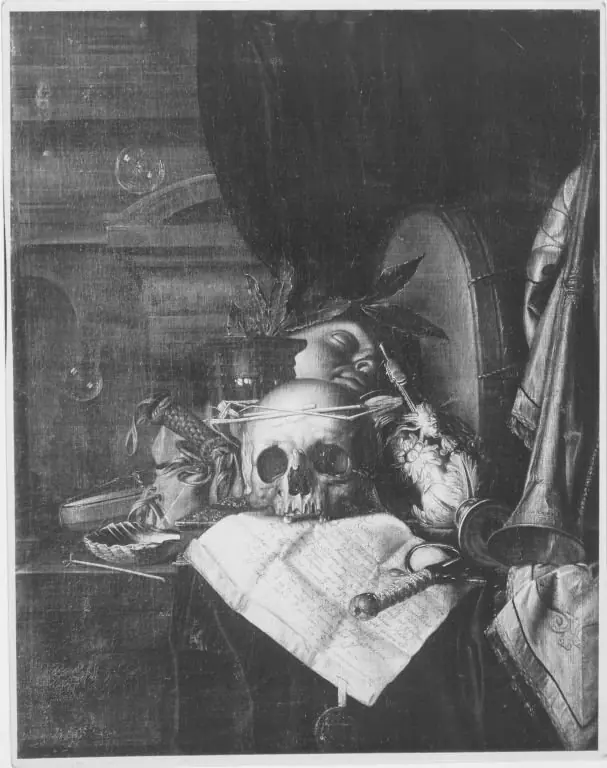 Vanitas-Stillleben
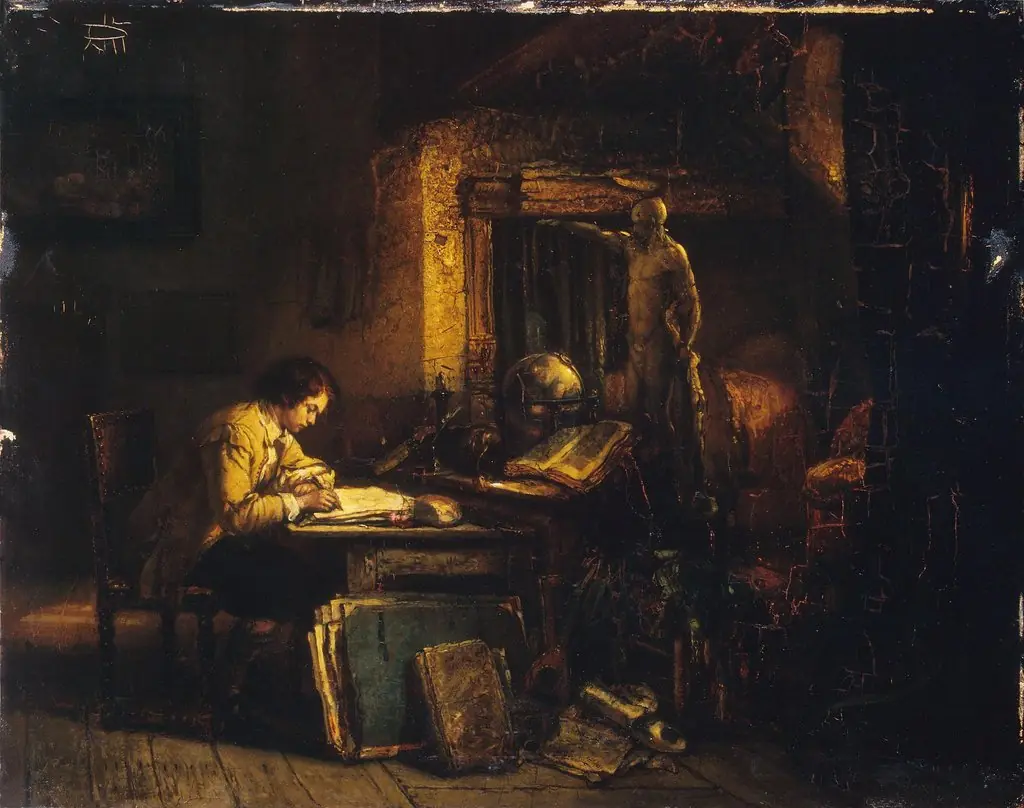 Artist in his Studio
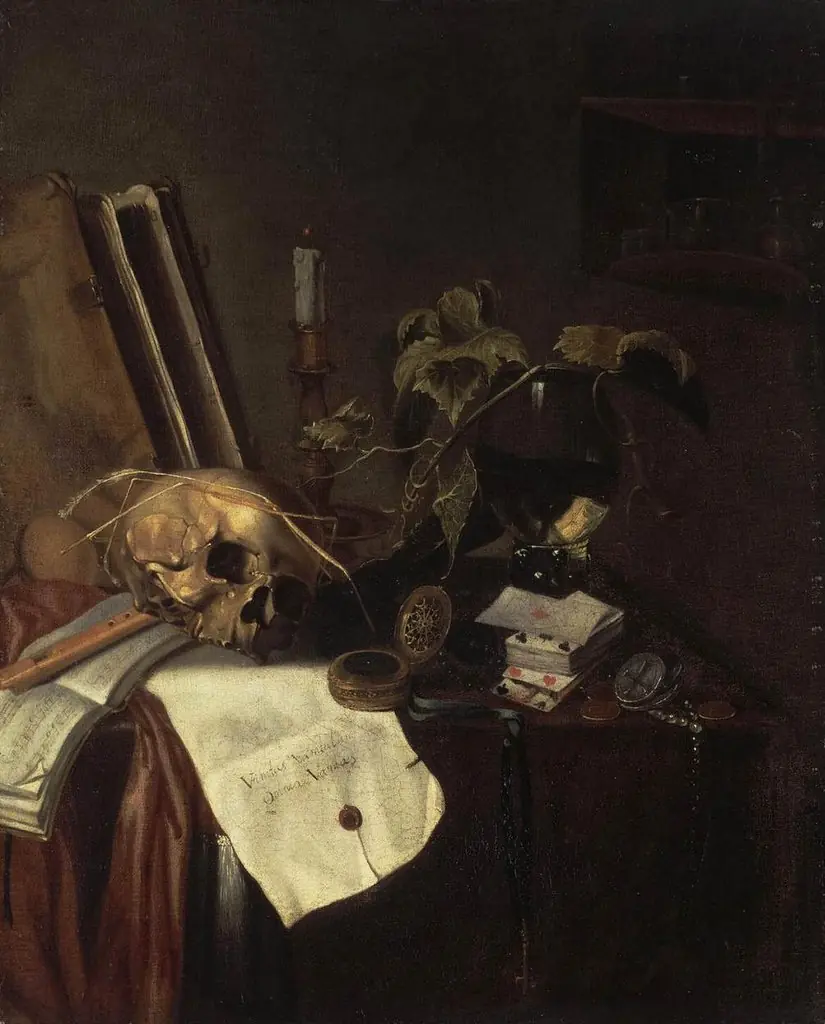 Still Life
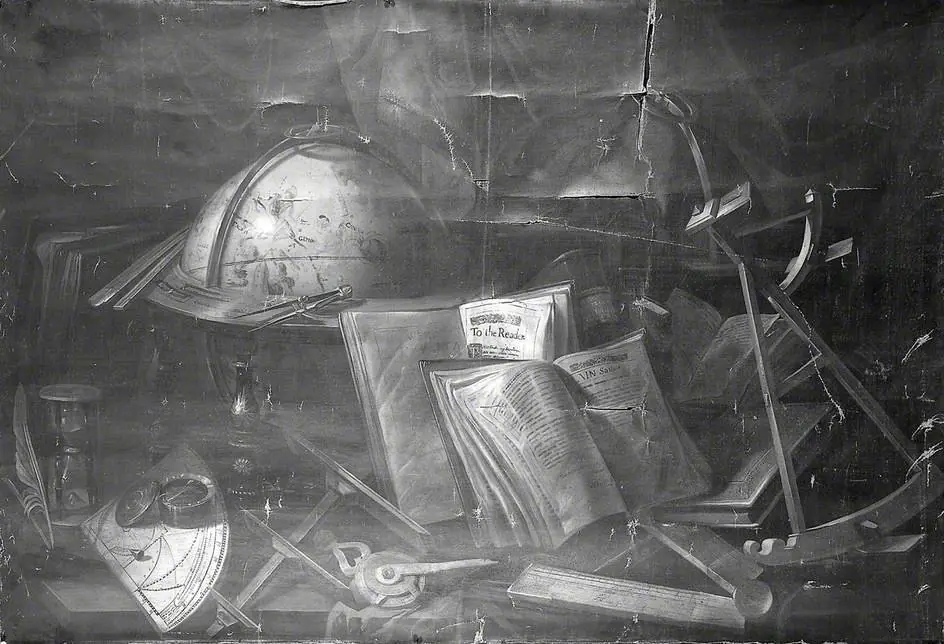 Still Life with Books and Astronomical Instruments
 Vanitas still life
 Stillleben
 Opstilling. Allegori på forkrænkeligheden