Artwork
Still Life
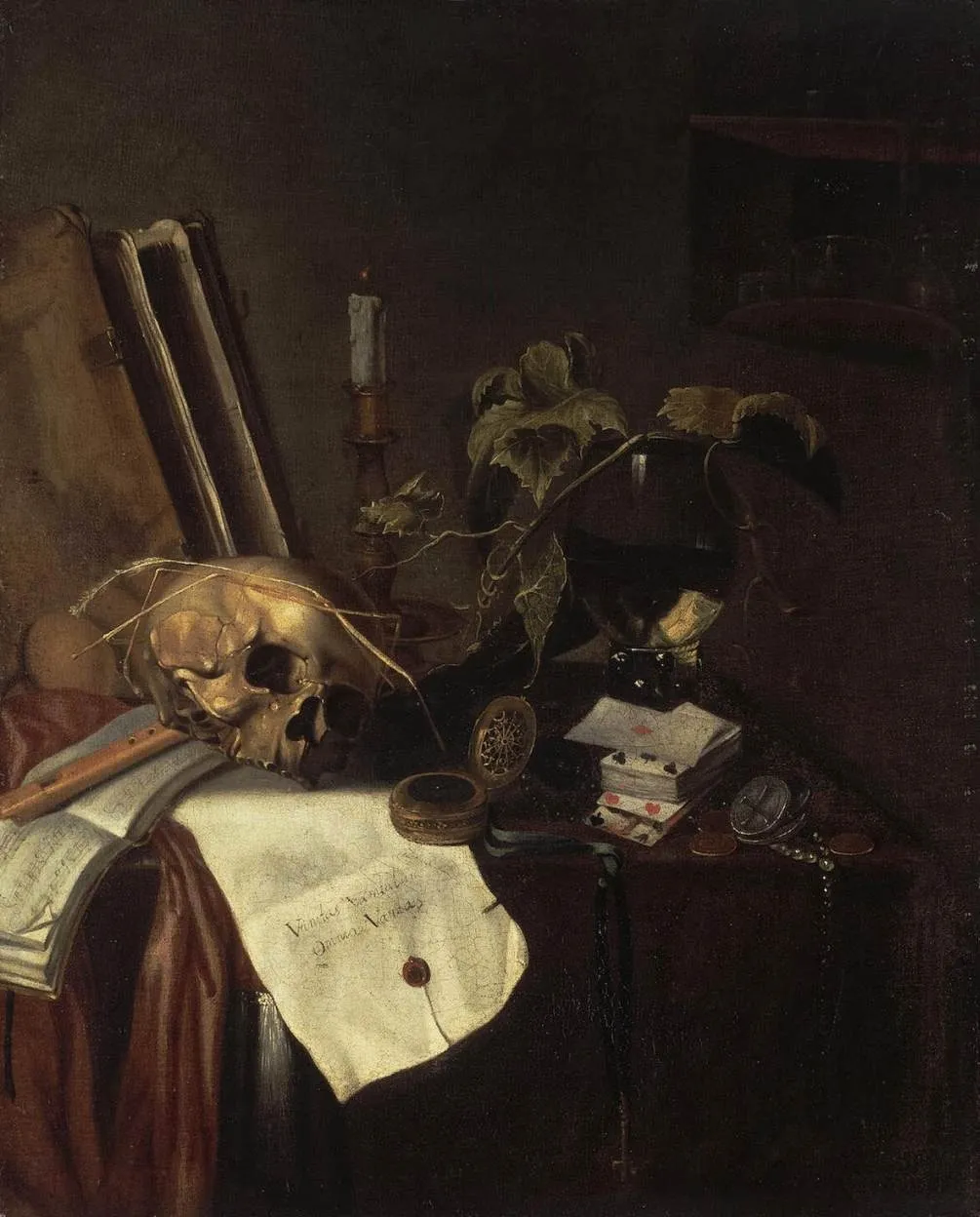
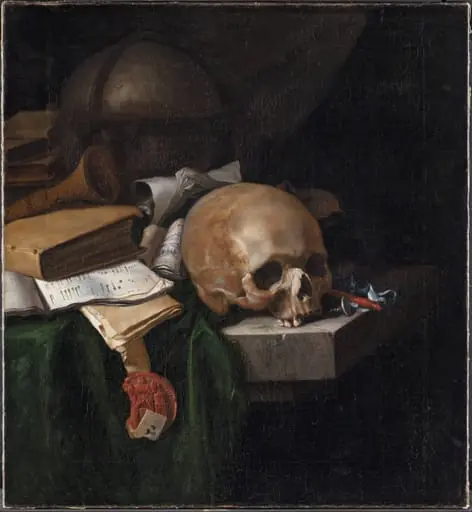
Still Life is an oil painting by the Dutch Golden Age artist Pieter Steenwijck. It dates from 1625 and is held in the collection of the Hermitage Museum.
About this work
Overview
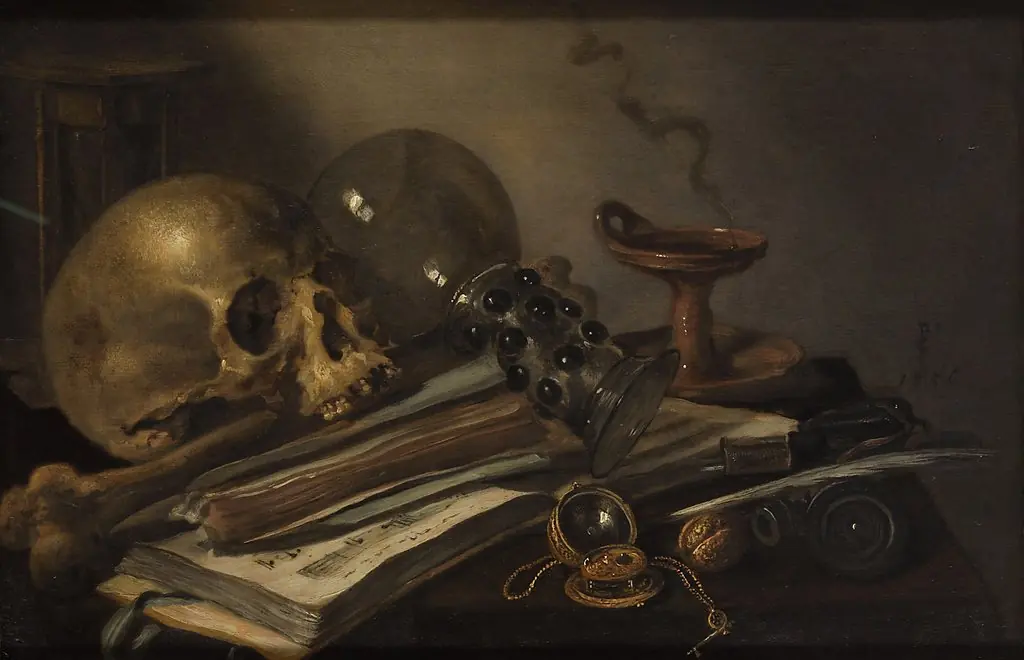
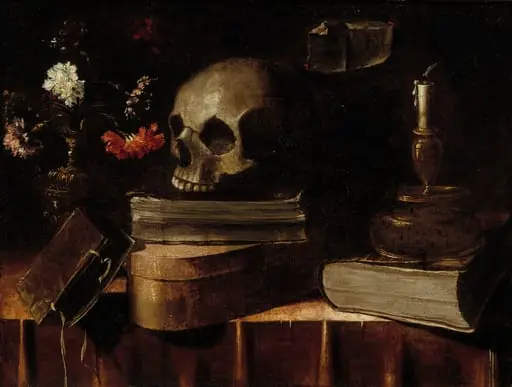
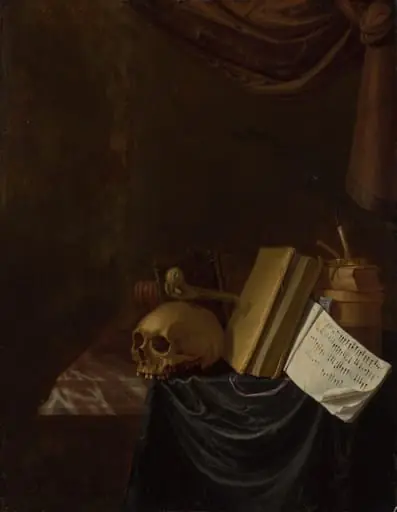
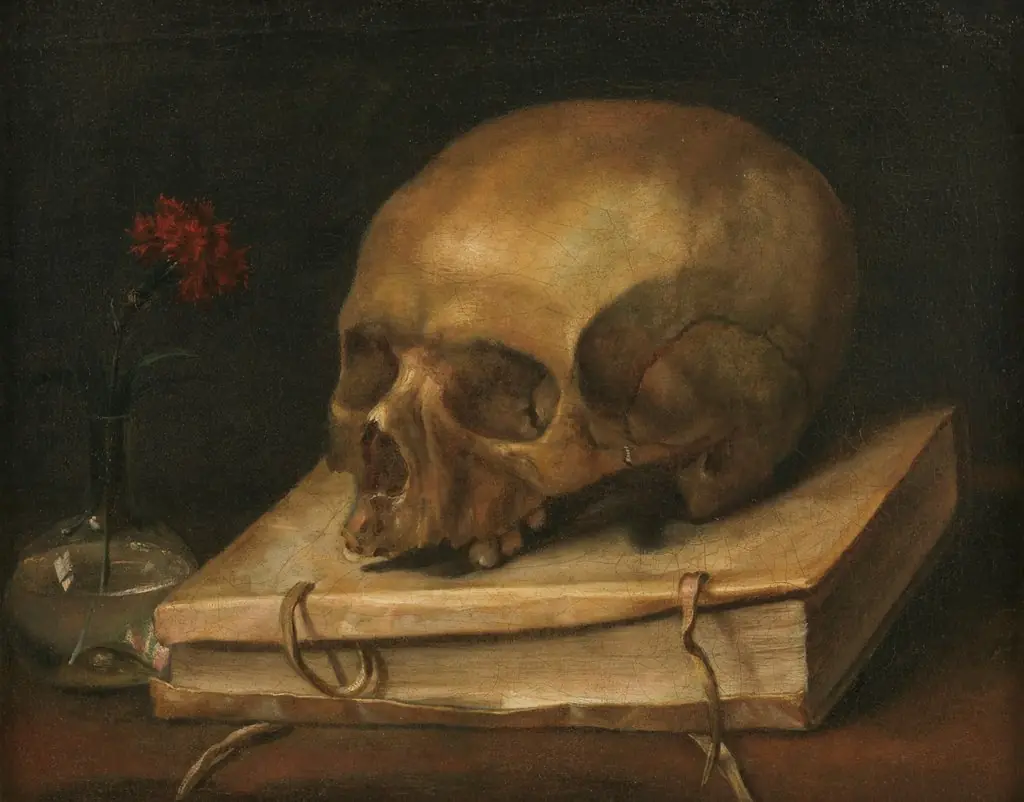
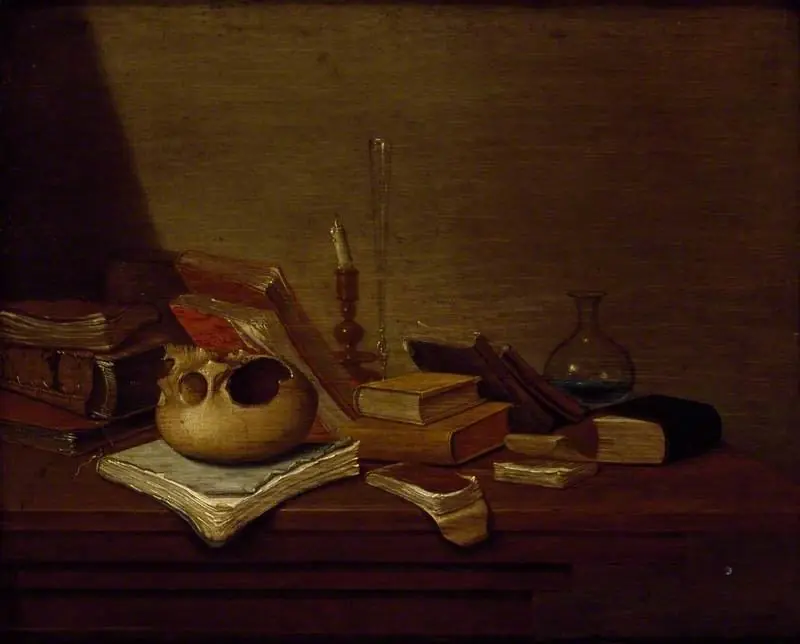
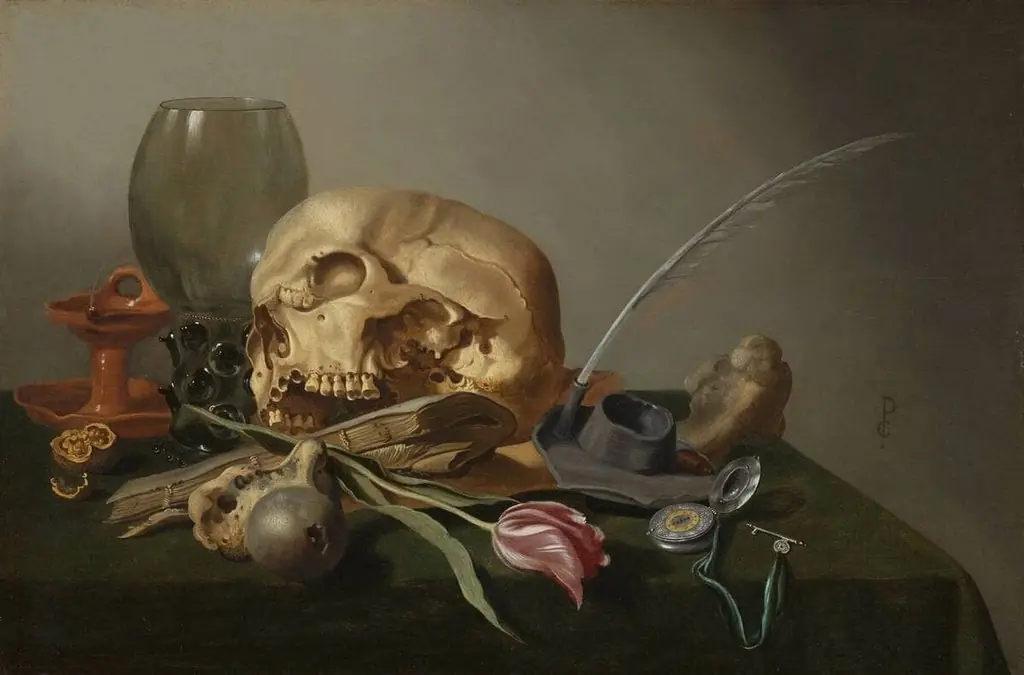
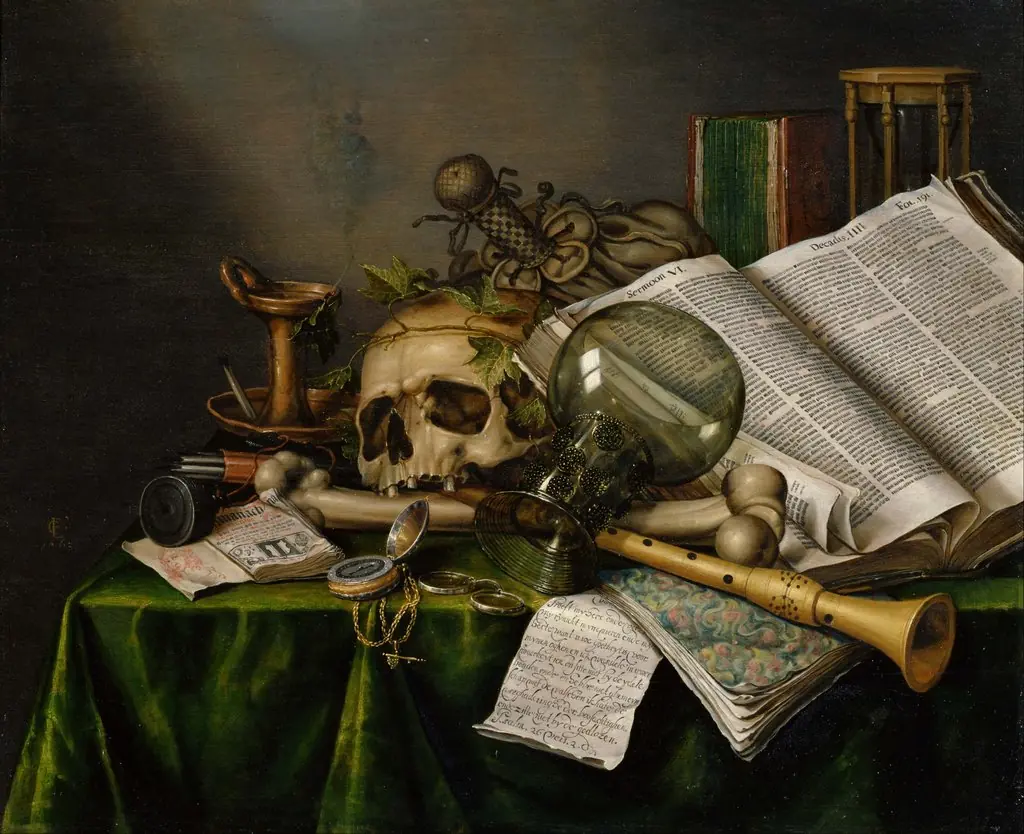
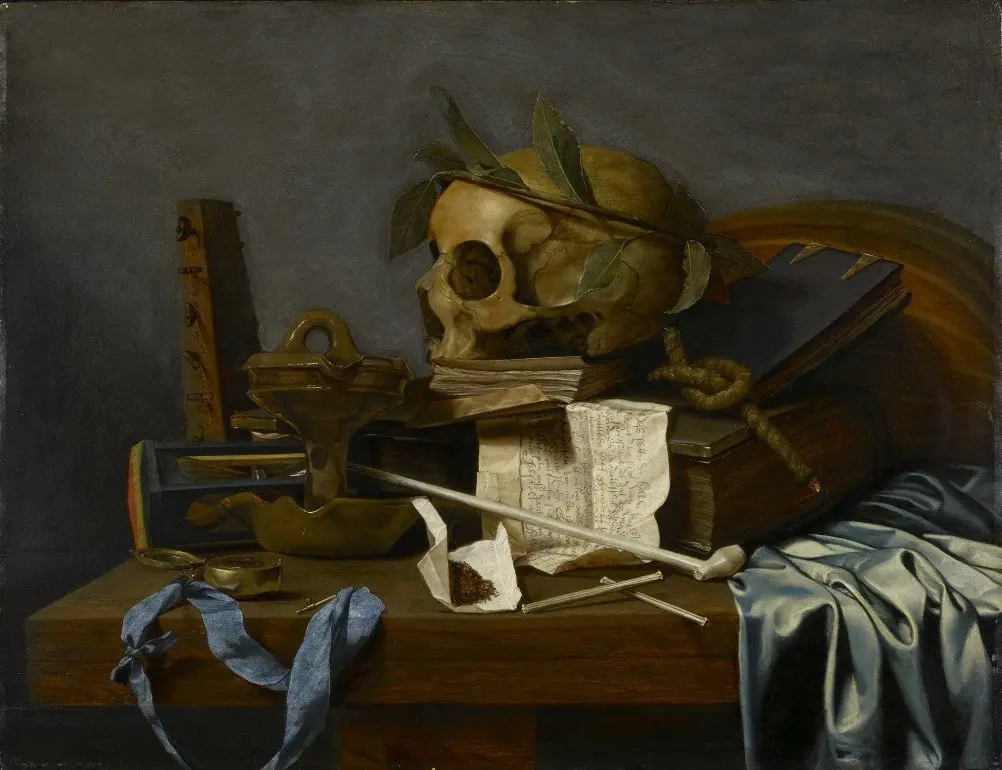
Pieter Steenwijck’s oil painting titled Still Life, dated 1625, presents a somber arrangement of objects on a darkened tabletop. Central to the composition is a human skull crowned with a frayed hat, accompanied by a partially opened book, a modest candle, scattered coins, a wilted plant, and a folded sheet beneath a metal cup. The work is part of the collection of the State Hermitage Museum.
Subject & Meaning
The assemblage of a skull, decaying foliage, and extinguished light evokes the traditional vanitas theme, reminding viewers of mortality and the fleeting nature of earthly pursuits. The tattered hat and the half‑filled book suggest the passage of time and the loss of knowledge, while the coins and candle hint at material wealth and the brief illumination of life.
Technique & Style
Steenwijck employs a stark chiaroscuro, contrasting deep shadows with illuminated objects that seem to glow against the blackened background. The precise rendering of textures—the smooth bone, the worn fabric, the metallic sheen of the cup—demonstrates his skill in oil paint, while the composition’s tight framing creates an intimate, almost theatrical tableau.
History & Provenance
Created in the early seventeenth century, the painting entered the State Hermitage Museum’s holdings during the museum’s expansion of Dutch Baroque works. Its provenance prior to acquisition remains undocumented, but its presence in the Hermitage reflects the institution’s commitment to representing the moralizing still‑life genre of the Dutch Golden Age.
Artist & collection