Artwork
A Rocky Coast with a Atormy Sea and Ships Being Wrecked
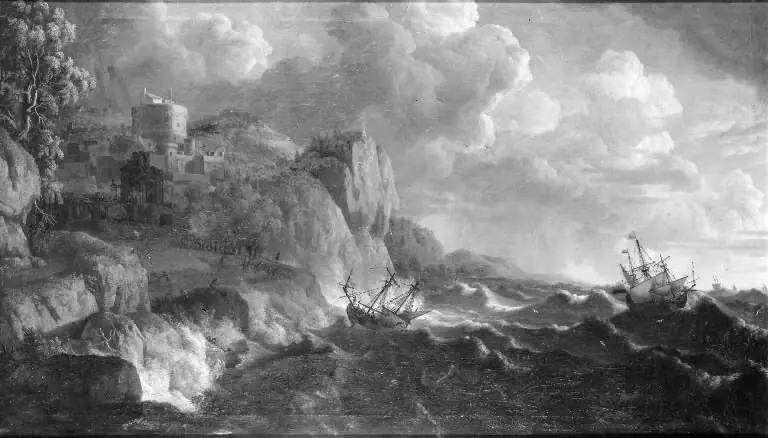
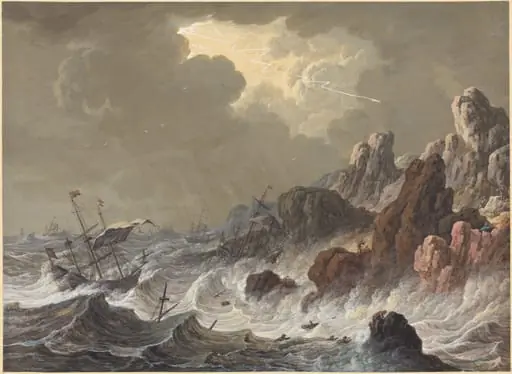
A Rocky Coast with a Atormy Sea and Ships Being Wrecked is an oil painting by the Barbizon school artist Friedrich Wilhelm Boehme. It dates from 1704 and is held in the collection of the Statens Museum for Kunst.
About this work
Overview
Painted in 1704 by Friedrich Wilhelm Boehme, this oil on canvas depicts a violent coastal scene dominated by crashing waves and a storm-lashed horizon. The work is part of the collection at Statens Museum for Kunst in Copenhagen. Its composition centers on the confrontation between human endeavor and natural force, rendered with a focus on atmospheric tension rather than narrative detail.
Subject & Meaning
The painting portrays ships caught in a tempest off a jagged shoreline, their fates uncertain amid the churning sea.
The painting portrays ships caught in a tempest off a jagged shoreline, their fates uncertain amid the churning sea. No figures are visible, yet the vessels’ precarious positions suggest human vulnerability. The absence of rescue or salvation implies a meditation on nature’s indifference, a common theme in early 18th-century maritime art that reflects contemporary anxieties about seafaring and divine will.
Technique & Style
Boehme employs chiaroscuro to heighten the drama, contrasting deep shadows in the waves and cliffs with fleeting bursts of light on foam and sky. Brushwork is energetic but controlled, with thick impasto in the foam and thinner glazes in the distant clouds. The palette is muted—grays, browns, and muted blues—enhancing the oppressive mood without resorting to theatrical color.
History & Provenance
The painting entered the collection of Statens Museum for Kunst in the 19th century, likely through Danish state acquisitions of Northern European works. Its attribution to Boehme, a lesser-known German-Danish painter, reflects the museum’s broader effort to document regional artistic output beyond major figures. No earlier records of its ownership are documented prior to its museum acquisition.
Context
Created during a period when maritime trade and naval power were central to Northern European economies, the painting aligns with a growing interest in depicting nature’s sublime force. While not tied to a specific historical event, its imagery resonates with contemporary fears of shipwreck and loss, echoed in literature and sermons of the time that framed the sea as both provider and destroyer.
Legacy
Though Boehme’s oeuvre remains limited in scholarly attention, this work contributes to the understanding of early 18th-century Nordic landscape painting. It stands as a quiet example of how regional artists adapted Dutch and German traditions of marine drama, emphasizing mood over spectacle. Its preservation in a national collection underscores its role in documenting Denmark’s artistic engagement with natural themes.
Artist & collection