Artwork
Dunstaffnage Castle, Argyllshire
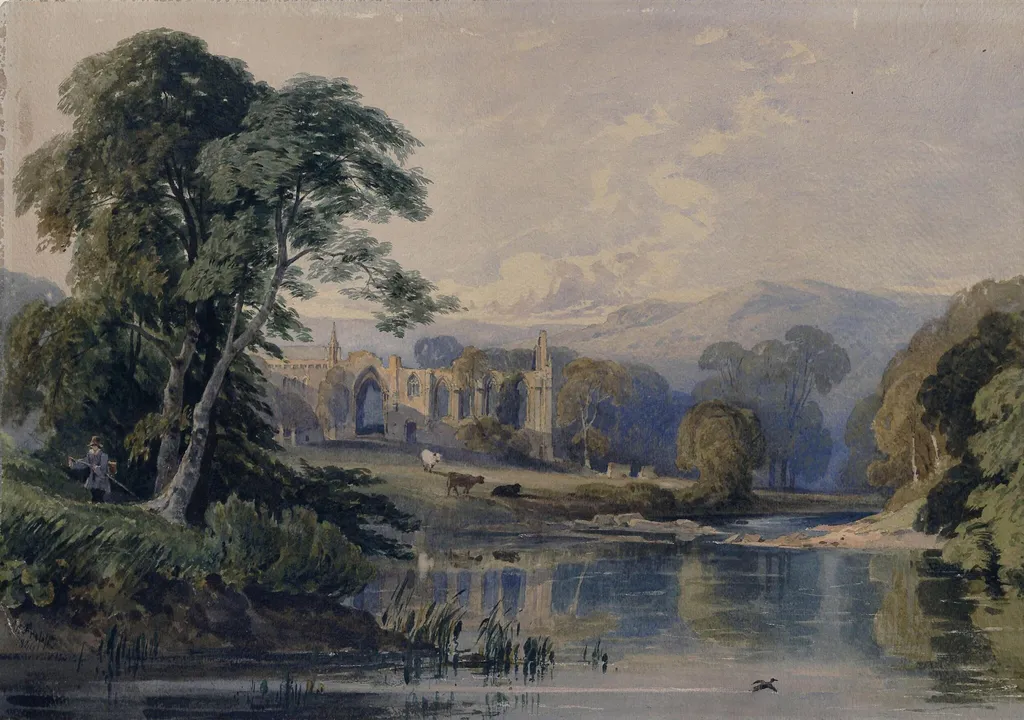
Dunstaffnage Castle, Argyllshire is a watercolor work on paper by the Impressionist artist Fripp. It dates from 1869 and is held in the collection of the Victoria and Albert Museum.
About this work
Overview
Painted in 1869 by William Fripp, this watercolor depicts Dunstaffnage Castle in Argyllshire, Scotland. The work is part of the Victoria and Albert Museum’s collection and exemplifies 19th-century British landscape watercolor traditions. Fripp’s approach emphasizes quiet observation over dramatic effect, focusing on the interplay of natural elements and architectural decay.
Subject & Meaning
The scene centers on the castle’s weathered ruins, positioned against a backdrop of rolling hills and dense trees.
The scene centers on the castle’s weathered ruins, positioned against a backdrop of rolling hills and dense trees. A solitary figure near the structure and grazing sheep suggest human presence without narrative intrusion. The still river mirrors the sky and foliage, reinforcing a sense of calm continuity. The ruin serves not as a symbol of loss, but as a quiet witness to time’s passage within an enduring landscape.
Technique & Style
Fripp employed delicate, translucent washes to render light and atmosphere with subtlety. Soft edges and muted tones unify the composition, while minimal detail in the castle and figures avoids distraction. The bird skimming the water and the texture of grass are suggested rather than defined, reflecting a preference for evocation over precision. The watercolor medium allows for a luminous, airy quality that enhances the scene’s tranquility.
History & Provenance
The painting was completed in 1869 and entered the Victoria and Albert Museum’s collection shortly thereafter. It reflects the Victorian era’s interest in topographical accuracy and romanticized rural scenes. Fripp, known for his Scottish landscapes, often traveled to document historic sites, and this work aligns with his broader practice of recording architectural remnants within their natural settings.
Context
During the mid-19th century, watercolor painting gained recognition as a serious artistic medium, particularly among British artists documenting the countryside. Dunstaffnage Castle, a medieval stronghold with ties to Scottish royalty, was one of many historic sites visited by artists seeking to capture the nation’s layered past. Fripp’s work fits within this trend of topographical art that valued quiet observation over grandeur.
Legacy
Though not widely exhibited today, the painting remains a representative example of Victorian landscape watercolor. It contributes to the understanding of how artists of the period engaged with heritage and nature without sentimentality. Fripp’s restrained style influenced later topographical painters who favored understated realism over romanticized drama.
Artist & collection

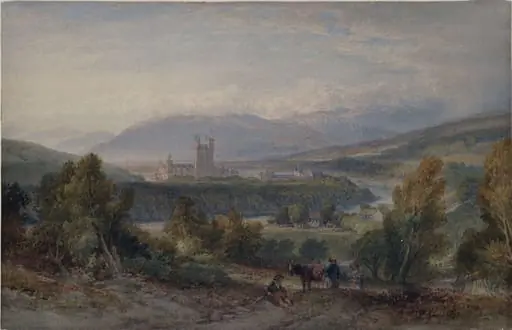 Balmoral Castle and the Surrounding Countryside
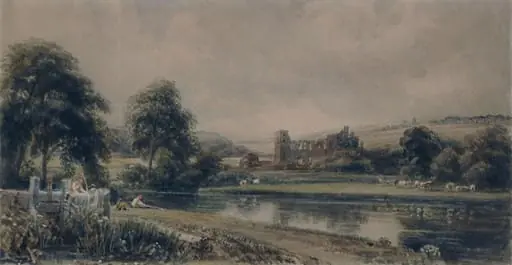 Torksey Castle on the Trent, Lincolnshire
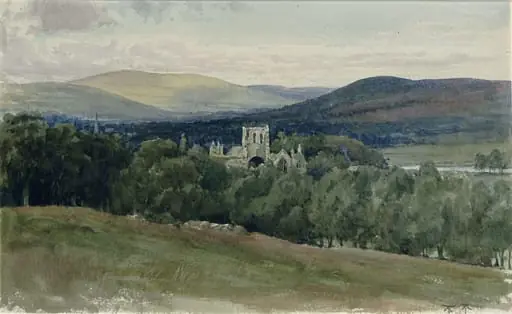 Melrose Abbey
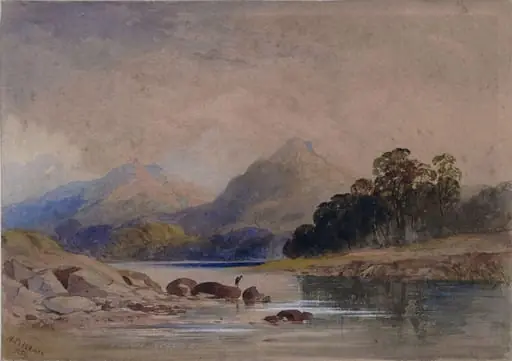 River Scene
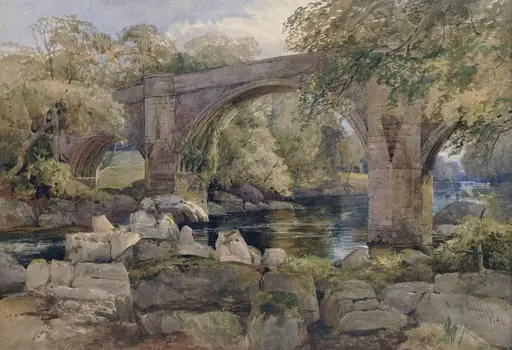 The bridge at Kirby Lonsdale
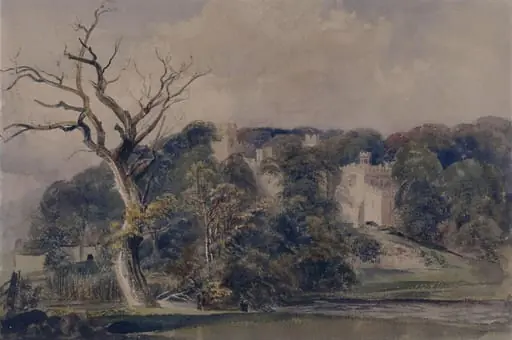 Haddon Hall, Derbyshire
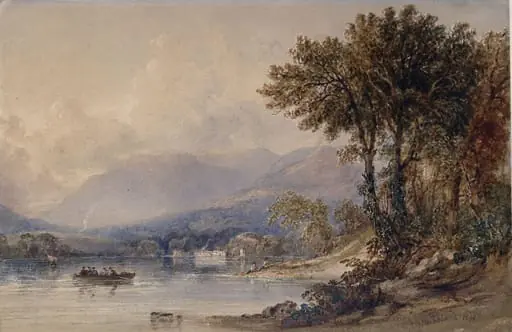 The Rydal mountains near the head of Windermere
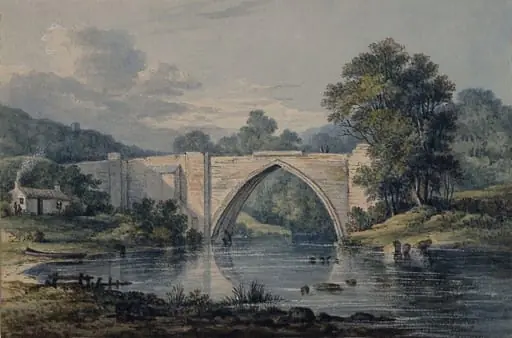 A bridge, perhaps the old bridge of Don, Aberdeen
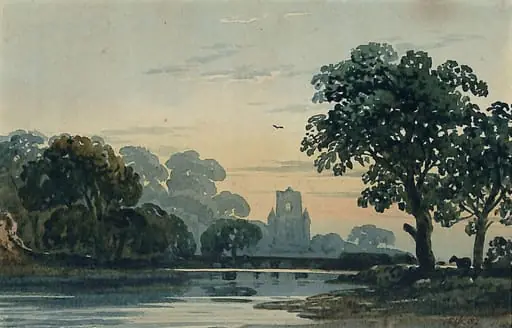 River scene with church in the background
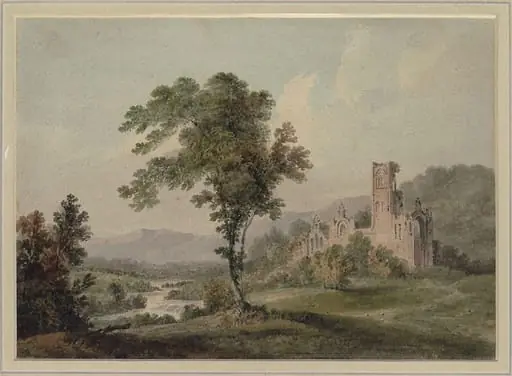 Kirkstall Abbey, Yorkshire
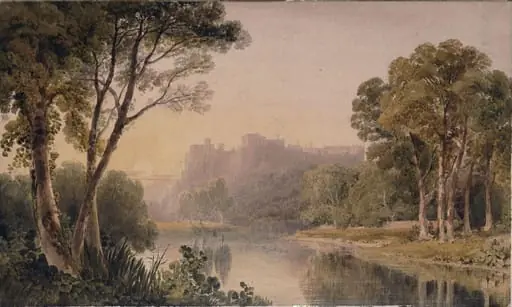 View of Windsor Castle
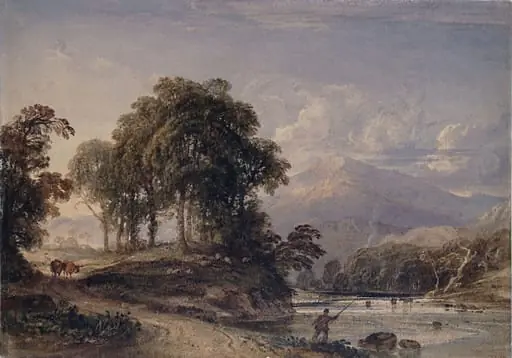 Moel Hebog, looking down the vale from Dinas Emrys, near Beddgelert