Artwork
A Country Church
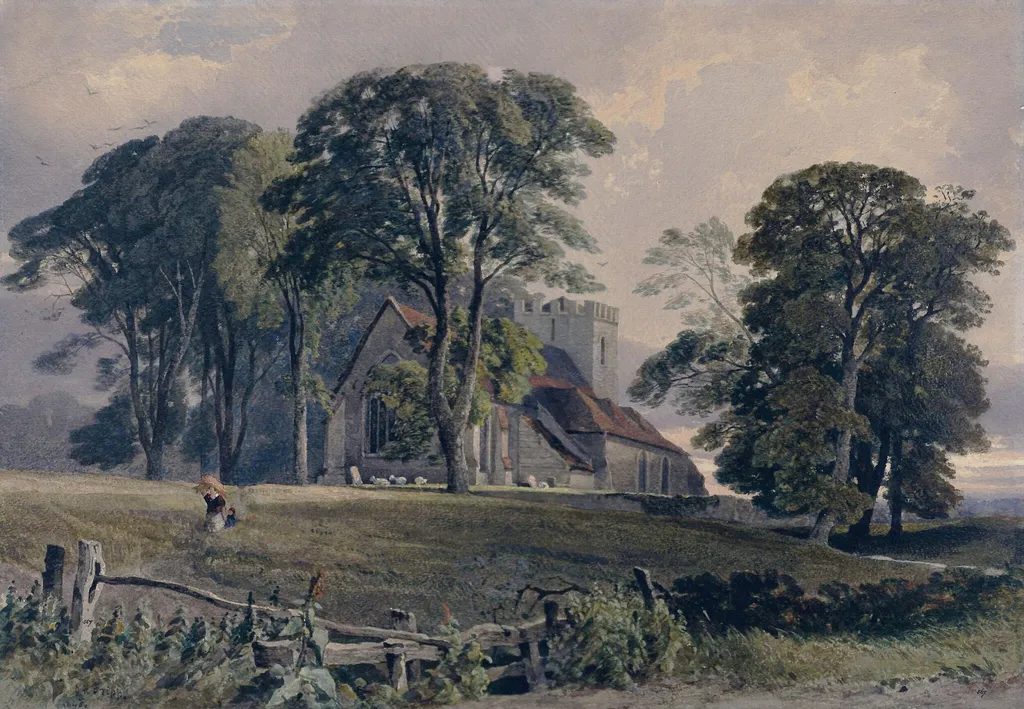
A Country Church is a watercolor work on paper by the British Romanticist artist Fripp. It dates from 1845 and is held in the collection of the Victoria and Albert Museum.
About this work
Overview
A Country Church is a watercolor painting attributed to Fripp, dated around 1845. Executed in delicate washes, it depicts a modest rural place of worship nestled in a quiet landscape. The work is part of the Victoria and Albert Museum’s collection, where it is preserved as an example of mid-nineteenth-century British watercolor practice.
Subject & Meaning
The painting presents a simple stone church with a tall spire, standing amid trees and open pasture where sheep graze. A wooden fence and low shrubs frame the foreground, anchoring the scene in everyday rural life. The absence of human figures and the subdued sky suggest a contemplative stillness, evoking quiet devotion and the enduring presence of faith in the countryside.
Technique & Style
Fripp employs soft, translucent watercolor washes to render form and atmosphere. Gentle brushwork defines the church’s stonework and the texture of foliage, while the cloudy sky is suggested through muted grays and pale blues. The composition avoids dramatic contrast, favoring tonal harmony and a restrained palette to convey serenity and natural quiet.
History & Provenance
The painting entered the Victoria and Albert Museum’s collection in the nineteenth century, likely acquired as part of a broader effort to document British artistic output in watercolor. Its attribution to Fripp, a lesser-known artist of the period, reflects the museum’s interest in preserving works by regional practitioners alongside more prominent figures.
Context
Created during the height of Romanticism’s influence in British art, the work aligns with a growing interest in rural life and vernacular architecture. While not overtly sentimental, it shares with contemporaries a reverence for quiet landscapes and the spiritual resonance of isolated churches, often seen as symbols of continuity amid industrial change.
Legacy
Though not widely exhibited, the painting contributes to the understanding of watercolor’s role in capturing everyday English landscapes. It represents a quiet strand of mid-Victorian art that valued observation over spectacle, preserving a visual record of rural England’s architectural and natural character.
Artist & collection

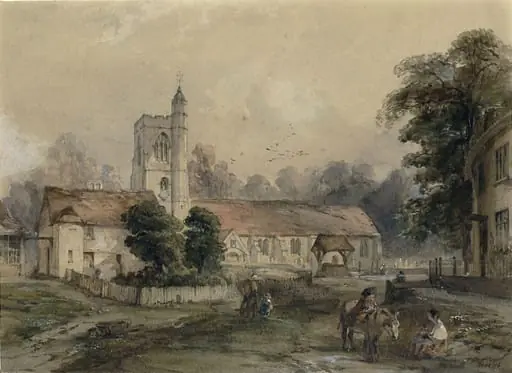 South Weald Church, Essex
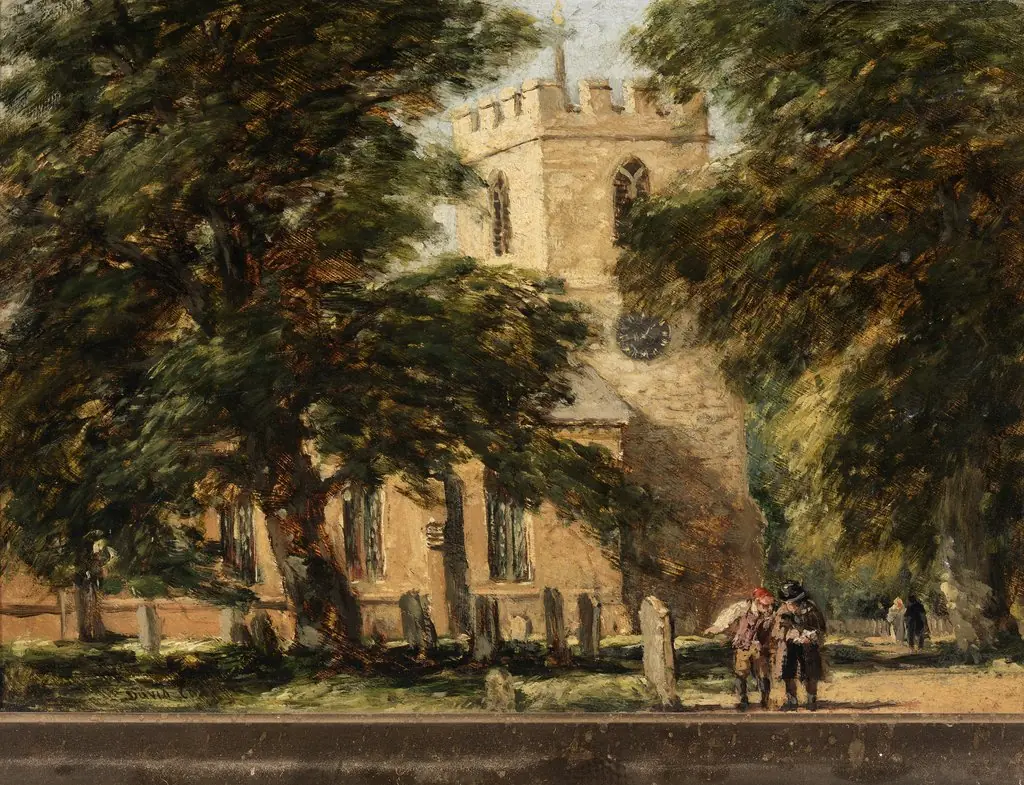 Harborne Church, near Birmingham
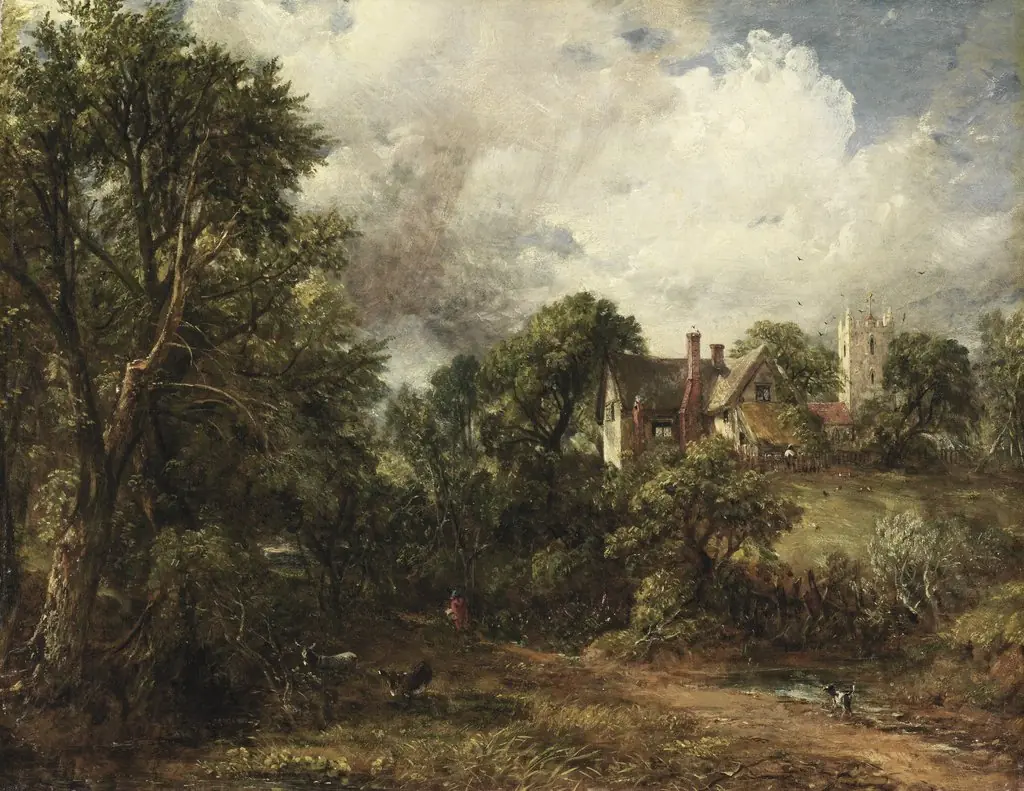 The Glebe Farm
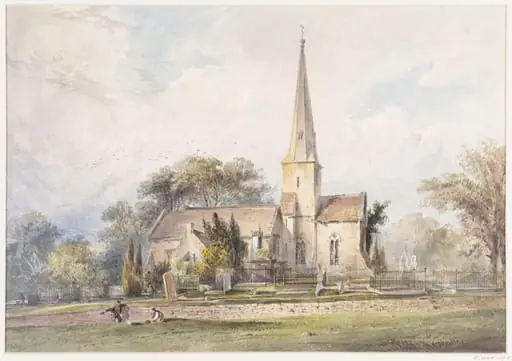 Church and churchyard
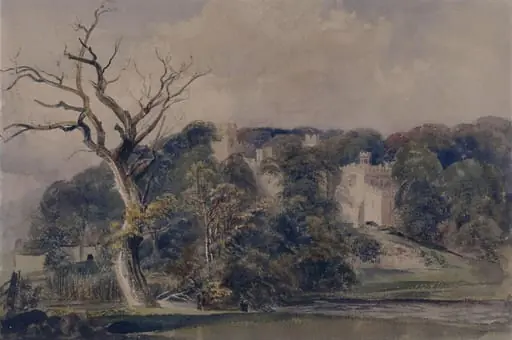 Haddon Hall, Derbyshire
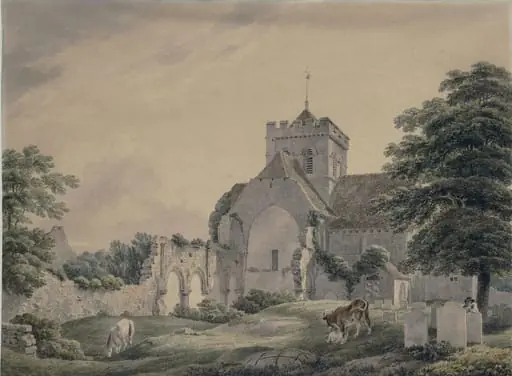 Boxgrove Priory Church, near Chichester
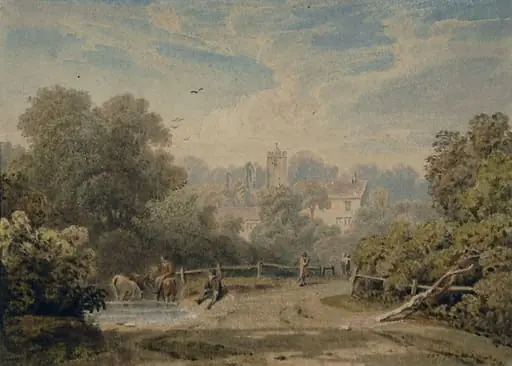 Crowhurst near Hastings
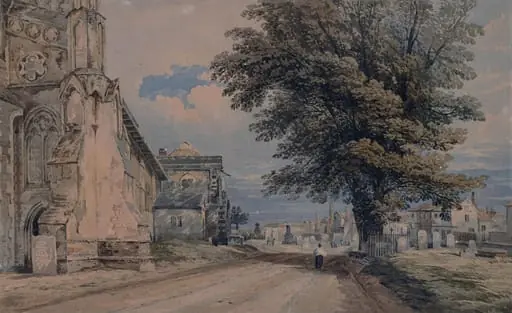 Waltham Abbey
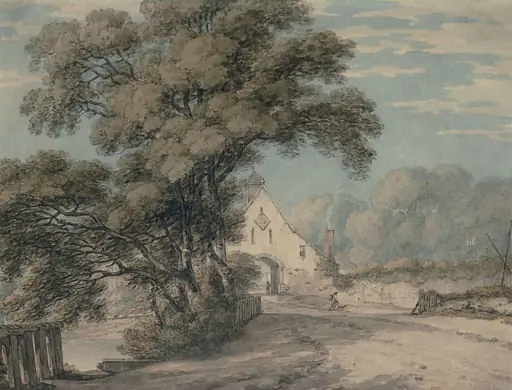 The Gateway at Beaulieu Abbey, Hants
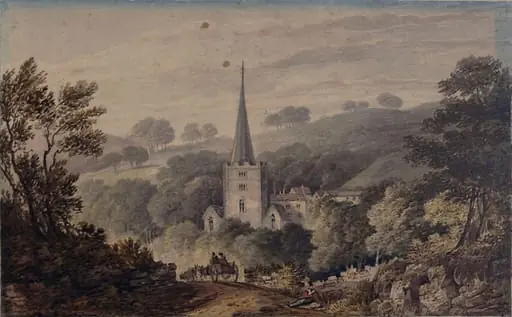 Shorwell, Isle of Wight
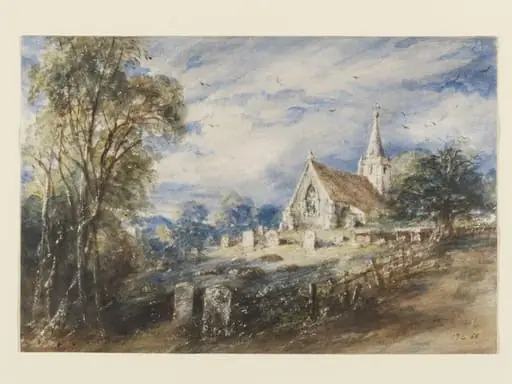 Stoke Poges Church, Buckinghamshire. Illustration to Gray's 'Elegy'
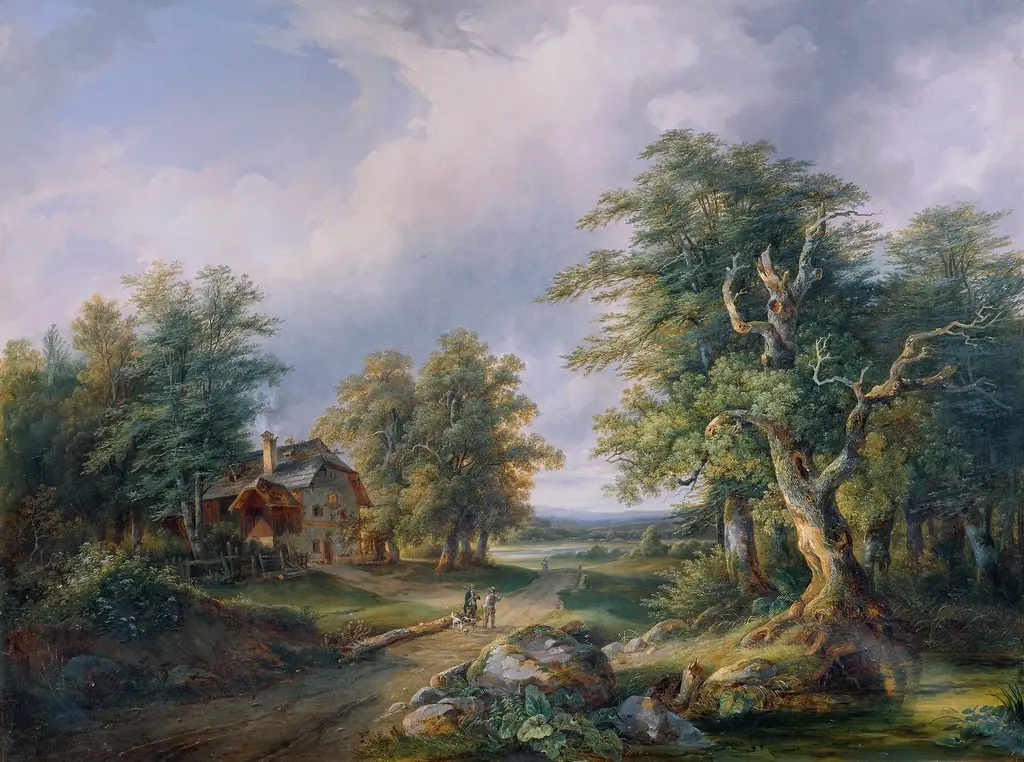 Farmstead on a Forest Road