Artwork
Melrose Abbey
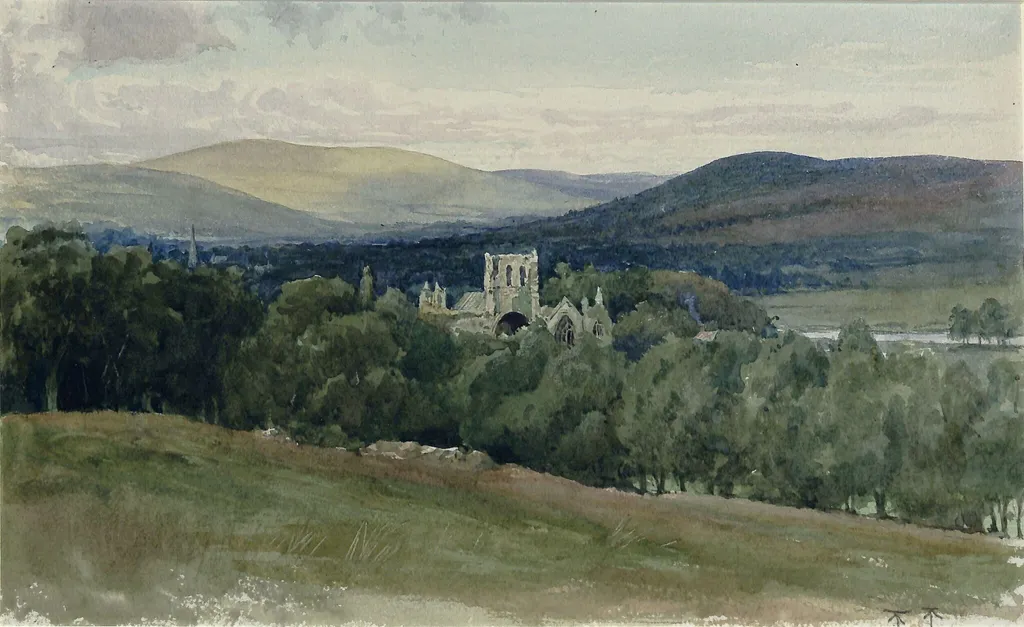
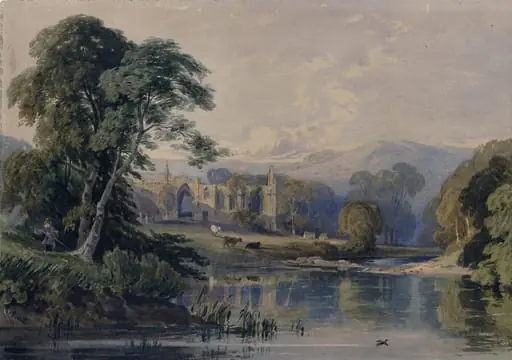
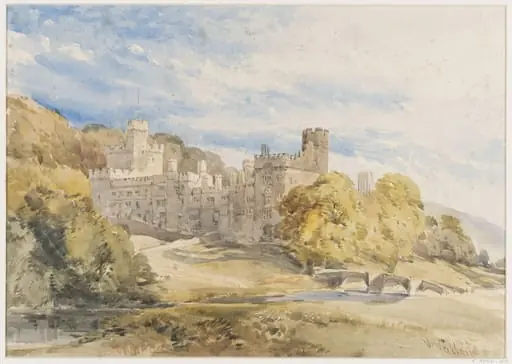
Melrose Abbey is a watercolor work on paper by the British Romanticist artist Francis Bernard Dicksee. It dates from 1870 and is held in the collection of the Victoria and Albert Museum. Francis Bernard Dickes created a watercolour that portrays a medieval abbey set within a tranquil valley.
About this work
Overview
Francis Bernard Dickes created a watercolour that portrays a medieval abbey set within a tranquil valley. The composition balances the stone structure, partially concealed by surrounding trees, against gentle hills that recede into the distance. A pale sky hovers above, while the foreground is rendered in loose green strokes that suggest grass and woodland.
Subject & Meaning
The work focuses on an abandoned monastic complex, identified as either Kirkstall Abbey in England or Melrose Abbey in Scotland, though the precise location remains uncertain. By situating the ruin within a serene landscape, the painting emphasizes the passage of time and the quiet endurance of historic architecture amid nature.
Technique & Style
Dickes employed delicate washes of watercolour, allowing pigments to blend softly and edges to dissolve. This approach creates a hazy, atmospheric effect that softens the architectural details. The handling of colour and light aligns with Realist tendencies to depict ordinary, unembellished scenery with fidelity to visual perception.
History & Provenance
The piece is catalogued as a watercolour by Francis Bernard Dickes, though its acquisition history is not detailed in the source material. It is currently referenced in museum records alongside other 19th‑century works, suggesting it forms part of a broader collection of landscape watercolours.
Own this work as a print
Artist & collection
Artist
Francis Dicksee painted quiet, detailed watercolors of buildings and landscapes in the late 1800s.