Artwork
Bolton Abbey
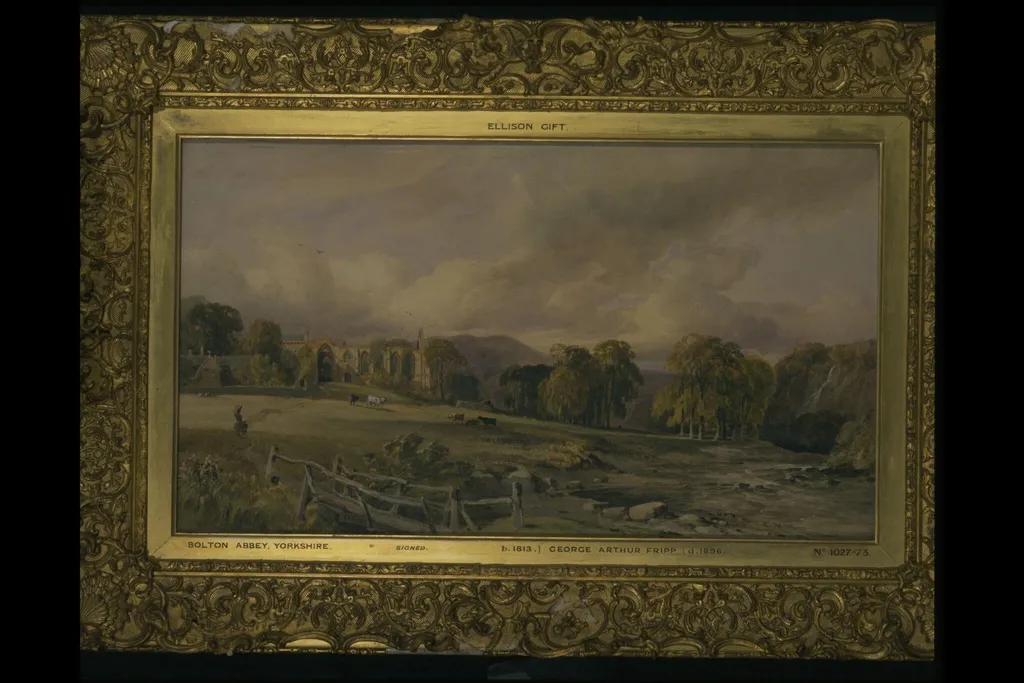
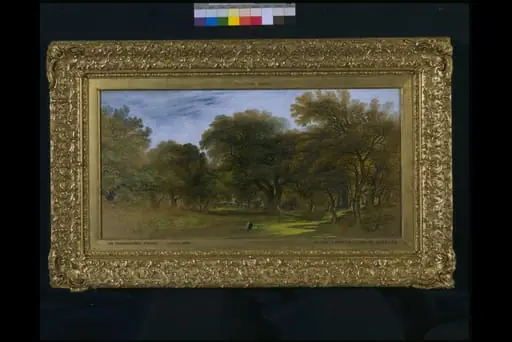
Bolton Abbey is a watercolor work on paper by the British Romanticist artist George Arthur Fripp. It dates from 1847 and is held in the collection of the Victoria and Albert Museum.
About this work
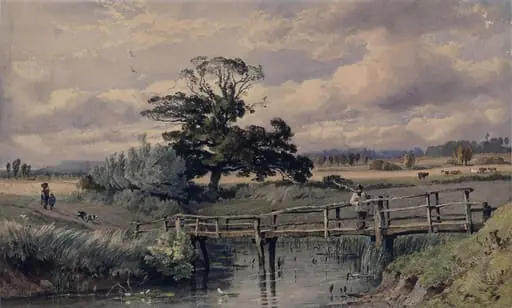
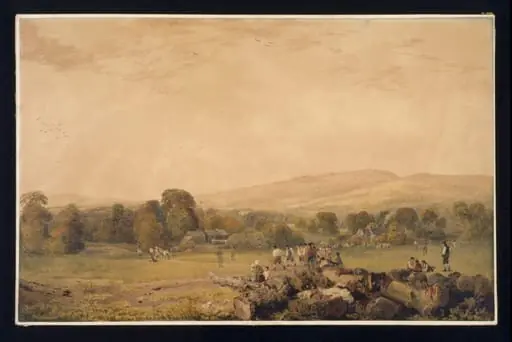
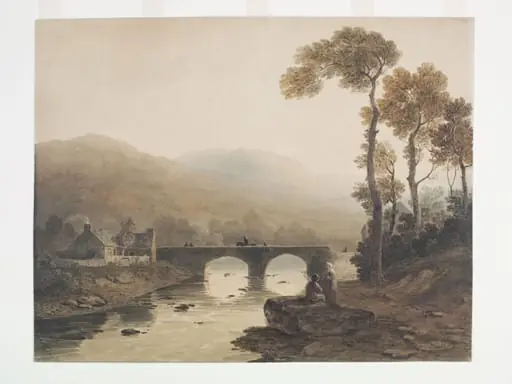
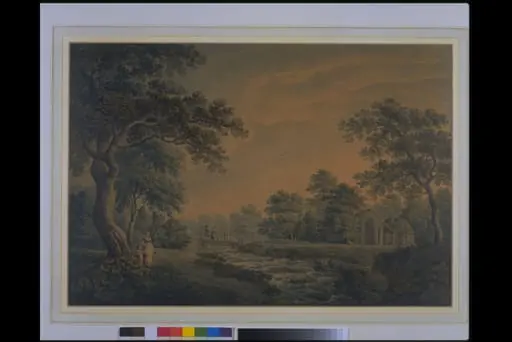
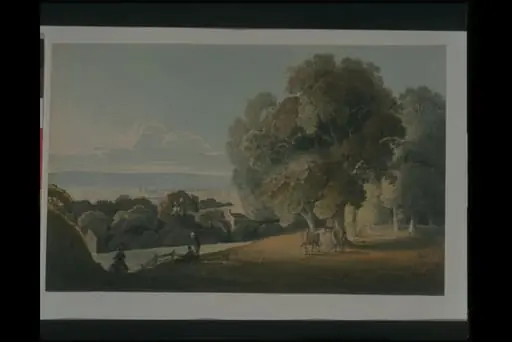
This painting shows a quiet countryside scene with an old stone bridge crossing a shallow stream.
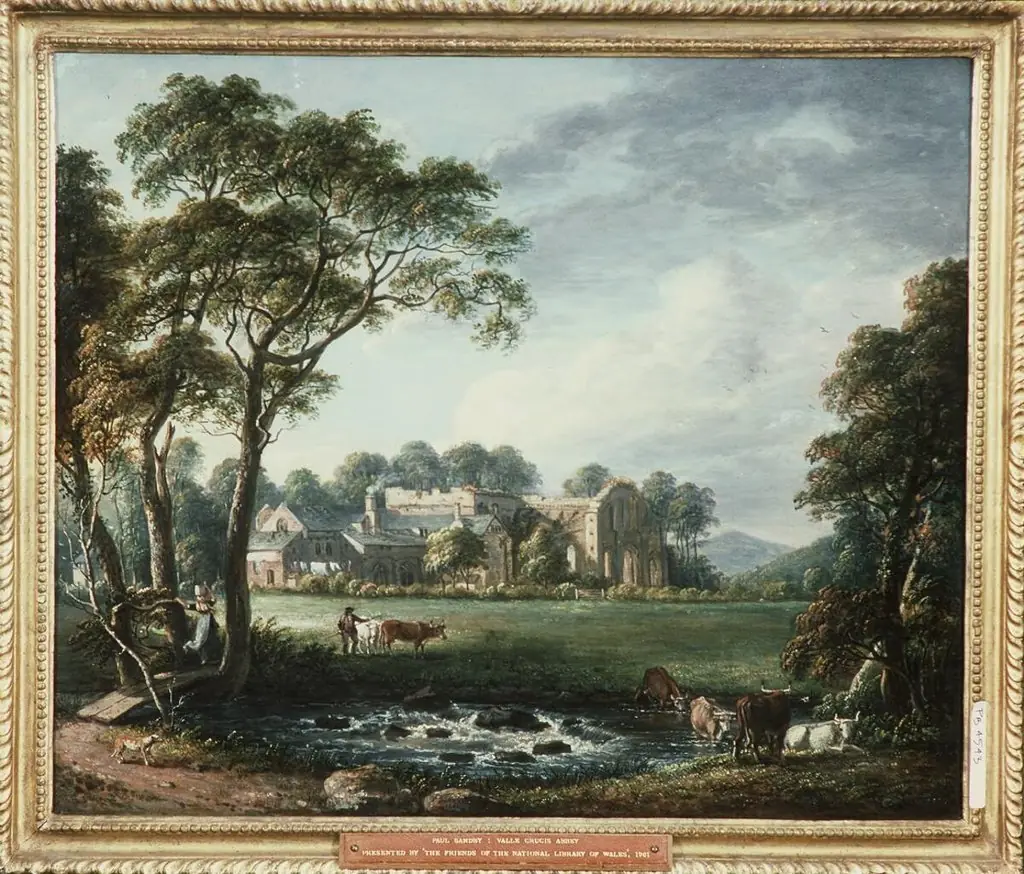
This painting shows a quiet countryside scene with an old stone bridge crossing a shallow stream. On the left, a ruined church with broken arches stands beside a cluster of trees. A few cows graze in the distance, and a lone figure walks near the water. The sky is soft with light clouds, and the colors are mostly muted greens, browns, and blues.
The frame has gold detailing and a label that reads *"Bolton Abbey, Yorkshire."* The artist signed it, and the bottom text confirms it’s a watercolor from around 1847.
If you like this peaceful countryside style, look up Romanticism next.
Overview
Bolton Abbey is a watercolour painting by George Arthur Fripp, depicting a serene rural landscape. Created around 1847, the work showcases Fripp's transition from portrait to landscape art, influenced by his experiences in Italy.
Subject & Meaning
The painting captures a tranquil countryside scene featuring a ruined church, an old stone bridge over a shallow stream, grazing cows, and a solitary figure. These elements evoke a sense of peacefulness and possibly the passage of time, hinted at by the ruins.
Technique & Style
Executed in muted greens, browns, and blues, the watercolour employs soft, light-infused cloudscapes. The style reflects Romanticism's emphasis on nature and contemplative atmosphere, though the overall palette and composition maintain a subdued, observational tone.
History & Provenance
Signed by the artist and dated to circa 1847, the painting is framed with gold detailing and labeled 'Bolton Abbey, Yorkshire'. Fripp's involvement with the Old Watercolour Society, where he exhibited nearly 600 works and served as Secretary, contextualizes the piece within the society's watercolour traditions.
Context
Bolton Abbey situates itself within the broader Romantic movement, emphasizing the beauty of the natural world and the emotional resonance of landscapes. The painting's subject, likely inspired by actual locations like Bolton Abbey in Yorkshire, blends realism with a nostalgic, serene quality.
Legacy
While not individually renowned as a landmark piece, Bolton Abbey contributes to the body of late 19th-century watercolours that popularized the Romantic vision of the English countryside, influencing subsequent generations of landscape artists.
Artist & collection
Artist
Born in the early 1800s, George Arthur Fripp made detailed watercolours of the English countryside.