Artwork
Dover Cliffs
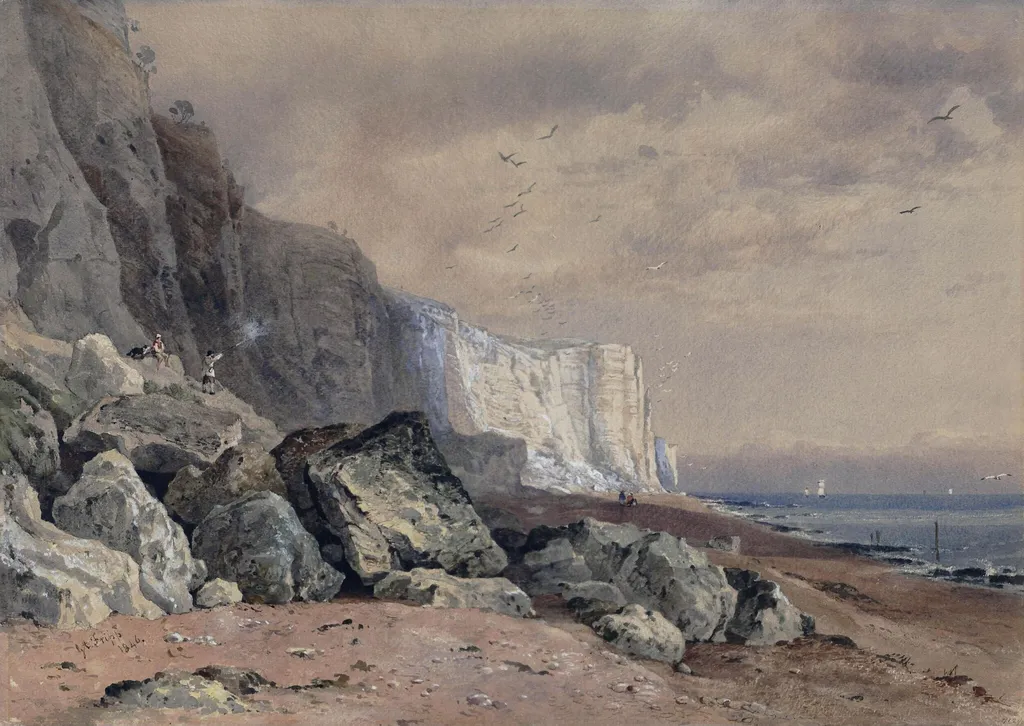
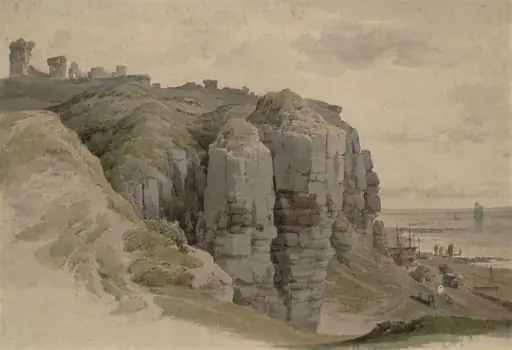
Dover Cliffs is a watercolor work on paper by the British Romanticist artist George Arthur Fripp. It dates from 1846 and is held in the collection of the Victoria and Albert Museum.
About this work
Overview
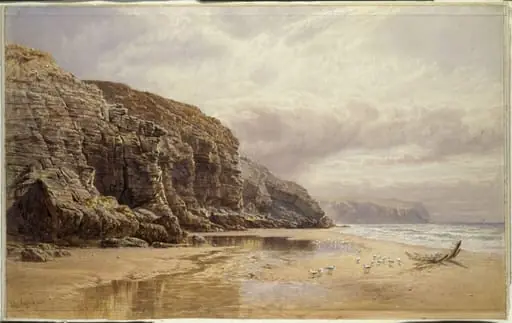
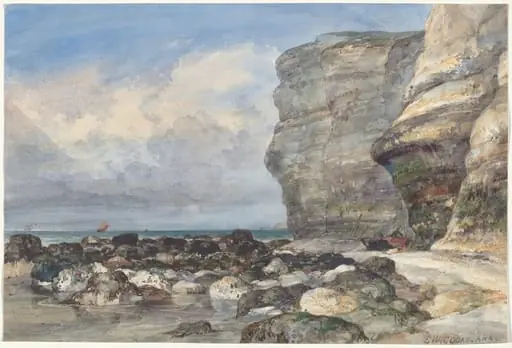
Dover Cliffs is a watercolour painting capturing the dramatic coastline of Dover, featuring steep cliffs, a sandy beach, and a cloudy sky. Signed and dated by the artist, it presents a scene of natural power.
Subject & Meaning
The painting focuses on the awe-inspiring natural landscape of Dover's cliffs and sea, emphasizing the dominance of nature over the two small figures on the rocks, conveying a sense of drama and the sublime.
Technique & Style
Executed in watercolour, the piece utilizes a muted palette of grays and browns to evoke a sense of realism and emotional depth, characteristic of the Romantic movement's emphasis on nature and emotion.
History & Provenance
While the artist's identity is confirmed by their signature and date, further details on the painting's history and ownership timeline are not provided in the available information.
Context
Created within the context of Romanticism, this work aligns with the movement's themes of nature's power and human insignificance, reflecting contemporary artistic values of the time.
Legacy
As a representative of Romantic-era watercolour painting, Dover Cliffs contributes to the broader understanding and appreciation of the Romantic movement's artistic output and its enduring influence on landscape depiction.
Own this work as a print
Artist & collection
Artist
Born in the early 1800s, George Arthur Fripp made detailed watercolours of the English countryside.