Artwork
The Sphinx
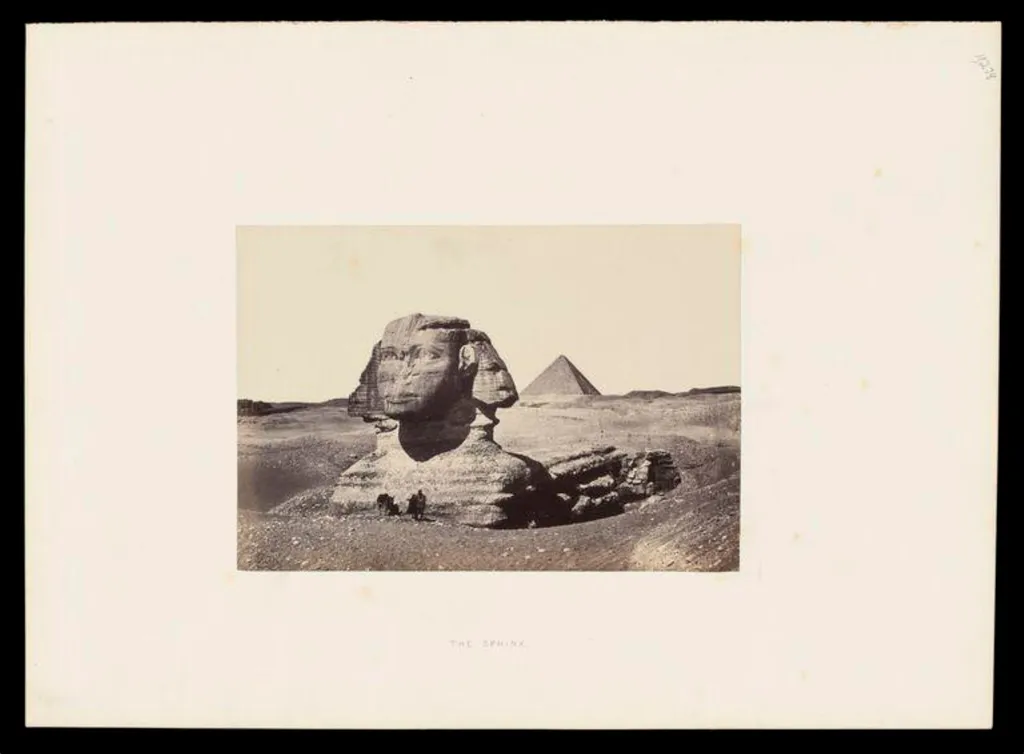
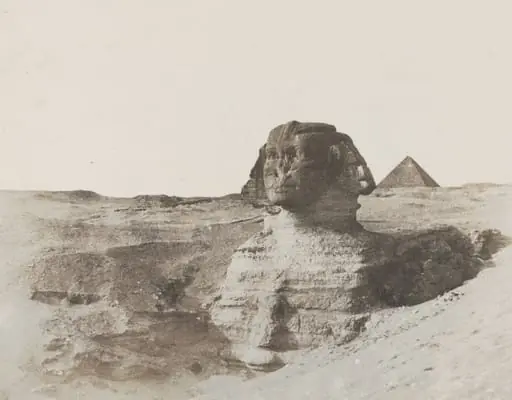
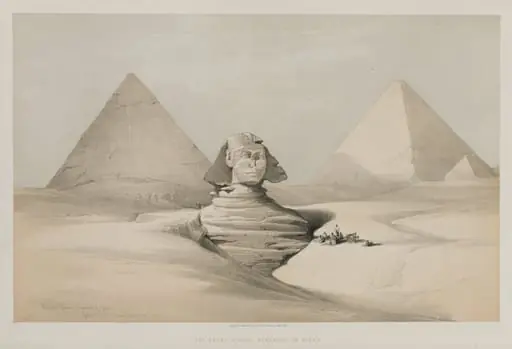
The Sphinx is a photographic photography by the Impressionist artist Francis Frith. It dates from 1854 and is held in the collection of the Victoria and Albert Museum.
About this work
Overview
This 1854 sepia photograph captures a stone sphinx, a monumental figure combining a lion’s body with a human head, positioned centrally against a stark desert backdrop. A distant pyramid provides a sense of scale, while the composition includes small human figures placed at the base of the statue, emphasizing its size.
Subject & Meaning
The image presents the iconic hybrid creature traditionally associated with ancient Egyptian guardianship, suggesting themes of power and mystery. The inclusion of diminutive figures at the sphinx’s feet highlights the monument’s imposing presence within its arid environment.
Technique & Style
Executed as a black‑and‑white photograph on a mounted album page, the work employs sepia toning typical of mid‑nineteenth‑century photographic processes. The contrast between the weathered stone surface and the smooth desert expanse is rendered through careful exposure, accentuating cracks and erosion on the sculpture.
History & Provenance
Created in 1854, the photograph forms part of the Victoria and Albert Museum’s collection. It reflects early photographic documentation of Egyptian monuments during a period of heightened Western interest in antiquities.
Context
The photograph situates the sphinx within a barren landscape, devoid of vegetation, underscoring the timeless, desolate setting of the ancient site. The distant pyramid serves as a geographical reference point, linking the sphinx to the broader architectural complex of the region.
Artist & collection
Artist
Francis Frith traveled with a camera and tripod to Egypt in the 1850s, lugging glass plates into temples and desert sites to record the ancient world before modern change.