Artwork
Sphinxes with a Human Head and with a Ram Head at Point Y. Karnak (Thebes)
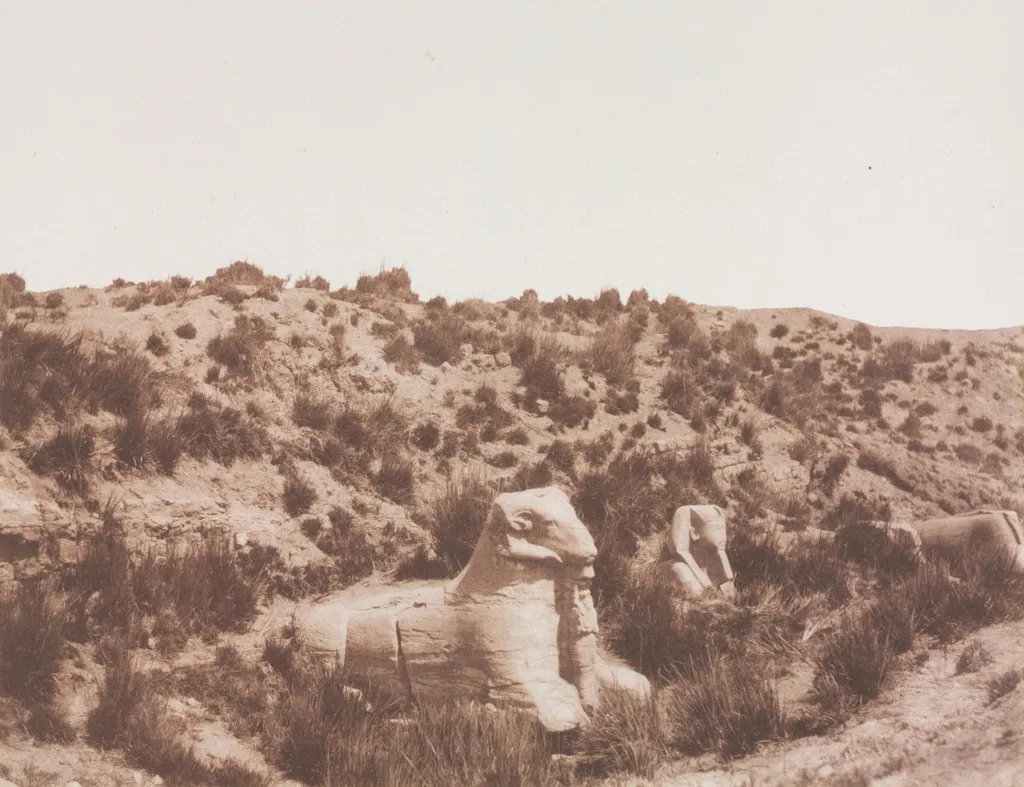
Sphinxes with a Human Head and with a Ram Head at Point Y. Karnak (Thebes) is a photography by the Impressionist artist Félix Teynard. It dates from 1852 and is held in the collection of the Cleveland Museum of Art. The photograph captures a pair of stone sphinxes situated at Point Y within the Karnak complex near Thebes.
About this work
Overview
The photograph captures a pair of stone sphinxes situated at Point Y within the Karnak complex near Thebes. One figure bears a human face while the other displays a ram’s head, both mounted on lion bodies. The composition presents the two guardians in a quiet, ancient setting, emphasizing their contrasting iconography.
Subject & Meaning
The human‑headed sphinx follows the classic Egyptian motif of a man’s visage on a lion’s body, symbolising royal authority. The ram‑headed counterpart represents a rarer variant, linked to the god Amun‑Ram, reflecting a localized religious nuance. Together they flank a small human statue, suggesting a protective role over the figure they hold.
Technique & Style
Carved from limestone, each sphinx measures roughly nine feet in length. The relief work displays the smooth, stylised contours typical of New Kingdom sculpture, with the ram’s curled horns rendered in low relief. The photograph’s lighting highlights the weathered surface, revealing ancient tool marks and the patina of centuries.
History & Provenance
Both sphinxes originate from the Karnak temple precinct, an extensive sanctuary devoted to Amun. Their exact date is uncertain, but stylistic analysis places them in the later phases of the New Kingdom, when ram symbolism became more prevalent. The image was taken by museum staff for documentation and educational purposes.
Context
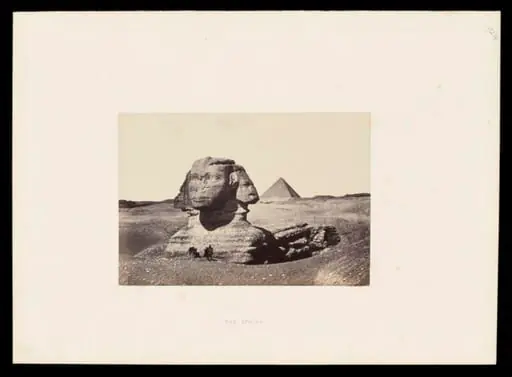
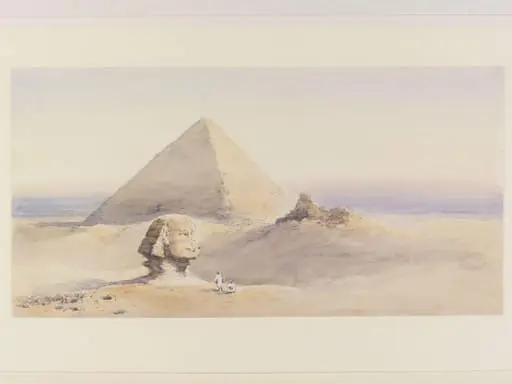
While the Great Sphinx of Giza dominates popular imagination, smaller sphinxes like these illustrate the broader use of the form across Egyptian sacred architecture. The ram‑headed version is especially uncommon, underscoring regional variations in deity worship within the Theban area.
Legacy
Photographic records of these figures aid scholars in tracking the distribution of sphinx types and their evolving iconography. The image is part of the Cleveland Museum of Art’s digital collection, providing researchers and the public with access to a lesser‑known aspect of Egyptian sculptural tradition.
Artist & collection