Artwork
Else Paneth and guide with Egyptian monuments
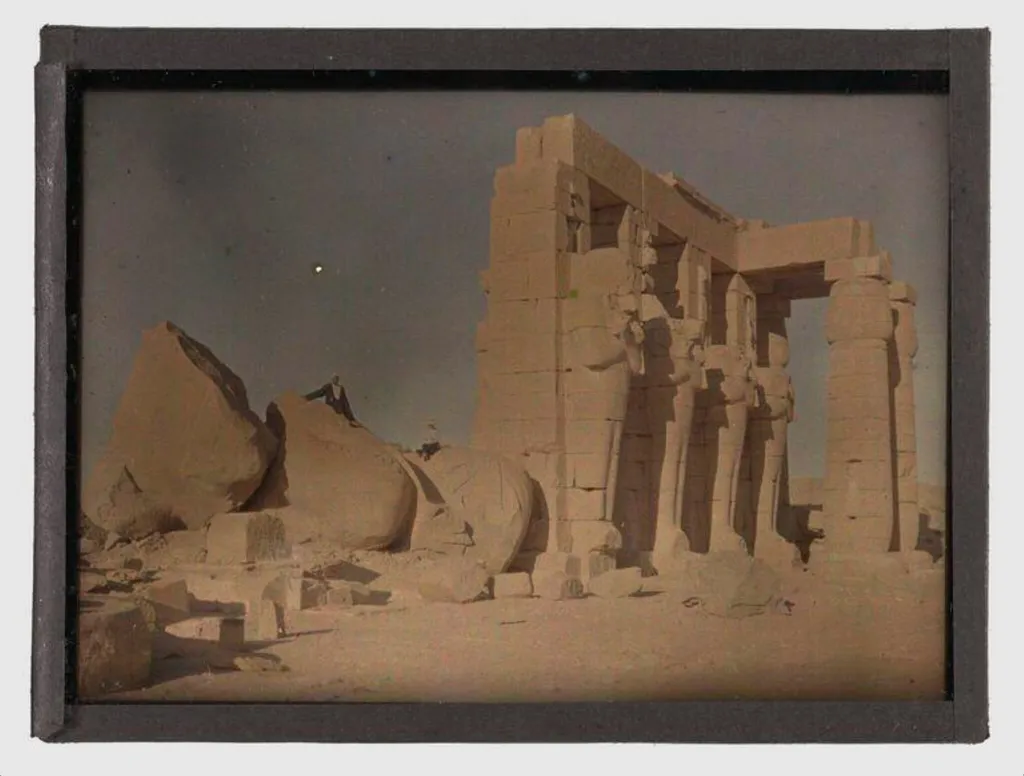
Else Paneth and guide with Egyptian monuments is a photographic photography by F.A. Paneth. It dates from 1913 and is held in the collection of the Victoria and Albert Museum.
About this work
Two people stand near crumbling stone columns and carvings, while a camel lies on the ground to the left.
This photo shows a desert scene with ruins in the background. Two people stand near crumbling stone columns and carvings, while a camel lies on the ground to the left. The sand is dry, and a small dog sits nearby.
The photo was taken around 1913, showing a mix of ancient and everyday life. The ruins look like they’re from a temple or tomb, but the people and animals add a lived-in feel.
Next, check out the Victoria and Albert Museum to see more works like this.
Overview
A black-and-white photograph from 1913 captures Else Paneth, an Austrian traveler, seated beside a local guide amid the ruins of an Egyptian temple or tomb. The scene includes weathered stone columns, fragmented sculptures, and a reclining camel to the left, with a small dog resting nearby. The dry, open desert landscape surrounds them, emphasizing the quiet coexistence of ancient architecture and contemporary human presence.
Subject & Meaning
The image presents a quiet moment of cultural encounter, where a European visitor and her companion rest among the remnants of antiquity. The figures are not posed for grandeur but appear absorbed in the moment, suggesting personal engagement rather than spectacle. The camel and dog reinforce the ordinary rhythms of life in the region, grounding the monumental ruins in daily reality.
Technique & Style
The photograph is rendered in sharp monochrome, with careful attention to light and texture. The contrast between the soft sand, rough stone surfaces, and the figures’ clothing reveals the photographer’s sensitivity to tonal variation. Compositionally, the ruins frame the subjects without dominating them, balancing historical weight with human scale.
History & Provenance
Taken in 1913, the photograph likely originated from Paneth’s travels in Egypt during a period of growing European interest in archaeological sites. It was preserved as part of her personal documentation, later entering institutional collections. The Victoria and Albert Museum holds related materials from this era, reflecting broader trends in early 20th-century travel photography.
Context
In the early 1900s, Egypt’s ancient sites were increasingly accessible to foreign tourists, often accompanied by local guides. This image reflects a transitional moment: archaeology was becoming more systematic, yet tourism still blended with informal exploration. The presence of animals and unposed figures reveals a less staged, more intimate encounter with heritage than later promotional imagery.
Legacy
The photograph contributes to a visual record of early archaeological tourism, capturing the human dimension of engagement with ancient sites. It avoids romanticization, instead offering a grounded view of how travelers interacted with ruins in their natural state. Such images remain valuable for understanding the social history of heritage perception.
Artist & collection
Artist
F.A. Paneth carried a camera everywhere, from London’s foggy streets to the sunlit pyramids, turning everyday scenes into quiet stories. In one shot, his sister Else leans on a donkey cart near the Sphinx, her hat…

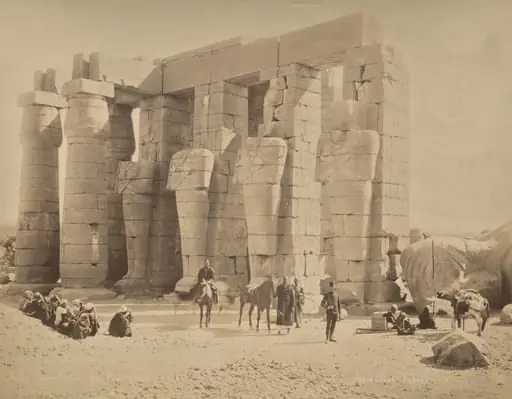 Les cariatides du Ramesseum 134
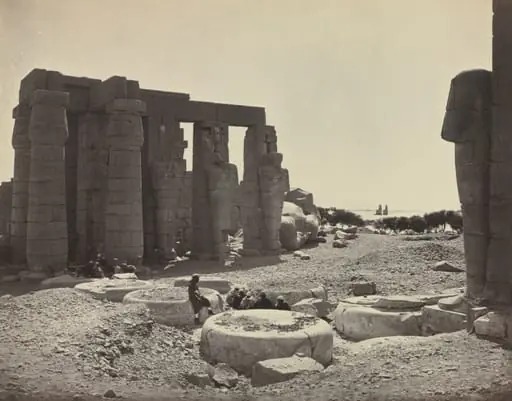 The Ramesseum, Thebes
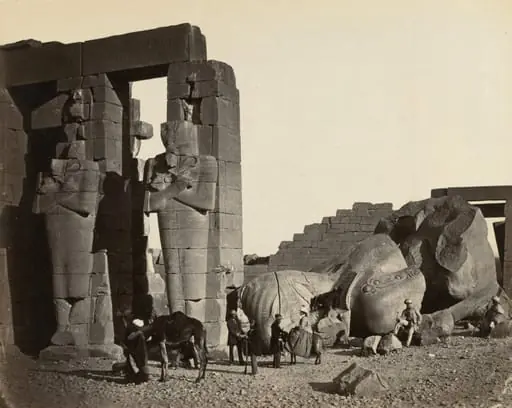 Fallen Statue at the Ramesseum, Thebes
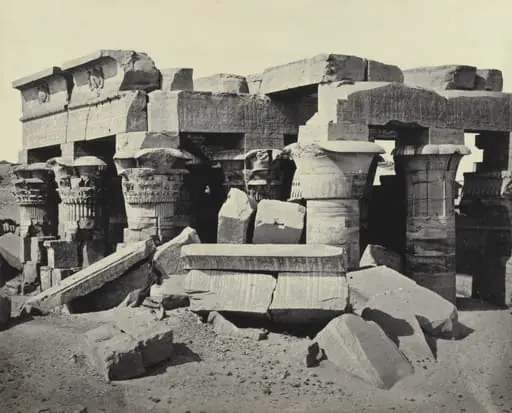 Kom Ombo
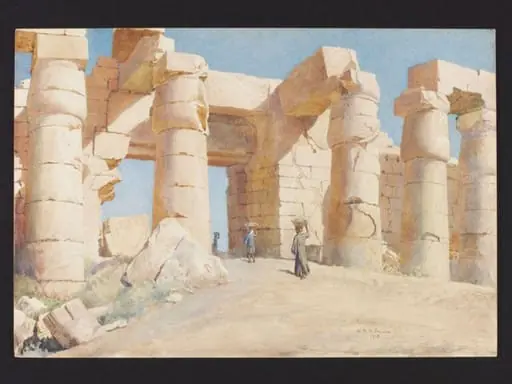 There were Giants in those days
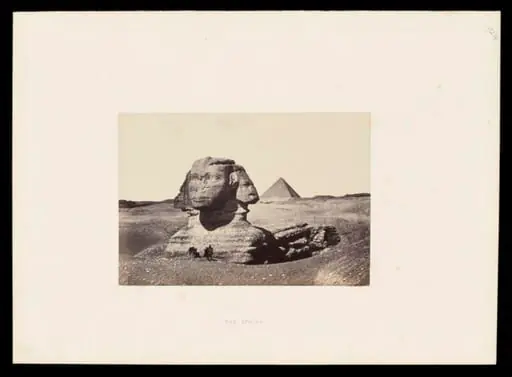 The Sphinx
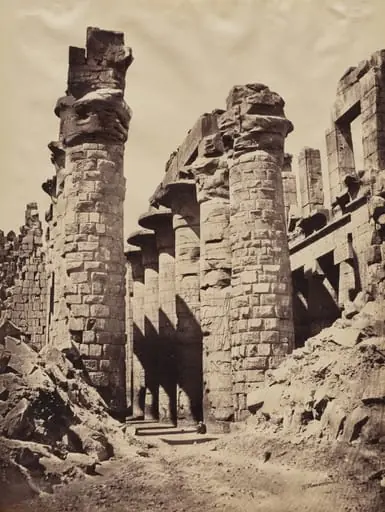 View of Karnak Temple, Hypostyle Hall
 Colossol Monolith of Amenhotep III, Gournah
 Egypt and Nubia, Volume II: Karnac
 The Vocal Statue - Thebes, 1848
 Colossal Figure at Abou Simbel, Nubia
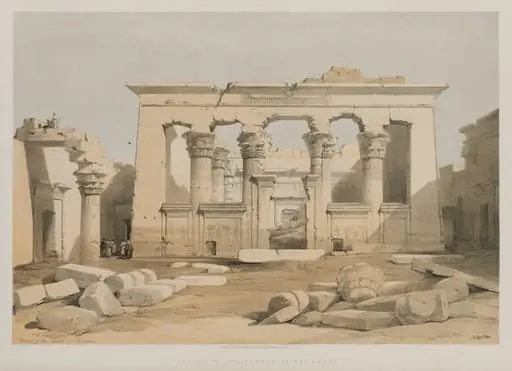 Egypt and Nubia, Volume I: Portico of the Temple of Kalabshe