Artwork
Sabina
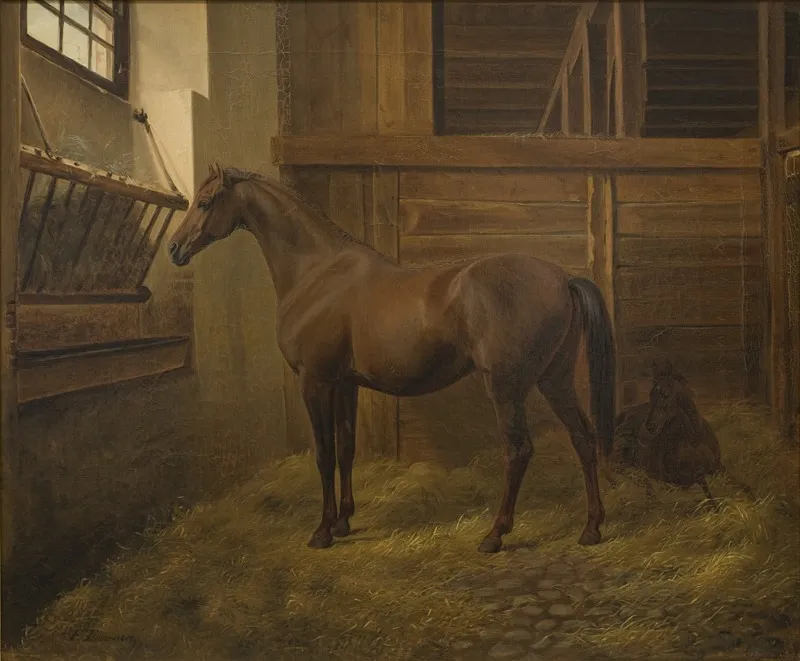
Sabina is an oil painting by the Realist artist Fritz Thomsen. It dates from 1853 and is held in the collection of the Statens Museum for Kunst.
About this work
Overview
Its quiet composition and restrained palette reflect a focus on everyday rural life, typical of mid-19th century Danish realism.
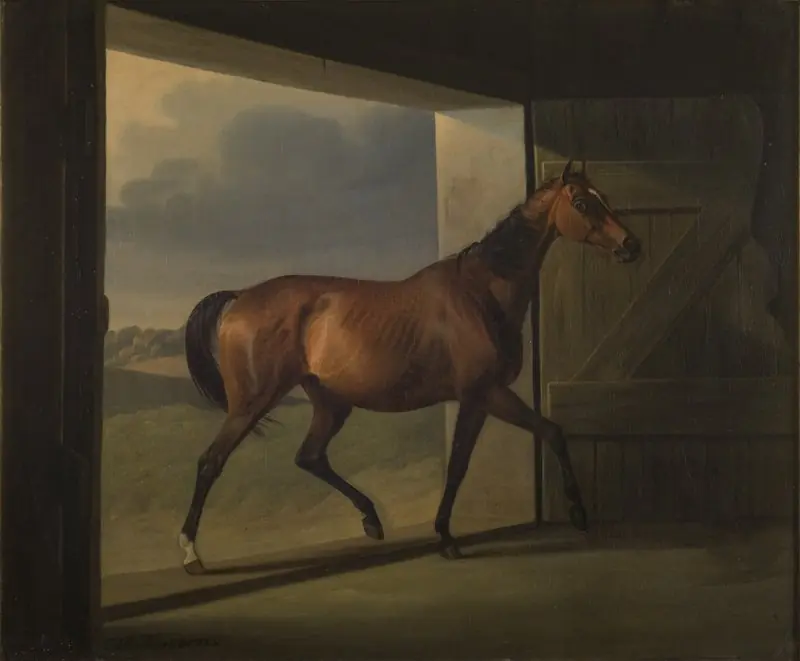
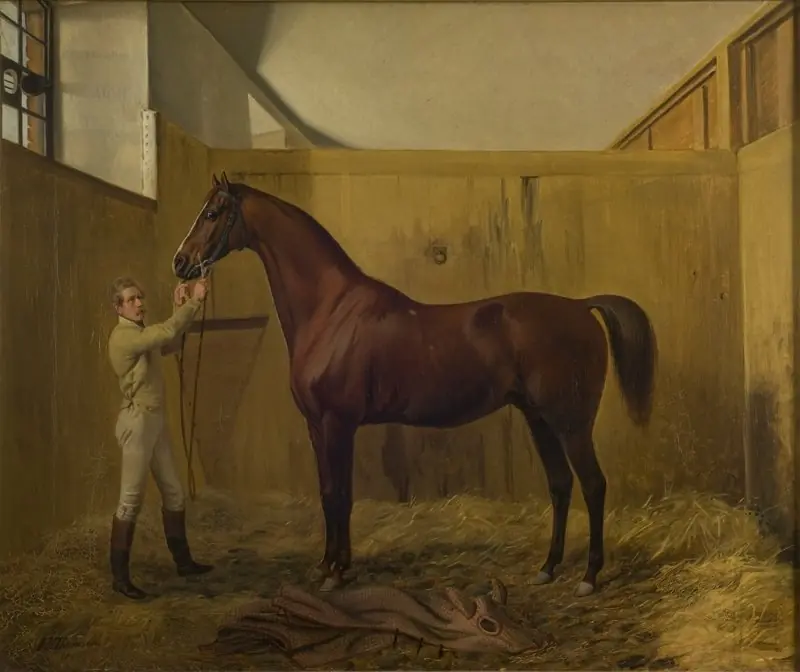
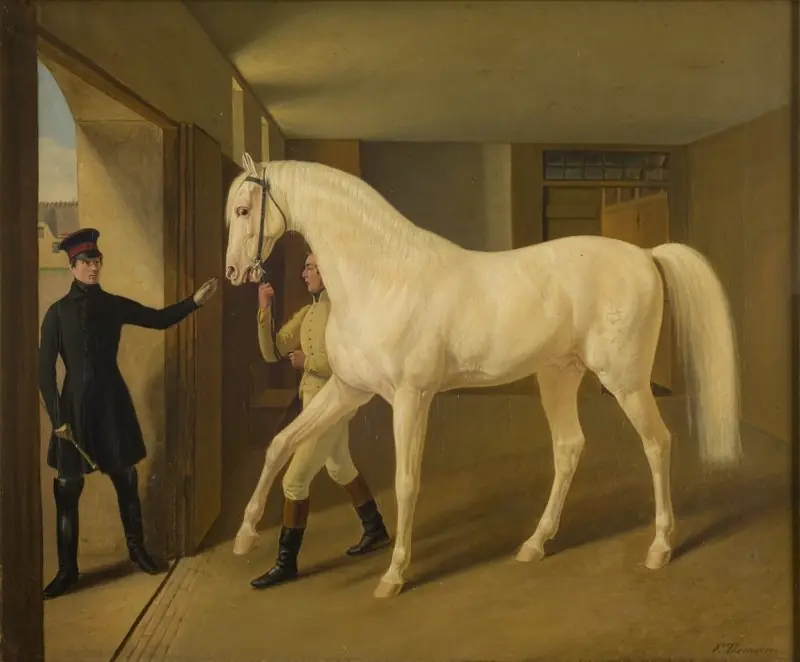
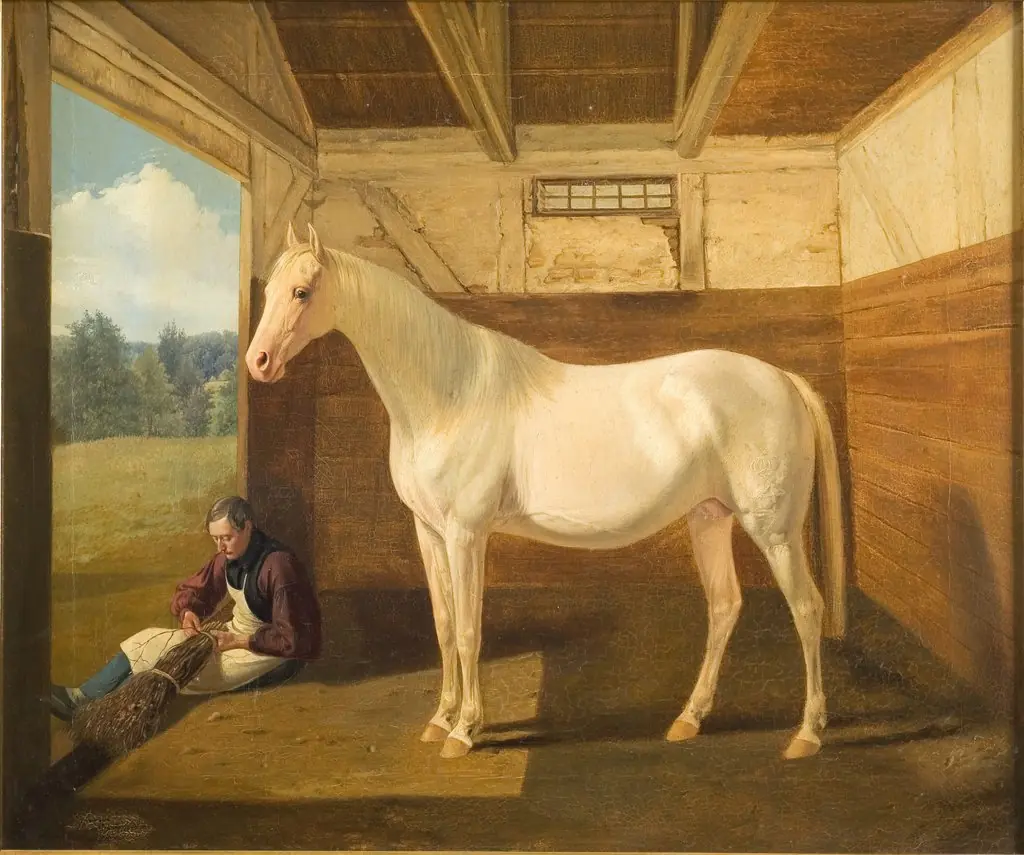
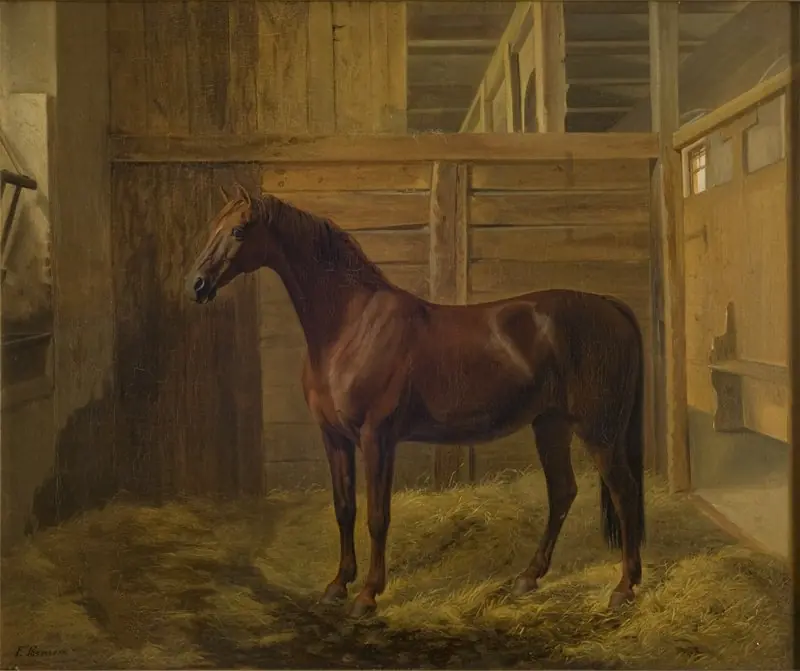
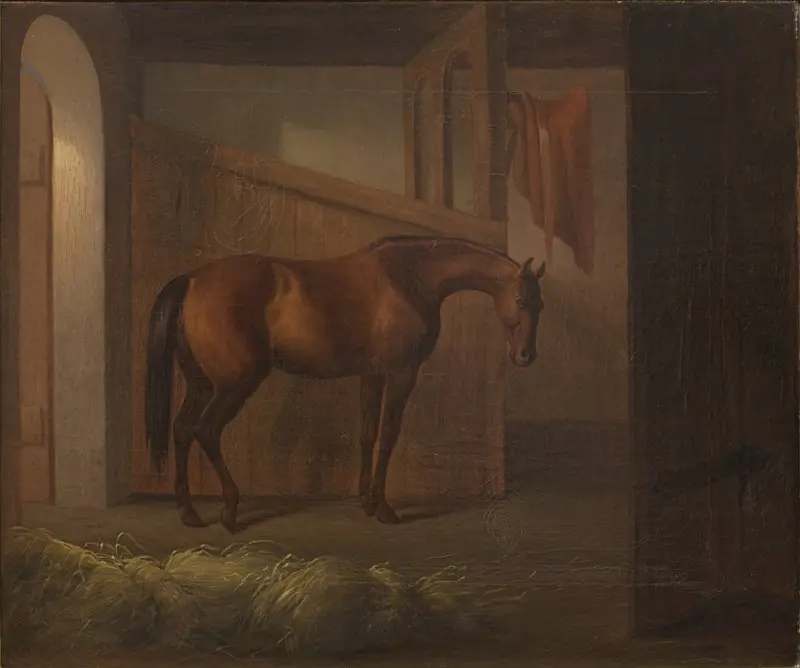
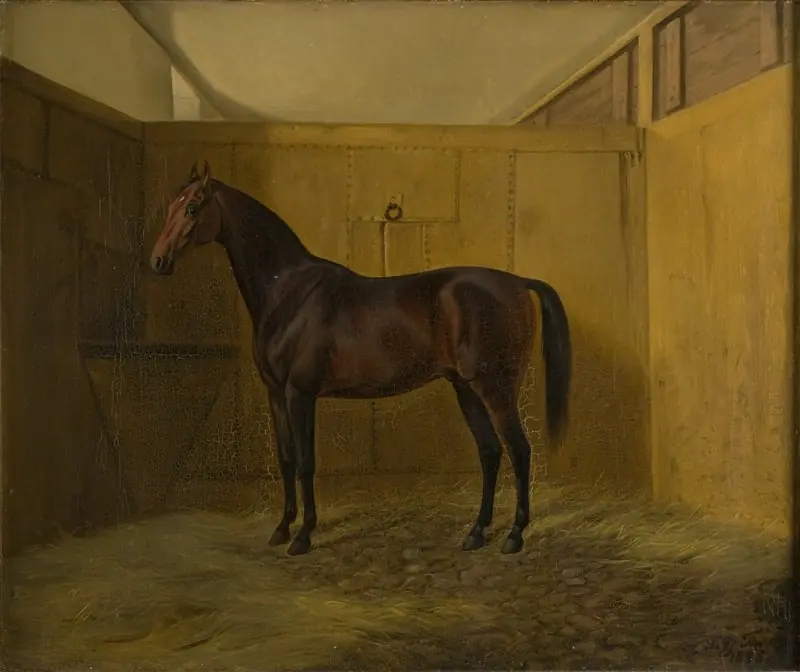
Painted in 1853 by Danish artist Fritz Thomsen, Sabina is an oil-on-canvas work depicting a single horse in a stable interior. The painting resides in the collection of Statens Museum for Kunst in Copenhagen. Its quiet composition and restrained palette reflect a focus on everyday rural life, typical of mid-19th century Danish realism. The title refers to the horse’s name, grounding the scene in personal, observational detail rather than grand narrative.
Subject & Meaning
The subject is a dark brown mare named Sabina, standing still beside a wooden feeding trough in a dim stable. Her calm posture and the absence of human figures suggest a moment of rest, emphasizing the animal’s presence as worthy of quiet contemplation. The painting conveys dignity in the ordinary, inviting viewers to appreciate the stillness and routine of agricultural life without sentimentality or drama.
Technique & Style
Thomsen employs chiaroscuro to model the horse’s form and define the stable’s architecture, using subtle gradations of light and shadow to suggest depth. The dim interior is rendered with muted earth tones, while the window on the left introduces a soft, diffused glow that grazes the floor and walls. Brushwork is precise yet unobtrusive, favoring tonal harmony over decorative detail, aligning with the Danish realist tradition of the period.
History & Provenance
Created in 1853, Sabina entered the collection of Statens Museum for Kunst shortly after its completion. It was likely acquired as part of a broader effort to document Danish rural culture during a time of social and economic transition. The painting has remained in public ownership since, with no record of private sale or significant relocation, reflecting its consistent recognition within national art institutions.
Context
In mid-19th century Denmark, artists increasingly turned to scenes of rural labor and animal husbandry as subjects of serious artistic study. Sabina aligns with this movement, rejecting romanticized pastoral ideals in favor of unembellished observation. The stable setting, devoid of human activity, mirrors a broader cultural interest in the quiet dignity of working animals and the spaces that sustained them.
Legacy
Sabina remains a representative example of Danish realist painting from the 1850s, valued for its restrained emotion and technical precision. While not widely exhibited outside Denmark, it continues to inform scholarly discussions on the depiction of animals in 19th-century Nordic art. Its endurance in the national collection underscores its role as a quiet testament to everyday rural existence.
Artist & collection