Artwork
Helga
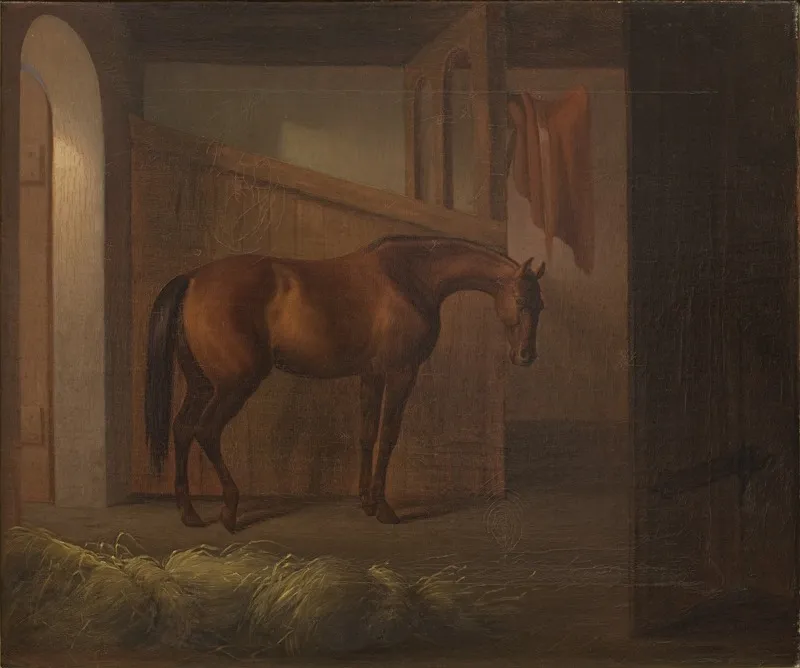
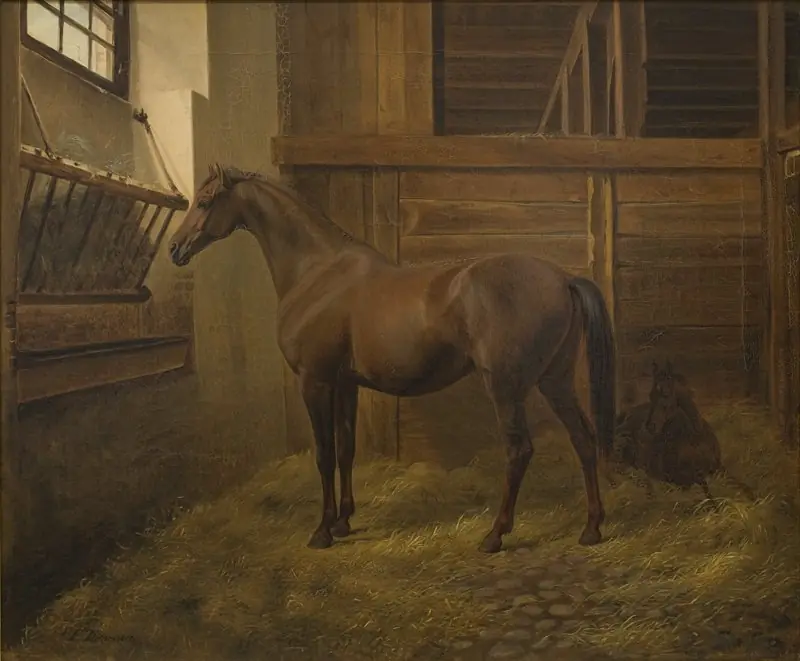
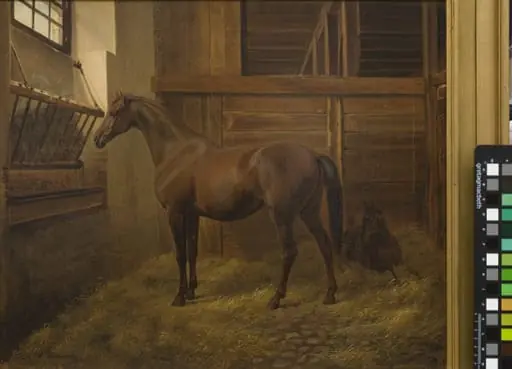
Helga is an oil painting by Fritz Thomsen. It dates from 1853 and is held in the collection of the Statens Museum for Kunst.
About this work
Overview
Rendered with careful attention to light and texture, the piece captures a moment of stillness, emphasizing the animal’s presence rather than narrative action.
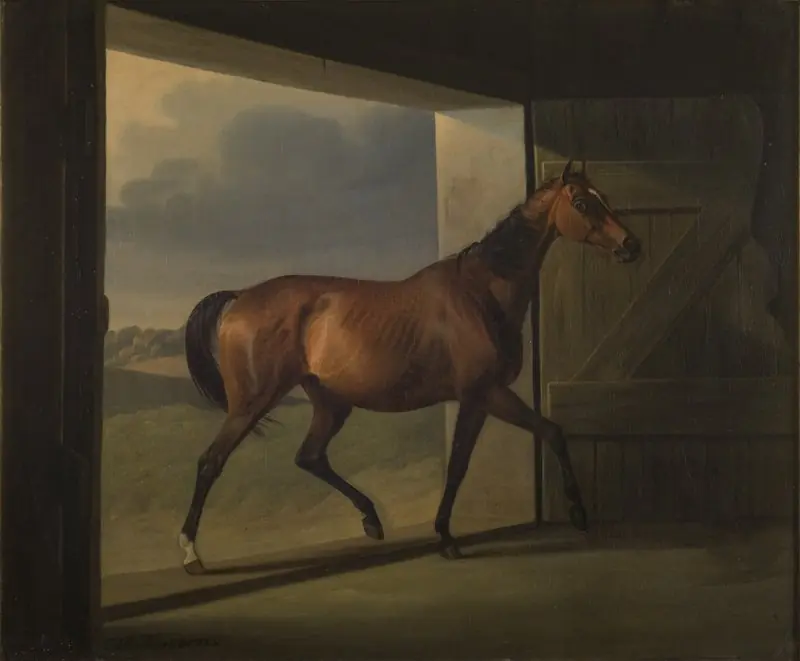
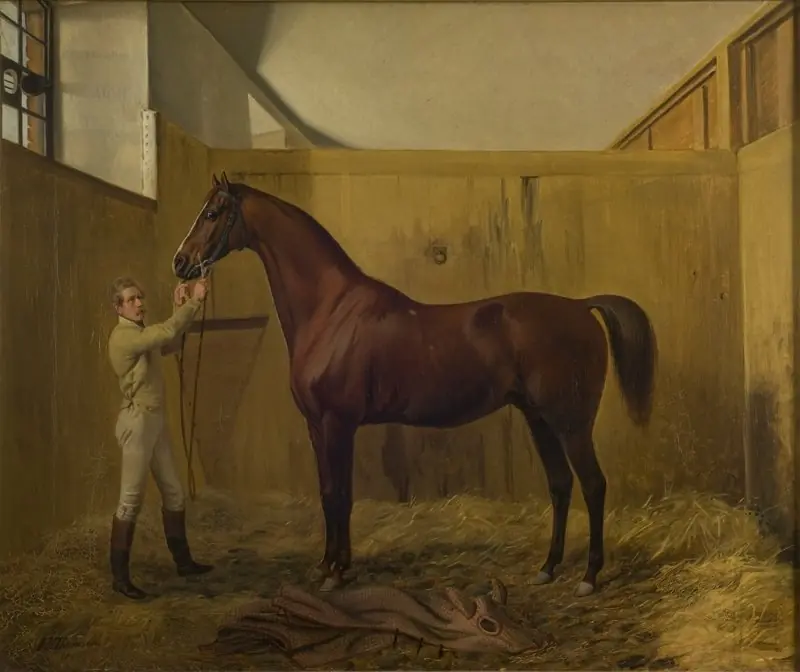
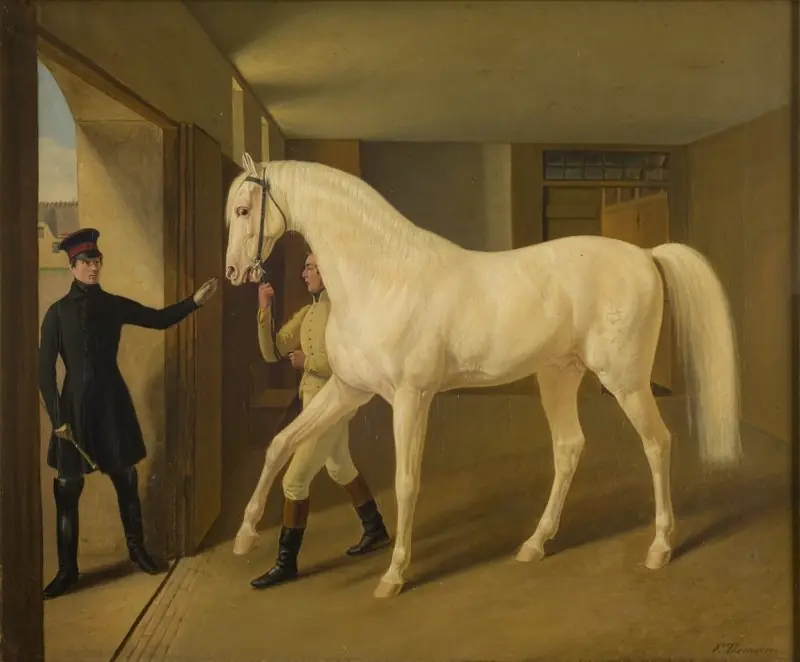
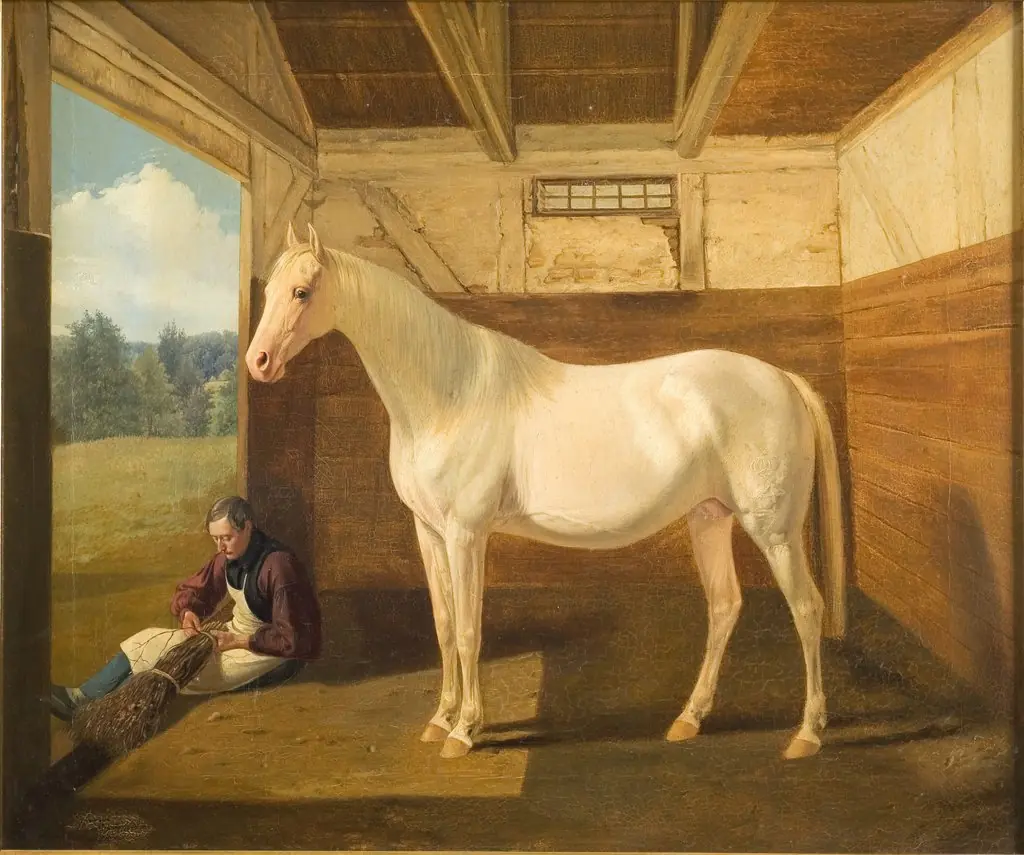
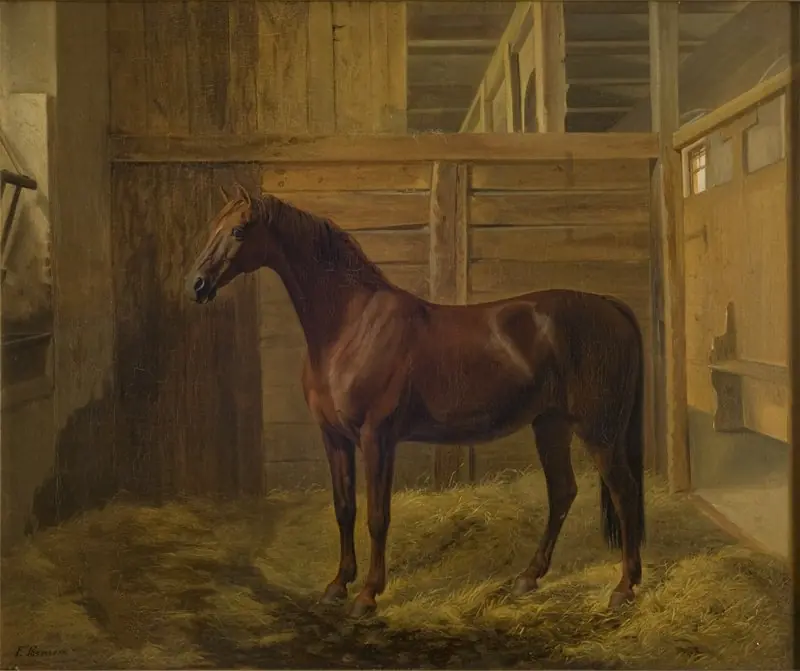
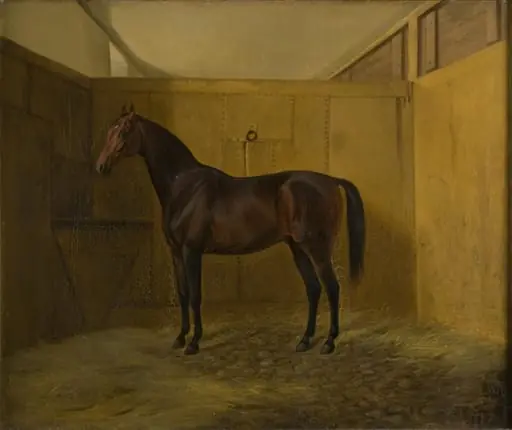
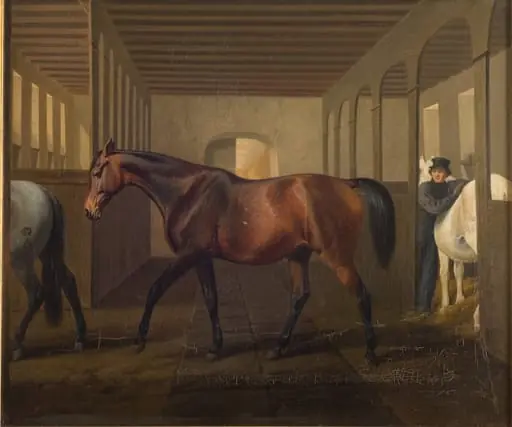
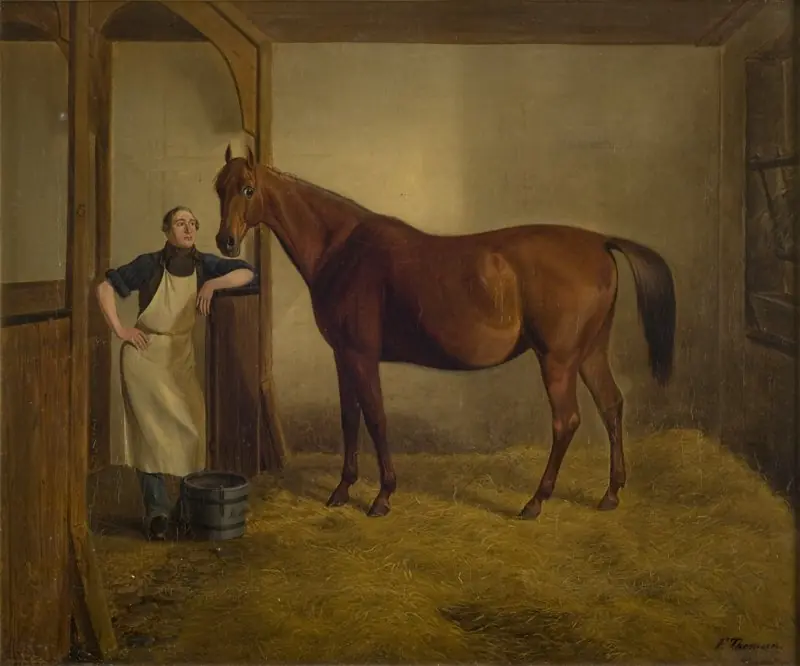
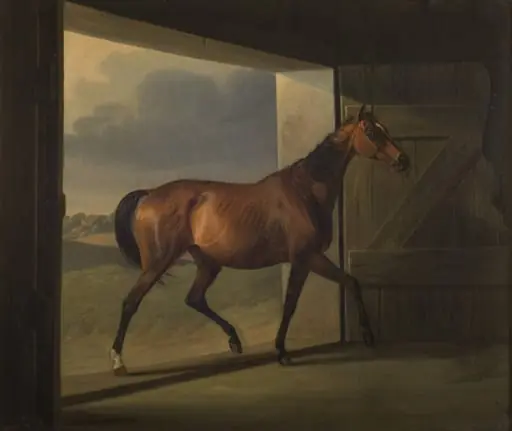
Painted in 1853 by Fritz Thomsen, Helga is an oil-on-canvas work depicting a single horse within a dimly lit stable. The painting is part of the collection at Statens Museum for Kunst in Copenhagen. Rendered with careful attention to light and texture, the piece captures a moment of stillness, emphasizing the animal’s presence rather than narrative action. The medium allows for subtle tonal variations that enhance the quiet mood.
Subject & Meaning
The subject is a brown mare named Helga, standing calmly in a wooden stable, her gaze directed toward the open doorway on the left. The absence of human figures and the focused attention on the animal suggest a contemplative reverence for rural life. The horse’s posture and direction imply awareness beyond the frame, inviting quiet reflection on the unseen world outside the stable’s confines.
Technique & Style
Thomsen employed oil paint to build layered textures in the horse’s coat, the rough wooden walls, and the piled hay. Light filters softly through the doorway, casting gentle shadows that define form without harsh contrast. The technique leans toward naturalism, with muted tones and careful modeling of volume, avoiding dramatic chiaroscuro in favor of a subdued, atmospheric realism.
History & Provenance
Created in 1853, the painting entered the collection of Statens Museum for Kunst shortly after its completion. Its early acquisition suggests it was recognized within Danish artistic circles for its quiet dignity. No records indicate public exhibition prior to its museum placement, and it has remained in the institution’s care since, with no known alterations or restorations documented.
Context
In mid-19th century Denmark, depictions of farm animals were gaining traction as subjects worthy of serious artistic attention, moving beyond mere genre scenes. Thomsen’s work aligns with a broader trend of rural realism, where everyday agricultural life was rendered with sensitivity. This shift reflected national interest in identity and the natural world amid industrialization.
Legacy
Helga remains a quiet example of Danish equestrian portraiture from the period, notable for its restraint and emotional subtlety. While not widely reproduced, it is referenced in studies of 19th-century Nordic realism for its understated technique and empathetic portrayal of animals. The painting contributes to a broader understanding of how domesticated creatures were perceived in Danish visual culture.
Artist & collection