Artwork
Godefroy Wendelin
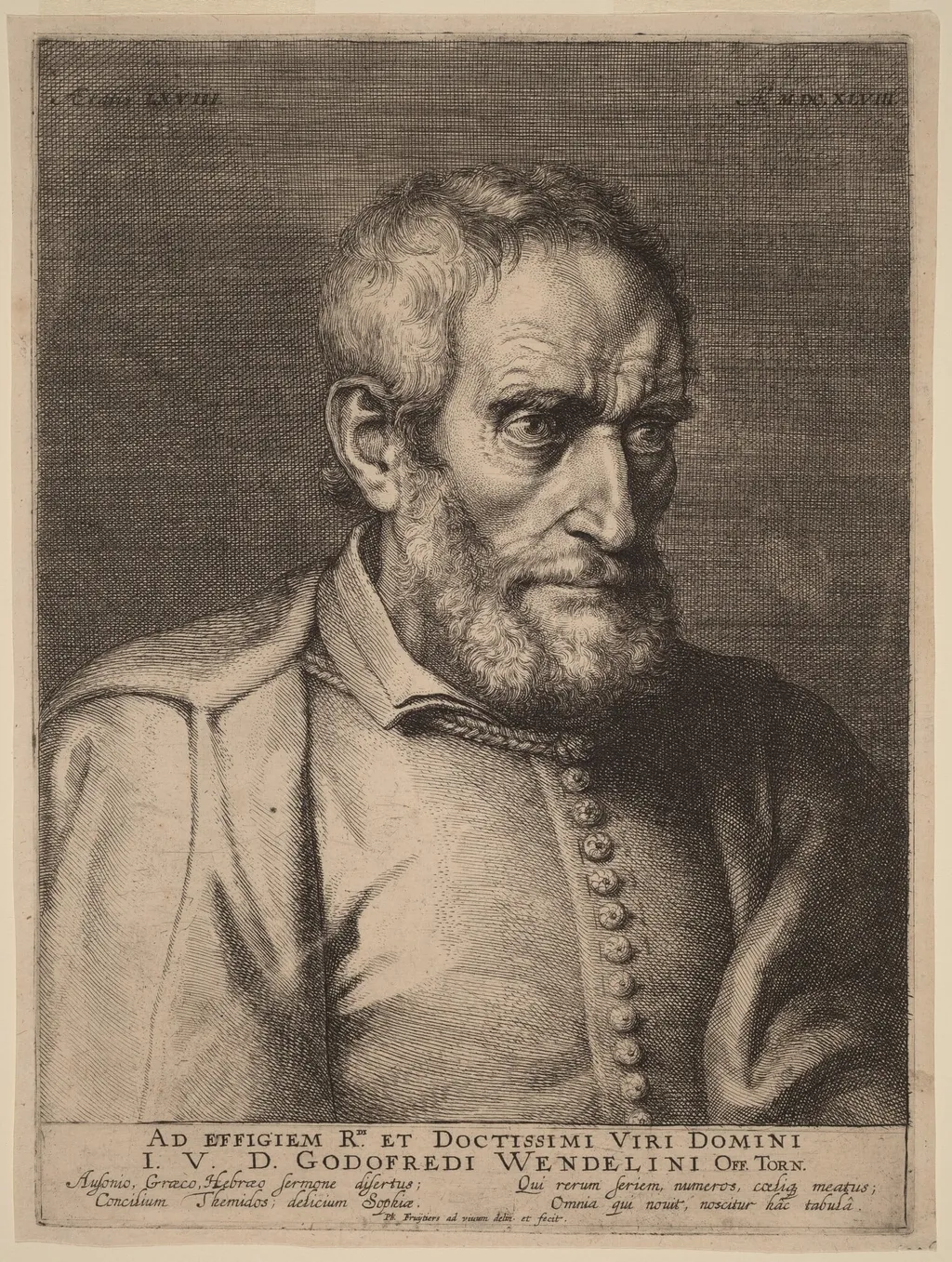
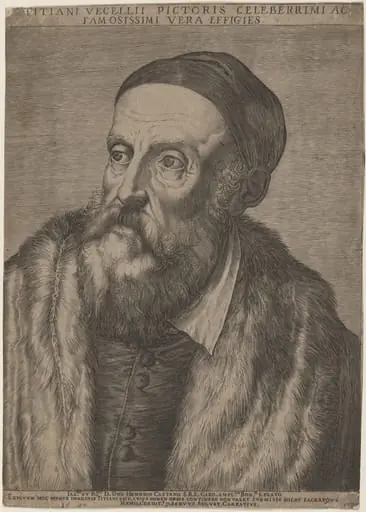
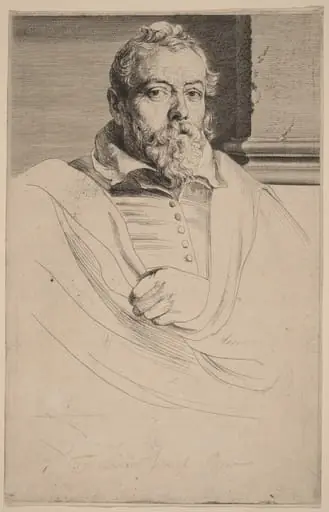
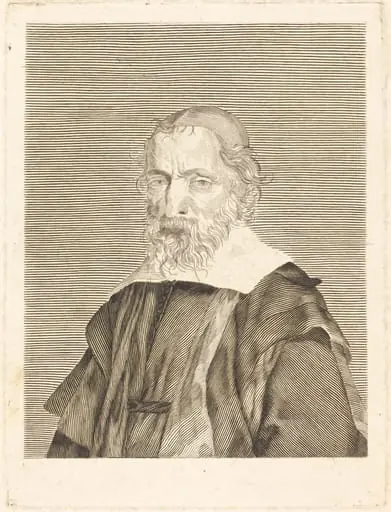
Godefroy Wendelin is an ink print by the Baroque artist Philip Fruytiers. It dates from 1648 and is held in the collection of the National Gallery of Art.
About this work
Overview
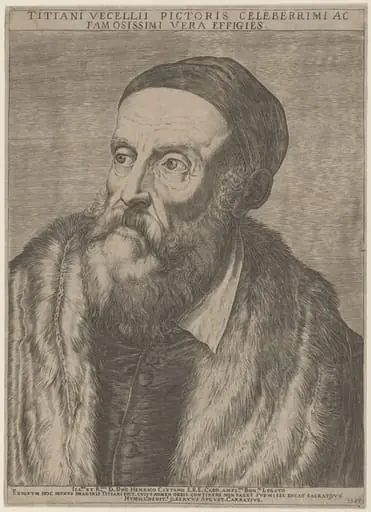
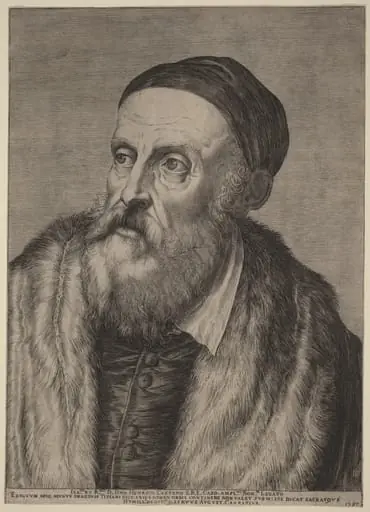
Created in 1648, this print presents a monochrome portrait of Godefroy Wendelin, a bearded scholar rendered in a sober pose. Executed on laid paper, the image concentrates on the sitter’s face and shoulders, set against an unadorned background that directs the viewer’s focus to the detailed rendering of his features and attire.
Subject & Meaning
The work depicts Godefroy Wendelin, a noted astronomer of the early modern period, shown with a serious expression, thick hair, and a modest chain around his neck. The restrained composition and direct gaze suggest an emphasis on intellectual authority and personal dignity, typical of portraiture intended to convey the sitter’s professional stature.
Technique & Style
Philip Fruytiers combined etching and engraving to achieve a fine, linear quality. The artist employed delicate, incised lines to model wrinkles, hair texture, and the sheen of the chain, while deeper engraved strokes define the contours of the face. This blend of methods reflects the Flemish Baroque interest in precise, tactile surface treatment within print media.
History & Provenance
Fruytiers, a Flemish painter and engraver active in the mid‑17th century, signed many of his works with the monogram PHF. While primarily known for miniature portraits, he also produced larger canvas pieces. This particular portrait of Wendelin belongs to his print output and exemplifies his skill in rendering scholarly figures for a learned audience.
Artist & collection
Artist
Philip Fruytiers (1610–1666) was a Flemish Baroque painter and engraver. Until the 1960s, he was especially known for his miniature portraits in watercolor and gouache. Since then, several large canvases signed with the…