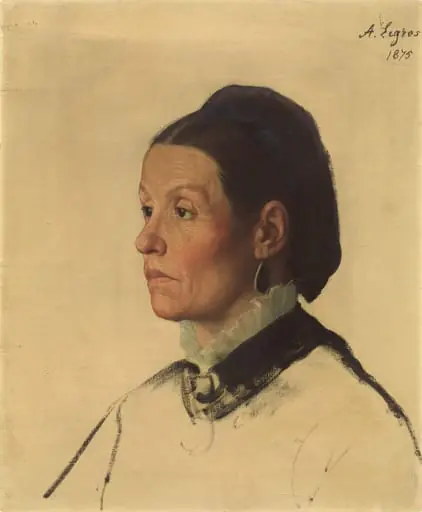
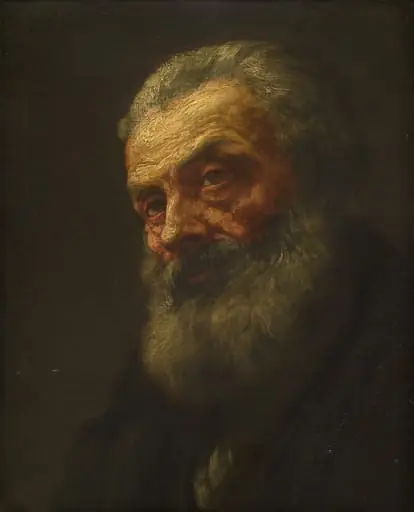
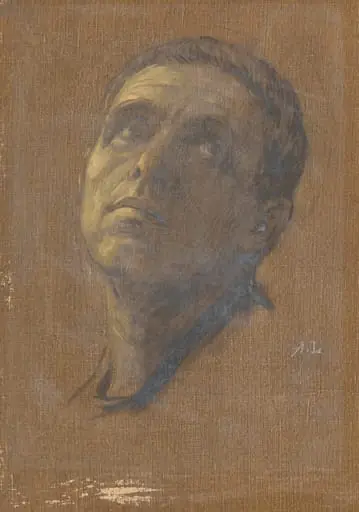
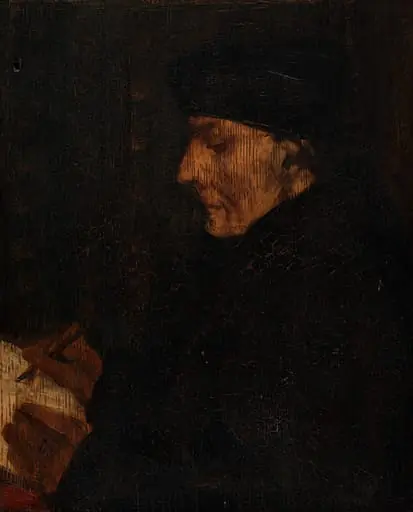
Artwork
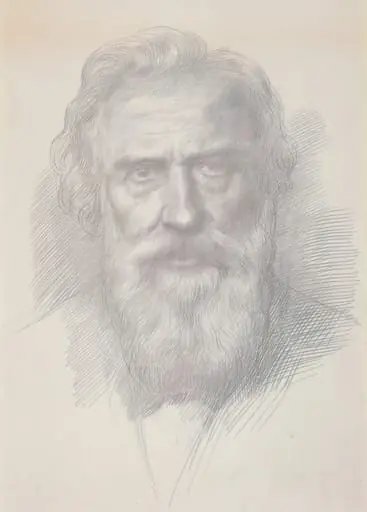
Study for Head of a Man (Etude de tete d'homme)
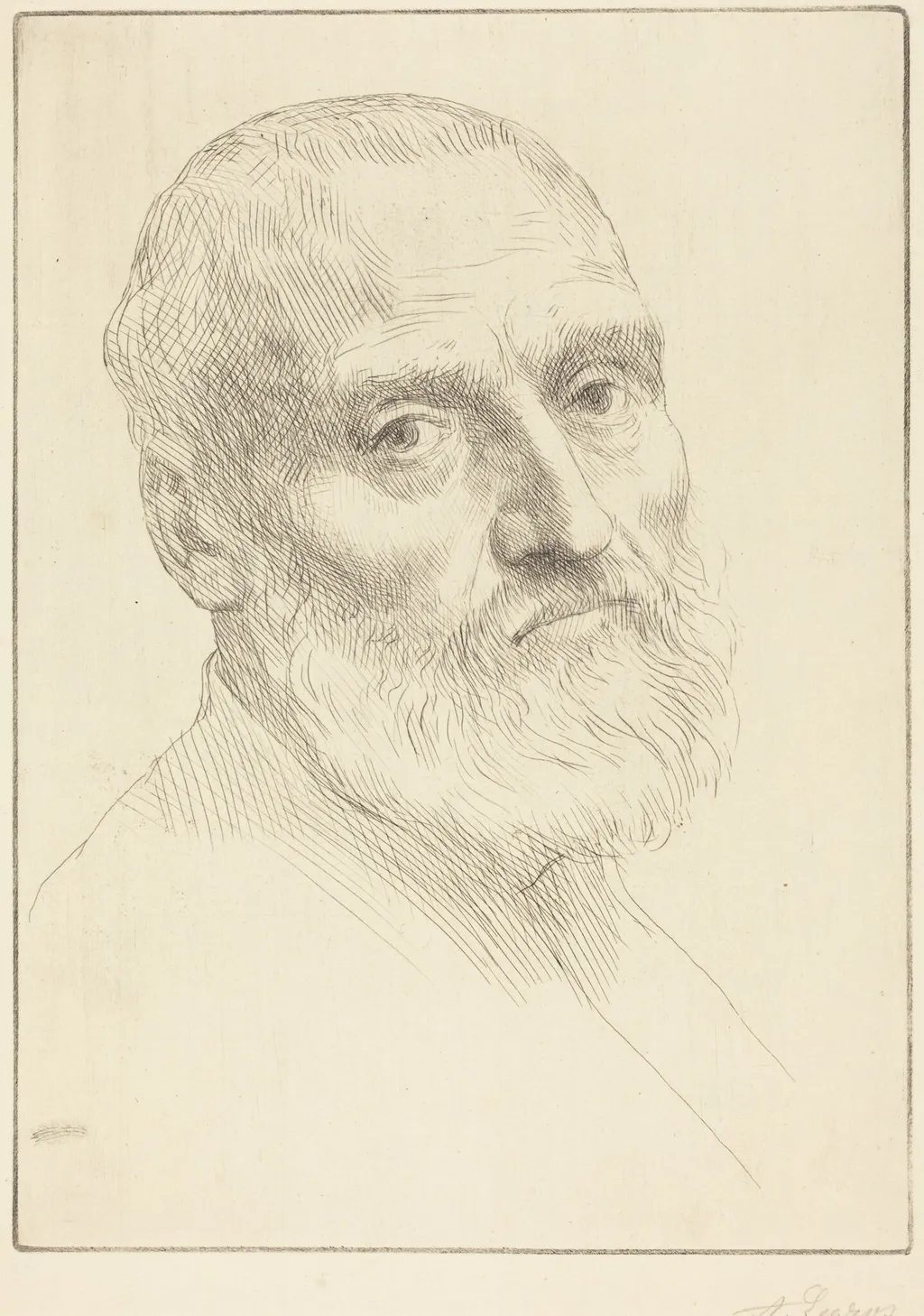
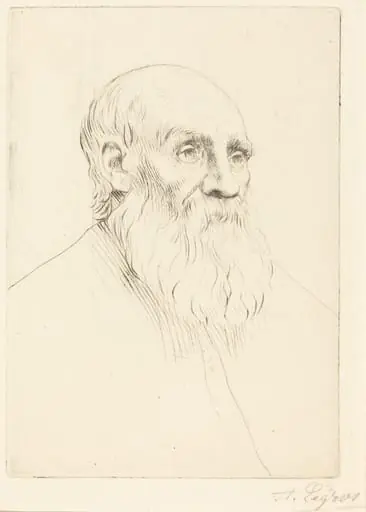
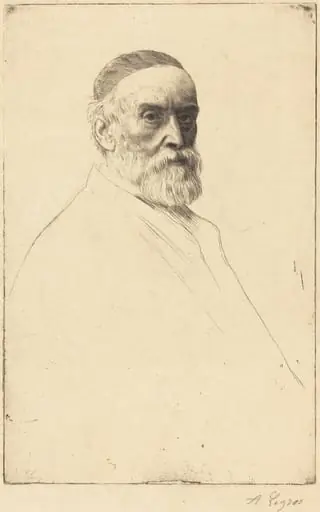
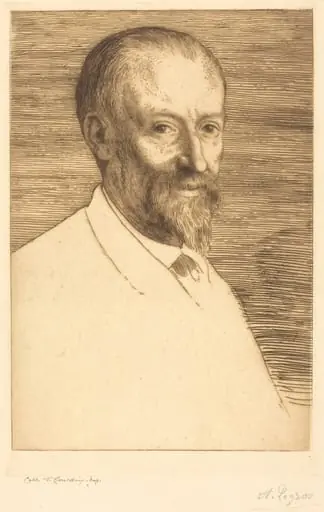
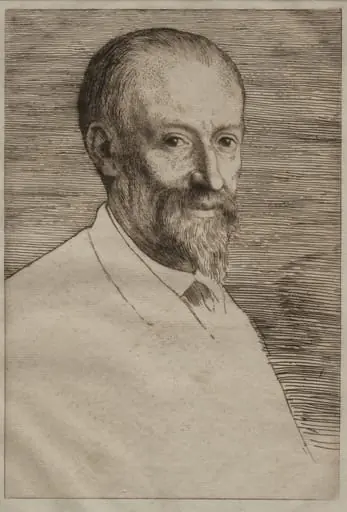
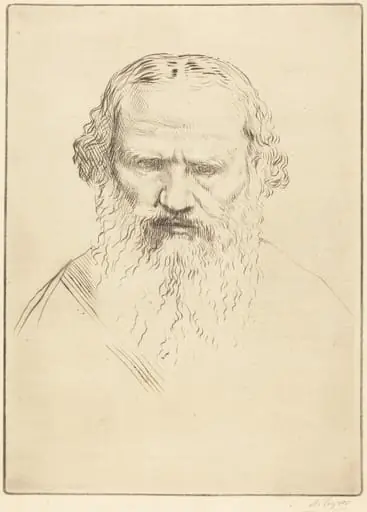
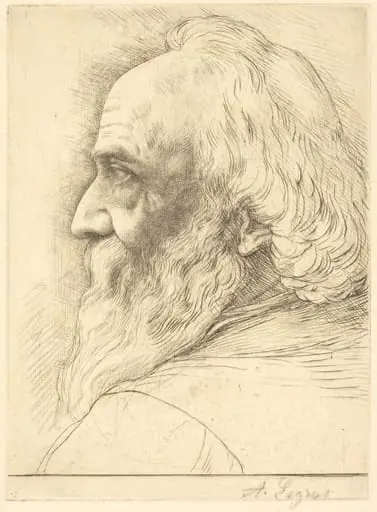
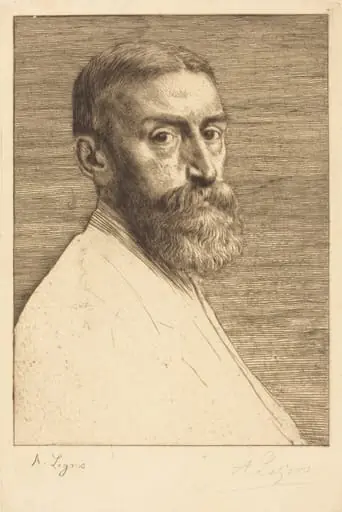
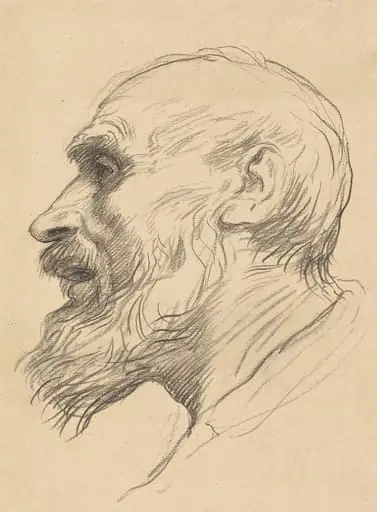
Study for Head of a Man (Etude de tete d'homme) is an ink print by the Romanticist artist Alphonse Legros. It dates from 1874 and is held in the collection of the National Gallery of Art.
About this work
Overview
Its restrained composition reflects Legros’s commitment to disciplined draftsmanship and the expressive potential of line.
Created in 1874 by Alphonse Legros, this print combines etching and drypoint to capture a male portrait in profile. Legros, a French artist who relocated to London in 1863, was deeply engaged in the revival of printmaking in Britain. The work is a focused study, stripped of context, emphasizing the head as a subject of formal and emotional inquiry. Its restrained composition reflects Legros’s commitment to disciplined draftsmanship and the expressive potential of line.
Subject & Meaning
The portrait depicts an older man with thinning hair and a full, textured beard, rendered with quiet intensity. His gaze is directed away from the viewer, suggesting introspection or detachment. The absence of narrative detail or setting isolates the figure’s presence, inviting contemplation of character rather than identity. The seriousness of the expression aligns with Legros’s interest in psychological depth over idealization, grounding the image in human realism.
Technique & Style
Legros employed drypoint for its rich, velvety lines and etching for controlled tonal gradations, building depth through layered incisions. The texture of the beard and scalp emerges from dense, deliberate strokes, while the smooth planes of the forehead and cheek contrast with the rougher areas. The blank background eliminates distraction, directing focus to the interplay of light, shadow, and surface. The technique prioritizes tactile presence over decorative effect.
History & Provenance
This study was made during Legros’s tenure at the Slade School of Fine Art in London, where he taught drawing and printmaking. It reflects his influence on a generation of British artists revitalizing etching as a serious artistic medium. Though not widely exhibited in his lifetime, the work was part of a broader body of portrait studies that circulated among collectors and students, contributing to his reputation for technical rigor.
Context
In the 1870s, British art saw renewed interest in etching as a means of personal expression, distinct from mass-produced illustrations. Legros, trained in France but active in England, bridged continental precision with British sensibilities. His focus on the human head aligned with broader 19th-century inquiries into individuality and perception, though his approach remained rooted in observation rather than romantic idealism.
Legacy
Legros’s portrait studies, including this one, helped redefine etching as a vehicle for serious artistic expression in Britain. His emphasis on direct observation and technical control influenced later printmakers and educators. While not widely known today, his work remains a reference point in the history of 19th-century printmaking, valued for its restraint and psychological clarity.
Artist & collection

Artist
Alphonse Legros (French pronunciation: ; 8 May 1837 – 8 December 1911) was a French, later British, painter, etcher, sculptor, and medallist.