Artwork
Two Greyhounds, Leashed and Facing Each Other
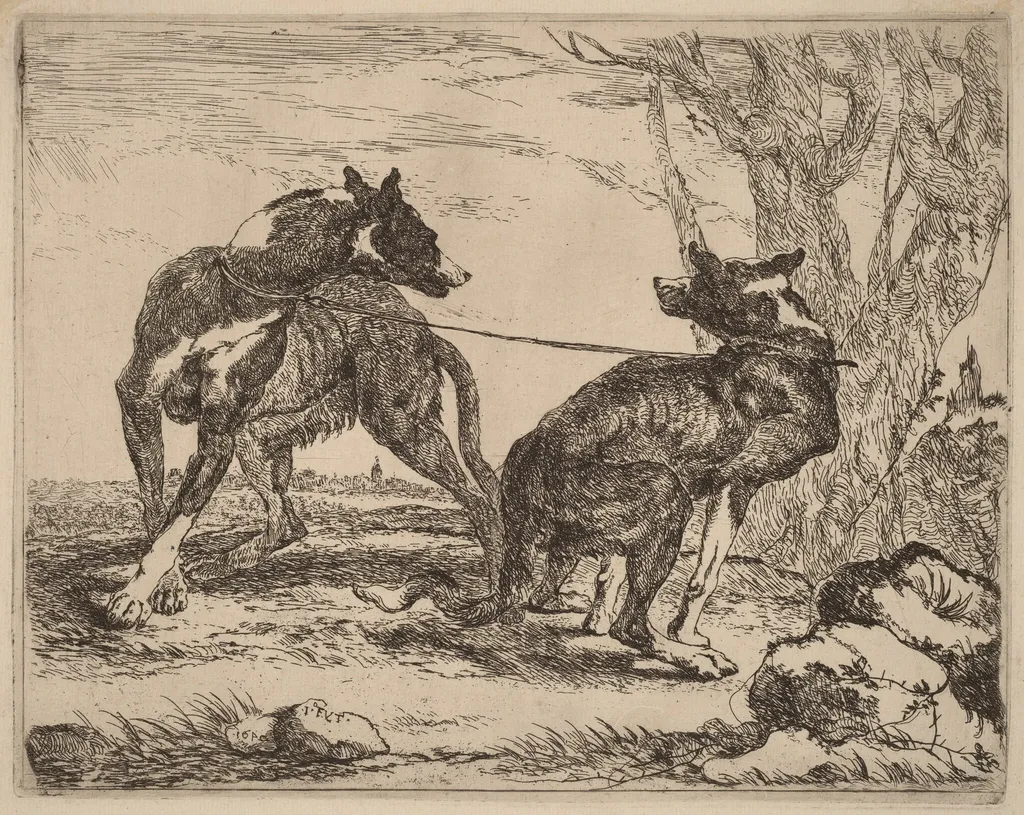
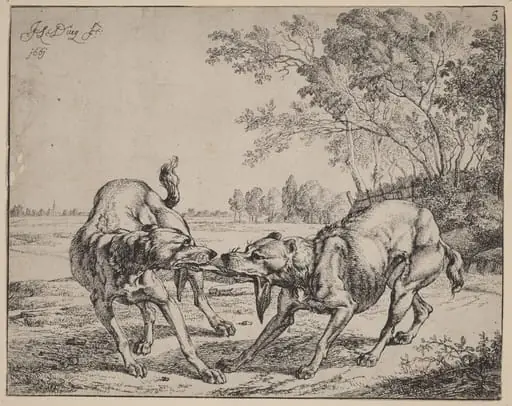
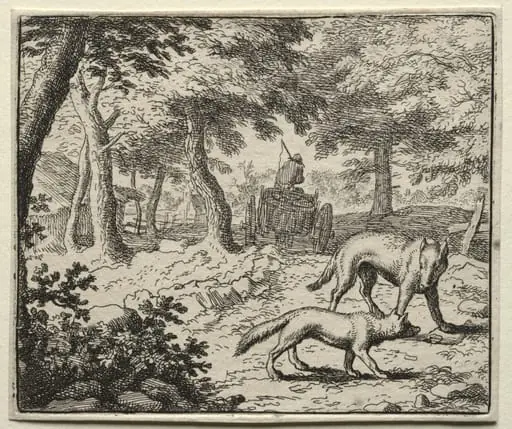
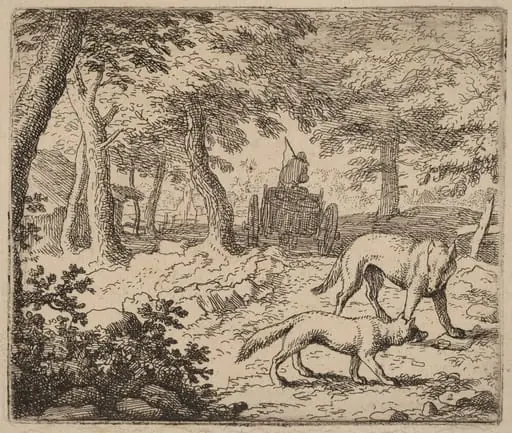
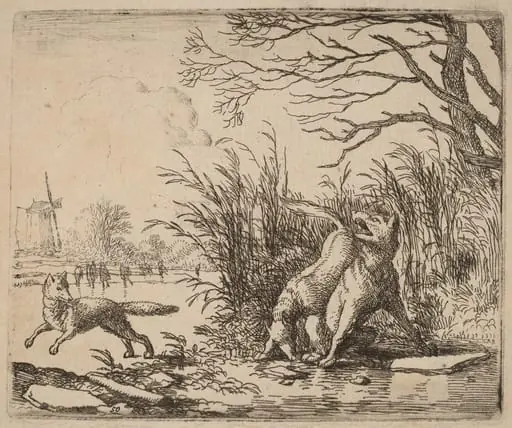
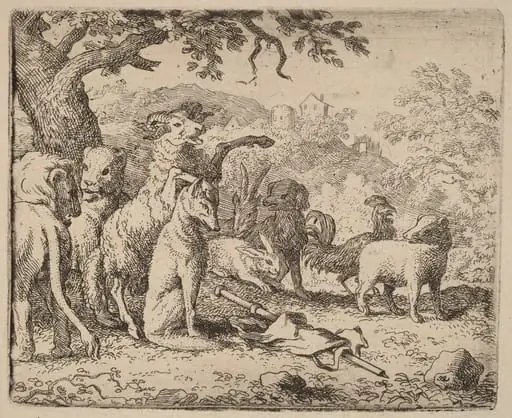
Two Greyhounds, Leashed and Facing Each Other is an ink print by the Baroque artist Jan Fyt. It dates from 1642 and is held in the collection of the National Gallery of Art.
About this work
Overview
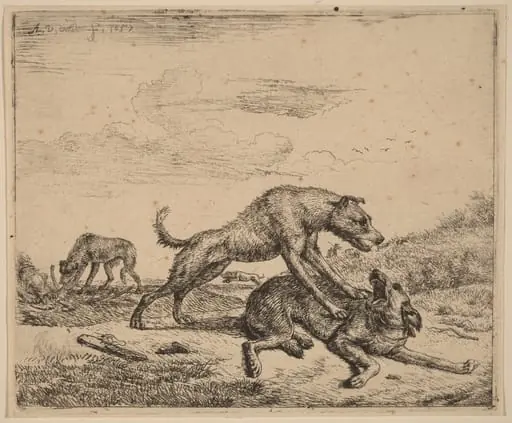
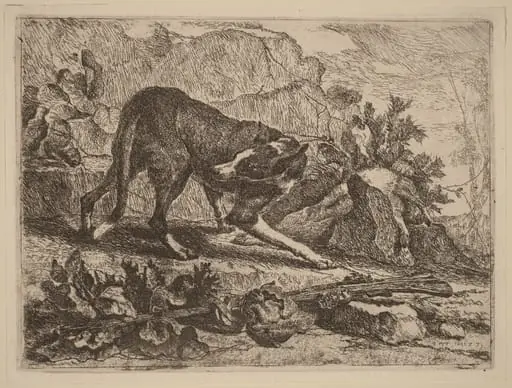
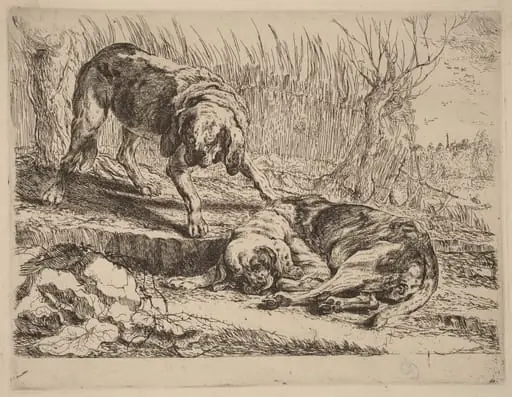
Created in 1642, *Two Greyhounds, Leashed and Facing Each Other* is an etching by the Flemish artist Jan Fyt. Executed on laid paper, the work exemplifies Fyt’s mastery of animal portraiture within the Baroque tradition. Unlike his larger painted compositions, this print focuses narrowly on two dogs, capturing their presence with quiet intensity and technical precision.
Subject & Meaning
The leashes, drawn diagonally, imply tension without movement, evoking a moment suspended between stillness and action.
The two greyhounds are depicted in a poised, mirrored stance, leashed and facing one another. Their restrained posture suggests control and discipline, possibly referencing aristocratic hunting culture. The leashes, drawn diagonally, imply tension without movement, evoking a moment suspended between stillness and action. The composition avoids narrative, emphasizing form and presence over symbolism.
Technique & Style
Fyt employed fine hatching and cross-hatching to model the dogs’ muscular forms and textured fur, creating subtle gradations of light and shadow. The dark, detailed figures contrast with the lightly worked background, enhancing their three-dimensionality. The etching’s precision reflects the artist’s keen observation of anatomy and his command of line to convey both weight and delicacy.
History & Provenance
The etching is held in the collection of the National Gallery of Art in Washington, D.C. It was produced during Fyt’s mature period, when he was highly regarded for his animal studies. While few impressions of this specific plate survive, its presence in major collections attests to its recognition among collectors of Flemish graphic art in the 17th and 18th centuries.
Context
In mid-17th-century Flanders, depictions of hunting dogs were popular among elite patrons who valued both sport and status. Fyt’s prints complemented his painted still lifes, which often included game and hounds. This etching aligns with a broader trend in Northern European art that elevated the observation of animals as subjects worthy of serious artistic attention.
Legacy
Fyt’s etching contributed to the development of animal portraiture in printmaking, influencing later artists who sought to capture naturalism through fine line work. Though less widely known than his paintings, this print remains a refined example of how Baroque draftsmanship could convey dignity and presence in modest scale.
Artist & collection
Artist
Jan Fijt, Jan Fijt or Johannes Fijt (or Fyt) (19 August 1609 – 11 September 1661) was a Flemish Baroque painter, draughtsman and etcher.