Artwork
The Disputed Meat (La viande disputé)
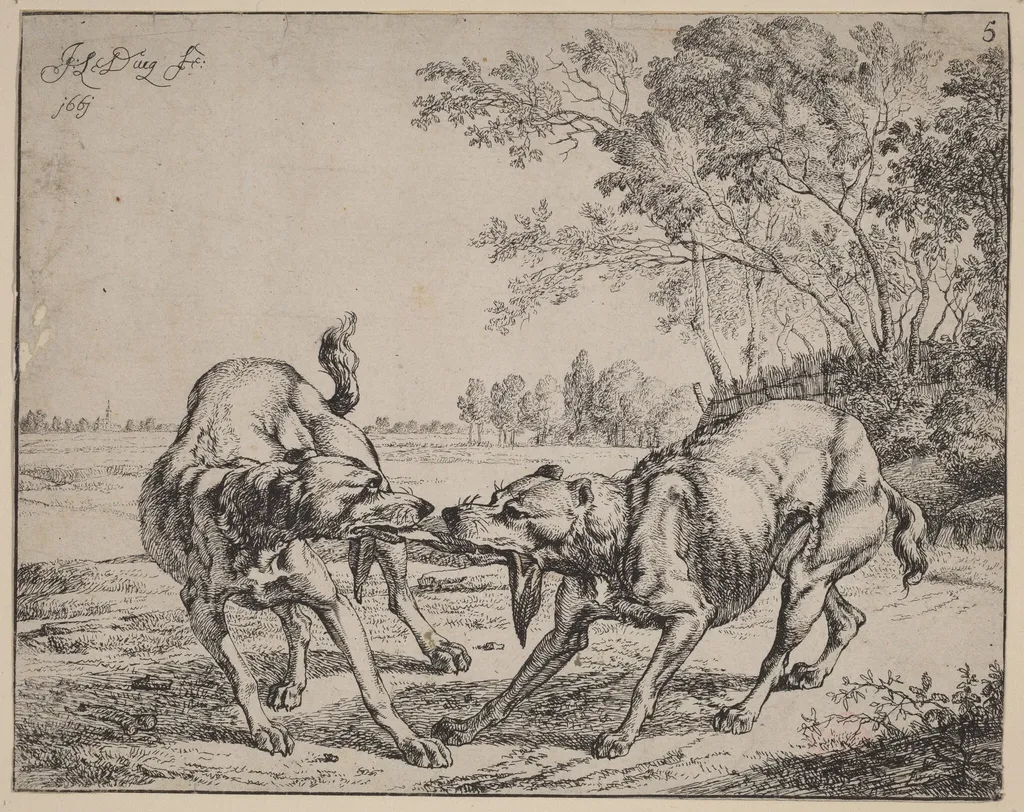
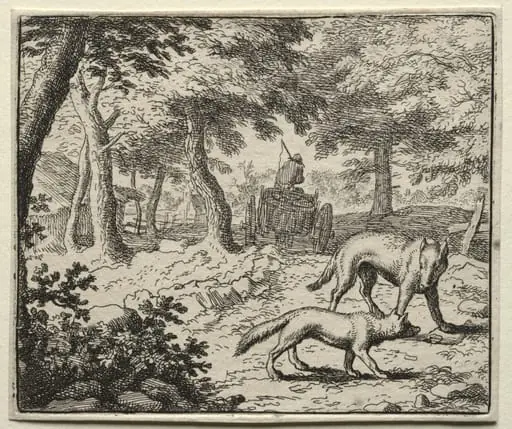
The Disputed Meat (La viande disputé) is an ink print by the Baroque artist Jan le Ducq. It dates from 1661 and is held in the collection of the National Gallery of Art.
About this work
Overview
The Disputed Meat, executed as an etching in 1661 by Jan le Ducq, presents a compact narrative scene in which two dogs vie for a single piece of meat. The composition centers the animals in the foreground, while a modest landscape of trees, grass, and distant structures recedes behind them, framing the conflict within a simple outdoor setting.
Subject & Meaning
The work captures a moment of animal aggression, the dogs locked in a struggle that underscores themes of competition and survival. By focusing on the visceral contest over food, the image invites reflection on primal instincts and the tension inherent in the pursuit of sustenance.
Technique & Style
Le Ducq employs the etching medium to render fine lines and textured surfaces, achieving a tactile quality that enhances the realism of fur and foliage. Contrasting light and shadow—chiaroscuro—heightens the drama, casting the dogs in stark relief against the dimmer background and emphasizing the intensity of their encounter.
History & Provenance
Created in the mid‑seventeenth century, the print is attributed to Jan le Ducq, a Dutch artist known for his animal studies. While specific ownership records are limited, the piece remains documented in catalogues of his oeuvre and is referenced in scholarly works on Dutch printmaking of the period.
Context
The etching aligns with a broader Dutch tradition of depicting everyday animal scenes, which often served both decorative and moralizing purposes. Its modest scale and detailed execution reflect the period’s interest in naturalistic observation and the technical possibilities of print media.
Artist & collection


 Fighting Dogs
 Two Dogs Copulating
 The Wolves on the Ice
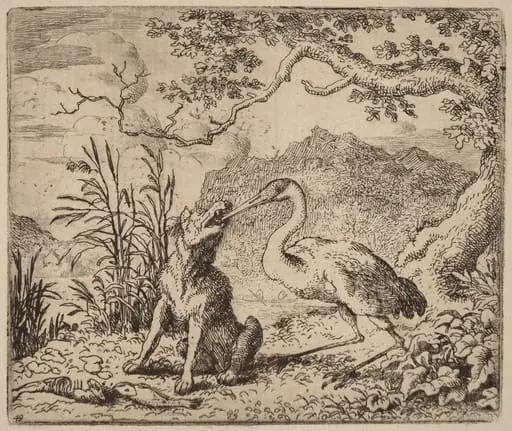 The Wolf and the Crane
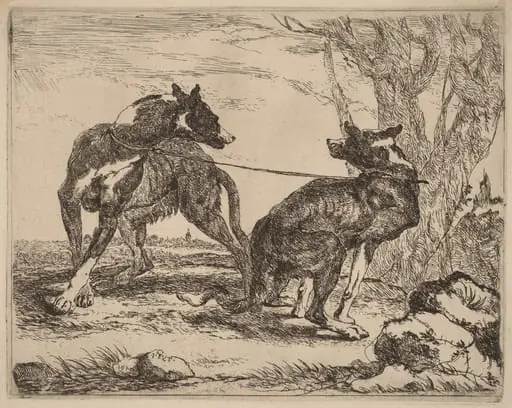 Two Greyhounds, Leashed and Facing Each Other
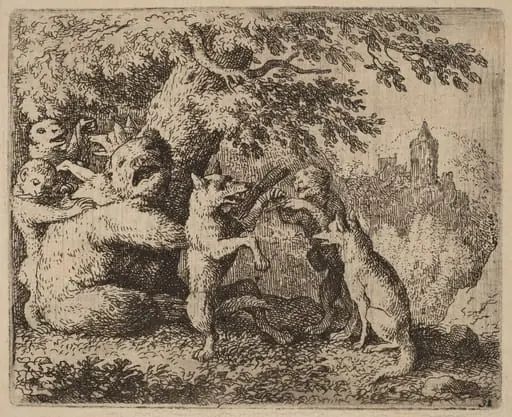 The Bear and the Wolf are Persecuted
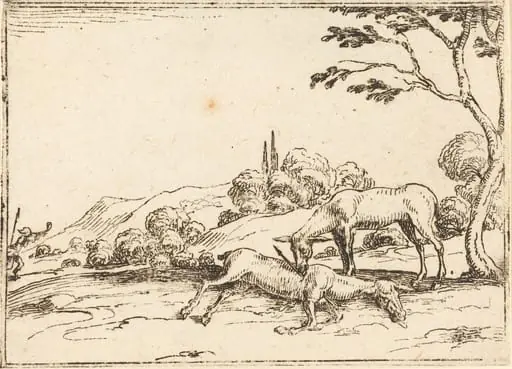 Doe Mourning her Foal
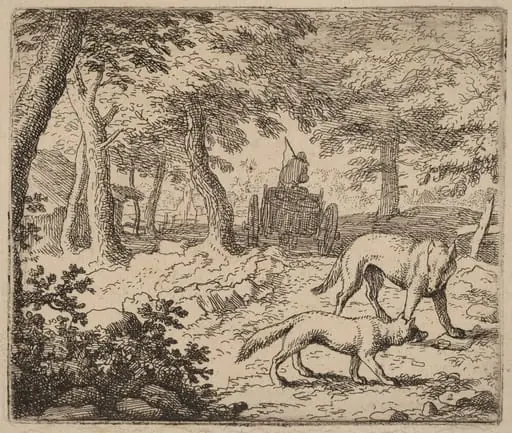 Reynard and the Wolf before the Fish Cart
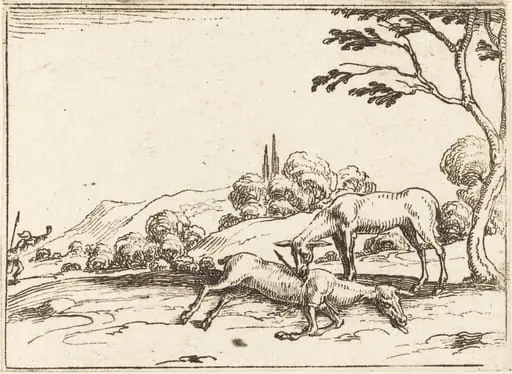 Doe Mourning her Foal
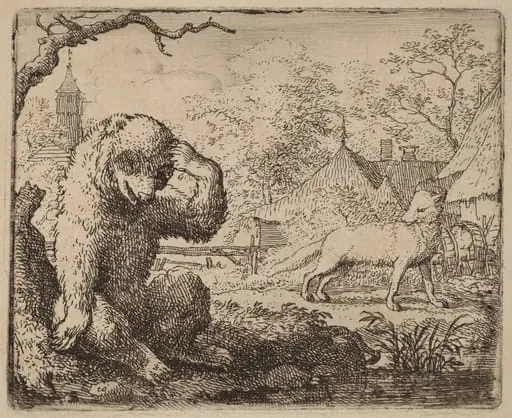 Reynard Mocks the Woeful Bear
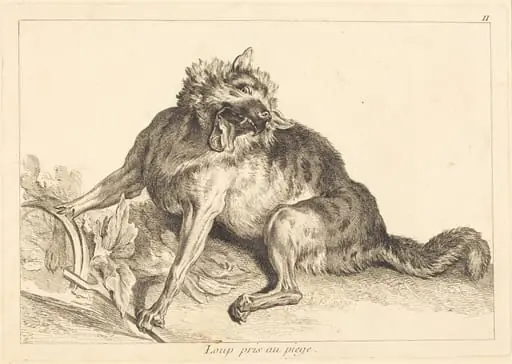 Loup pris au piege (Wolf Caught in a Trap)
 Reynard the Fox: The Badger's Defense of Reynard