Artwork
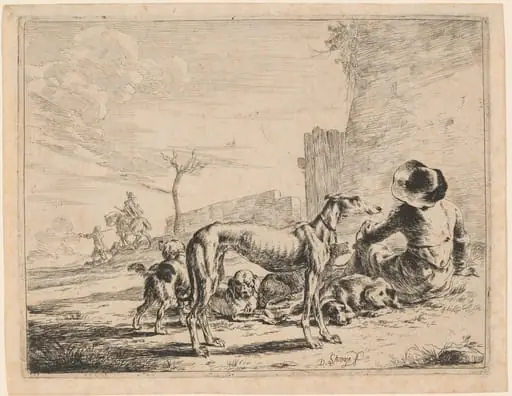
Two Greyhounds, Leashed and Facing Opposite Directions
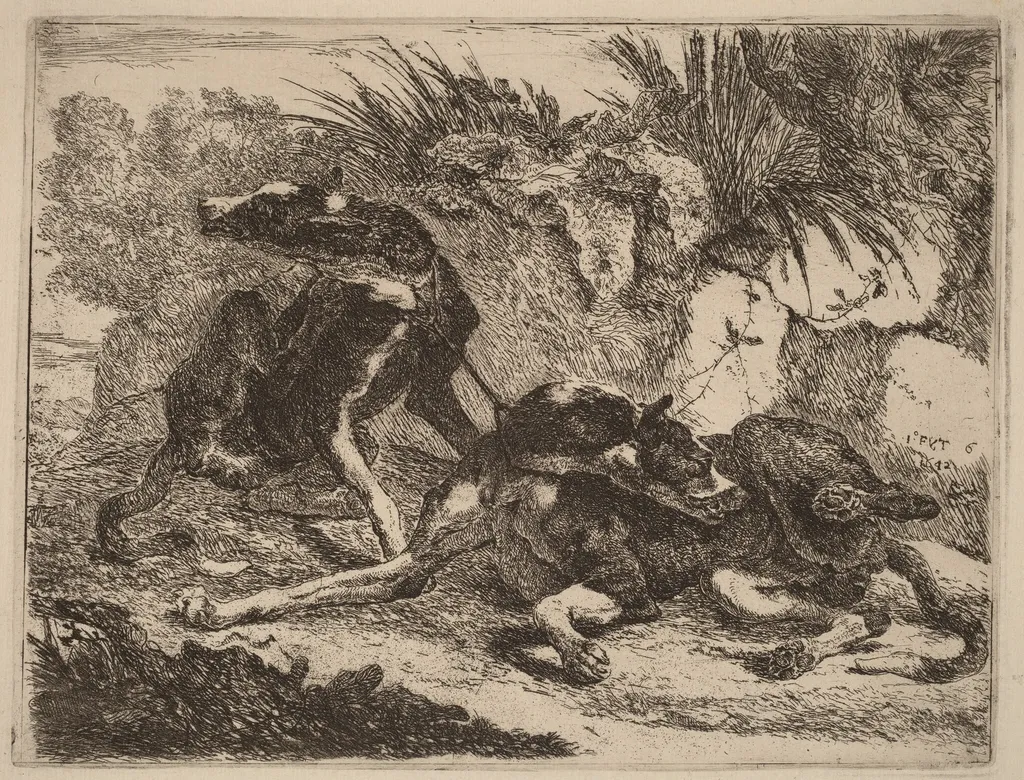
Two Greyhounds, Leashed and Facing Opposite Directions is an ink print by the Baroque artist Jan Fyt. It dates from 1642 and is held in the collection of the National Gallery of Art.
About this work
Overview
Jan Fyt’s 1642 print, *Two Greyhounds, Leashed and Facing Opposite Directions*, presents a pair of calm yet alert dogs tied to a single post. Executed as an etching on laid paper, the composition balances the two animals, each looking away from the other, creating a quiet tension within a restrained, symmetrical layout.
Subject & Meaning
The work depicts two greyhounds, a breed associated with hunting and aristocratic leisure in 17th‑century Flanders. By positioning the dogs opposite one another, Fyt emphasizes their alertness and the controlled energy of domesticated predators, hinting at themes of restraint, vigilance, and the social status conveyed through well‑trained hunting companions.
Technique & Style
Fyt employed traditional etching, incising lines into a metal plate before inking and pressing onto laid paper. The process yields crisp yet softened edges that suggest the softness of fur. His handling of line and hatching reflects the Flemish animaliers tradition, rendering texture and anatomy with meticulous attention to detail.
History & Provenance
Created in Antwerp, where Fyt was a leading figure in the Baroque animal‑painting circle, the print circulated among collectors of the period who prized depictions of fauna. Though specific ownership records are scarce, the piece survives in several museum collections, attesting to its continued relevance as an example of 17th‑century Flemish printmaking.
Own this work as a print
Artist & collection
Artist
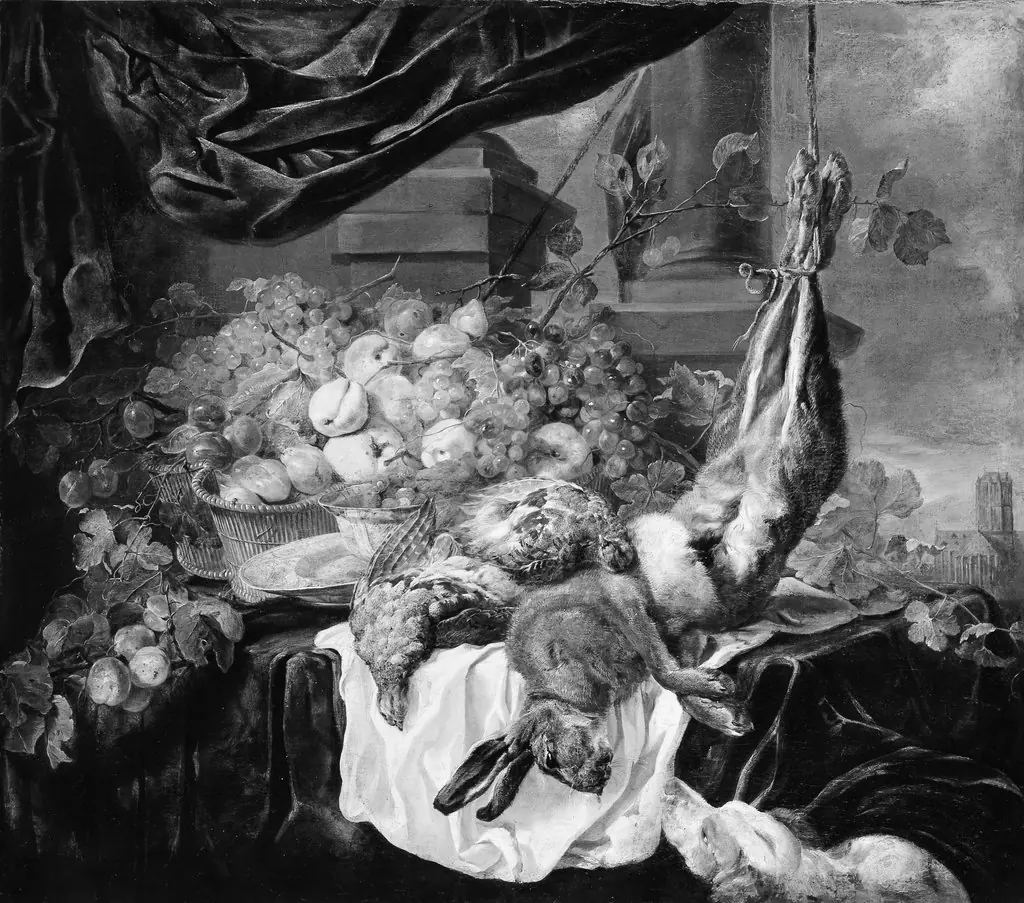
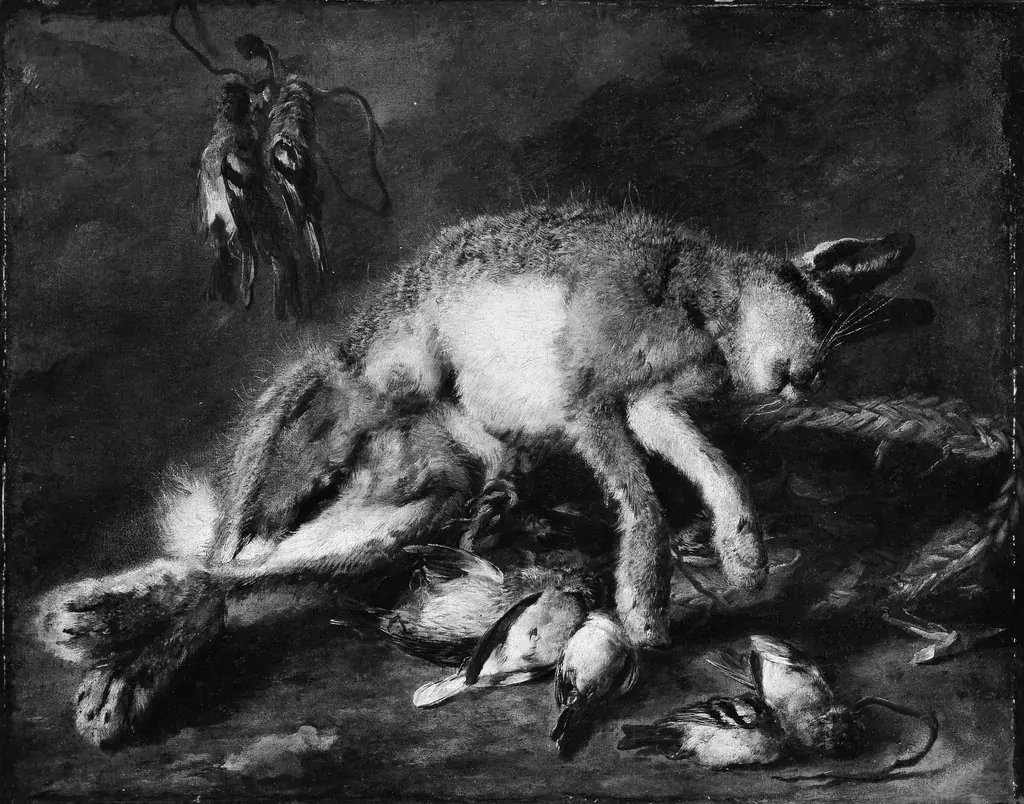
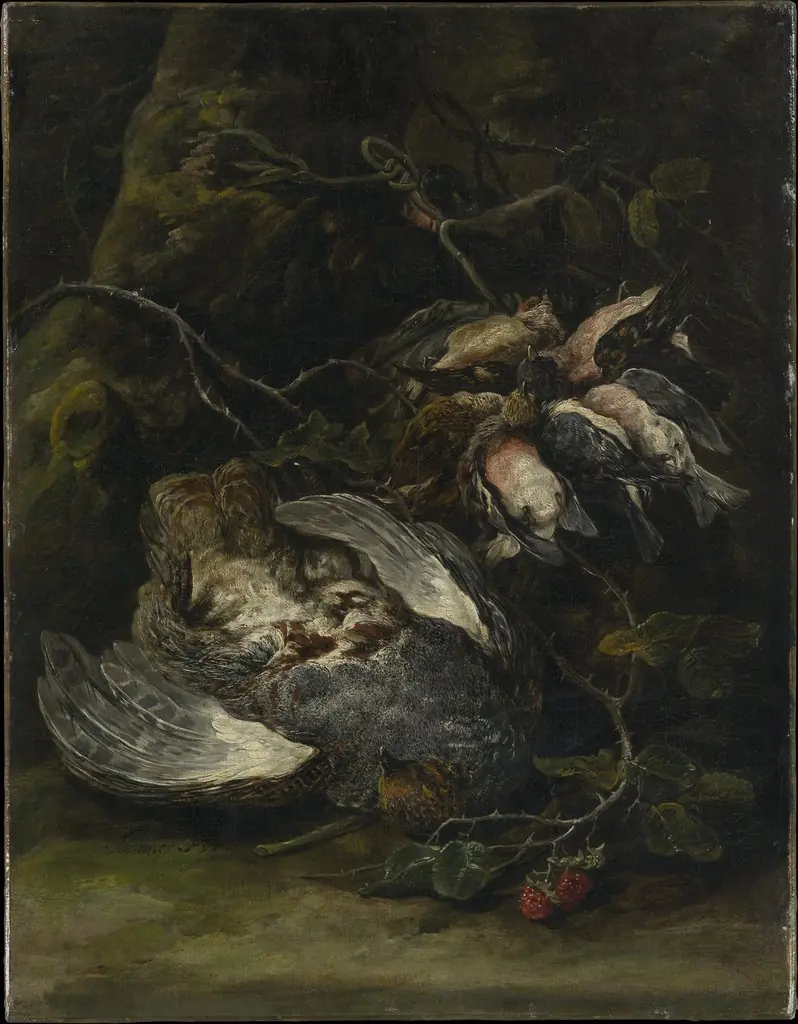
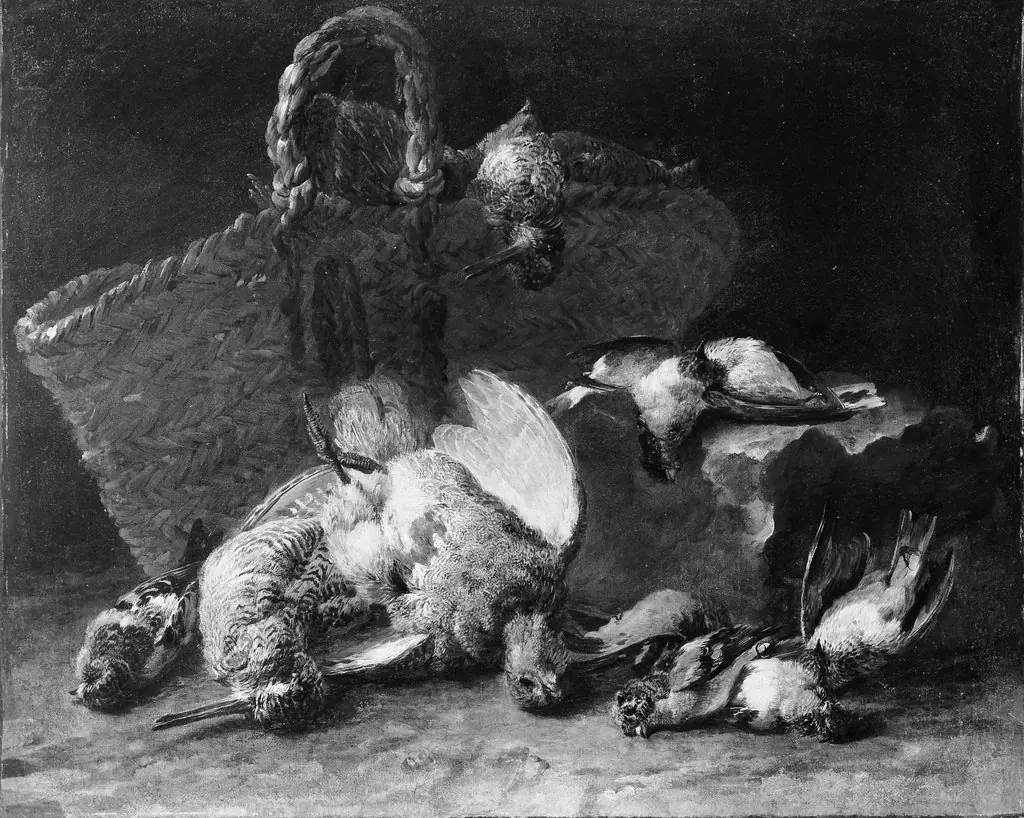
Jan Fijt, Jan Fijt or Johannes Fijt (or Fyt) (19 August 1609 – 11 September 1661) was a Flemish Baroque painter, draughtsman and etcher.