Artwork
Two Mastiffs beside a Fountain
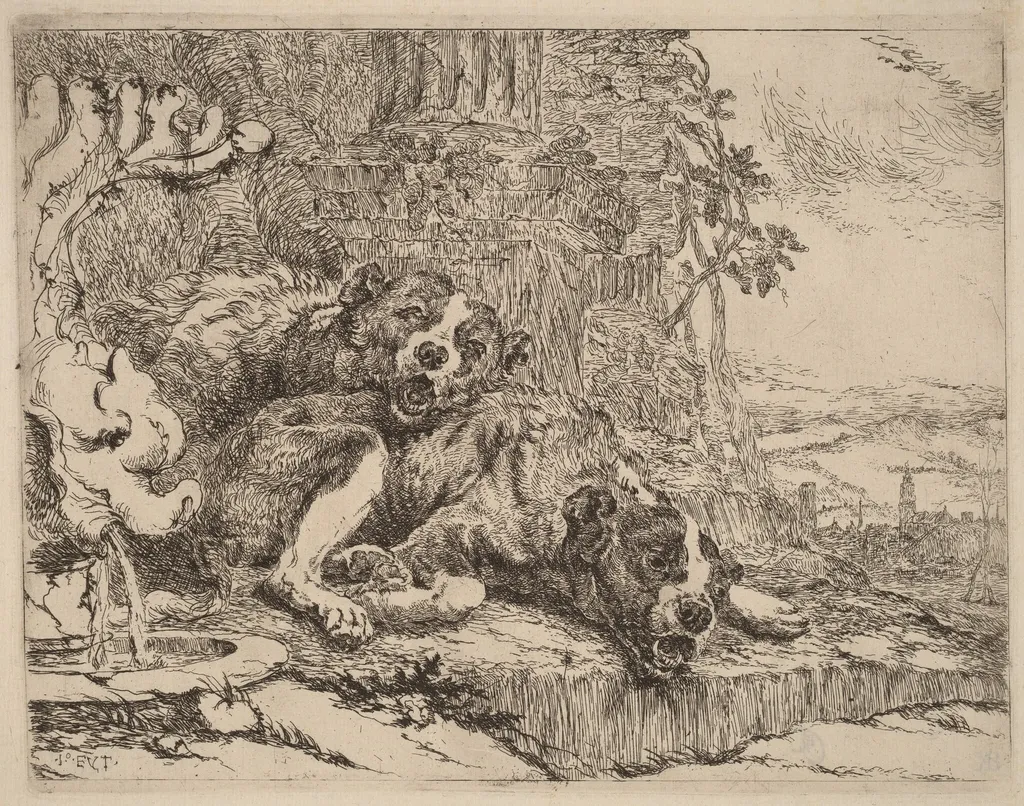
Two Mastiffs beside a Fountain is an ink print by the Baroque artist Jan Fyt. It dates from 1642 and is held in the collection of the National Gallery of Art.
About this work
Overview
Fyt, primarily known for his still lifes and animal subjects, turned to printmaking to explore the textures and presence of domesticated animals.
Created in 1642, *Two Mastiffs beside a Fountain* is an etching by the Flemish artist Jan Fyt, executed on laid paper. Fyt, primarily known for his still lifes and animal subjects, turned to printmaking to explore the textures and presence of domesticated animals. This work exemplifies his interest in capturing the quiet alertness of dogs within naturalistic settings, using the etching technique to achieve both precision and atmospheric depth.
Subject & Meaning
The composition centers on two mastiffs seated beside a stone fountain, their postures suggesting vigilance rather than rest. The dogs, rendered with anatomical care, are framed by sparse vegetation and water suggested through fluid, irregular lines. The fountain, a symbol of sustenance and stillness, contrasts with the dogs’ alertness, hinting at themes of guardianship and the quiet tension between domestication and instinct in the natural world.
Technique & Style
Fyt employed etching to create fine, incised lines that hold ink deeply, producing rich contrasts between dark shadows and the untouched paper. The background foliage is rendered with loose, scratchy strokes, while the dogs’ fur and the fountain’s stone are detailed with controlled, deliberate marks. This interplay of precision and spontaneity gives the image a tactile quality, balancing realism with the inherent texture of the print medium.
History & Provenance
The print was made during Fyt’s mature period, when his animal studies were gaining recognition across Europe. While specific early ownership records are sparse, the work aligns with the broader 17th-century Flemish interest in animal portraiture and natural observation. It likely circulated among collectors of prints and hunting imagery, reflecting the period’s fascination with the domesticated and wild alike.
Context
In mid-17th-century Flanders, detailed animal depictions were valued for their technical skill and connection to aristocratic pastimes like hunting. Fyt’s etchings contributed to a growing genre that moved beyond mere decoration to convey psychological presence in animals. His work stood apart from purely decorative still lifes by emphasizing the individuality and alertness of his subjects within outdoor environments.
Legacy
Fyt’s etchings, including this one, influenced later artists interested in animal anatomy and the expressive potential of printmaking. His ability to render fur, stone, and water with minimal yet effective lines set a standard for precision in animal portraiture. Though less celebrated than his paintings, these prints remain important for understanding the breadth of his observational approach and the technical possibilities of etching in the Baroque era.
Artist & collection
Artist
Jan Fijt, Jan Fijt or Johannes Fijt (or Fyt) (19 August 1609 – 11 September 1661) was a Flemish Baroque painter, draughtsman and etcher.

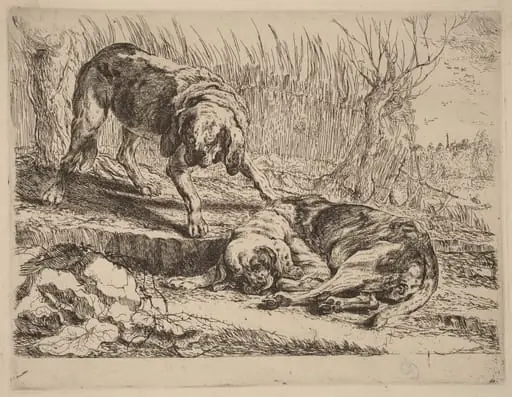 Two Beagles, One Sleeping
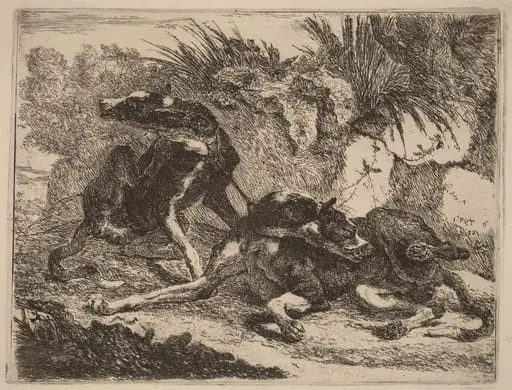 Two Greyhounds, Leashed and Facing Opposite Directions
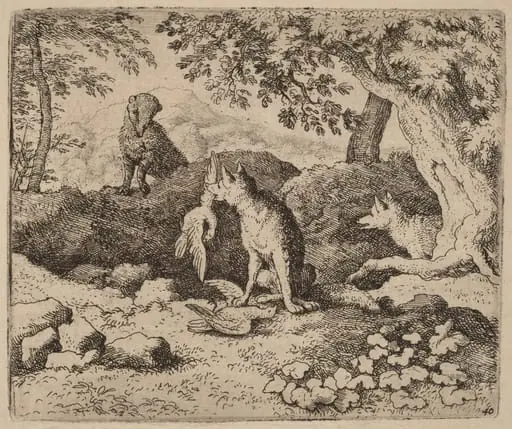 The Badger Goes to Warn Reynard
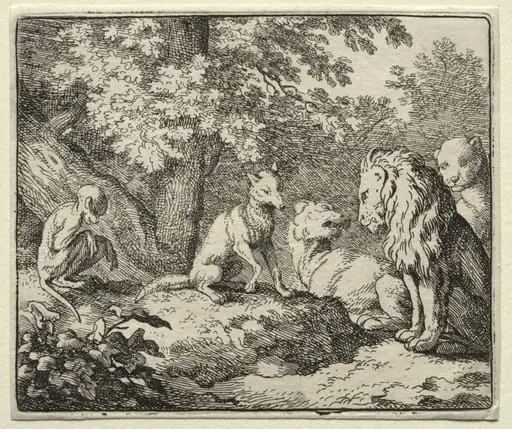 Reynard the Fox: Further False Testimony from Reynard
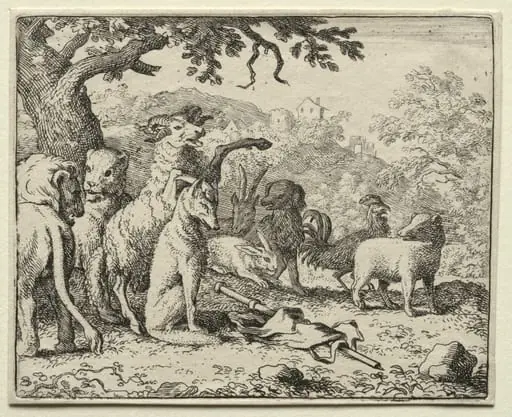 Reynard the Fox: The Benediction Given to Reynard
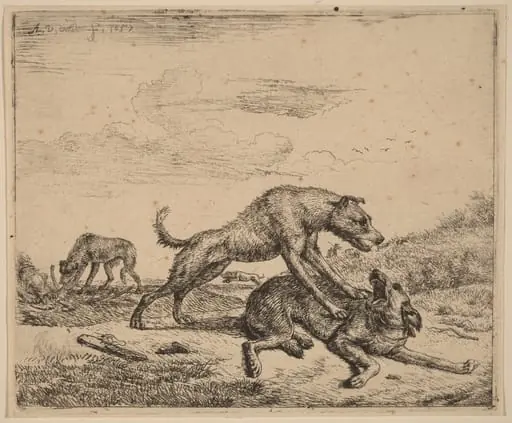 Fighting Dogs
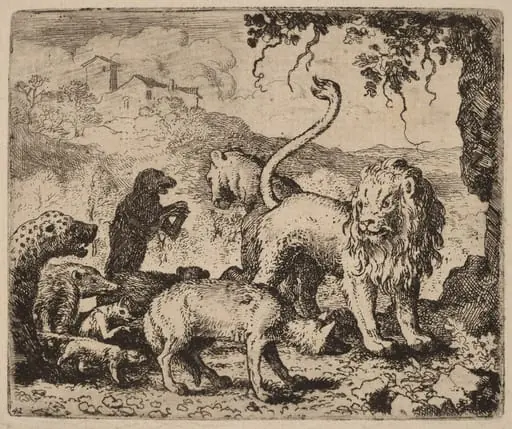 Reynard Accused
 The Ram Blesses Reynard
 Reynard the Fox: The Freeing of the Wolf and the Bear
 Two Dogs Copulating