Artwork
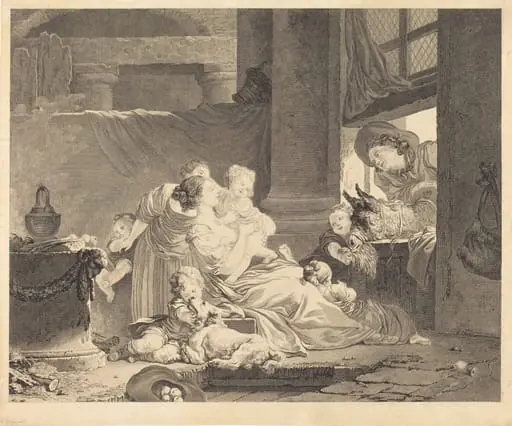
The Child and the Bulldog
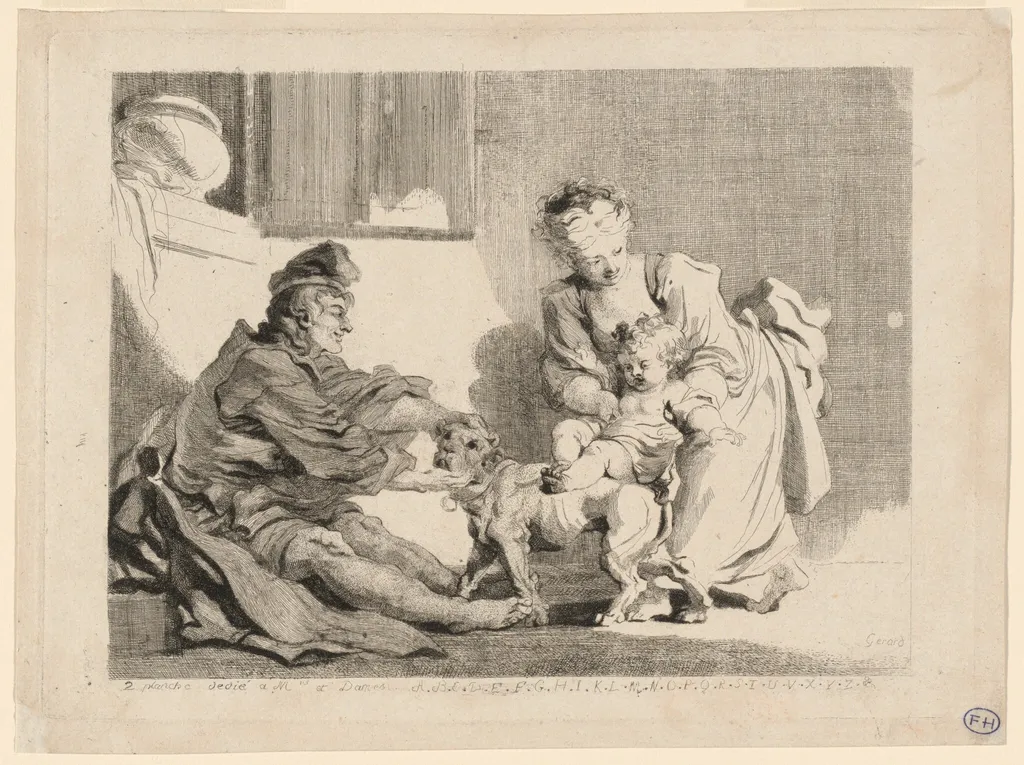
The Child and the Bulldog is an ink print by the Romanticist artist Marguerite Gérard. It dates from 1778 and is held in the collection of the National Gallery of Art.
About this work
Overview
Created in 1778, *The Child and the Bulldog* is an etching on laid paper by French artist Marguerite Gérard. The work presents a young child seated on the floor reaching toward a standing bulldog, rendered with the lightness and intimacy typical of late‑18th‑century French prints.
Subject & Meaning
The composition captures a moment of gentle interaction between the child and the dog, emphasizing affection and play. By focusing on everyday domestic life, Gérard aligns the scene with the Rococo interest in private, tender moments rather than grand historical narratives.
Technique & Style
Executed with fine lines and subtle tonal variations, the etching demonstrates Gérard’s skill in handling the medium’s capacity for delicate detail. The use of a limited palette and careful shading creates a sense of depth, while the overall treatment remains light‑hearted and decorative, hallmarks of the Rococo aesthetic.
History & Provenance
Gérard, who began her artistic training after moving to Paris at fourteen, worked closely with her brother‑in‑law Jean‑Honoré Fragonard. In 1778 she produced nine etchings in collaboration with him, and *The Child and the Bulldog* was among these early prints, marking her emergence as an independent printmaker.
Context
The print belongs to a period when French art favored intimate genre scenes that celebrated domestic pleasures. Gérard’s work reflects the broader Rococo trend of portraying everyday life with elegance and charm, catering to a market of collectors interested in small, finely executed works.
Artist & collection
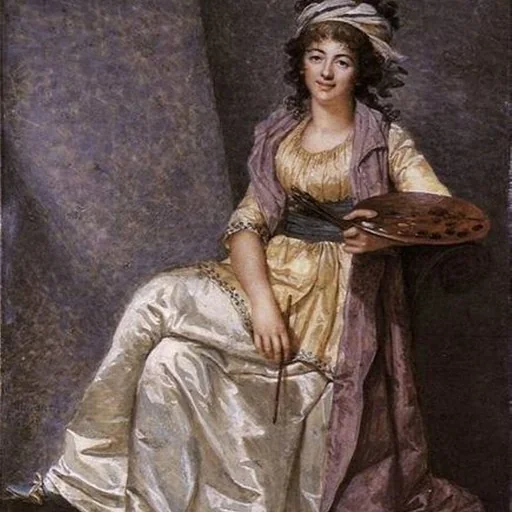
Artist
Marguerite Gérard (French pronunciation: ; 28 January 1761 in Grasse – 18 May 1837 in Paris) was a French painter and printmaker working in the Rococo style.

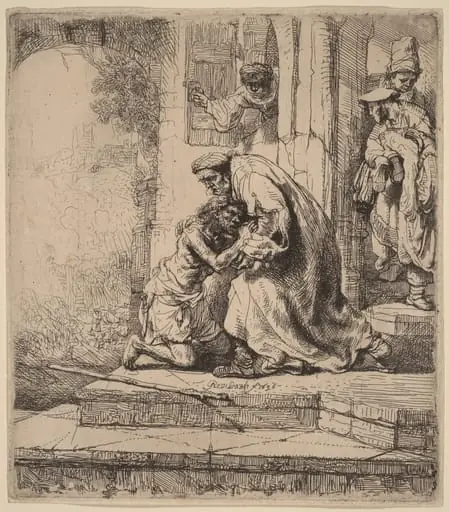 The Return of the Prodigal Son
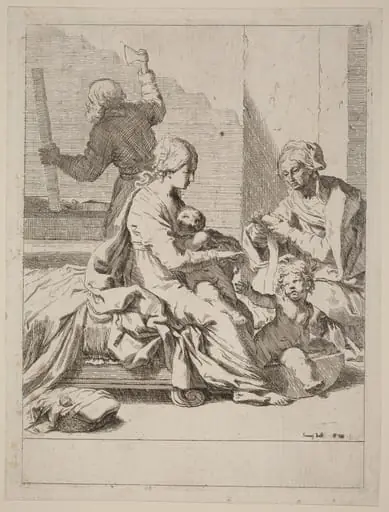 The Holy Family with Saint Elizabeth and Saint John the Baptist
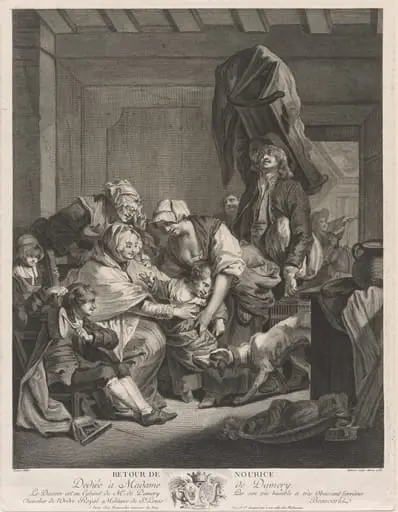 Retour de Nour(r)ice (Return from the Wet Nurse)
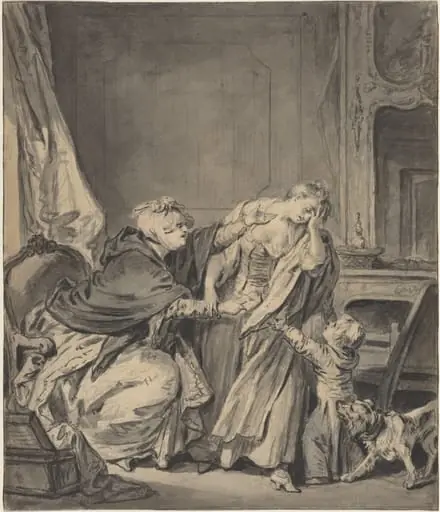 The Angry Mother
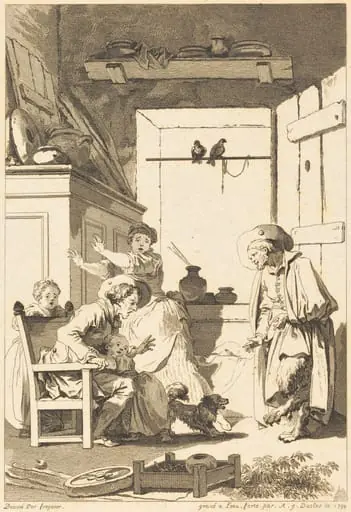 Belphegor
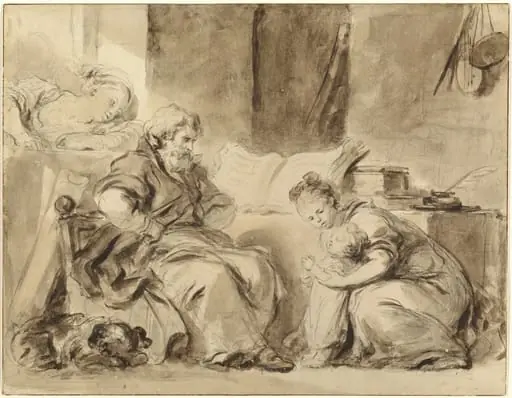 A Prayer for Grandpapa
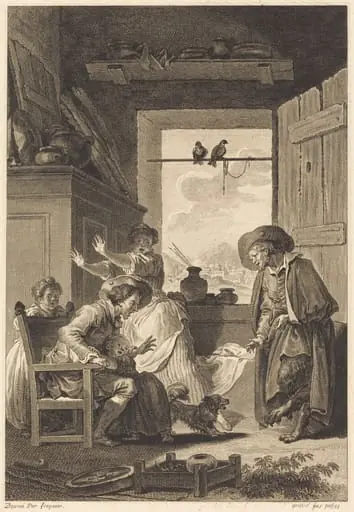 Belphegor
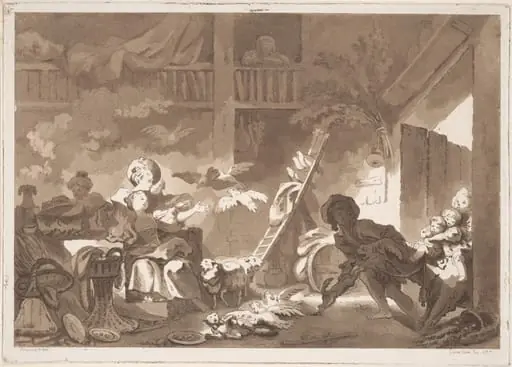 The Stubborn Donkey
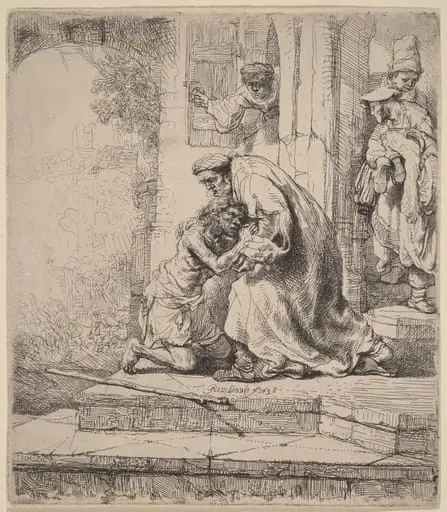 Return of the Prodigal Son
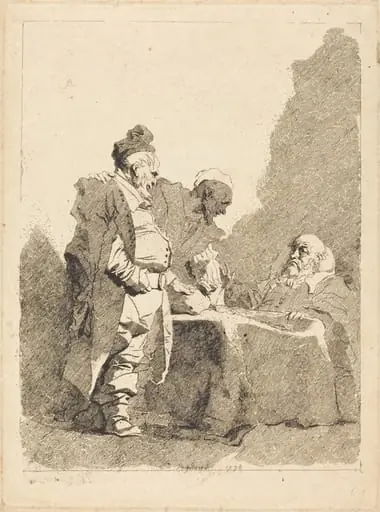 The Tax Collectors (Les traitants)
 La famille du fermier
 Joseph Relays to Mary God's Command to Flee