Artwork
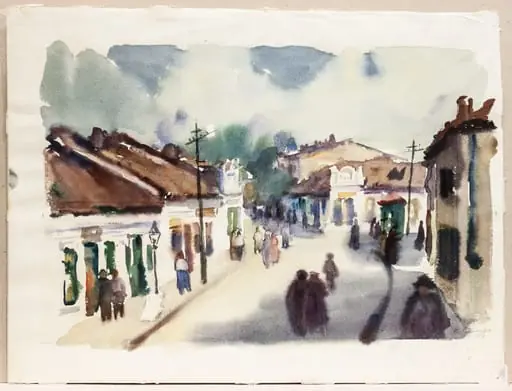
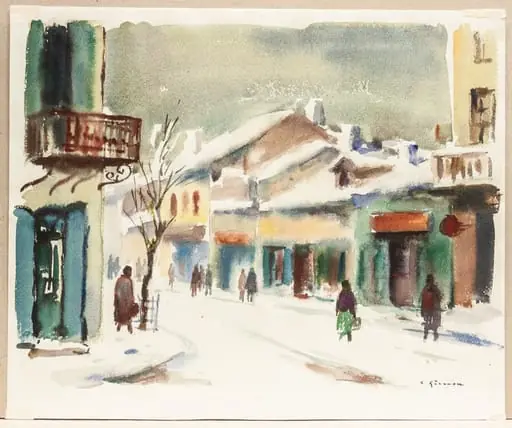
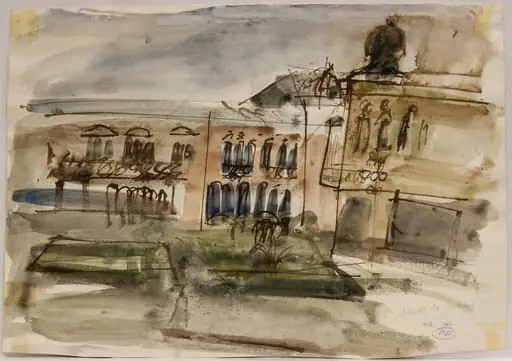
față: Strada Isaccei din Tulcea
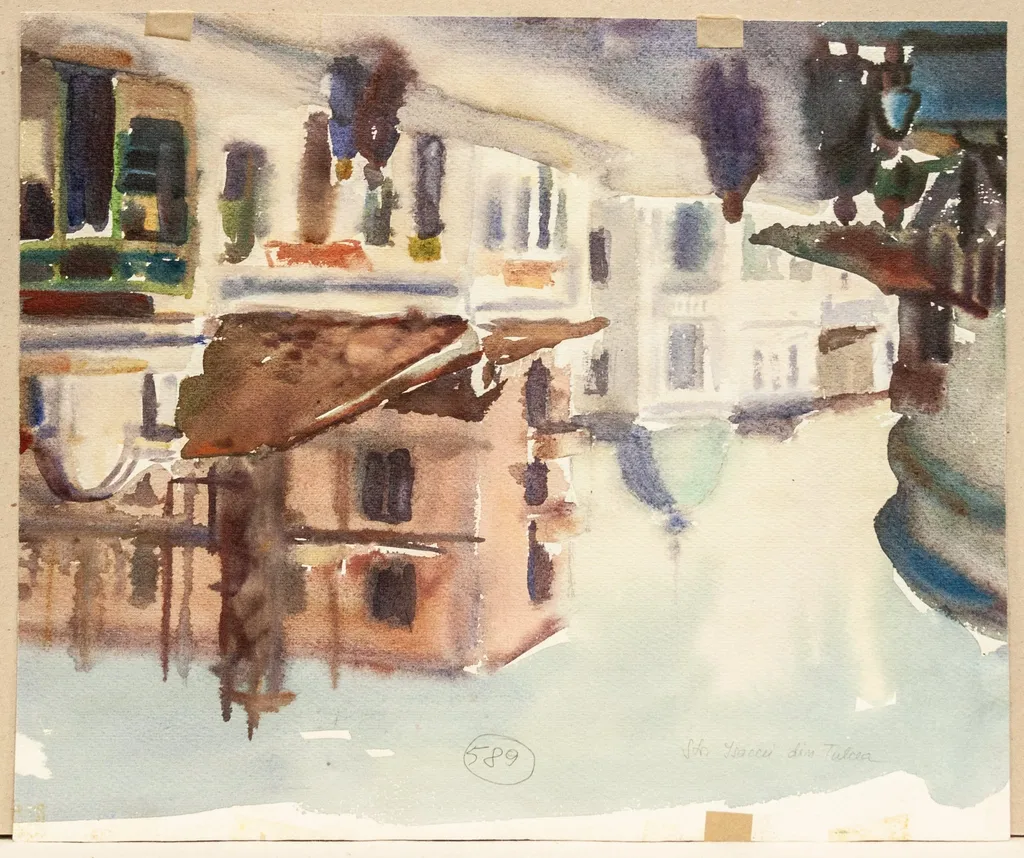
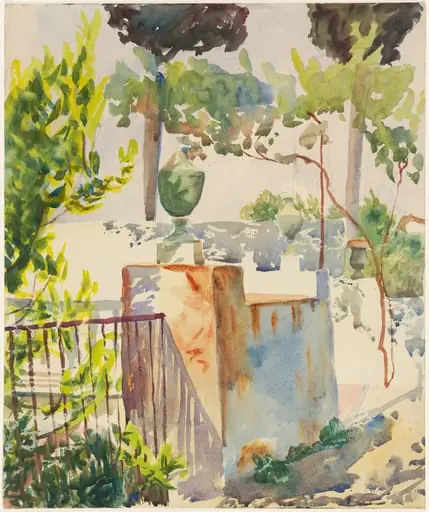
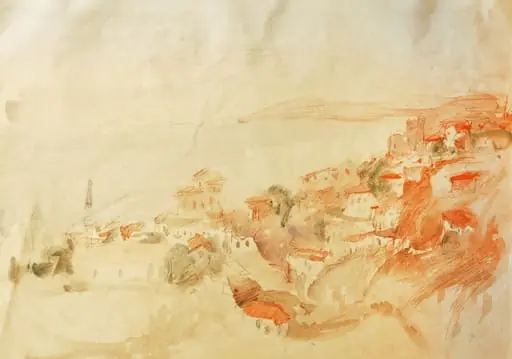
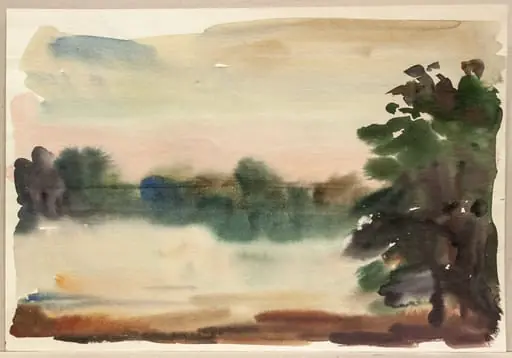
față: Strada Isaccei din Tulcea is a print by Constantin Găvenea. It dates from 1950 and is held in the collection of the Gavrila Simion Eco-Museum Research Institute Tulcea.
About this work
Overview
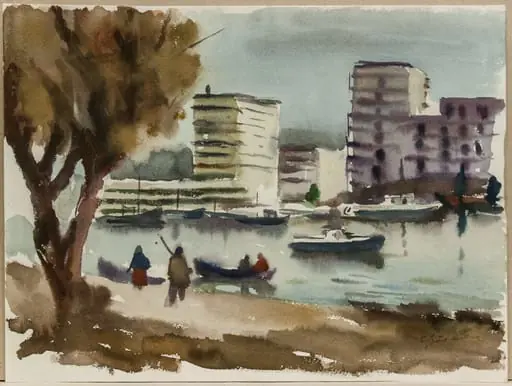
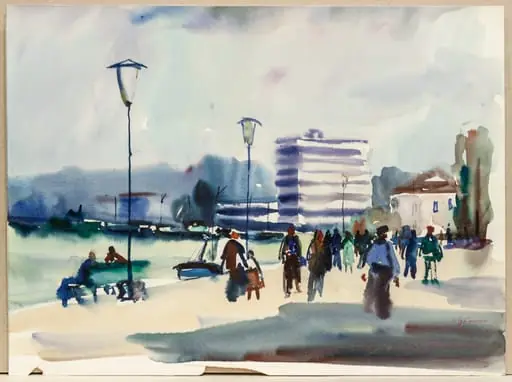
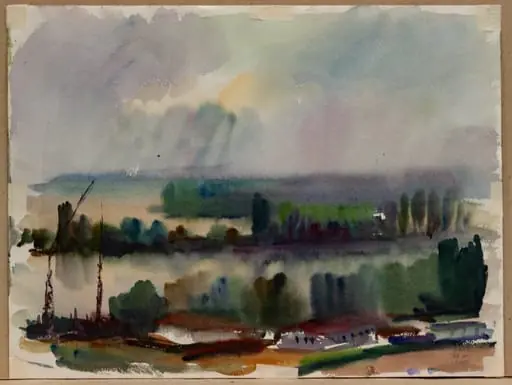
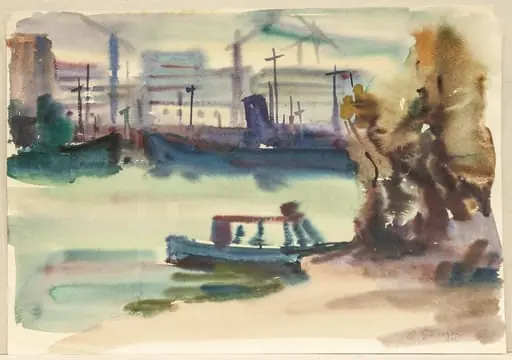
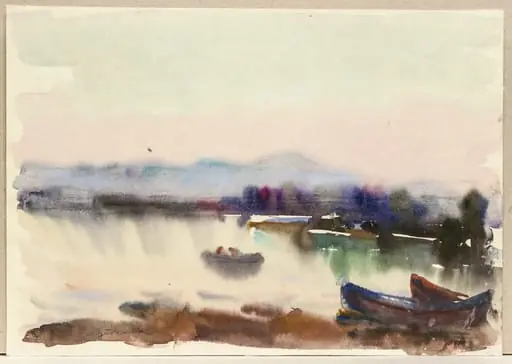
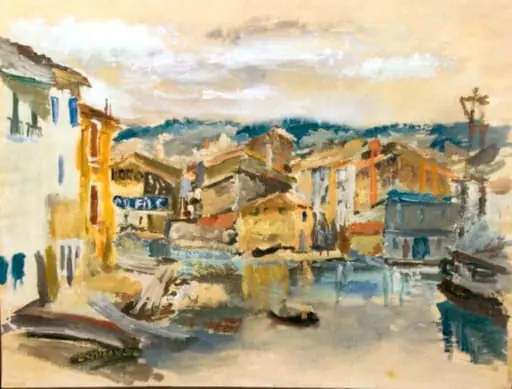
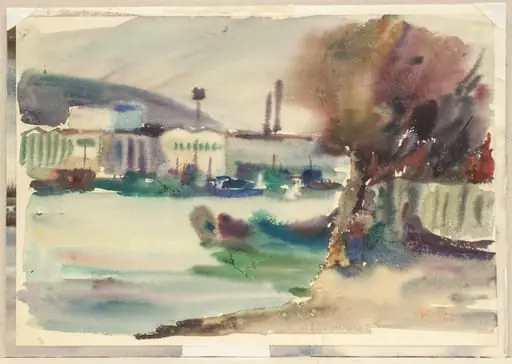
Created around 1950 by Romanian artist Constantin Găvenea, this watercolor depicts a street in Tulcea, a port city on the Danube. Executed with minimal detail and loose brushwork, the piece captures a fleeting moment rather than a polished scene. It is part of the collection at the Museum of Ethnography, where it serves as a quiet record of everyday urban life in mid-20th century Romania.
Subject & Meaning
The scene shows a modest street lined with simple buildings and a single horse-drawn cart, its form softened by the wet-on-wet technique. No figures are present, yet the cart implies human activity. The lack of emphasis on individual details suggests an interest in atmosphere over narrative, reflecting the quiet rhythms of provincial life rather than grand historical events.
Technique & Style
Găvenea employed light, transparent watercolor washes, allowing the paper’s white surface to remain visible in many areas. Forms are suggested with quick, irregular strokes—windows and doors are barely indicated, and the cart merges into the background. The absence of sharp outlines and the emphasis on tonal variation create a sense of spontaneity, as if the scene was recorded in real time.
History & Provenance
The work entered the Museum of Ethnography’s collection after its creation, likely acquired as part of a broader effort to document regional life in postwar Romania. Its unassuming nature and lack of signature or date suggest it was a personal study rather than a commissioned piece. The inscription identifying Tulcea confirms its geographic origin and contextual grounding.
Context
In the early 1950s, Romania was undergoing rapid social and political change under early communist rule. While official art promoted idealized realism, artists like Găvenea often turned to intimate, informal sketches as a way to preserve unvarnished observations of daily existence. This work stands as a quiet counterpoint to state-sanctioned imagery.
Legacy
Though not widely exhibited, the piece exemplifies a tradition of Romanian watercolor sketching that valued immediacy over finish. Its preservation in a museum of ethnography underscores its value as a cultural document. The technique anticipates later modernist approaches to landscape and urban observation, emphasizing perception over precision.
Artist & collection
Museum
Gavrila Simion Eco-Museum Research Institute Tulcea
Continue through works from the same source collection.