Artwork
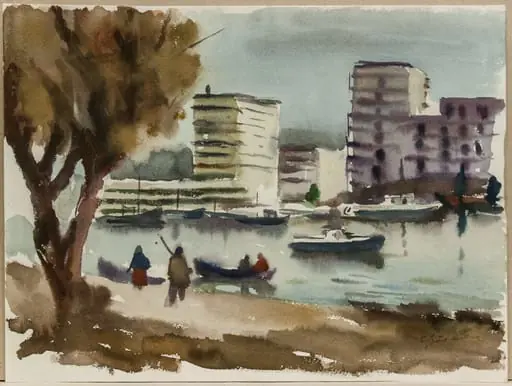
Peisaj în port
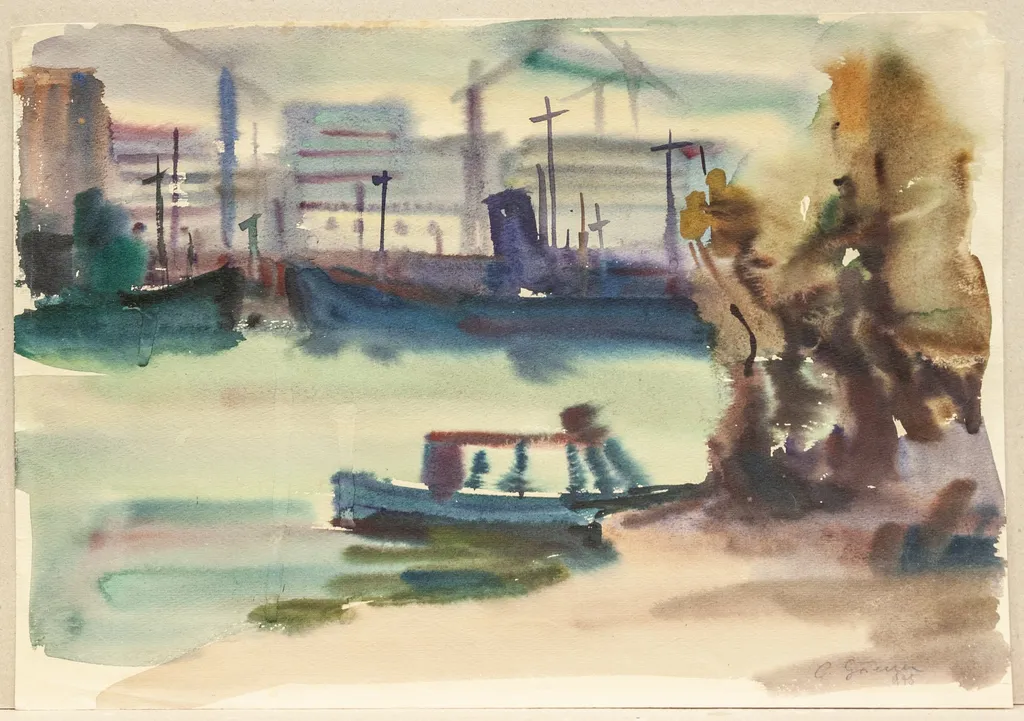
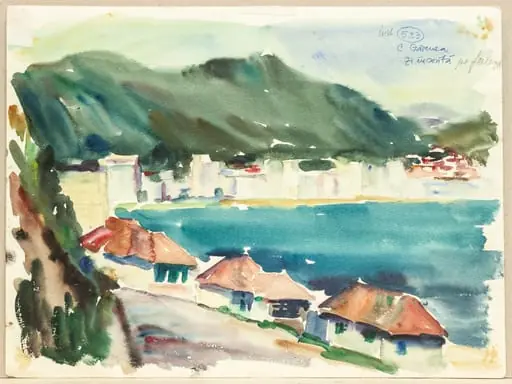
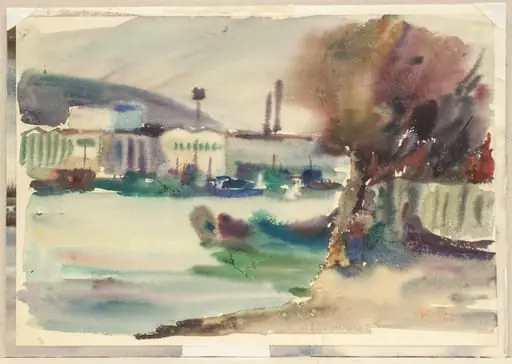
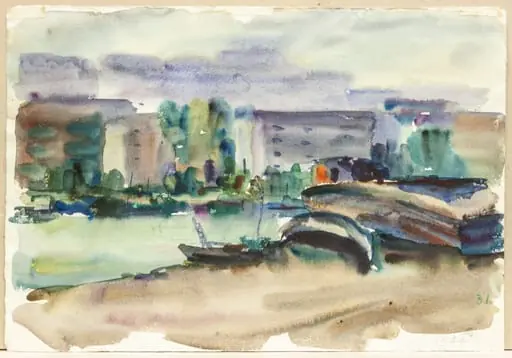
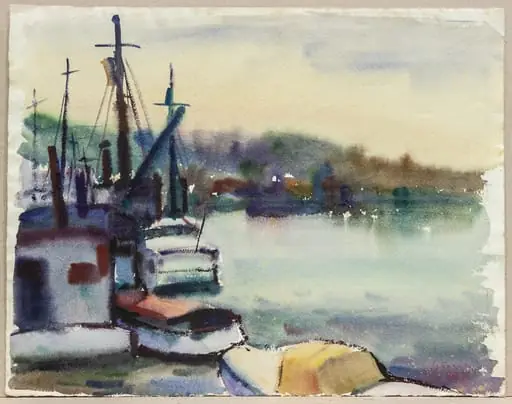
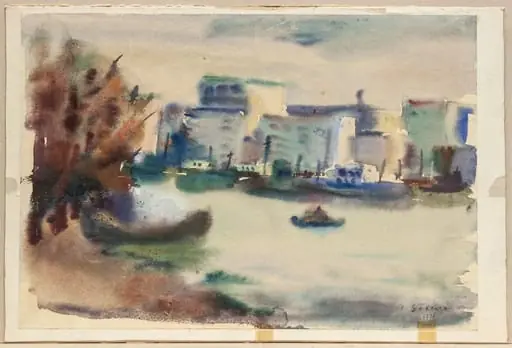
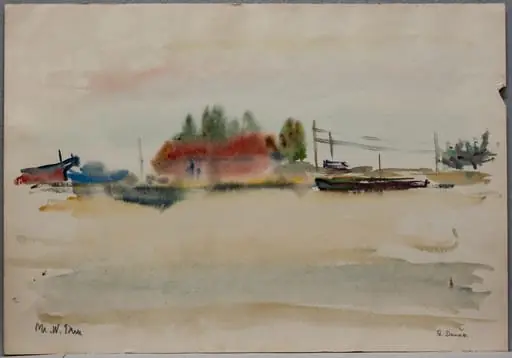
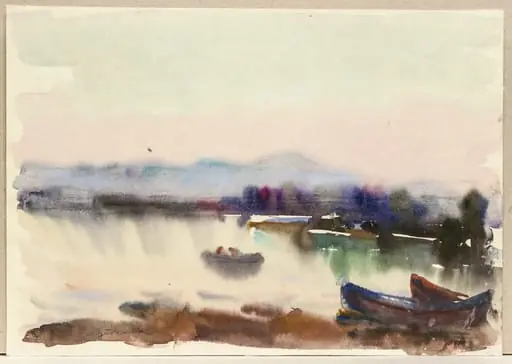
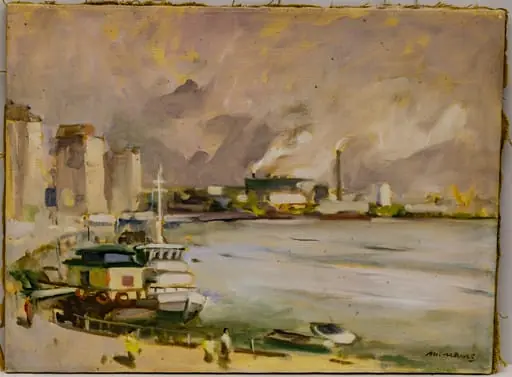
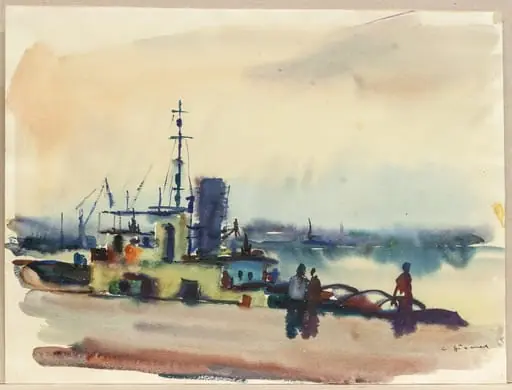
Peisaj în port is a print by Constantin Găvenea. It dates from 1950 and is held in the collection of the Gavrila Simion Eco-Museum Research Institute Tulcea.
About this work
Overview
Its modest scale and unpolished handling suggest spontaneity, aligning with informal observational practices common among Romanian artists of the period.
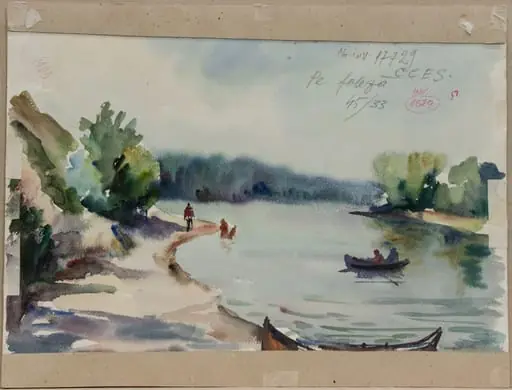
Painted around 1950 by Constantin Găvenea, this watercolor depicts a quiet harbor at twilight. Executed with loose, fluid strokes, the work captures a fleeting moment rather than a detailed scene. Its modest scale and unpolished handling suggest spontaneity, aligning with informal observational practices common among Romanian artists of the period. The piece resides in the collection of the Museum of Ethnography.
Subject & Meaning
The scene centers on a small boat with two figures, gently drifting on still water. Along the shore, indistinct dark forms suggest buildings or hulls, while slender poles with lanterns punctuate the edge of land. The absence of clear narrative or symbolic elements invites contemplation of daily life at the water’s edge, emphasizing atmosphere over story. The quietude of the image reflects a moment of pause in routine activity.
Technique & Style
Găvenea employed watercolor with minimal layering, allowing pigments to bleed and merge on the paper. Brushwork is rapid and unrefined, creating soft transitions between sky and water. Cool gray-blue tones dominate the surface, while the sky shifts subtly between muted greens and yellows. The lack of sharp outlines and the transparency of the medium enhance the sense of immediacy and ephemeral light.
History & Provenance
The painting was likely made during Găvenea’s active years in mid-20th century Romania, though specific details of its creation or early ownership are not documented. It entered the Museum of Ethnography’s collection sometime after its completion, possibly through donation or institutional acquisition. Its presence there reflects an interest in documenting everyday visual culture beyond formal artistic traditions.
Context
In postwar Romania, many artists turned to intimate, informal subjects as state-sponsored realism dominated public art. Găvenea’s work fits within this quieter current—personal, observational, and unmonumental. Watercolor, often used for sketches, became a vehicle for capturing transient moments, distinguishing such works from official commissions and highlighting private artistic expression.
Legacy
Though not widely exhibited outside institutional holdings, the painting contributes to an understudied body of Romanian watercolor from the mid-century. Its preservation in the Museum of Ethnography underscores its value as a record of ordinary visual experience. It remains a quiet example of how artists engaged with their surroundings beyond the demands of public or political art.
Artist & collection
Museum
Gavrila Simion Eco-Museum Research Institute Tulcea
Continue through works from the same source collection.