Artwork
The Symbolist
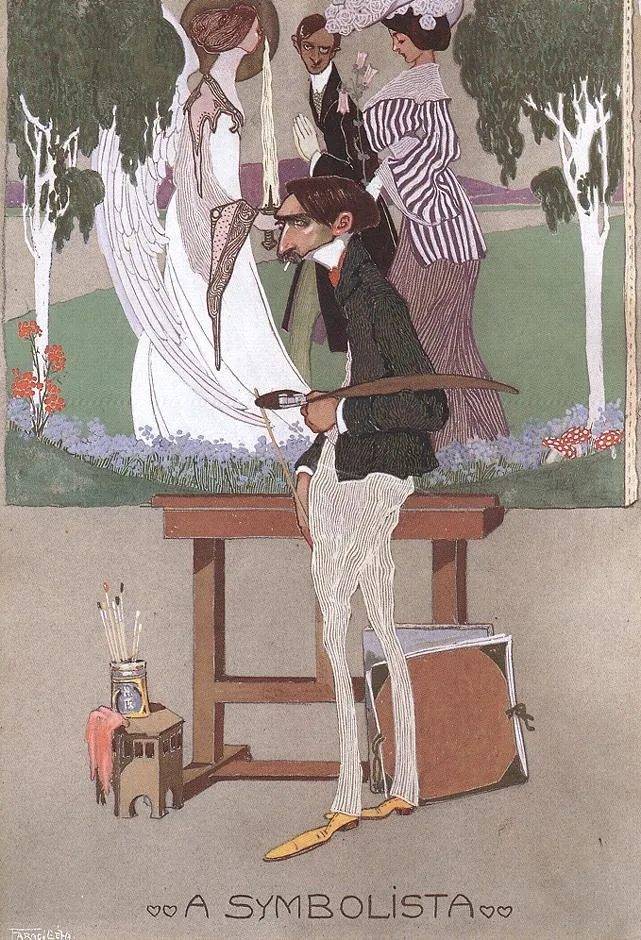
The Symbolist is an unspecified painting by the Symbolist artist Géza Faragó. It dates from 1908 and is held in the collection of the Hungarian National Gallery.
About this work
Overview
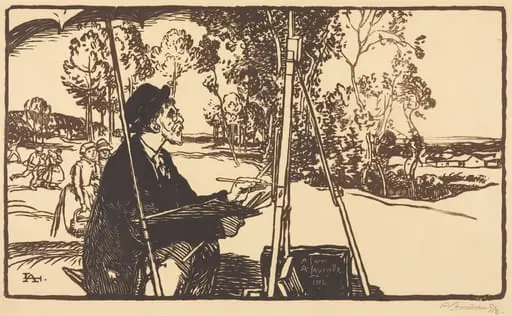
Géza Faragó’s 1908 canvas titled *The Symbolist* is part of the collection of the Hungarian National Gallery. The work presents a solitary figure in formal black attire, holding a brush and palette before an easel, set against a park scene populated by trees and blossoms. Behind the central figure, a small group in period costume, including a winged woman in white, adds narrative depth.
Subject & Meaning
The central man appears as an artist or allegorical creator, his tools emphasizing the act of painting. The surrounding figures, dressed in antiquated clothing and a winged female figure, evoke a blend of historical reference and mythic symbolism, suggesting the painter’s contemplation of artistic inspiration and the intersection of reality with imagined realms.
Technique & Style
Faragó employs a clear contrast of light and shadow reminiscent of chiaroscuro, giving the composition a three‑dimensional quality. The palette is restrained, with the dark suit and white garments standing out against the softer greens and floral tones of the background, highlighting the focal figure while maintaining a harmonious overall balance.
History & Provenance
Created in the early twentieth century, *The Symbolist* entered the holdings of the Hungarian National Gallery, where it remains on display. Its acquisition reflects the institution’s commitment to representing Hungarian modernist painting and preserving works that illustrate the symbolic currents influencing artists of that era.
Artist & collection