Artwork
Sculpted Grotesques with Roses and Tulips
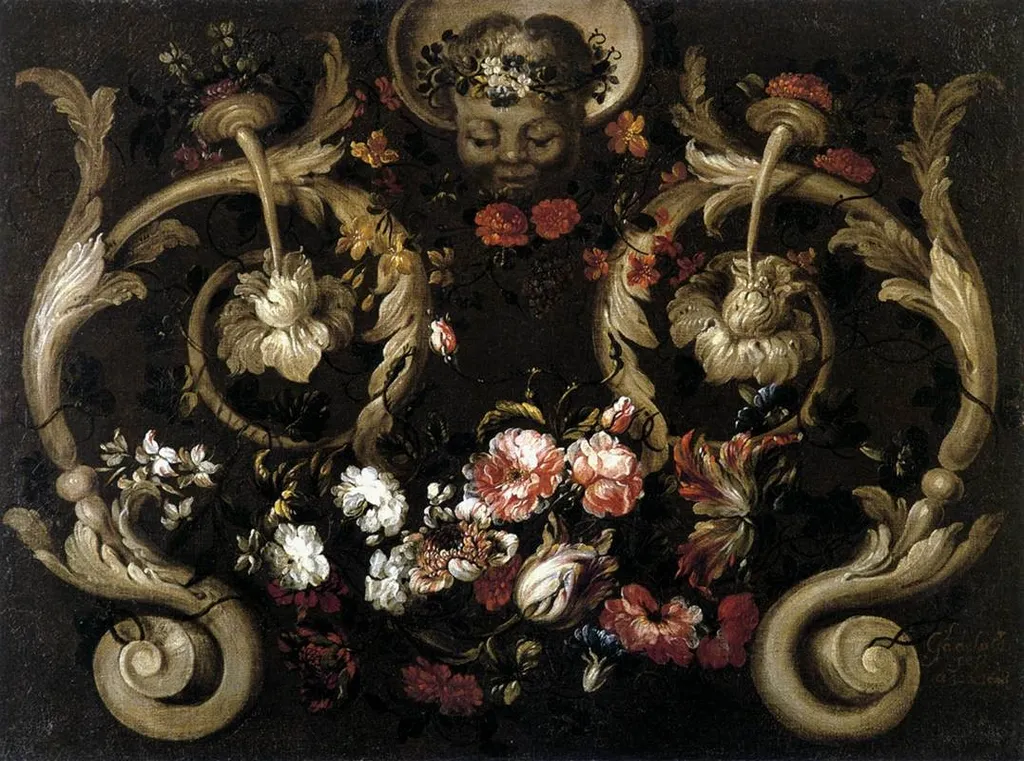
Sculpted Grotesques with Roses and Tulips is an oil painting by the Early Baroque Italian artist Gabriel de la Corte. It is held in the collection of the Museo del Prado.
About this work
The artist likely chose specific flowers for a reason, like their meanings or how they looked together.
The painting is called Sculpted Grotesques with Roses and Tulips.
It was made by Gabriel de la Corte in 1690.
The Museo del Prado holds this work, and it's classified as a floral piece.
I don't know what it looks like, but it's an oil painting.
The artist likely chose specific flowers for a reason, like their meanings or how they looked together.
You can learn more about this style by looking into the technique of glazing.
Overview
Gabriel de la Corte’s *Sculpted Grotesques with Roses and Tulips* is an oil painting dated to 1696. The work is part of the collection at the Museo del Prado and is classified as a floral still‑life. It combines sculptural grotesque figures with a lush arrangement of roses and tulips, exemplifying the decorative taste of the late seventeenth‑century Spanish Baroque.
Subject & Meaning
The composition juxtaposes fanciful, carved grotesques—typical of ornamental motifs—with a carefully selected bouquet of roses and tulips. Such floral choices often carried symbolic weight in the period, suggesting themes of love, transience, and the exotic appeal of tulips, while the grotesques add a playful, allegorical dimension.
Technique & Style
Executed in oil, the painting displays confident brushwork and a layered glazing technique that enhances the depth of colour and the tactile quality of the flowers. The decorative arrangement reflects the ornate visual language of early Baroque Italian still‑lifes, despite the artist’s Spanish background.
History & Provenance
De la Corte, a self‑taught painter who relied on modest sales to sustain himself, produced this work during a financially precarious phase of his career. The painting entered the Prado’s holdings in the nineteenth century, where it remains a representative example of his decorative still‑life output.
Context
The piece belongs to a broader trend of decorative still‑lifes that catered to a market for affordable, ornamental art. De la Corte’s focus on vases, garlands, and floral motifs aligns with contemporary tastes for elaborate interior decoration in Spanish aristocratic and bourgeois homes.
Artist & collection
Artist
Gabriel de la Corte (1648 – 6 August 1694) was a Spanish painter specializing in the painting of vases, baskets, garlands and signboards, that he had learned to paint without help of any teacher.

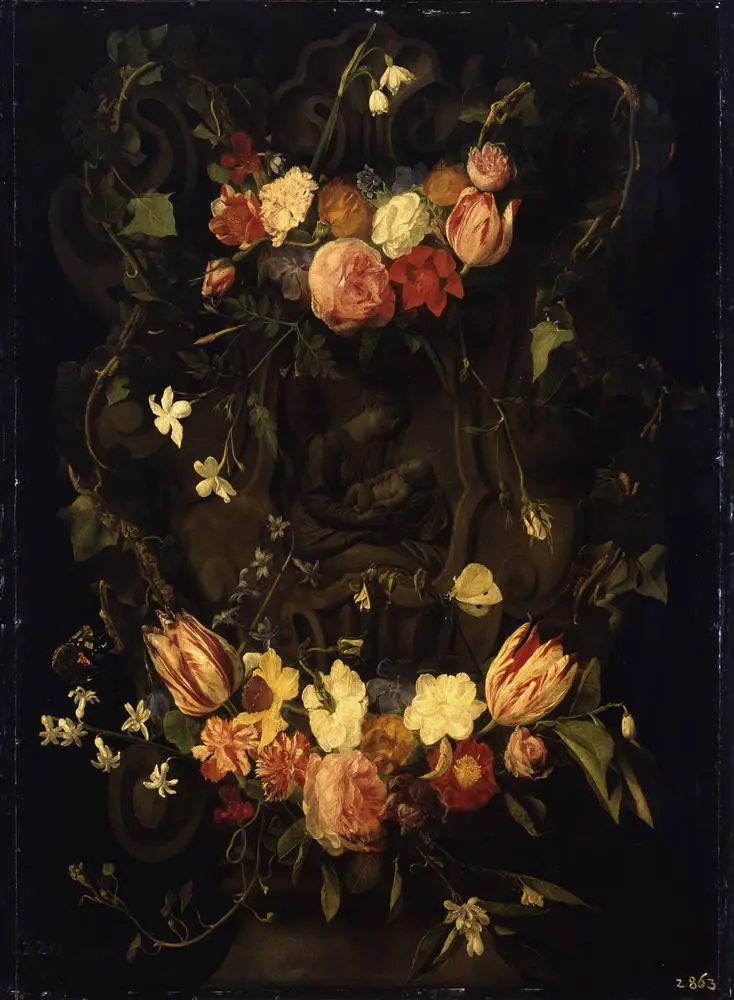 Sculpted cartouche adorned with flowergarlands with a representation of the Virgin and Christ-child
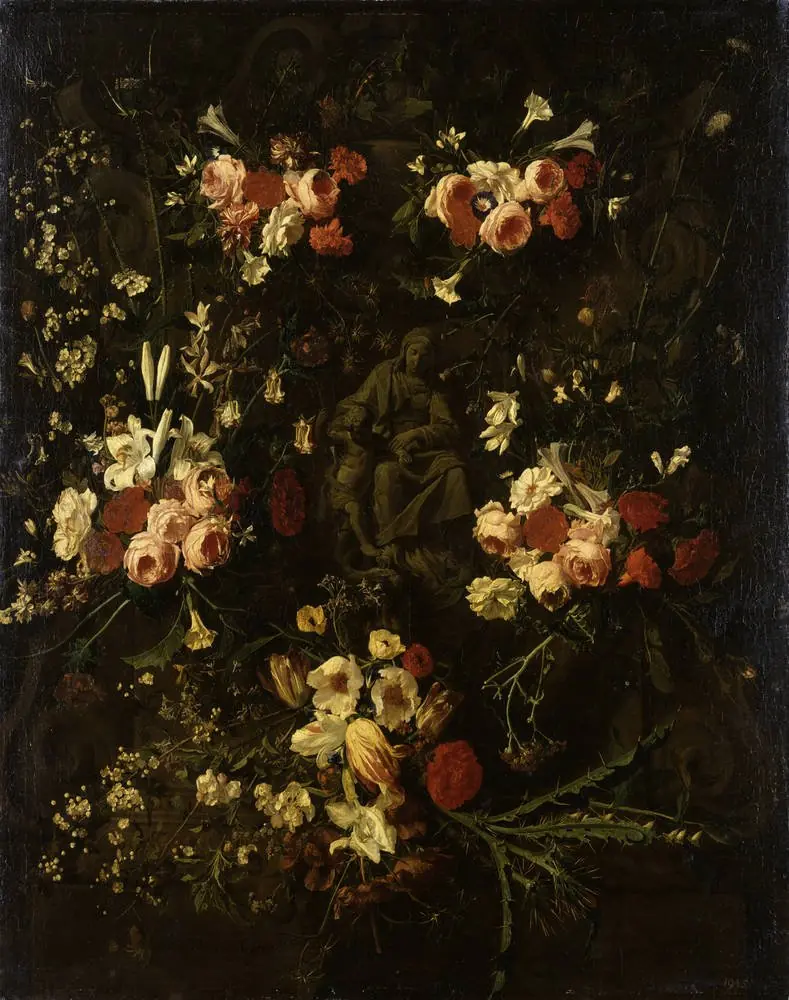 Flower garland cartouche around the Madonna and Child
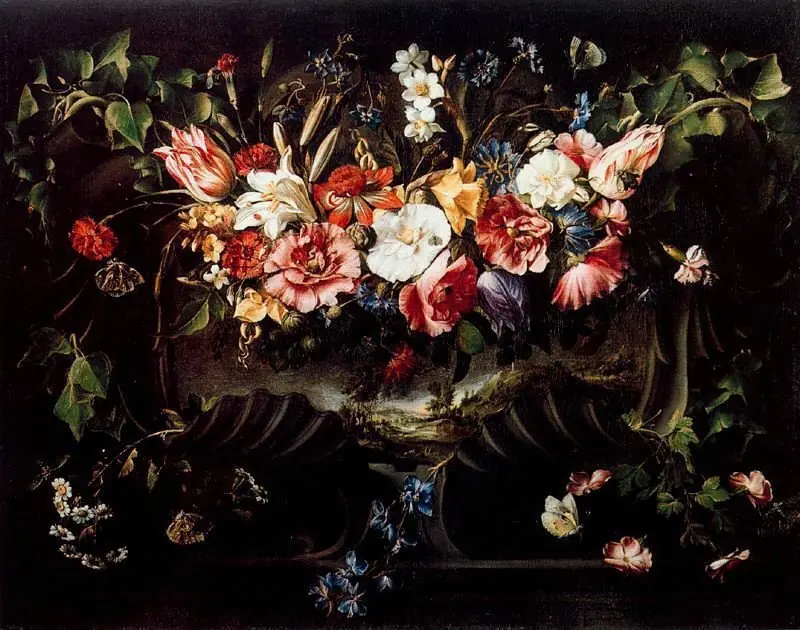 Garland of Flowers with a Landscape
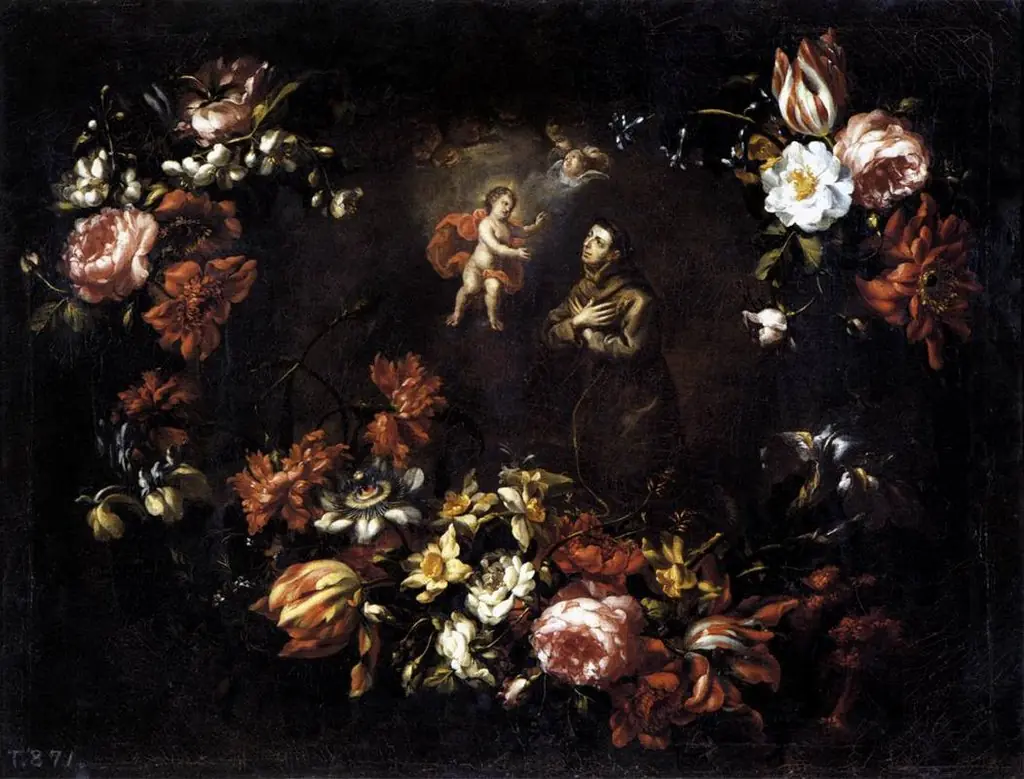 Garland of Flowers with Saint Anthony of Padua
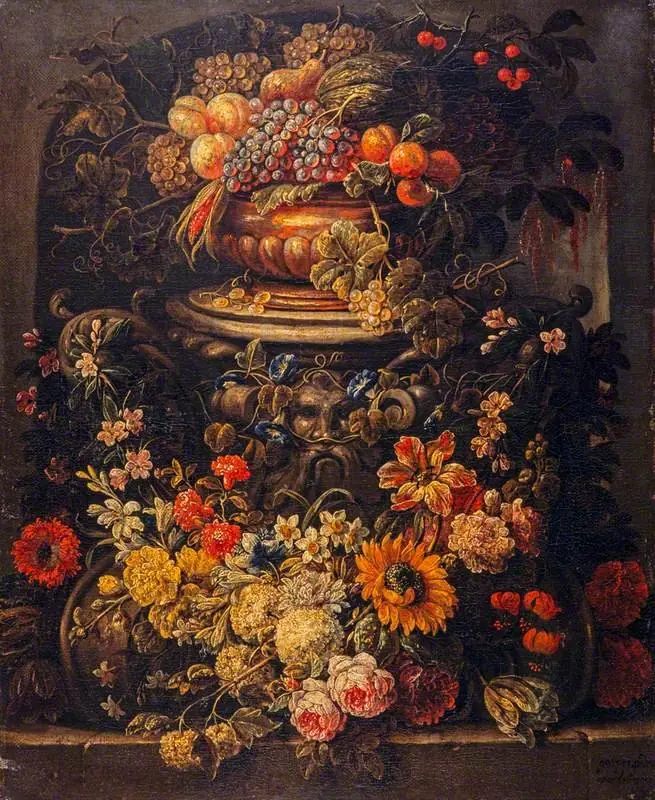 Still-life with Fruit and Flowers
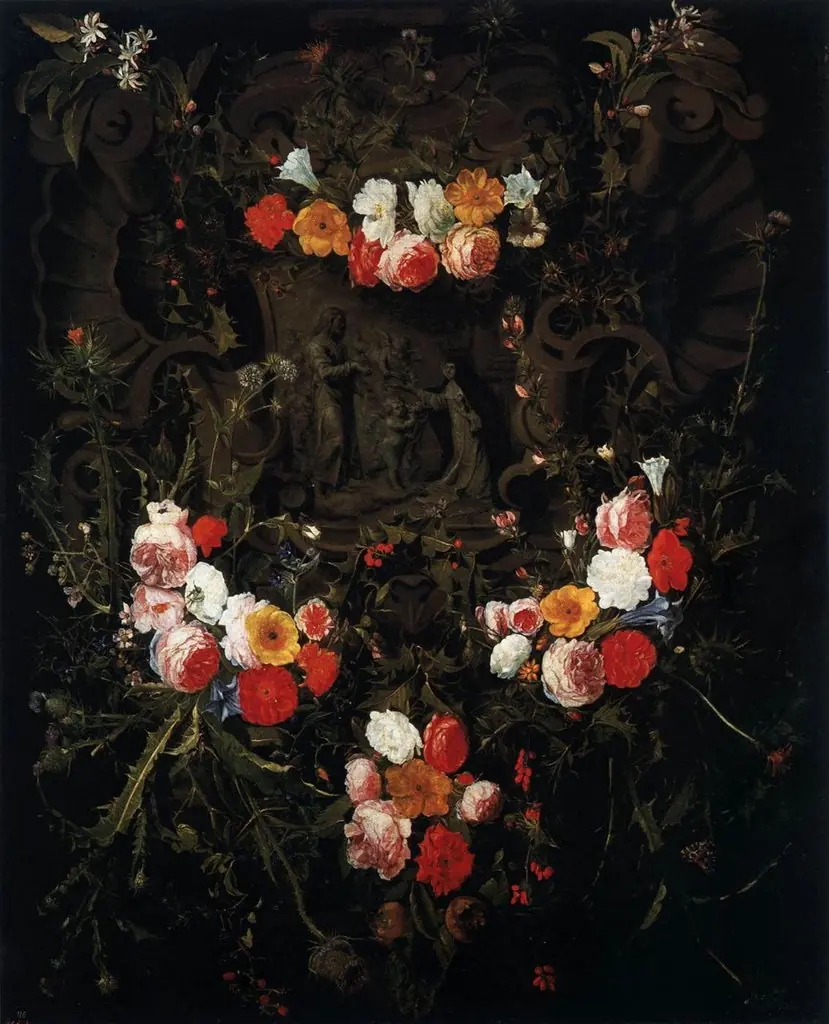 The Child Christ and St Theresa in a Flower Garland
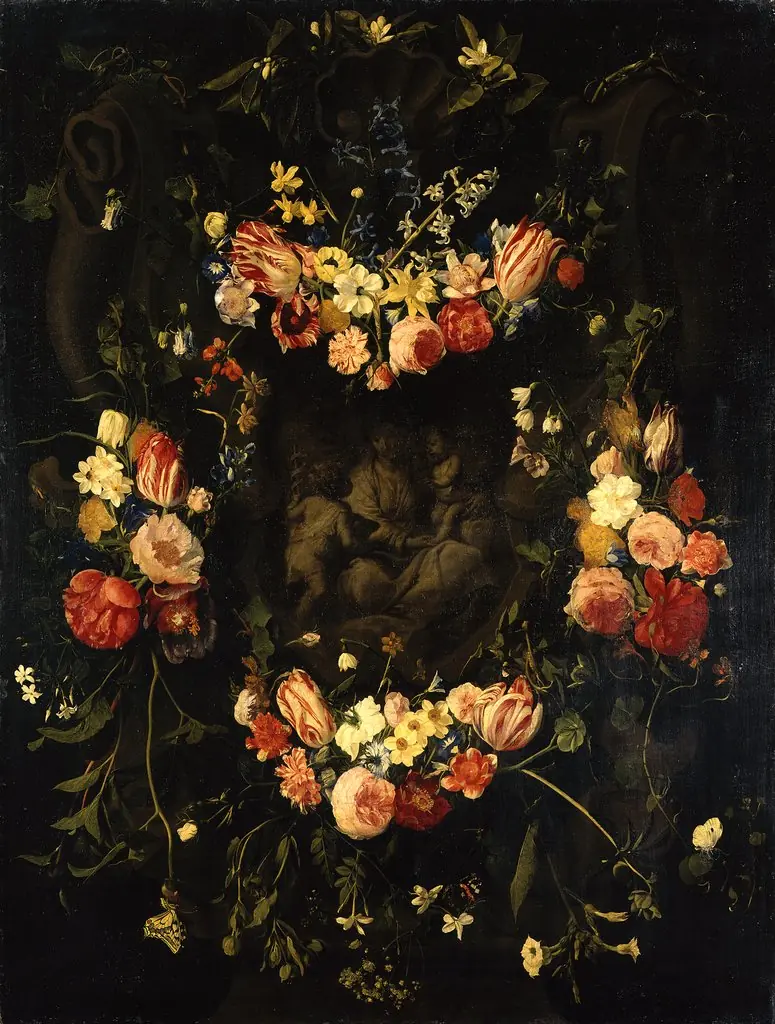 Cartouche addorned with flowergarlands surrounding a depiction of the Holy Family with the infant Saint John the Baptist
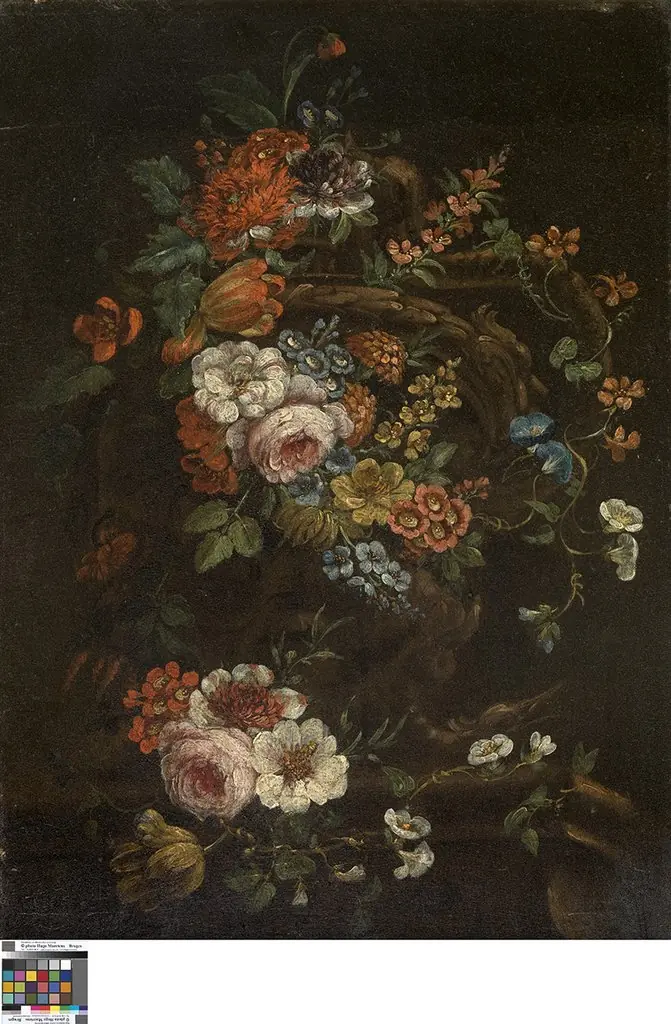 Bloemstilleven
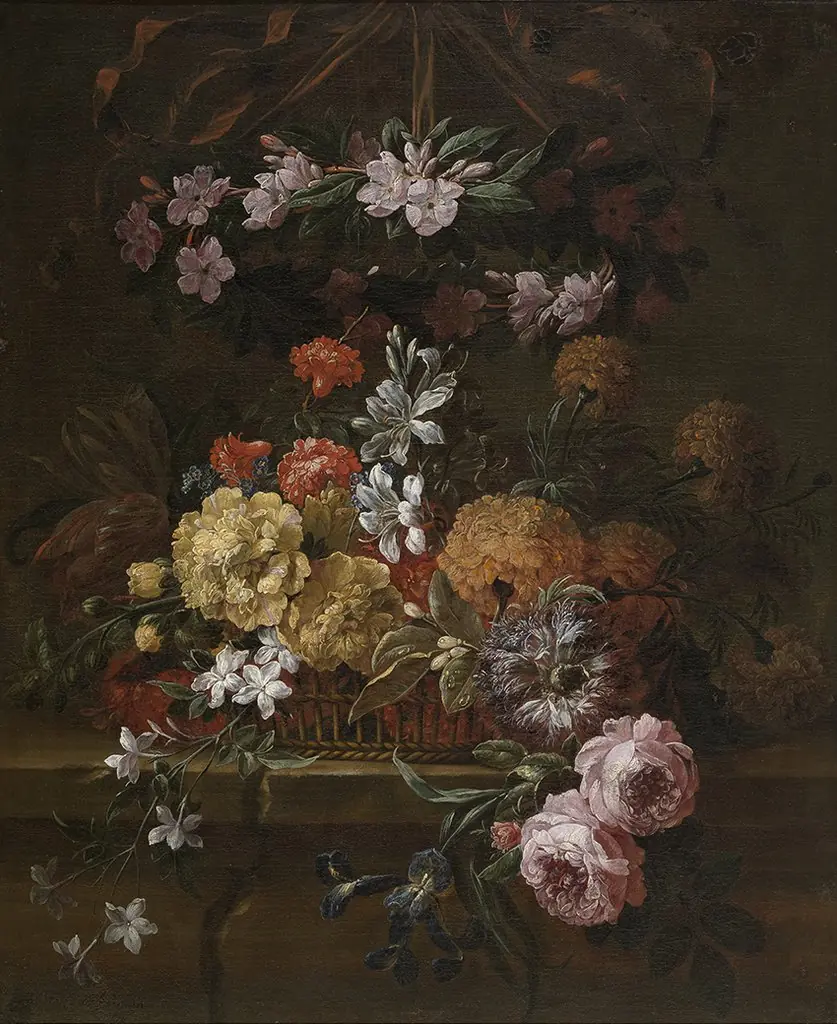 Flower Piece
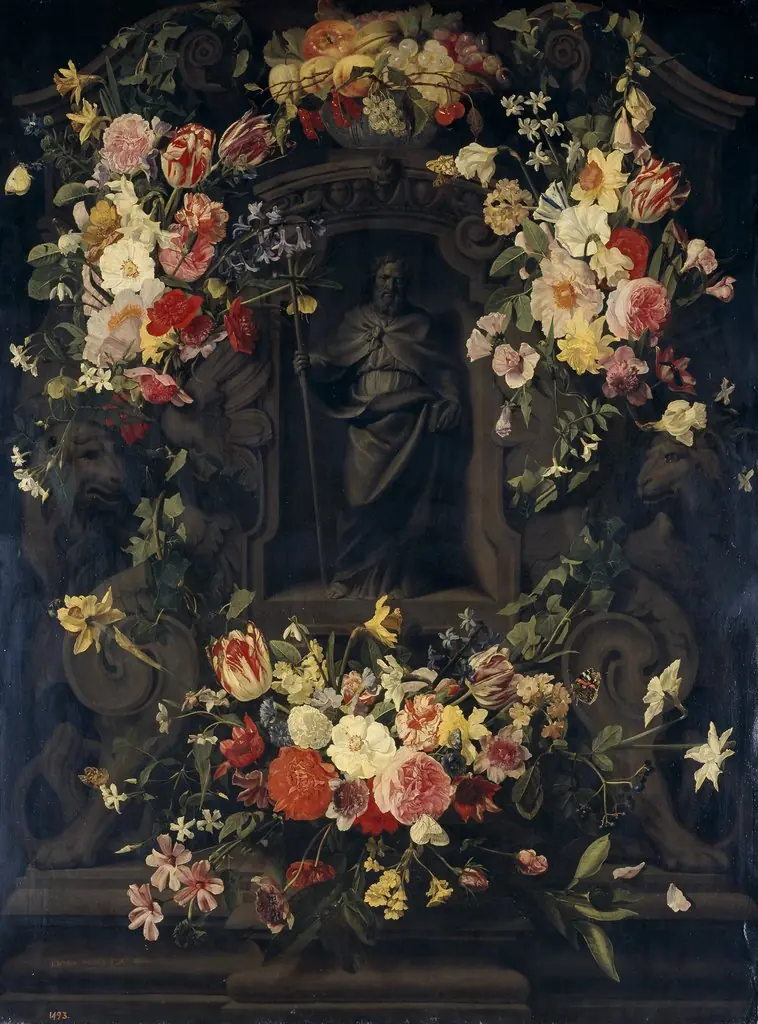 San Felipe en hornacina rodeada de flores
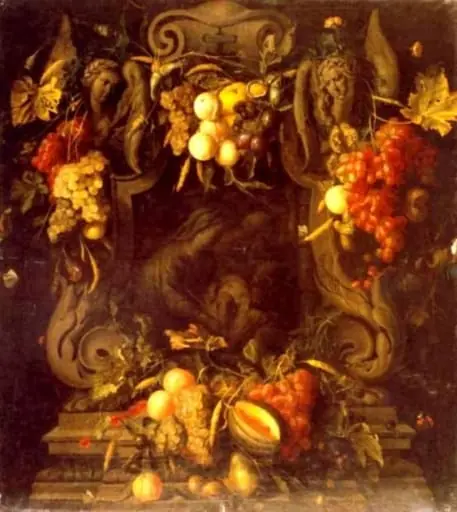 Fructe pe un piedestal antic cu Sfânta Familie