Artwork
Lace-Maker
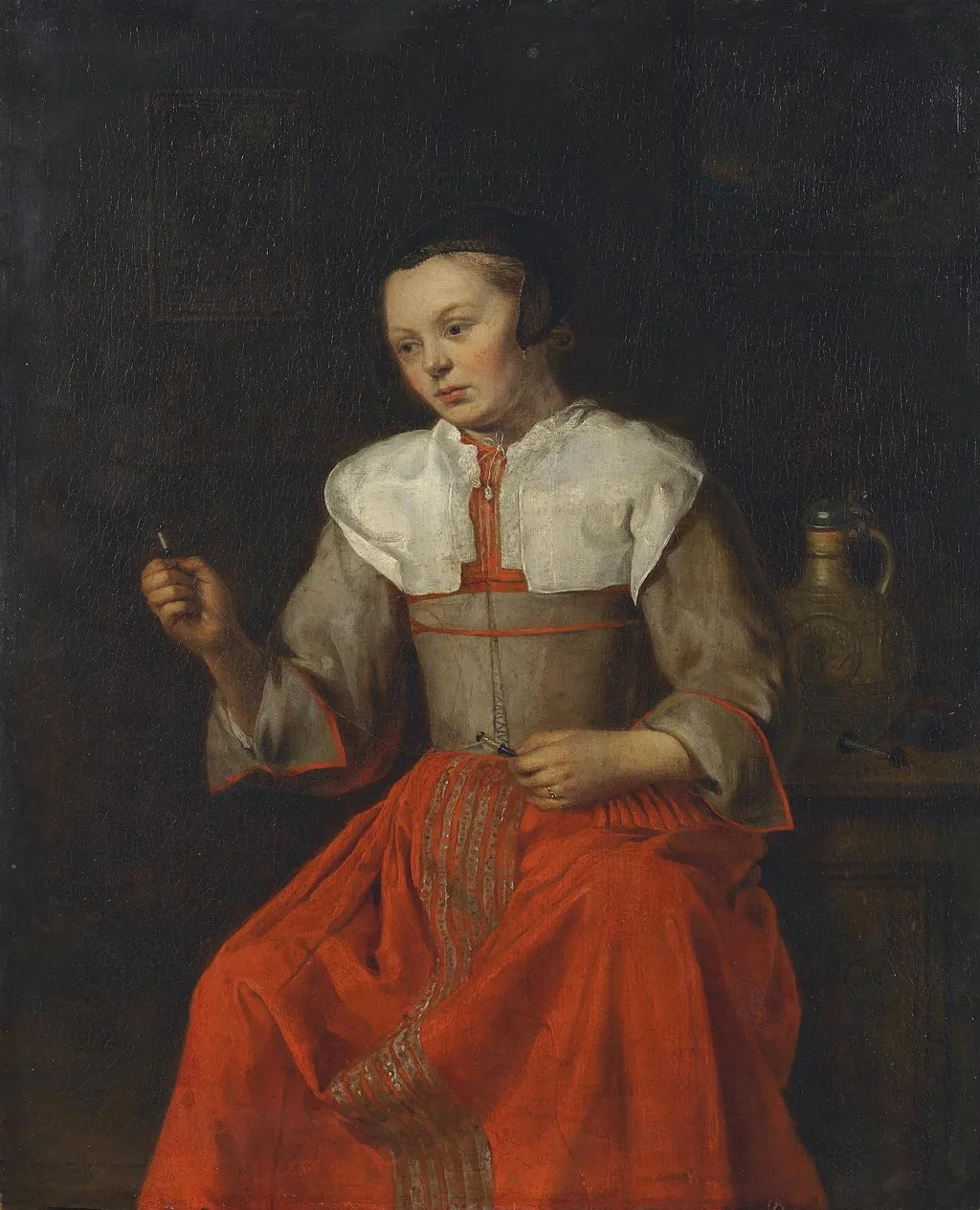
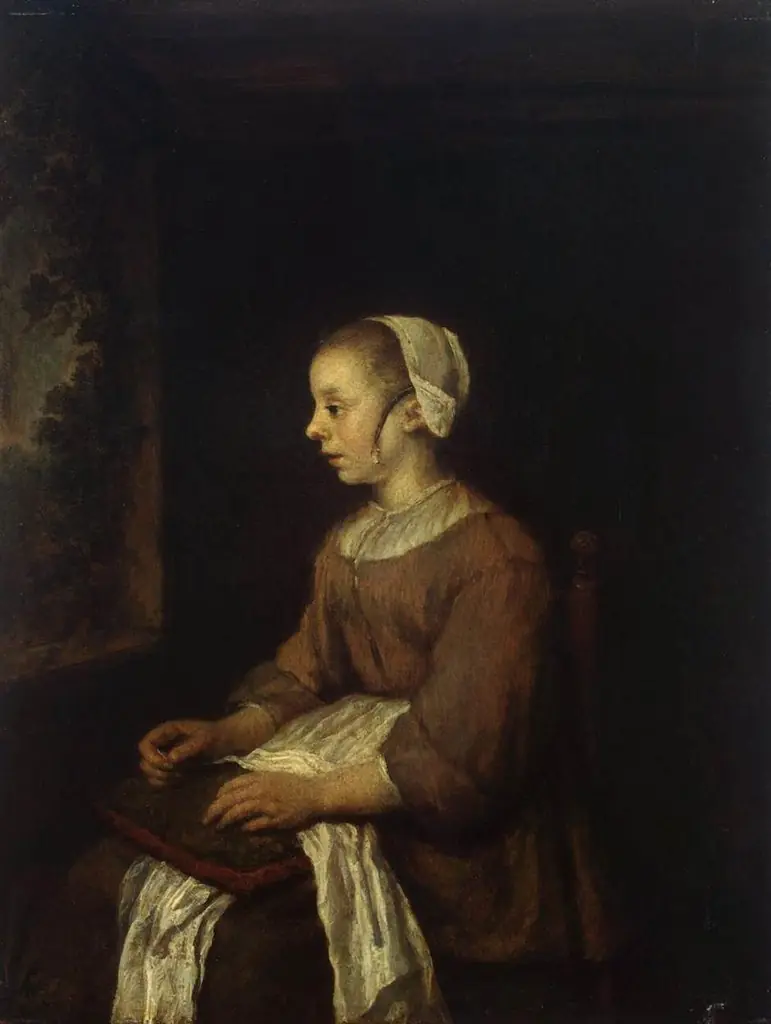
Lace-Maker is an oil painting by the Dutch Golden Age artist Gabriel Metsu. It dates from 1648 and is held in the collection of the Hermitage Museum.
About this work
Overview
Though he explored multiple genres, Metsu’s known output was limited, with only 14 signed and dated works among approximately 133 attributed pieces.
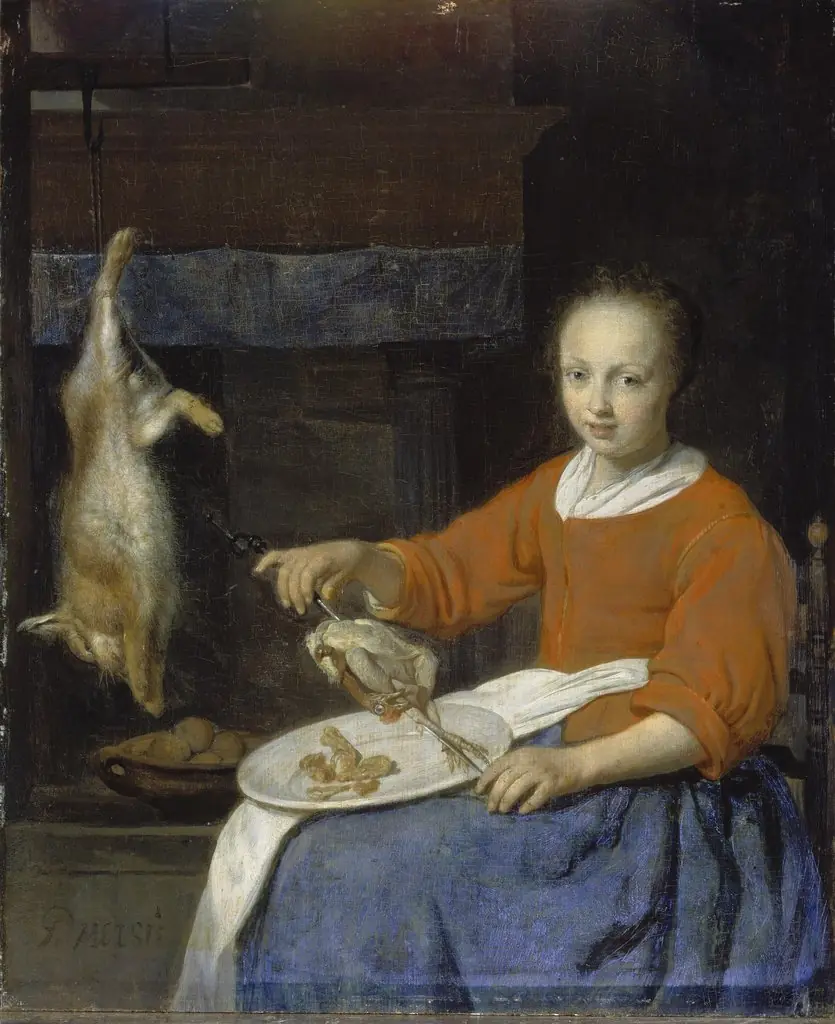
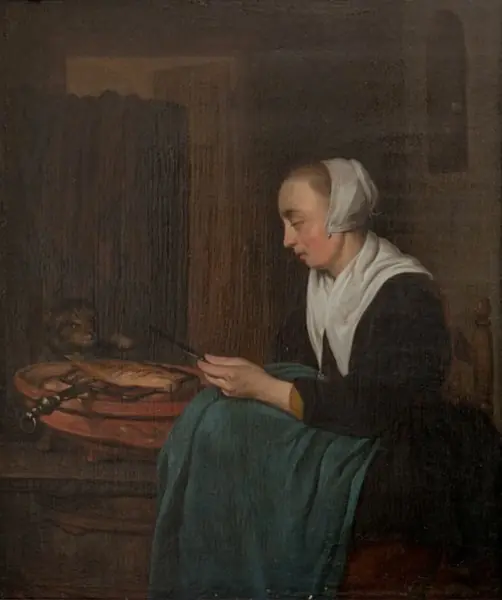
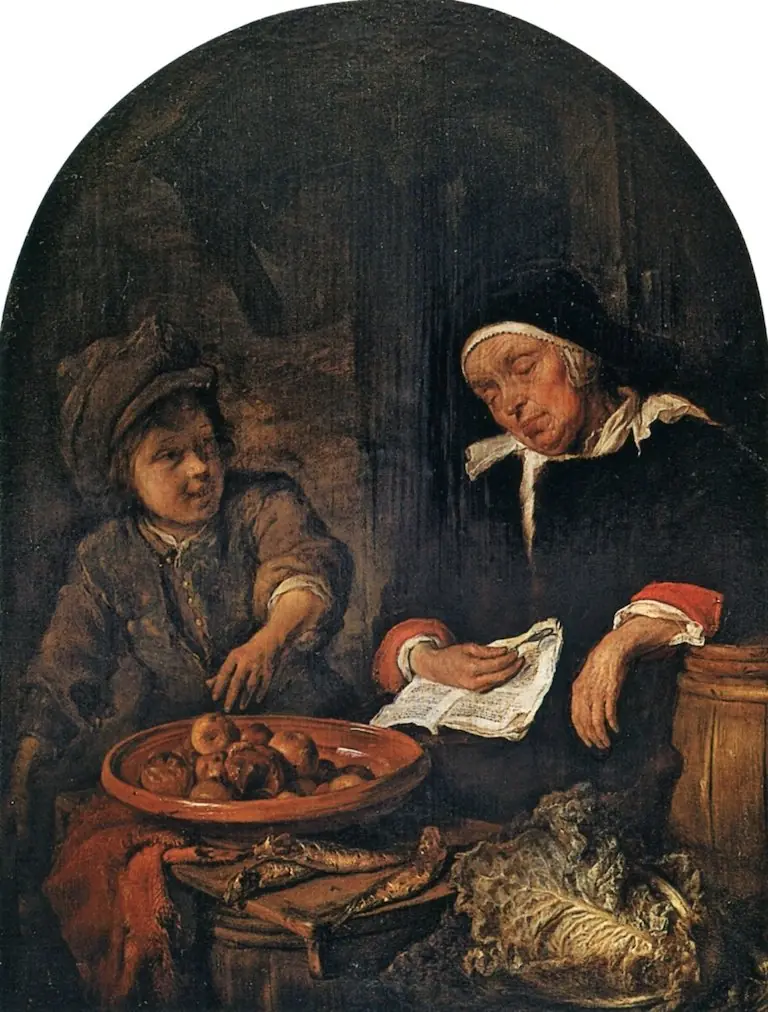
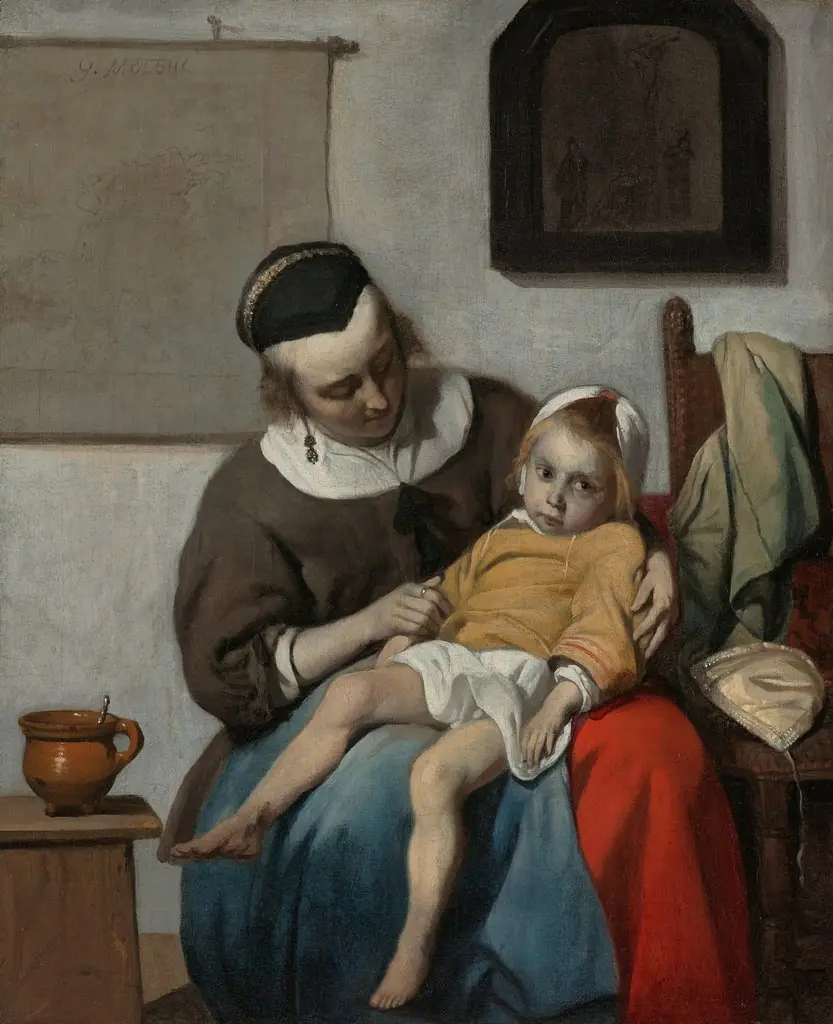
Gabriël Metsu painted *Lace-Maker* in 1648 during the Dutch Golden Age, a time of economic prosperity and artistic innovation in the Netherlands. Though he explored multiple genres, Metsu’s known output was limited, with only 14 signed and dated works among approximately 133 attributed pieces. This painting exemplifies his focus on intimate domestic scenes, rendered with careful attention to detail and quiet realism.
Subject & Meaning
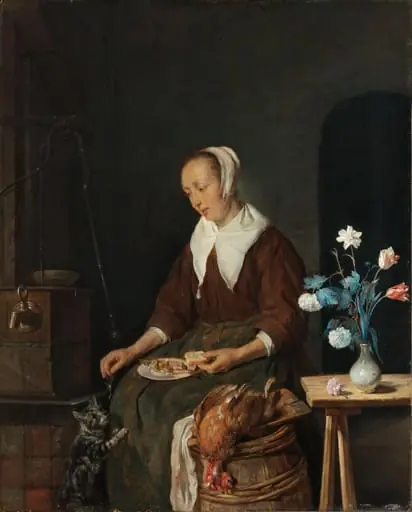
The painting portrays a woman absorbed in the meticulous task of lace-making, a domestic activity associated with patience and skill. Rather than idealizing the subject, Metsu presents her with quiet dignity, emphasizing the labor behind fine textile production. The scene reflects broader cultural values in 17th-century Holland, where domestic virtue and artisanal craft were celebrated in everyday life.
Technique & Style
Metsu employs subtle chiaroscuro to model the woman’s face and hands, drawing attention to the delicate motion of her fingers. The contrast between her illuminated skin and the deep, unbroken background enhances the sense of focus and stillness. His brushwork is precise yet unobtrusive, particularly in rendering the texture of lace and the sheen of fabric, demonstrating a refined command of light and material.
History & Provenance
The painting entered the collection of the State Hermitage Museum in Saint Petersburg, where it remains today. Its journey to Russia is not fully documented, but it likely arrived through 18th- or 19th-century European art acquisitions. The work’s preservation and display in a major imperial collection underscore its recognized significance among Dutch genre paintings of the period.
Context
In mid-17th-century Dutch cities, genre scenes depicting domestic labor became increasingly popular among middle-class patrons. Lace-making, a time-intensive craft often performed by women, symbolized both economic contribution and moral restraint. Metsu’s depiction aligns with this trend, offering a restrained, unsentimental view of private life that resonated with contemporary ideals of order and diligence.
Legacy
Though Metsu’s oeuvre is small, *Lace-Maker* exemplifies the quiet power of Dutch genre painting. Its emphasis on everyday labor, rendered with technical precision and emotional restraint, influenced later artists interested in intimate realism. The work continues to be studied for its nuanced portrayal of gender, craft, and the interplay of light and texture in 17th-century Dutch art.
Own this work as a print
Artist & collection
Artist
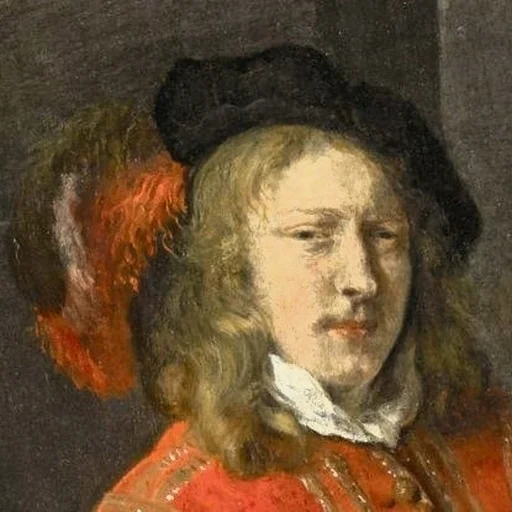
Gabriël Metsu (1629–1667) was a Dutch painter of history paintings, still lifes, portraits, and genre works.