Artwork
Untitled
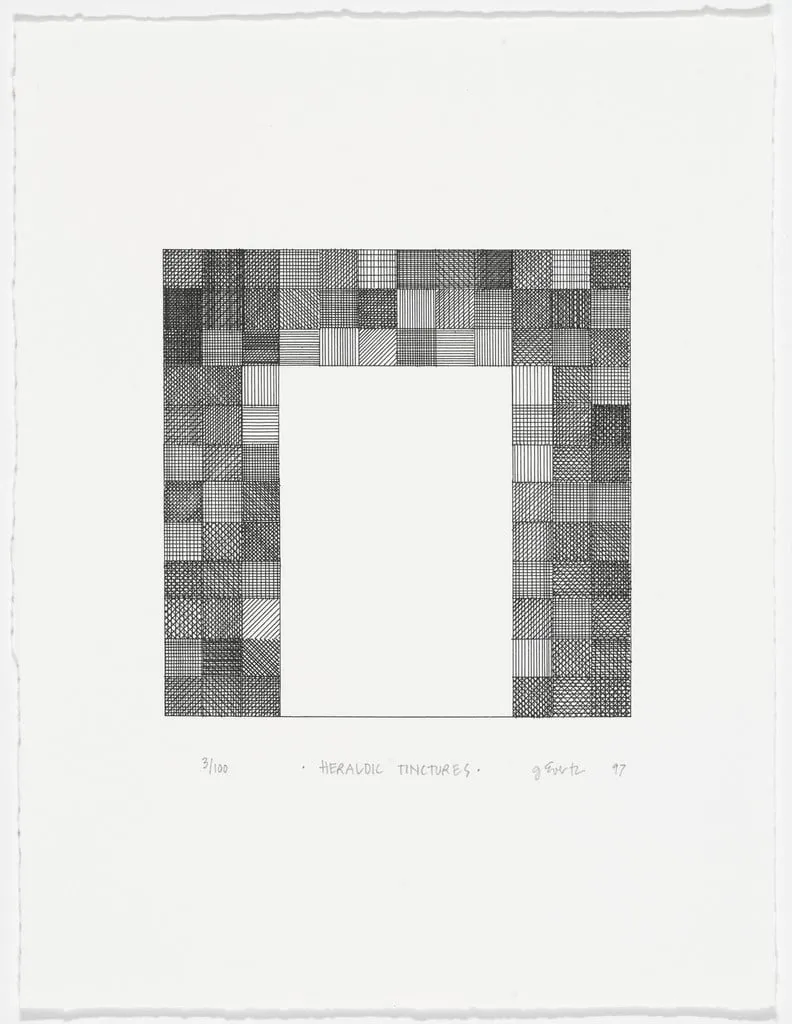
Untitled is an ink print by Gabriele Evertz. It dates from 1997 and is held in the collection of the Museum of Modern Art.
About this work
If you're interested in learning more about the artist's technique, you might want to look up lithography.
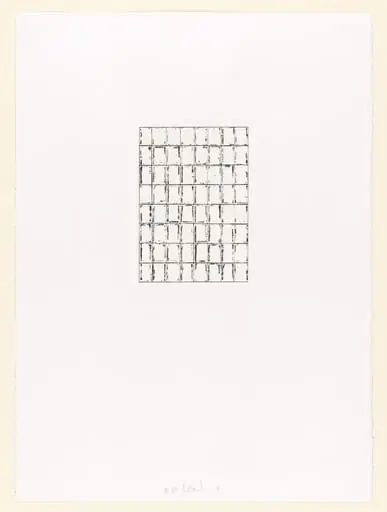
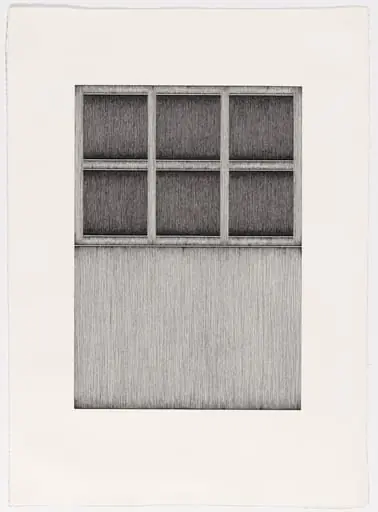
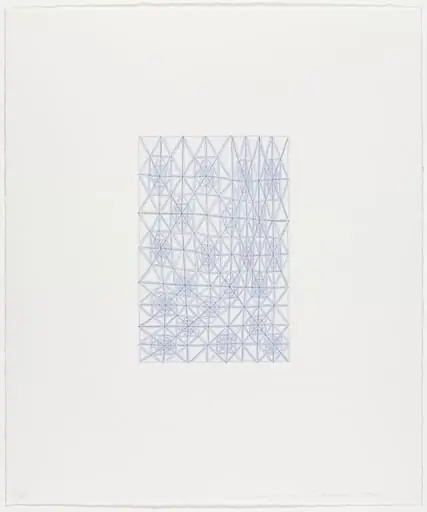
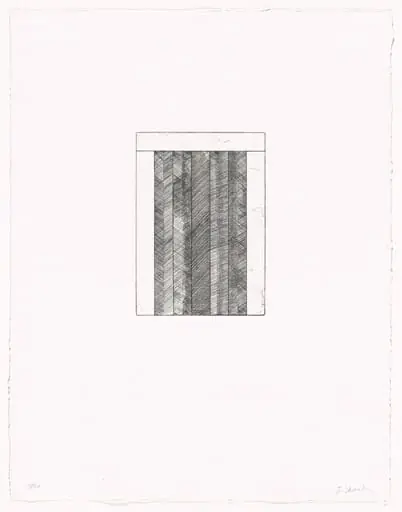
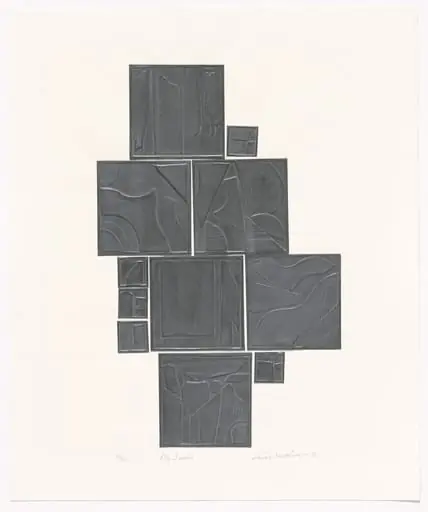
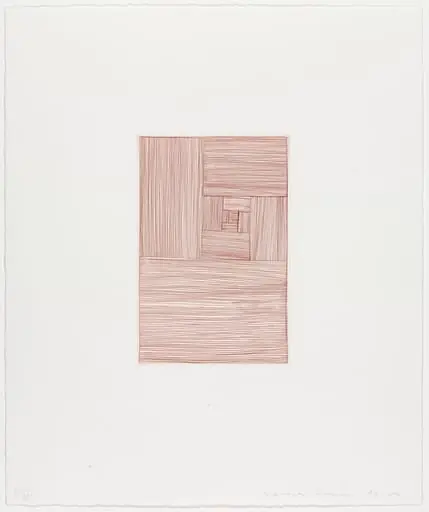
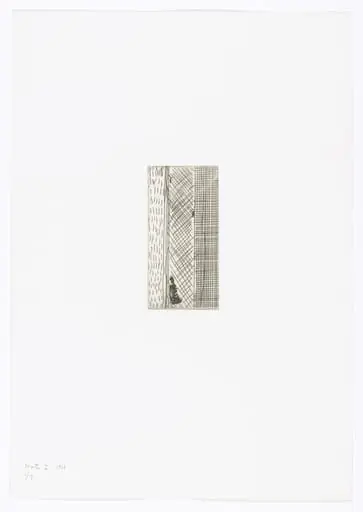
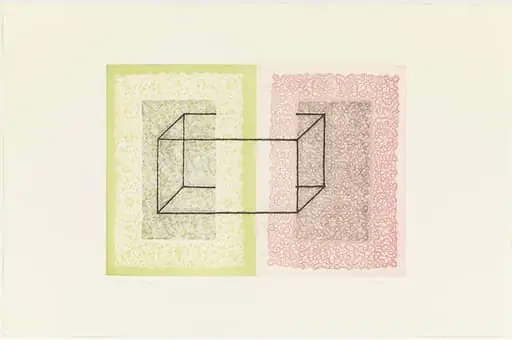
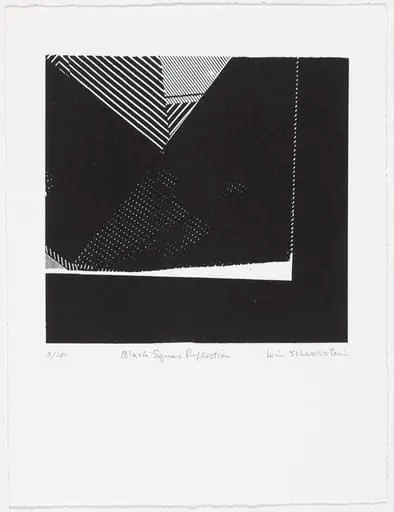
This image is a lithograph print, part of a portfolio of forty. It features a large square in the center, surrounded by a border of smaller squares and rectangles. The shapes are filled with various patterns, including lines, dots, and checks.
The print is done in black and white, with a focus on geometric shapes and patterns. The title of the work is "Untitled," and it was created by American artist Gabriele Evertz in 1997.
The lithograph is held at The Museum of Modern Art. If you're interested in learning more about the artist's technique, you might want to look up lithography.
Overview
Gabriele Evertz created this lithograph in 1997 as one of forty works in a unified portfolio. Produced in black and white, the print belongs to The Museum of Modern Art’s collection. It exemplifies her sustained interest in structured visual systems, using repetition and geometry to explore perception rather than representation. Evertz, born in Berlin in 1945 and active in the United States, approaches printmaking as an extension of her broader investigation into color and form.
Subject & Meaning
The work presents no figurative subject. Instead, it centers on a large square flanked by a grid of smaller geometric units—rectangles and squares—each filled with distinct linear, dotted, or checked patterns. These arrangements invite close looking, emphasizing rhythm, contrast, and spatial relationships. The absence of color directs attention to structure and density, reflecting Evertz’s interest in how visual order generates meaning without narrative or symbolism.
Technique & Style
Executed in lithography, the print relies on the medium’s capacity for fine line work and tonal variation. Evertz used precise, hand-drawn marks to create patterns within each shape, exploiting the lithographic stone’s ability to hold detailed textures. The black-and-white palette eliminates chromatic distraction, reinforcing the formal rigor of her compositions. Her style aligns with post-minimalist concerns, prioritizing systematic arrangement over expressive gesture.
History & Provenance
The lithograph was produced in 1997 as part of a limited portfolio of forty prints, all conceived as a cohesive body of work. It entered The Museum of Modern Art’s collection shortly after its creation, indicating early institutional recognition of Evertz’s contributions to contemporary printmaking. The portfolio remains intact in the museum’s holdings, preserving the artist’s intended sequence and context for each individual piece.
Context
Evertz’s work emerged during a period when abstract artists were re-examining the foundations of geometric composition, often in dialogue with minimalism and op art. Her focus on pattern and structure resonated with broader inquiries into perception and systems theory. As both an artist and educator, she contributed to a generation of practitioners who treated abstraction not as decoration but as a mode of critical inquiry.
Legacy
This lithograph exemplifies Evertz’s enduring influence on contemporary printmaking and abstract art education. Her systematic approach to form has informed subsequent artists exploring non-representational structures. The work’s inclusion in MoMA’s collection affirms its role in documenting the evolution of abstract practices in late 20th-century American art, particularly through the medium of print.
Artist & collection
Artist
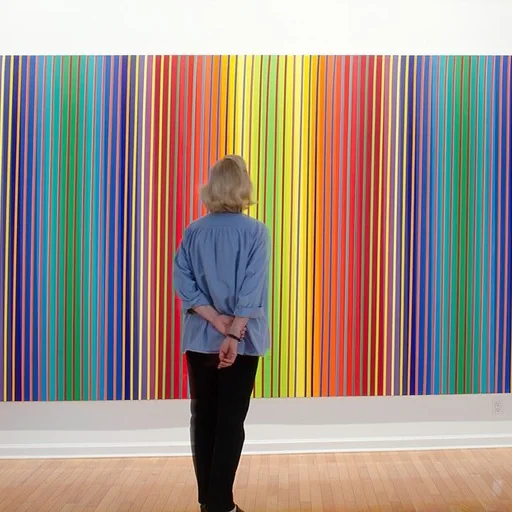
Gabriele Evertz (born 1945 in Berlin, Germany) is an American painter, curator and professor who is applying the history and theory of color in her work. She is known for abstract color painting and Geometric abstraction.