Artwork
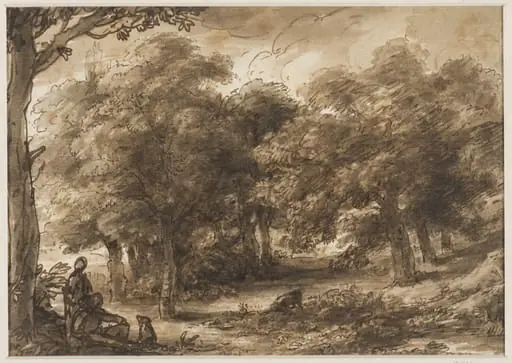
Woods Near a Village with Rabbit Catchers and Their Greyhounds
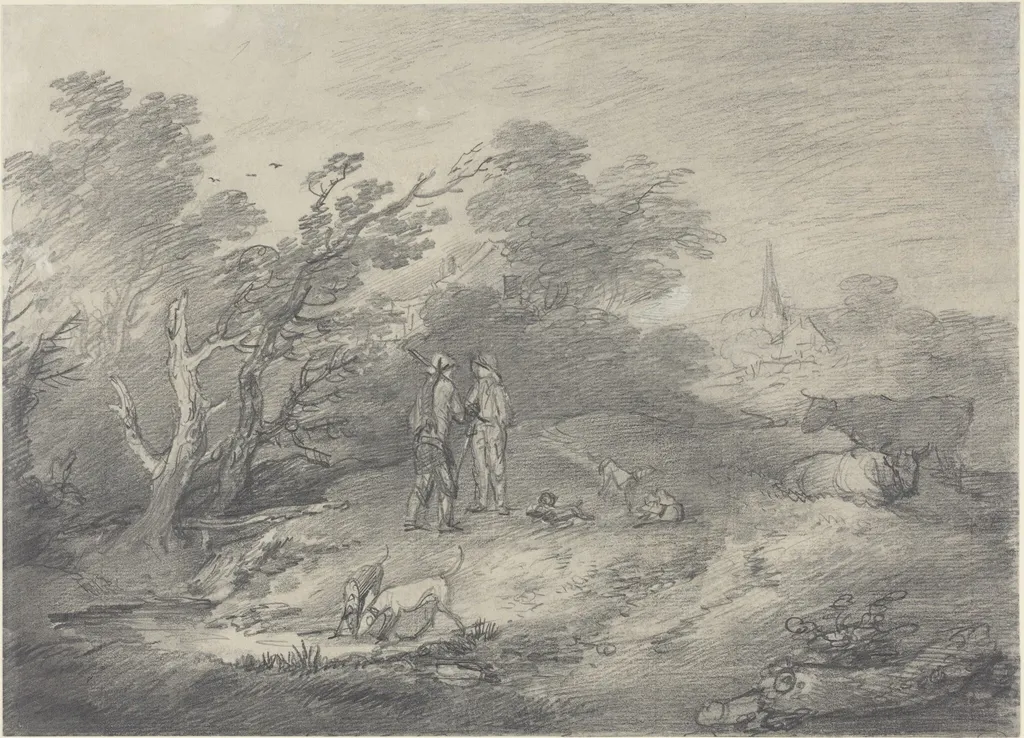
Woods Near a Village with Rabbit Catchers and Their Greyhounds is a graphite drawing by the Romanticist artist Thomas Gainsborough. It dates from 1754 and is held in the collection of the National Gallery of Art.
About this work
Overview
The work’s loose, spontaneous quality suggests it was made outdoors, possibly as a study or personal record of a scene observed in the English countryside.
Created around 1754, this graphite drawing by Thomas Gainsborough captures a quiet rural moment near a village. Executed with minimal means—only graphite on laid paper—it reflects the artist’s interest in landscape beyond his more formal portrait commissions. The work’s loose, spontaneous quality suggests it was made outdoors, possibly as a study or personal record of a scene observed in the English countryside.
Subject & Meaning
The scene portrays two men beside a tree, each holding long sticks, with greyhounds near two rabbits on the ground and a third lying nearby. The presence of hunting activity hints at rural livelihoods and land use, but the tone is subdued rather than dramatic. Gainsborough focuses on the stillness after the chase, emphasizing the quiet interplay between people, animals, and the natural environment rather than the violence of the hunt.
Technique & Style
Gainsborough employed soft, smudged graphite lines to suggest form and atmosphere, avoiding sharp contours. The trees and figures emerge through layered, delicate strokes, creating a hazy, atmospheric effect. The lack of detail in the distant village and the blurred edges of the figures reflect a preference for mood over precision. This approach reveals his sensitivity to light and texture, qualities later evident in his painted landscapes.
History & Provenance
The drawing is one of several surviving landscape studies from Gainsborough’s early career, made before his rise to prominence as a portraitist. Likely created during travels in Suffolk or Essex, it remained in private hands for much of its history. Its survival as a standalone work underscores its value as evidence of Gainsborough’s independent artistic interests outside his commissioned output.
Context
In mid-18th-century England, landscape drawing was often seen as preparatory rather than finished art. Gainsborough, alongside Richard Wilson, helped elevate the genre by treating natural scenes with poetic attention. This work reflects a growing interest in everyday rural life, distinct from idealized classical landscapes, aligning with broader cultural shifts toward observing the real and local.
Legacy
Though less known than his portraits, this drawing exemplifies Gainsborough’s foundational role in British landscape art. Its informal, observational style influenced later artists who sought to capture nature directly. The work stands as a quiet testament to his ability to find significance in modest, transient moments, helping to redefine landscape as a subject worthy of artistic contemplation.
Own this work as a print
Artist & collection
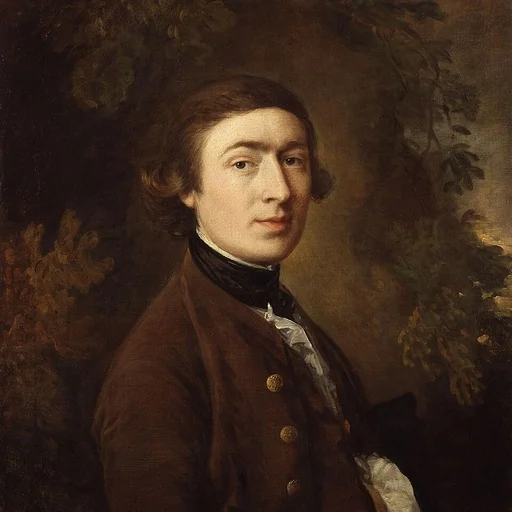
Artist
Thomas Gainsborough (; 14 May 1727 (baptised) – 2 August 1788) was an English painter, draughtsman and printmaker who specialised in portrait and landscape painting.

 Wooded landscape with figures
 Landscape with a Cow
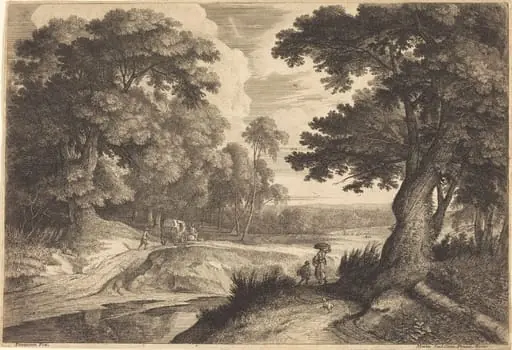 Edge of a Wood with Peasants Going to Market
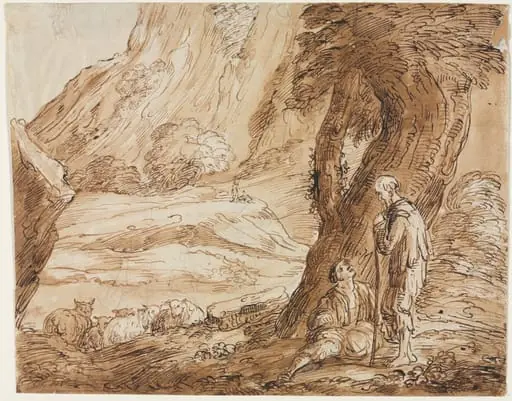 Landscape with Sheep and Two Shepherds
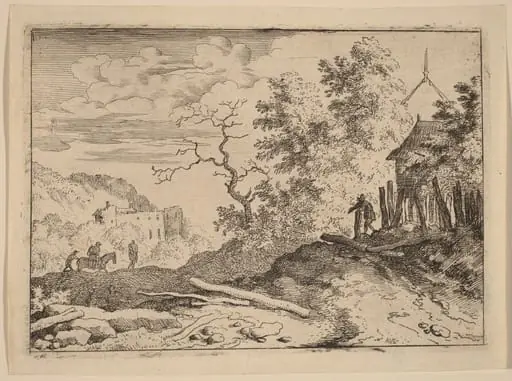 Hut with the Remains of a Hedge
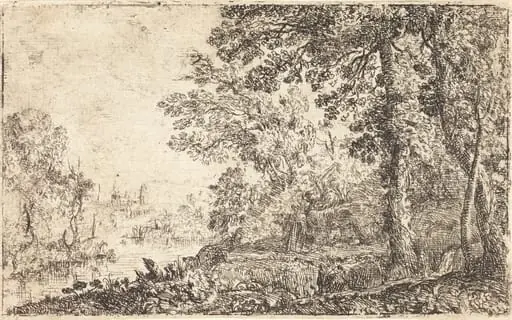 The Vision (L'apparition)
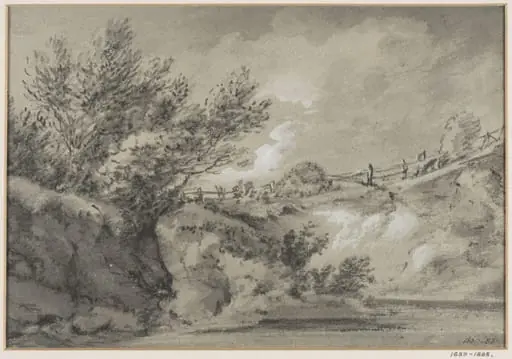 Landscape with high bank and railings
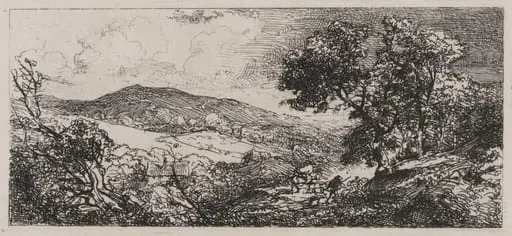 Valley View, Man with a Donkey and a Dog
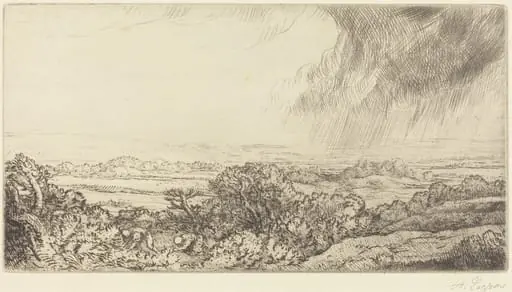 Mushroom Gatherers (Les ramasseurs de champignons)
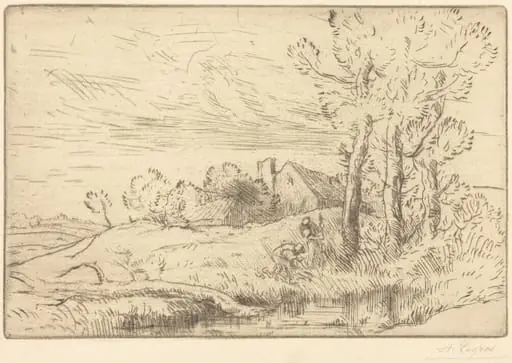 The House of the Well (La maison du puits)
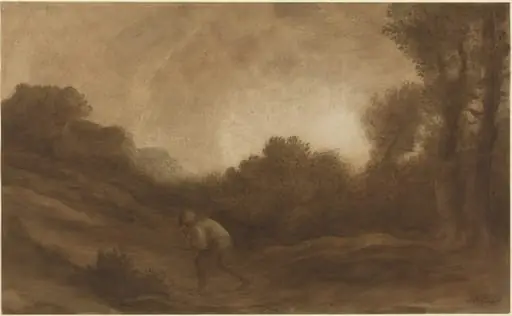 Landscape, Evening
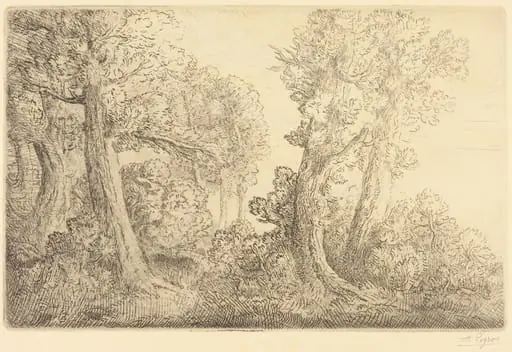 Near the Woods, Veronne (Pres du bois, Veronne)