Artwork
Landscape with a Cow
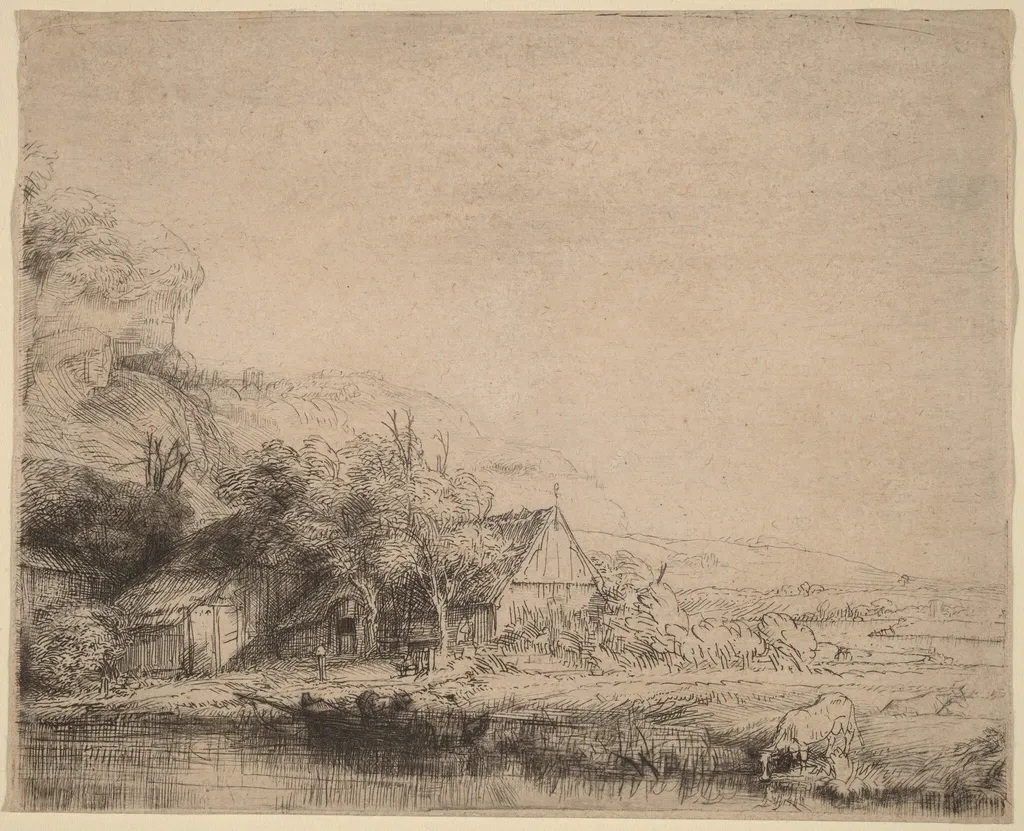
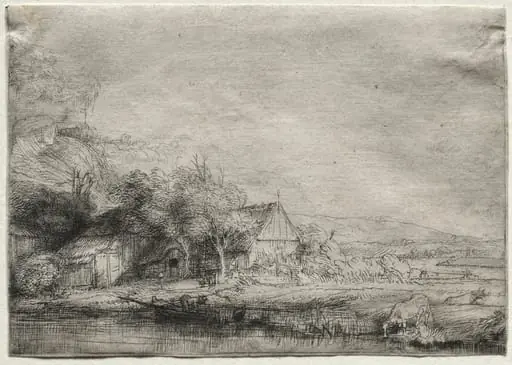
Landscape with a Cow is an ink print by the Baroque artist Rembrandt. It dates from 1650 and is held in the collection of the National Gallery of Art.
About this work
Overview
Created around 1650, this print by Rembrandt van Rijn depicts a tranquil rural scene through the combined techniques of etching and drypoint. Unlike finished compositions, it functions as a spontaneous study, capturing the quiet atmosphere of a countryside with minimal detail. The work emphasizes mood over precision, reflecting Rembrandt’s interest in natural light and informal observation.
Subject & Meaning
The scene centers on a single cow standing beside a still pond, surrounded by modest dwellings and scattered trees. There is no narrative or human activity—only the quiet presence of animals and architecture within nature. The composition suggests contemplation of rural life, not as an idealized pastoral, but as an unembellished moment observed directly from the landscape.
Technique & Style
Rembrandt employed drypoint to create rich, velvety darks through burrs formed by scratching the plate, while etching provided finer linear contours.
Rembrandt employed drypoint to create rich, velvety darks through burrs formed by scratching the plate, while etching provided finer linear contours. He layered strokes with varying density—some areas densely packed, others barely touched—to suggest texture and shifting light. The loose, almost sketchlike quality reveals his process: working quickly to capture fleeting effects of atmosphere rather than refining form.
History & Provenance
The print was produced during Rembrandt’s later years, a period marked by increasing experimentation with printmaking. It likely circulated among collectors and fellow artists as a private study rather than a commercial product. No definitive early ownership records exist, but its presence in major collections today reflects its recognition as a significant example of his graphic work.
Context
In mid-17th century Holland, landscape prints were valued for their intimacy and technical innovation. Rembrandt’s focus on ordinary rural scenes diverged from grand historical or mythological subjects common elsewhere. His use of drypoint and expressive line aligned with a broader Dutch interest in observing the everyday, transforming simple subjects into nuanced visual studies.
Legacy
This work exemplifies Rembrandt’s influence on the expressive potential of printmaking. Later artists studied his ability to convey depth and mood through minimal means. Though not widely reproduced in his lifetime, its raw immediacy and technical subtlety have secured its place in the canon of European graphic art as a quiet but profound exploration of light and place.
Own this work as a print
Artist & collection
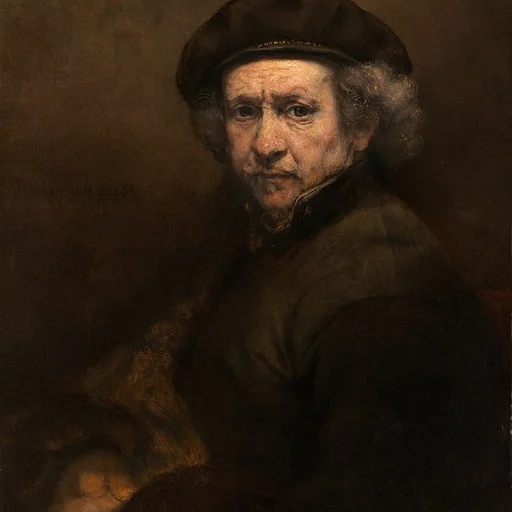
Artist
Rembrandt Harmenszoon van Rijn (15 July 1606 – 4 October 1669), known mononymously as Rembrandt, was a Dutch Golden Age painter, printmaker, and draughtsman.

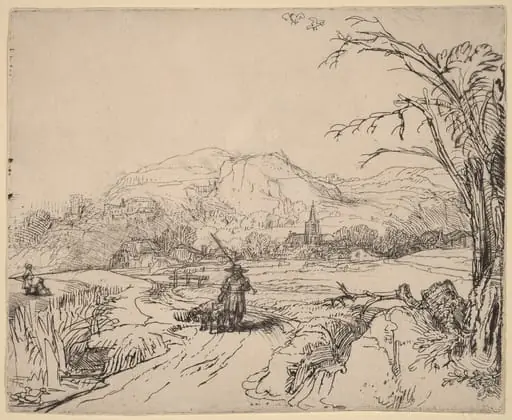 Landscape with Sportsman and Dog
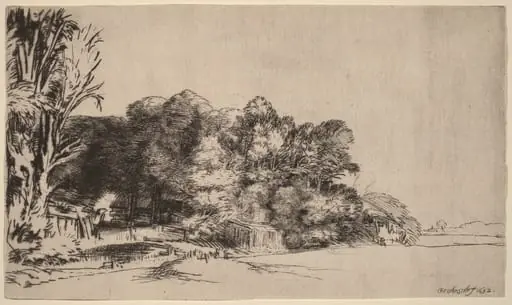 Clump of Trees with a Vista
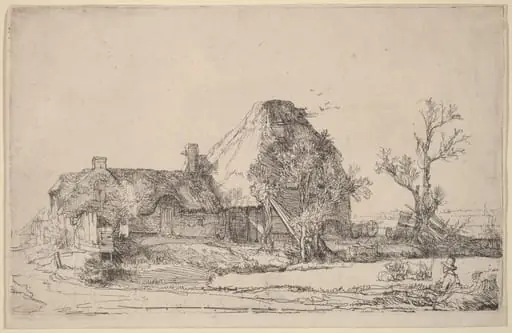 Cottages and Farm Buildings with a Man Sketching
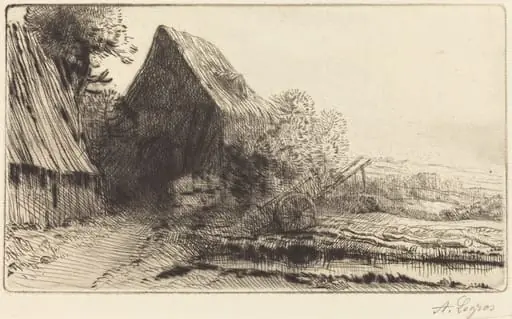 Wheelwright's Home (La maison du charron)
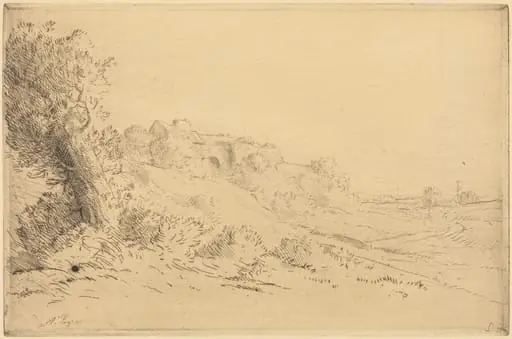 My Farm (Ma ferme)
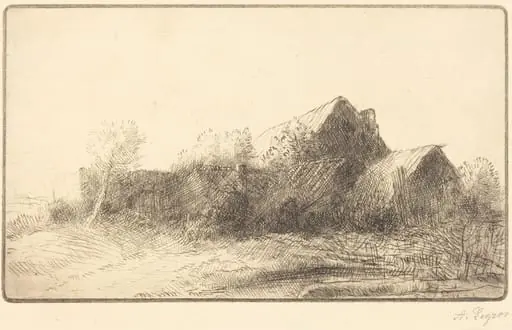 Farm (Une ferme)
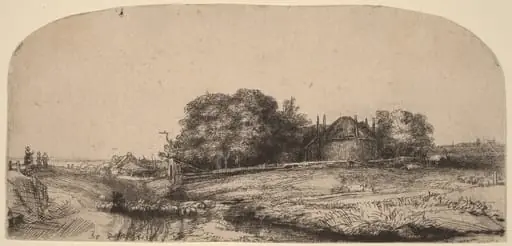 Landscape with a Hay Barn and a Flock of Sheep
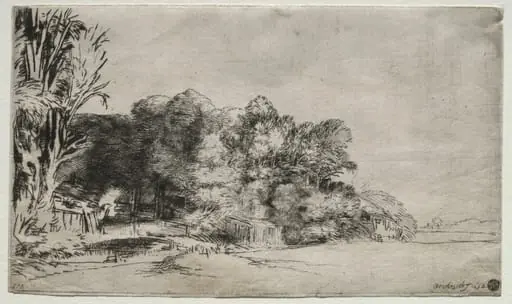 Clump of Trees with a Vista
![View of Houtewael near the Sint Anthoniespoort [recto], by Rembrandt](https://artifactworldgallery.com/img/rembrandt--view-of-houtewael-near-the-sint-anthoniespoort-recto--2919925de9060e70-w320.webp) View of Houtewael near the Sint Anthoniespoort [recto]
View of Houtewael near the Sint Anthoniespoort [recto] Cottage and landscape at Chirk, North Wales
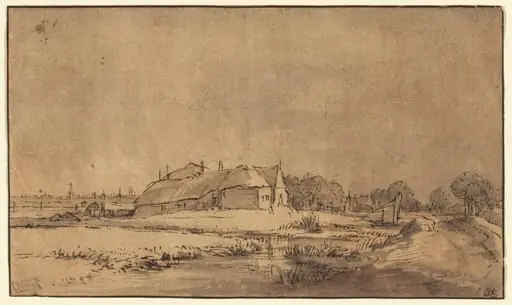 Cottages and Barn beside a Road
 Landscape with a Cow