Artwork
Fată în curte
Fată în curte is a print by Haroutiun Galentz. It dates from 1960 and is held in the collection of the National Museum of Art of Romania.
About this work
Overview
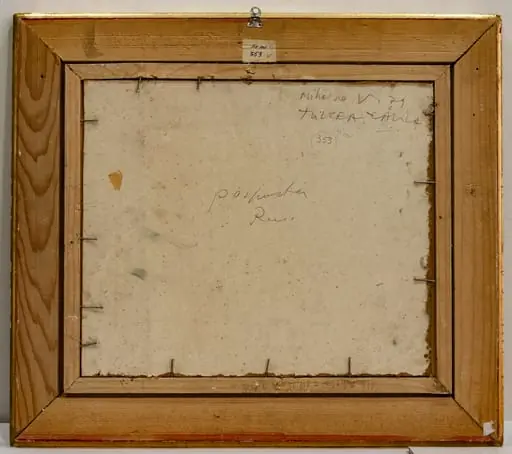
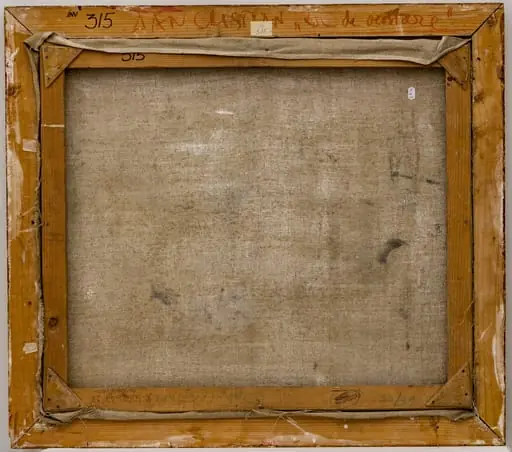
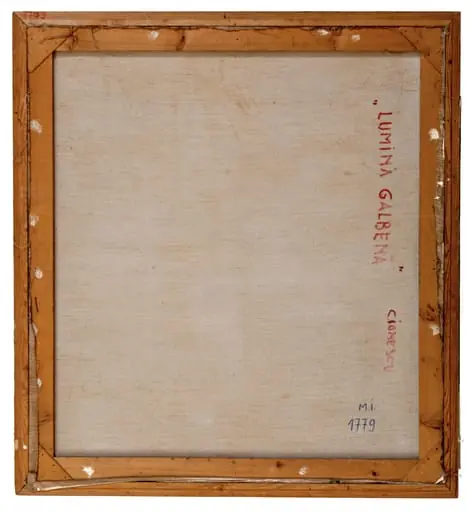
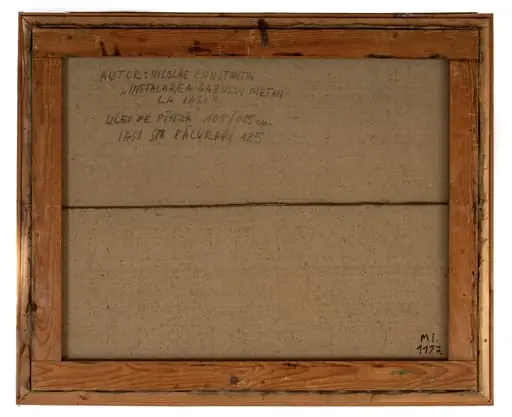
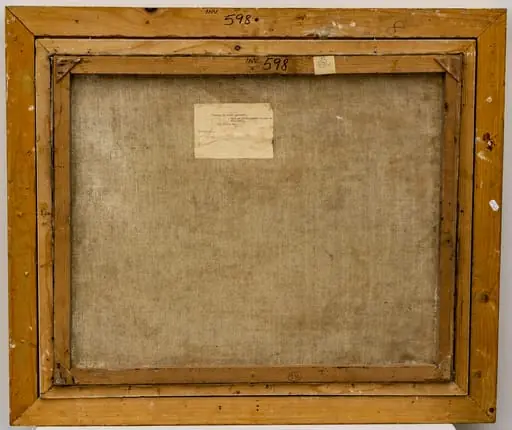
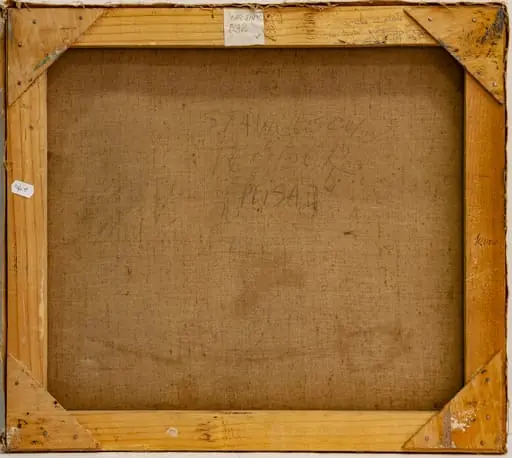
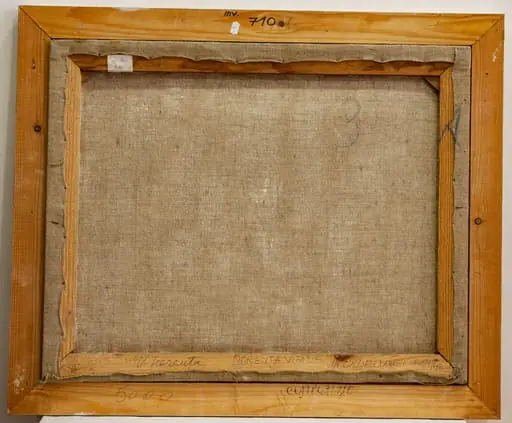
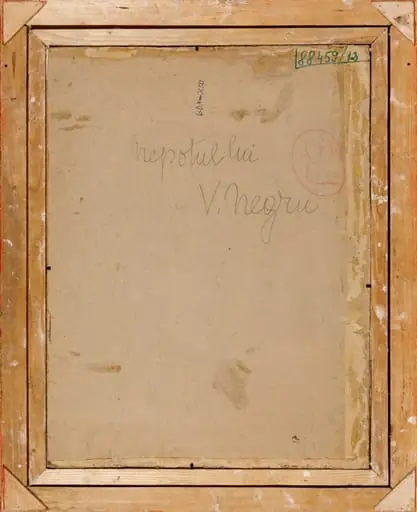
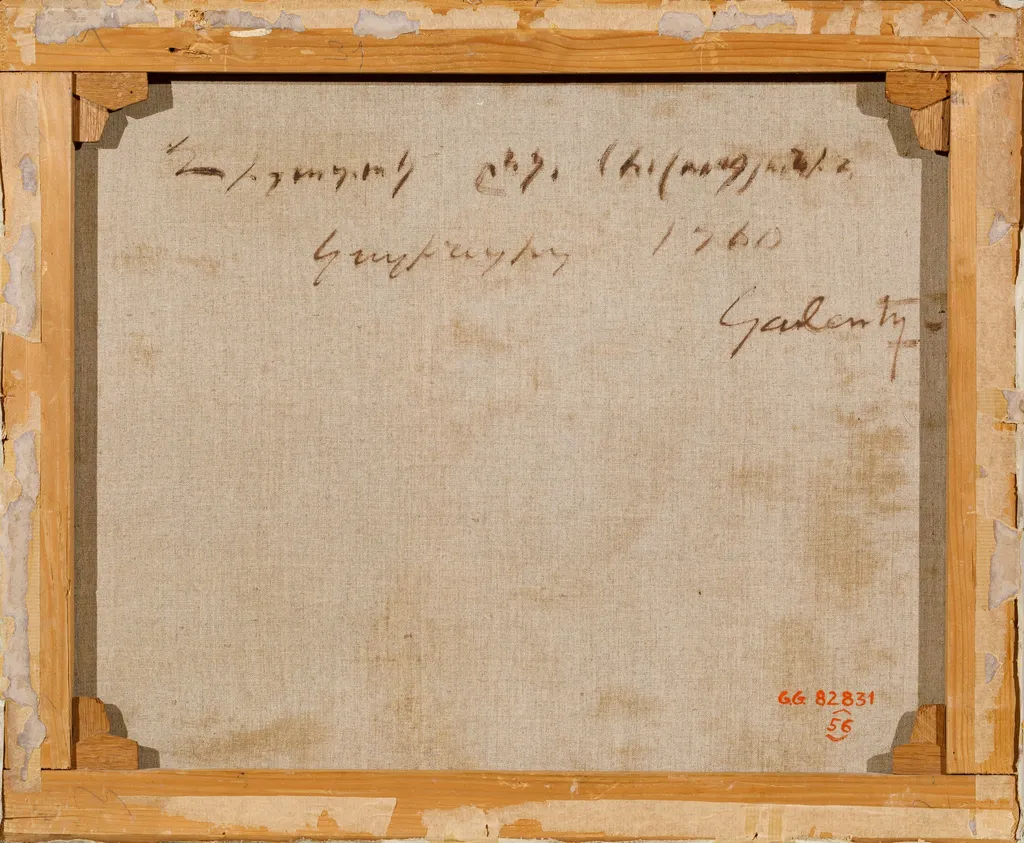
Fată în curte, created by Haroutiun Galentz in 1960, presents a paradoxical visual statement: a light brown wooden frame encasing a plain, light beige canvas devoid of any painting or print.
Subject & Meaning
The absence of a visible subject or artwork on the canvas invites interpretation. The title, translating to 'Girl in the Yard,' contrasts sharply with the empty canvas, suggesting either an intentional conceptual piece, a loss of the original work, or an unfinished state.
Technique & Style
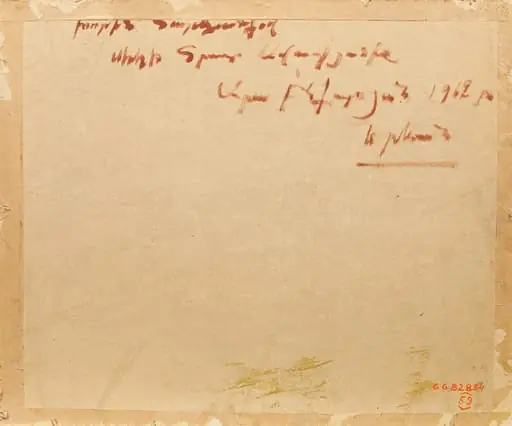
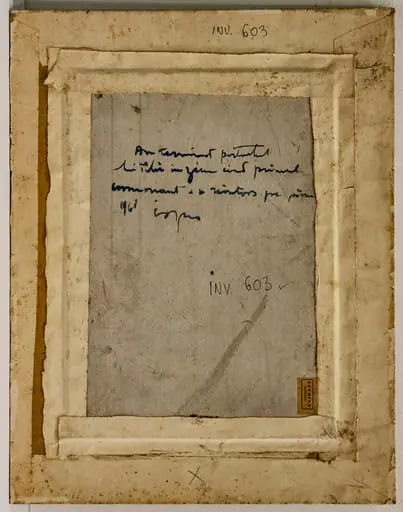
The technique employed here is one of omission. The style, if discernible, leans towards minimalism or conceptual art, emphasizing the frame and the expectation of content over the content itself. The worn frame and faded handwriting on the back add a layer of authenticity and history.
History & Provenance
Created in 1960 by Haroutiun Galentz, the piece's history is partially revealed through faded Romanian handwriting and the artist's name on the frame's back, along with unspecified numbers. The current state of the canvas (empty) is unexplained in the provided history.
Context
Understanding the context of its creation requires reference to Haroutiun Galentz's broader body of work and the artistic movements of 1960. The piece may reflect the experimental nature of early conceptual or minimalist art, though without further context, its precise intent remains speculative.
Legacy
The legacy of 'Fată în curte' is not clearly defined without more information on its reception, exhibition history, or how it fits into Galentz's oeuvre. Its current state as an empty canvas may spark curiosity or puzzlement among viewers.
Artist & collection
Artist
Haroutiun Galentz spent his life between two cities, Yerevan and Paris, painting whatever caught his eye—market stalls, neighbors, stray cats—with the same quiet attention.