Artwork
The Whirlwind
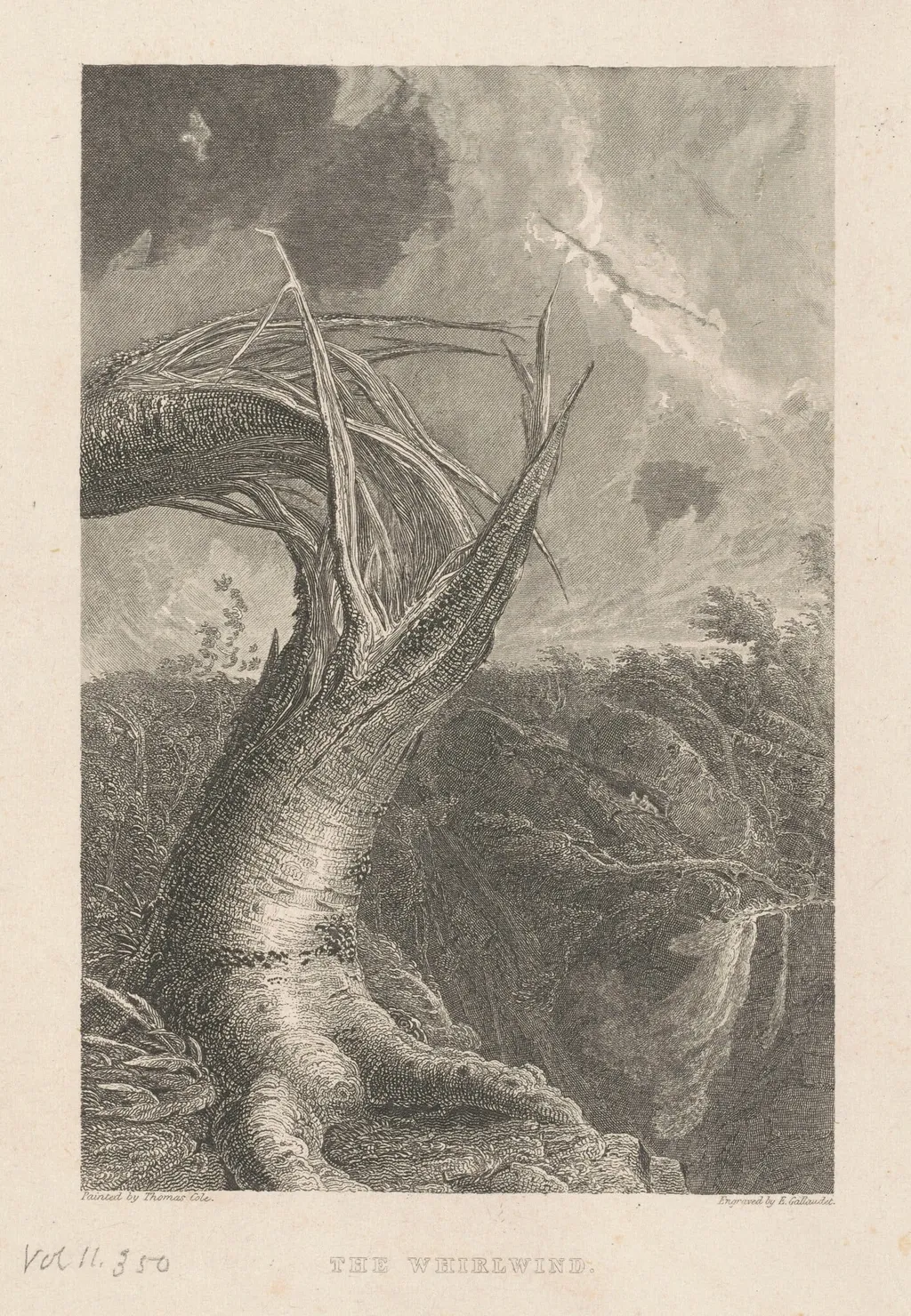
The Whirlwind is an ink print by the Romanticist artist Edward Gallaudet. It dates from 1836 and is held in the collection of the National Gallery of Art.
About this work
Overview
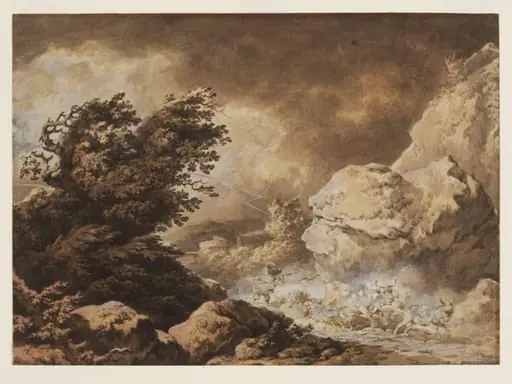
Edward Gallaudet’s 1836 print, titled The Whirlwind, is an engraving executed in black on wove paper. The composition captures a violent storm, with a swirling dark sky and debris suspended in the air. A distant ship struggles against the gale, while a small group clings to a rocky outcrop, emphasizing the scene’s dramatic tension.
Subject & Meaning
The work portrays the overwhelming force of a natural cyclone, illustrating how wind can uproot people, objects, and vessels alike. By focusing on the vulnerability of the figures against an indifferent tempest, Gallaudet underscores the precarious relationship between humanity and the elements, inviting reflection on nature’s uncontrollable power.
Technique & Style
Gallaudet employed fine, intersecting lines and graduated shading to convey motion and turbulence. The black ink on the smooth wove paper allows for crisp detail, while the dense hatching creates depth in the clouds and the chaotic whirl of debris. This meticulous line work intensifies the sense of kinetic energy across the plate.
History & Provenance
Created in 1836, The Whirlwind is an early example of American printmaking, reflecting the period’s interest in dramatic, narrative subjects. The engraving was produced in limited numbers, typical of the era’s hand-pressed prints, and has since been held in several public collections that document nineteenth‑century graphic art.
Artist & collection