Artwork
A Storm
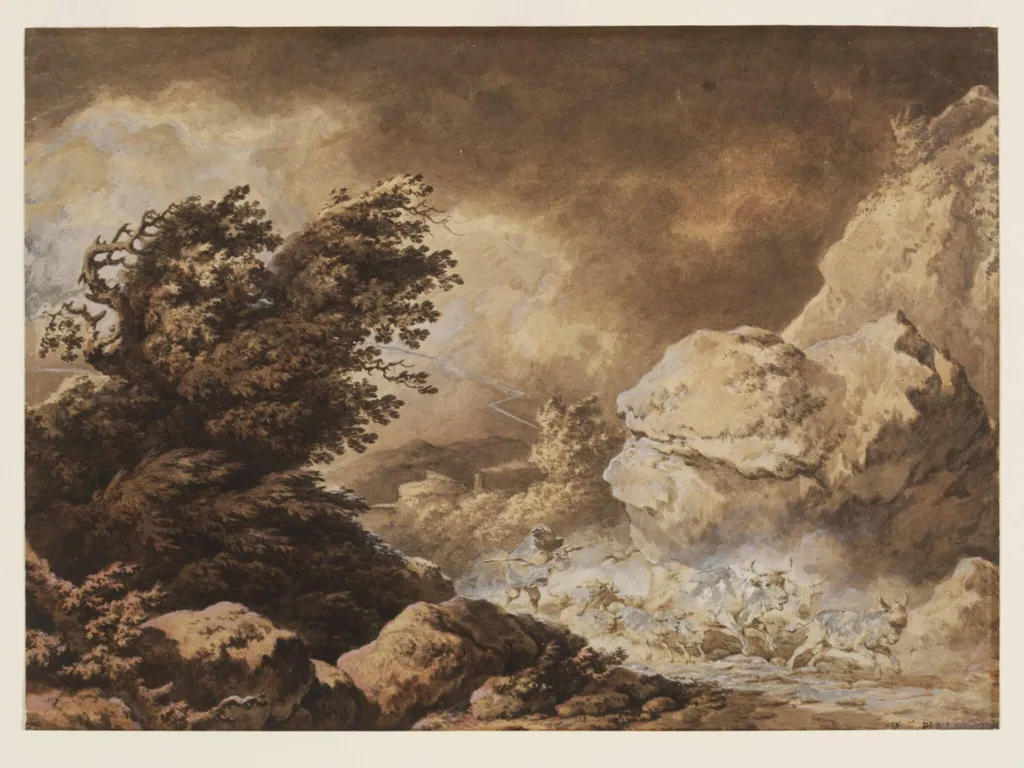
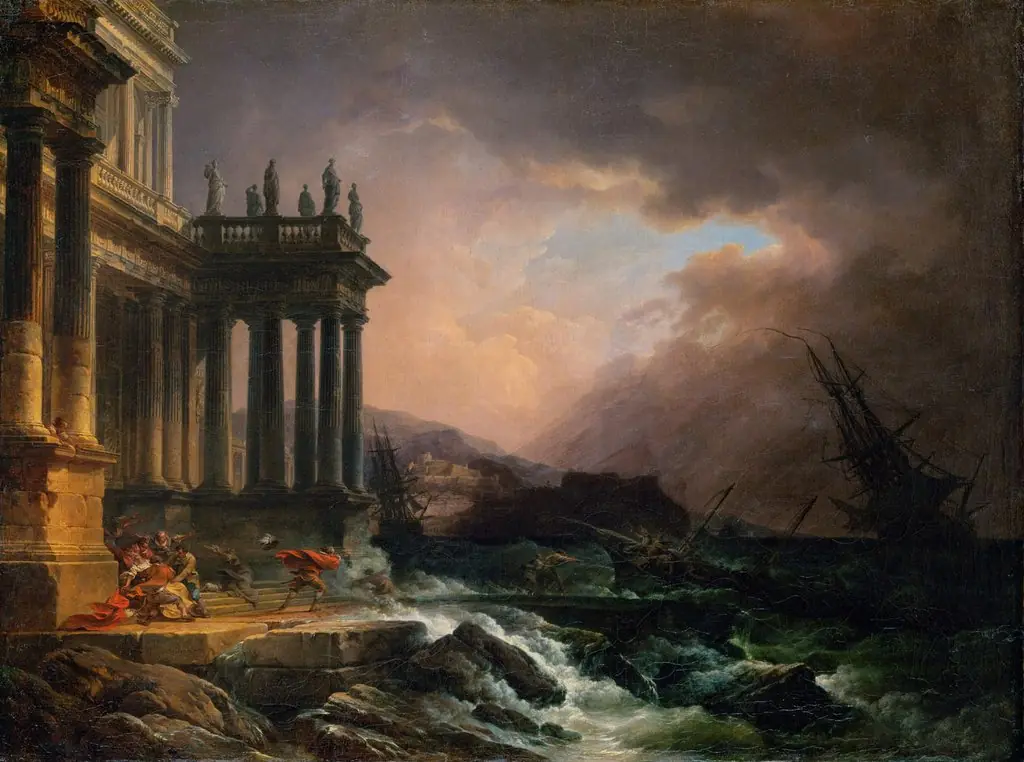
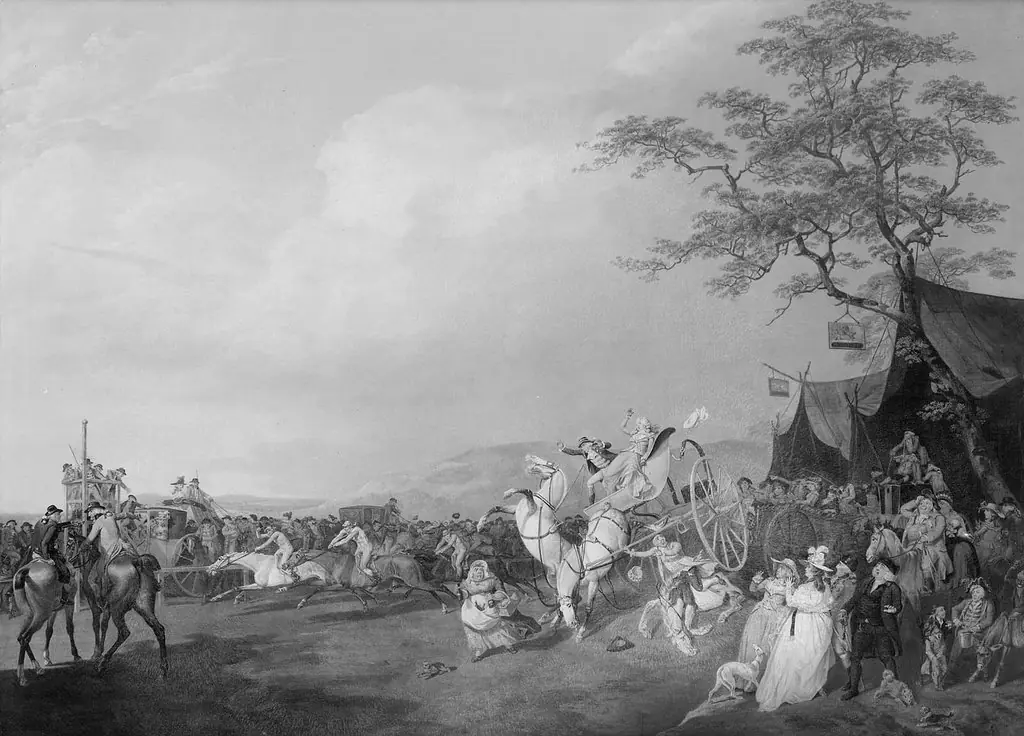
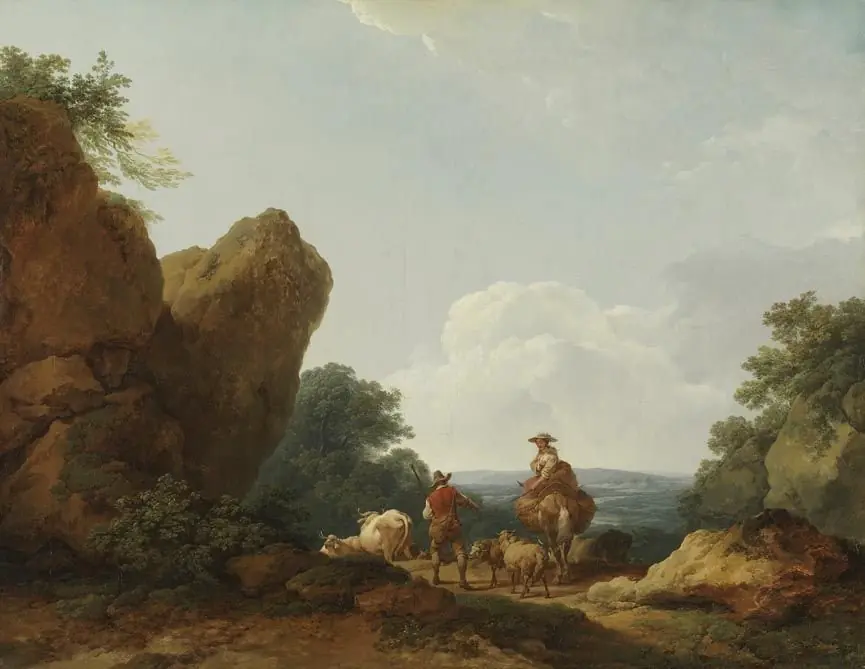
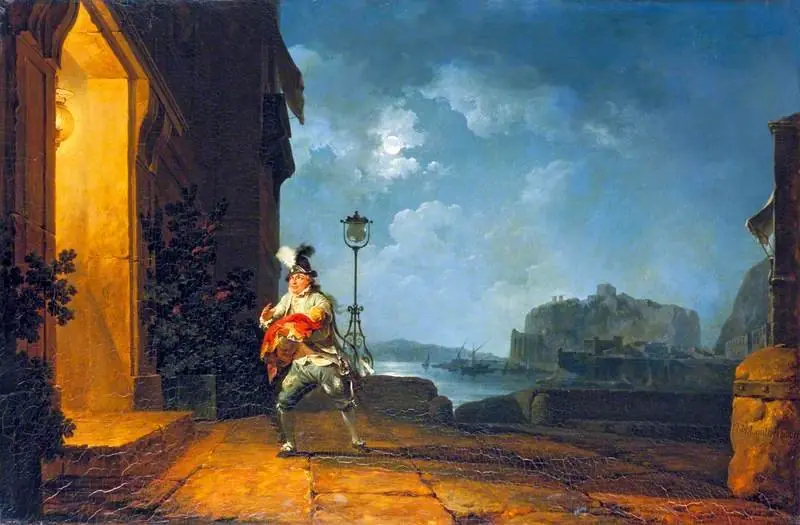
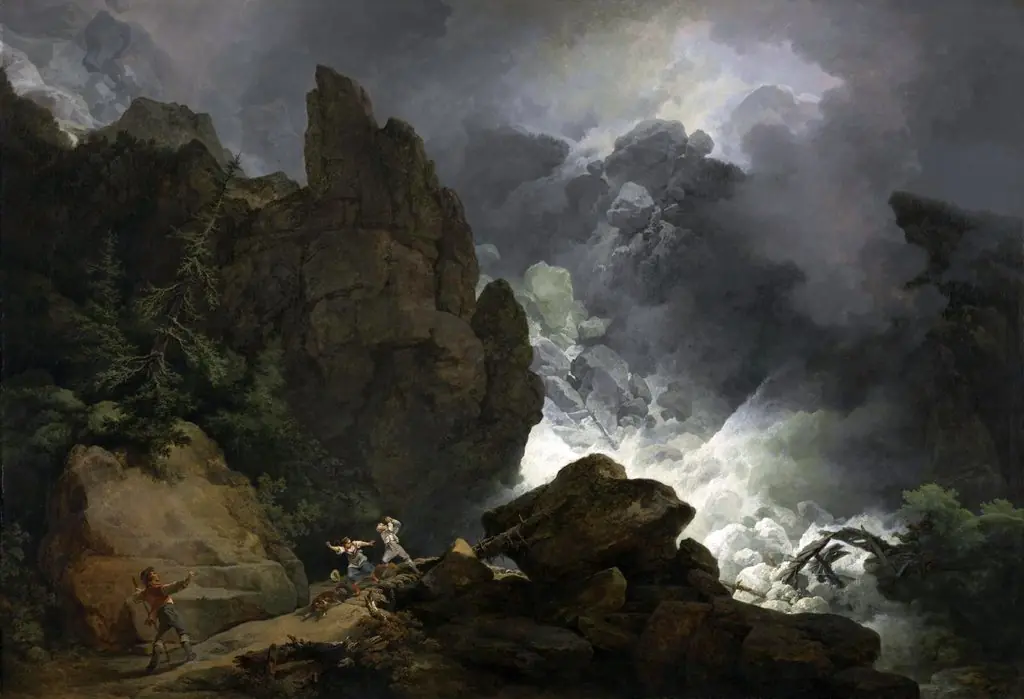
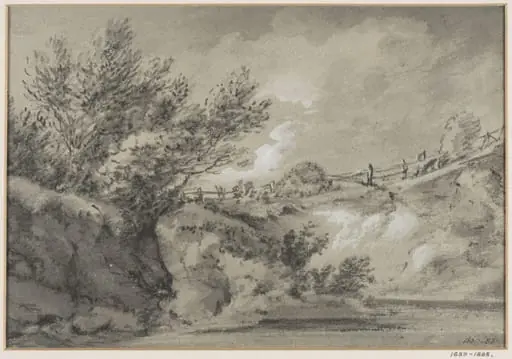
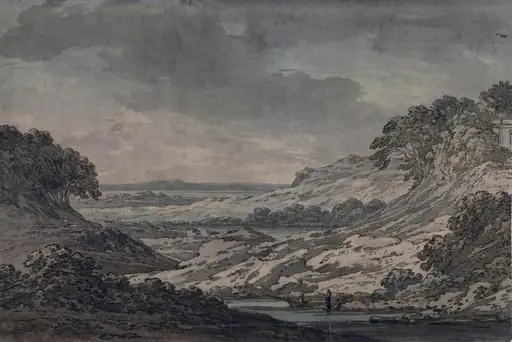
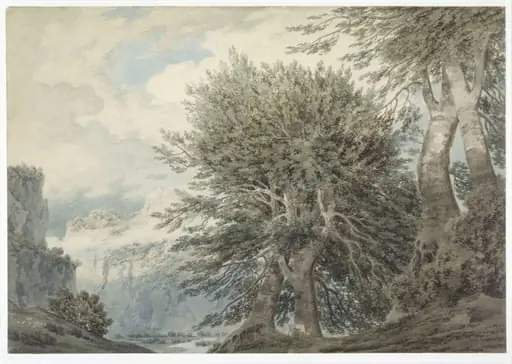
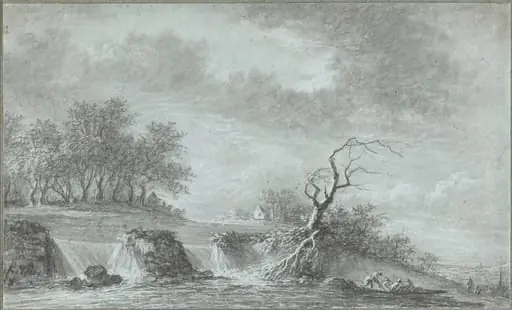
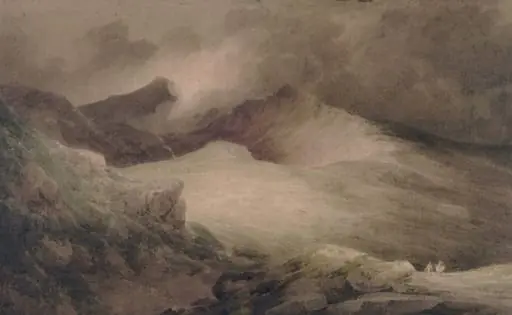
A Storm is a drawing by Philip James de Loutherbourg. It dates from 1750 and is held in the collection of the Victoria and Albert Museum. This drawing by Philippe Jacques de Loutherbourg captures a moment of impending tempest in a rugged natural setting.
About this work
Overview
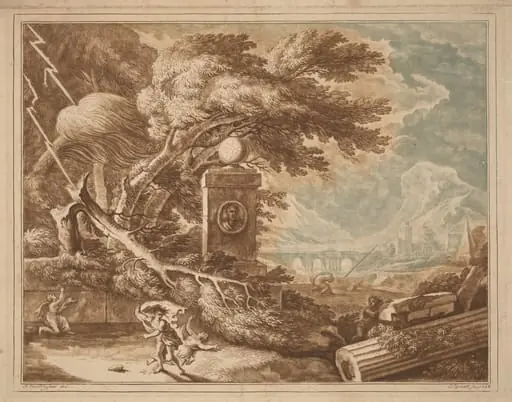
This drawing by Philippe Jacques de Loutherbourg captures a moment of impending tempest in a rugged natural setting. Executed in monochrome tones, it conveys the raw energy of a storm gathering over a steep, rocky terrain. The composition emphasizes movement and tension, with no human figures present—only the landscape and its fragile vegetation bear witness to the approaching violence.
Subject & Meaning
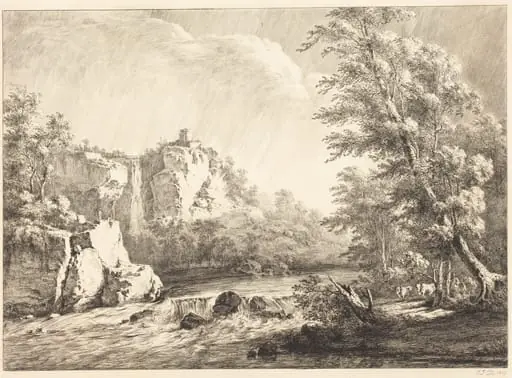
Cattle, barely discernible in the foreground, suggest vulnerability against the overwhelming forces of wind and lightning.
The scene portrays nature’s dominance over the fragile elements within it. Cattle, barely discernible in the foreground, suggest vulnerability against the overwhelming forces of wind and lightning. The twisted trees and jagged rocks imply endurance, yet their precarious positions hint at imminent disruption. The work reflects an 18th-century fascination with the sublime—the awe inspired by nature’s untamed power.
Technique & Style
Loutherbourg employed rapid, expressive strokes to mimic the turbulence of the storm. Layered washes and dry brushwork create depth in the clouds and texture in the rocks, while sparse green accents suggest life clinging to barren surfaces. The absence of fine detail heightens the sense of immediacy, as if the drawing were made in response to the storm’s sudden arrival.
History & Provenance
The drawing is held in the collection of the Victoria and Albert Museum, where it is recognized as part of Loutherbourg’s series of atmospheric landscapes. Likely created during his time in England, it reflects his interest in dramatic natural phenomena, a theme he later expanded in theatrical stage designs. Its preservation suggests it was valued as a study or independent work during the artist’s lifetime.
Context
In late 18th-century Britain, landscape drawing evolved beyond idealized views to include wild, untamed scenes. Loutherbourg’s work aligns with this shift, influenced by Romantic sensibilities and scientific interest in meteorology. His ability to convey transient weather conditions set his drawings apart from more static topographical records of the period.
Legacy
This drawing exemplifies Loutherbourg’s contribution to the transition from orderly landscape to emotionally charged naturalism. While less known than his theatrical work, such studies reveal his sensitivity to atmospheric effects and his role in shaping how nature’s volatility was visually articulated in British art.
Own this work as a print
Artist & collection
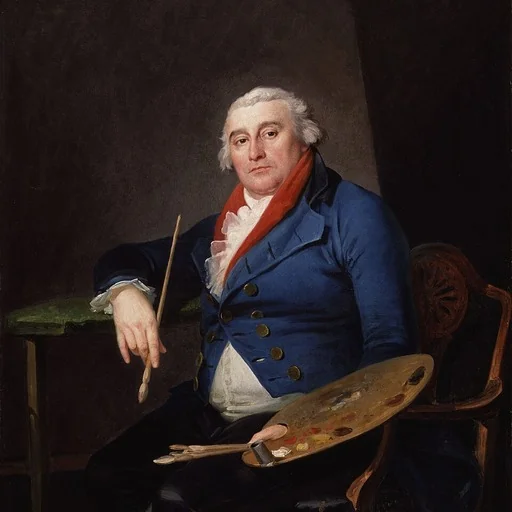
Artist
Philip James de Loutherbourg, RA (born Philippe Jacques de Loutherbourg; 31 October 1740 – 11 March 1812) was a French-born British painter who became known for his large naval works, his elaborate set designs for…