Artwork
Hevonen ja lampaat
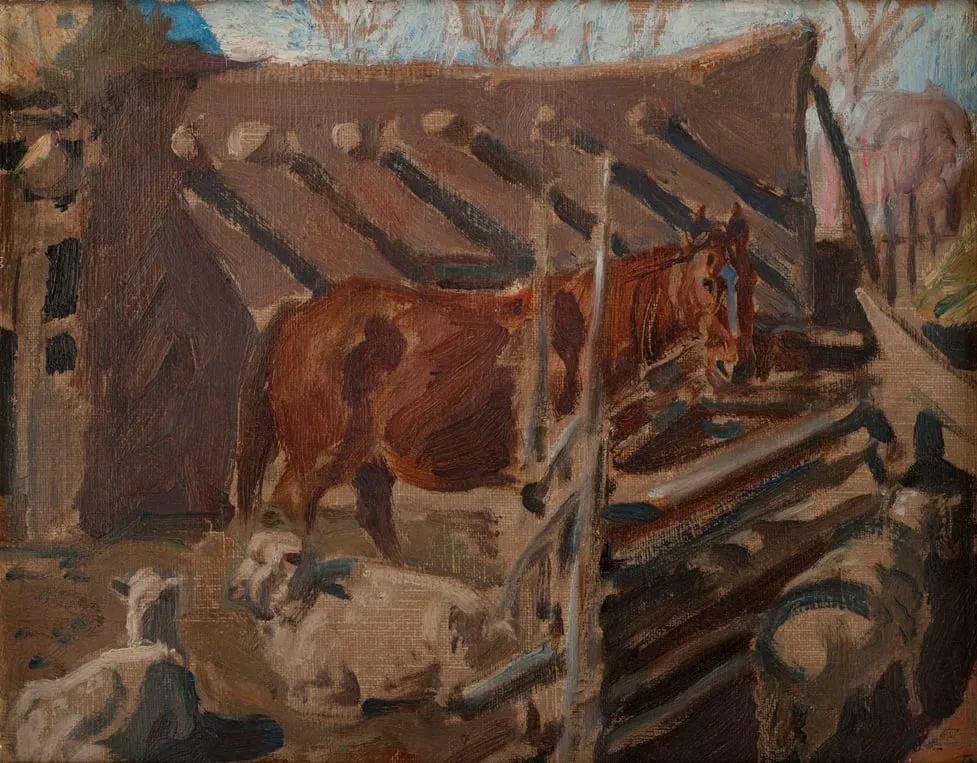
Hevonen ja lampaat is an unspecified painting by Akseli Gallen-Kallela. It is held in the collection of the Gallen-Kallela Museum. This painting depicts a brown horse and a group of white sheep within a confined, fenced space.
About this work
Overview
The horse stands centrally, head lowered, while the sheep are scattered around it in varying poses—some reclining, others upright.
This painting depicts a brown horse and a group of white sheep within a confined, fenced space. The horse stands centrally, head lowered, while the sheep are scattered around it in varying poses—some reclining, others upright. The background features a muted brown wall beneath a sloping roof and a pale blue sky. Dominated by earthy browns with subtle blue accents, the work conveys quiet pastoral energy through loose, dynamic brushwork.
Subject & Meaning
The scene presents a simple rural moment: a horse among sheep in an enclosed yard. No human figures are present, suggesting an observation of animal behavior rather than a narrative. The composition emphasizes coexistence and stillness, possibly reflecting everyday life in a Finnish agrarian setting. The absence of people invites contemplation of the animals’ relationship to their environment.
Technique & Style
The artist employs loose, expressive brushstrokes that suggest motion and texture without precise detail. The horse’s mane and the sheep’s wool are rendered with fluid, energetic marks, giving form through suggestion rather than definition. Color is restrained—browns dominate, with only the sky offering contrast. This approach prioritizes emotional resonance over realism, aligning with late 19th-century tendencies toward expressive naturalism.
History & Provenance
The painting resides in the collection of the Museum of Ethnography, indicating its cultural rather than purely aesthetic significance. Its inclusion there suggests it was acquired as documentation of rural Finnish life. While the exact date and provenance are not specified, its style and subject align with works from the late 1800s, a period when Finnish artists increasingly turned to native landscapes and traditions.
Context
Created during a time of growing Finnish national identity, the painting reflects a broader interest in depicting everyday rural scenes as expressions of cultural authenticity. Artists like Gallen-Kallela similarly explored Finnish nature and folk life, though often with more symbolic intent. This work, in contrast, offers a quiet, unembellished view of animal husbandry, grounding its cultural value in observation rather than myth.
Legacy
Though not widely known outside institutional collections, the painting contributes to a visual record of Finnish pastoral life at the turn of the century. Its unidealized portrayal and expressive technique place it within a regional tradition of naturalistic observation. It remains a quiet example of how Finnish artists engaged with the rhythms of rural existence, without grandeur or narrative embellishment.
Artist & collection
Artist
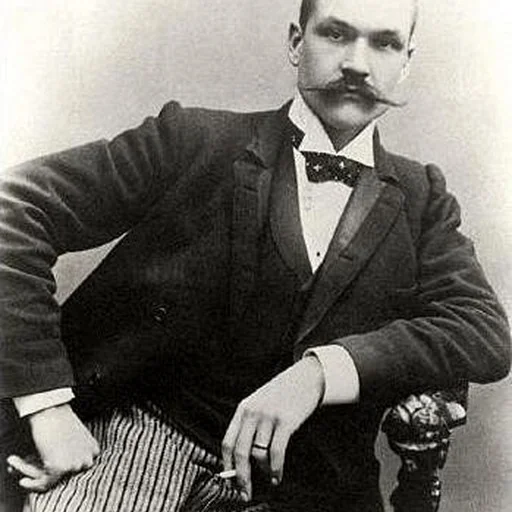
Akseli Gallen-Kallela (born Axel Waldemar Gallén; 26 April 1865 – 7 March 1931) was a Finnish painter and a leading figure of Finnish romantic nationalism around the turn of the 20th century.