Artwork
Curte țărănească
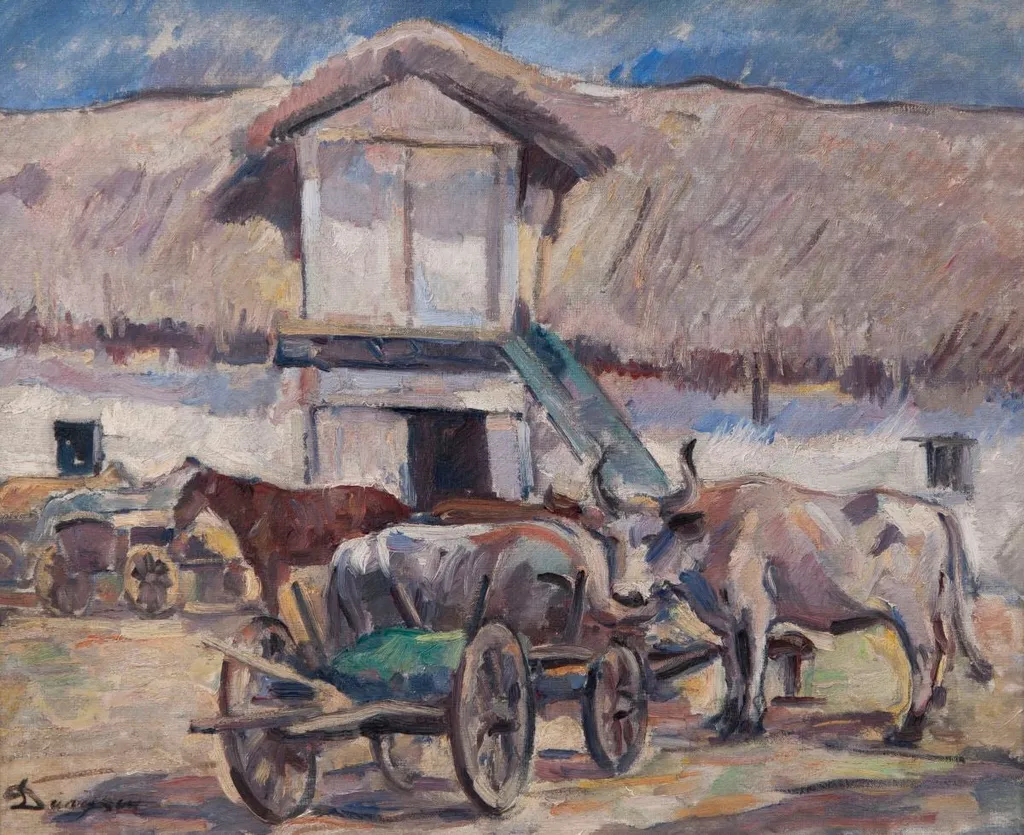
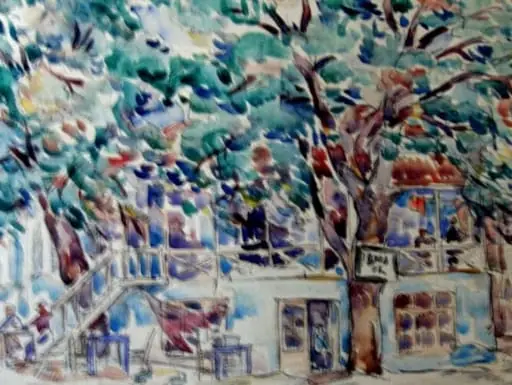
Curte țărănească is a print by Nicolae Dărăscu. It dates from 1931 and is held in the collection of the National Museum of Art of Romania.
About this work
Overview
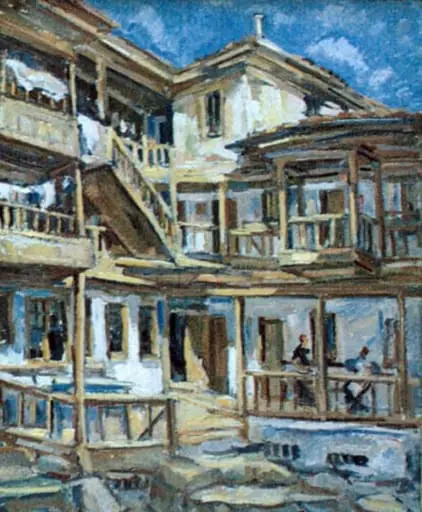
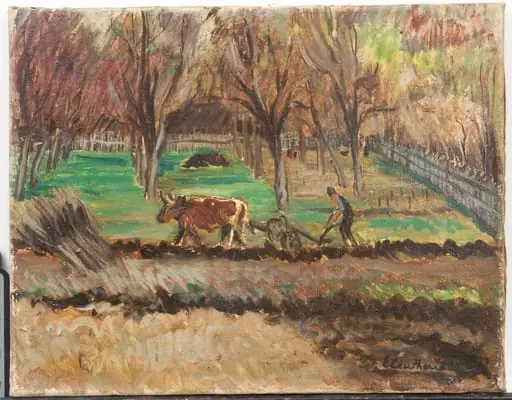
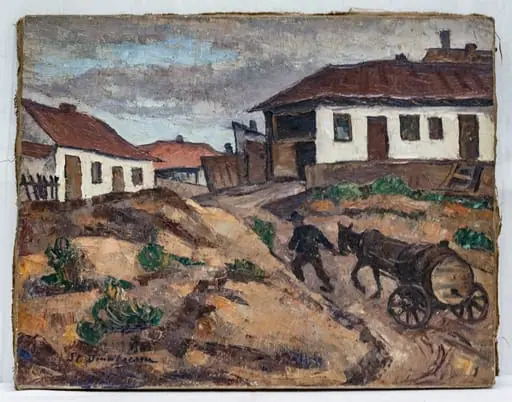
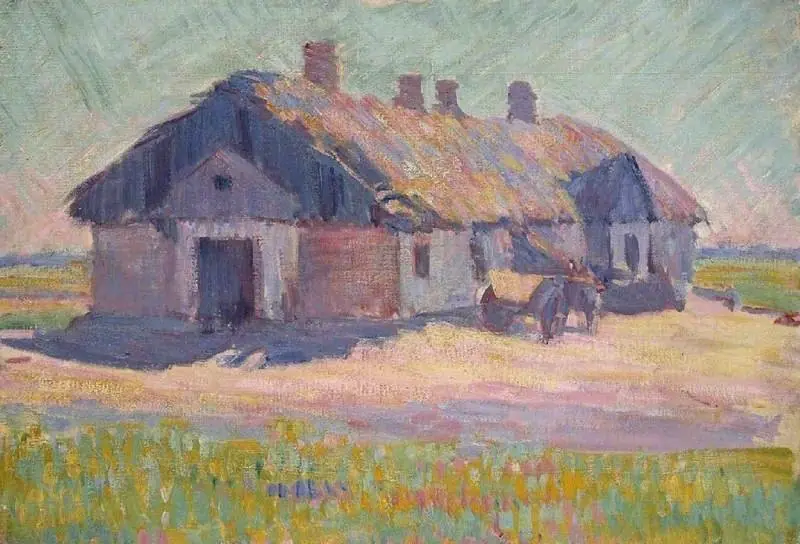
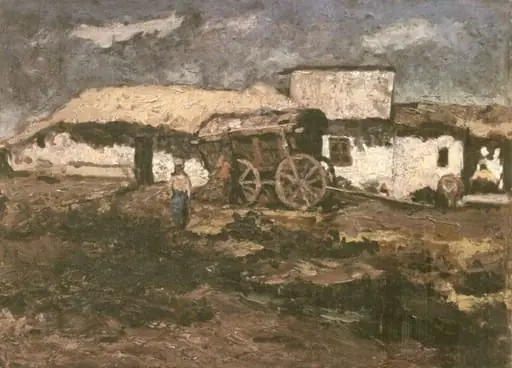
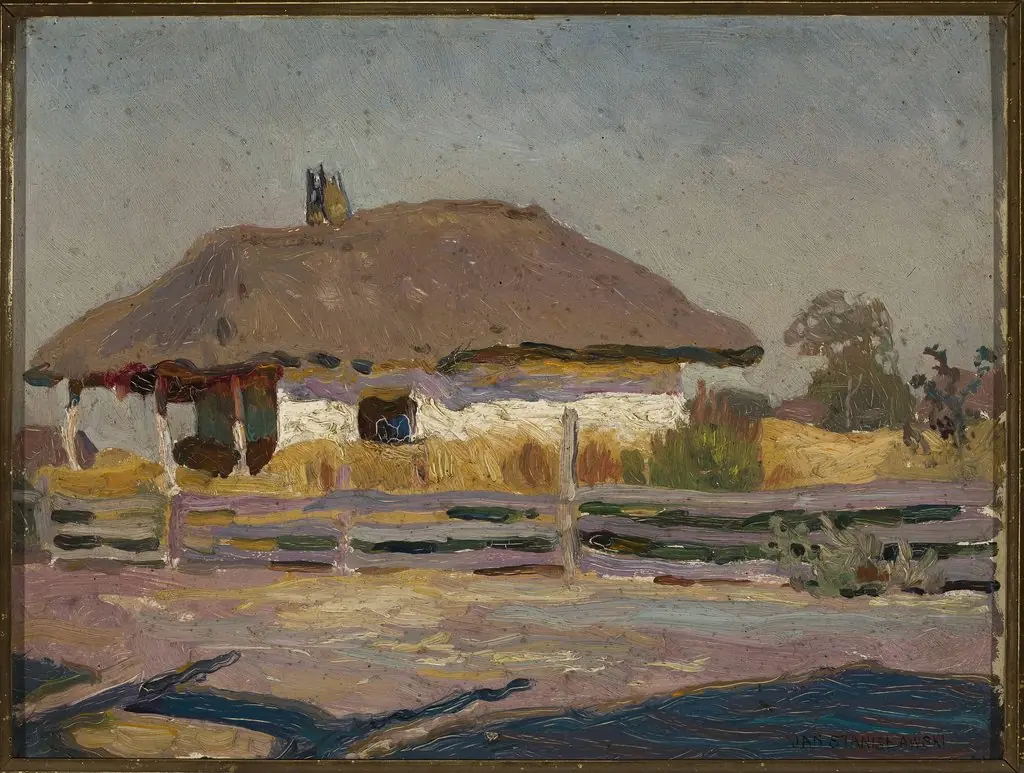
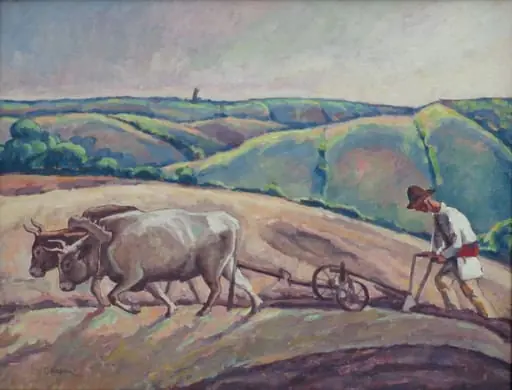
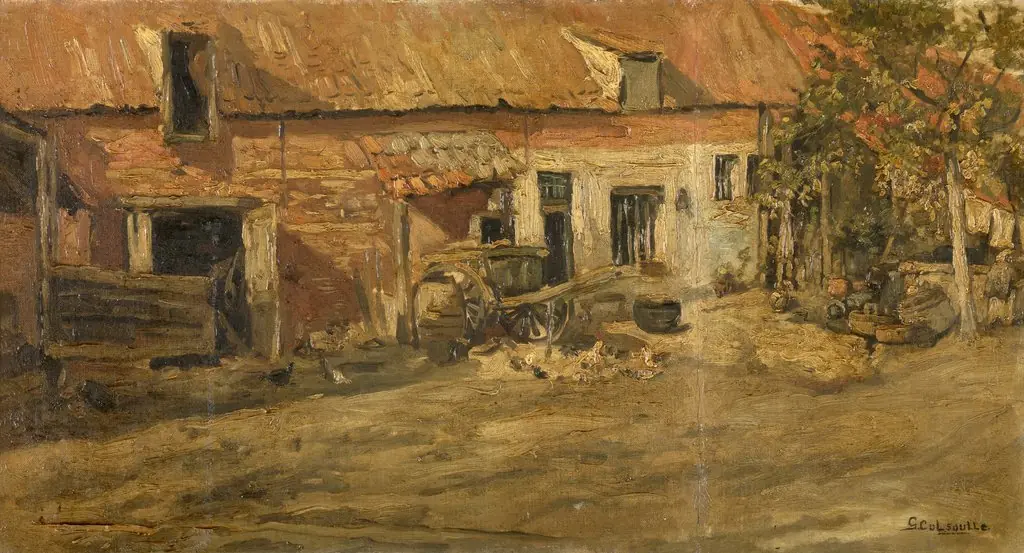
Painted around 1931 by Nicolae Dărăscu, Curte țărănească captures a quiet moment in rural Romanian life. The composition centers on a traditional farmhouse nestled behind a wooden cart drawn by two oxen. Dărăscu’s approach favors emotional resonance over detailed realism, using color and gesture to evoke the rhythm of agricultural labor and domestic stillness.
Subject & Meaning
The scene portrays a peasant courtyard, a common subject in early 20th-century Romanian art that symbolized cultural identity and continuity. The oxen, central to rural economy, and the sturdy house suggest self-sufficiency and endurance. The absence of human figures amplifies a sense of quiet dignity, focusing attention on the land and its tools rather than individual narratives.
Technique & Style
Dărăscu employs thick, deliberate brushwork and saturated hues to define the cart and oxen, contrasting them with softer, muted tones in the house and background. This tonal separation draws the eye forward, emphasizing the weight and presence of the animals. The paint is applied with physicality, reinforcing the tactile quality of the rural environment without idealizing it.
History & Provenance
It was likely exhibited in early 1930s Romanian salons, though specific ownership records before its inclusion in public collections remain limited.
Created during a period when Romanian artists were redefining national identity through local themes, the painting emerged from Dărăscu’s sustained engagement with village life. It was likely exhibited in early 1930s Romanian salons, though specific ownership records before its inclusion in public collections remain limited. Its preservation reflects institutional interest in interwar regional realism.
Context
In the interwar years, Romanian painters turned to rural subjects as a counterpoint to urban modernization. Dărăscu, influenced by French Post-Impressionism and local traditions, sought to convey the essence of peasant existence without sentimentality. Curte țărănească aligns with broader efforts to document and honor agrarian culture amid rapid social change.
Legacy
The painting remains a representative example of Romanian interwar realism, valued for its restrained emotional tone and formal clarity. It contributes to scholarly discussions on how visual art engaged with national identity during a time of cultural consolidation. While not widely reproduced, it holds steady presence in institutional collections focused on 20th-century Romanian art.
Artist & collection

Artist
Nicolae Dărăscu was a Romanian painter. He was influenced by Impressionism and Neo-impressionism.