Artwork
Vanki
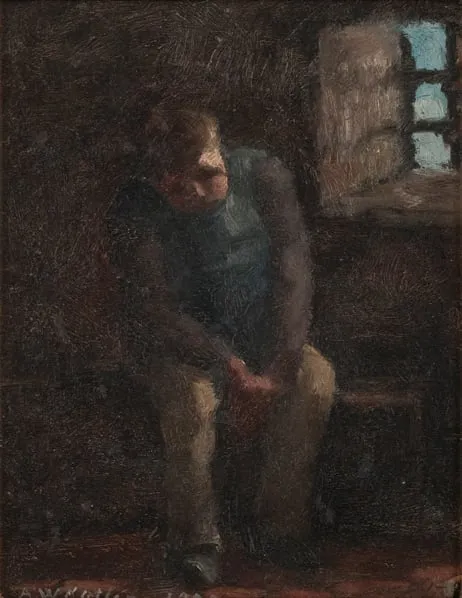
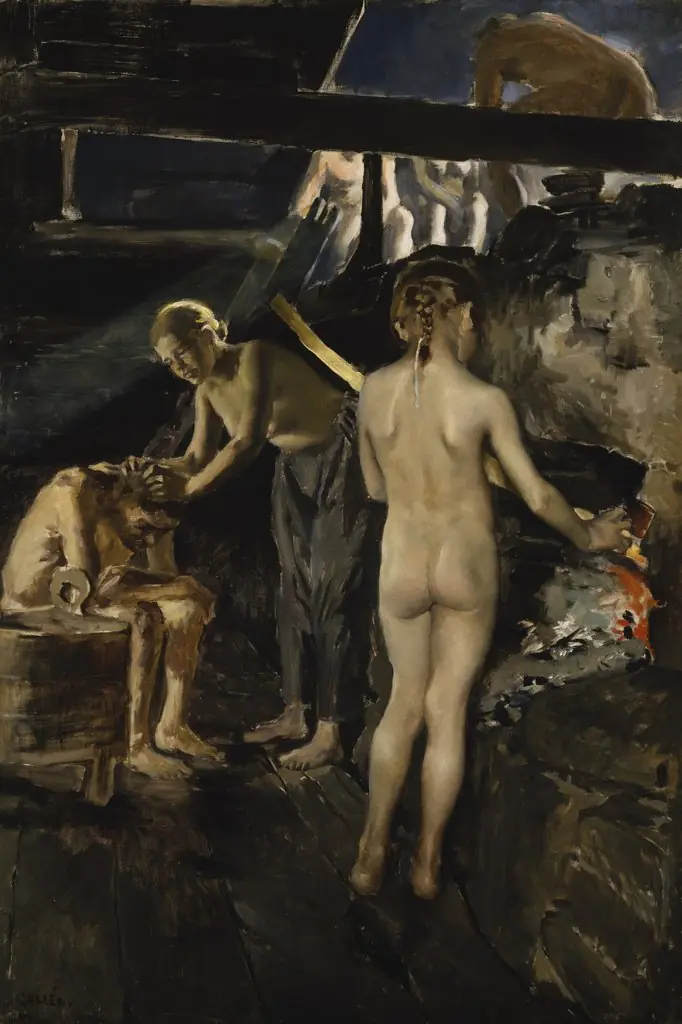
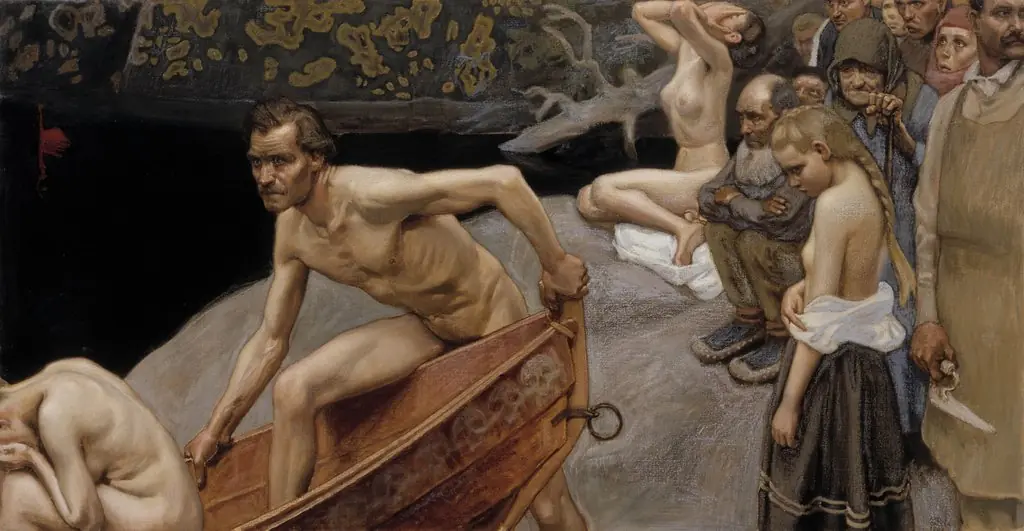
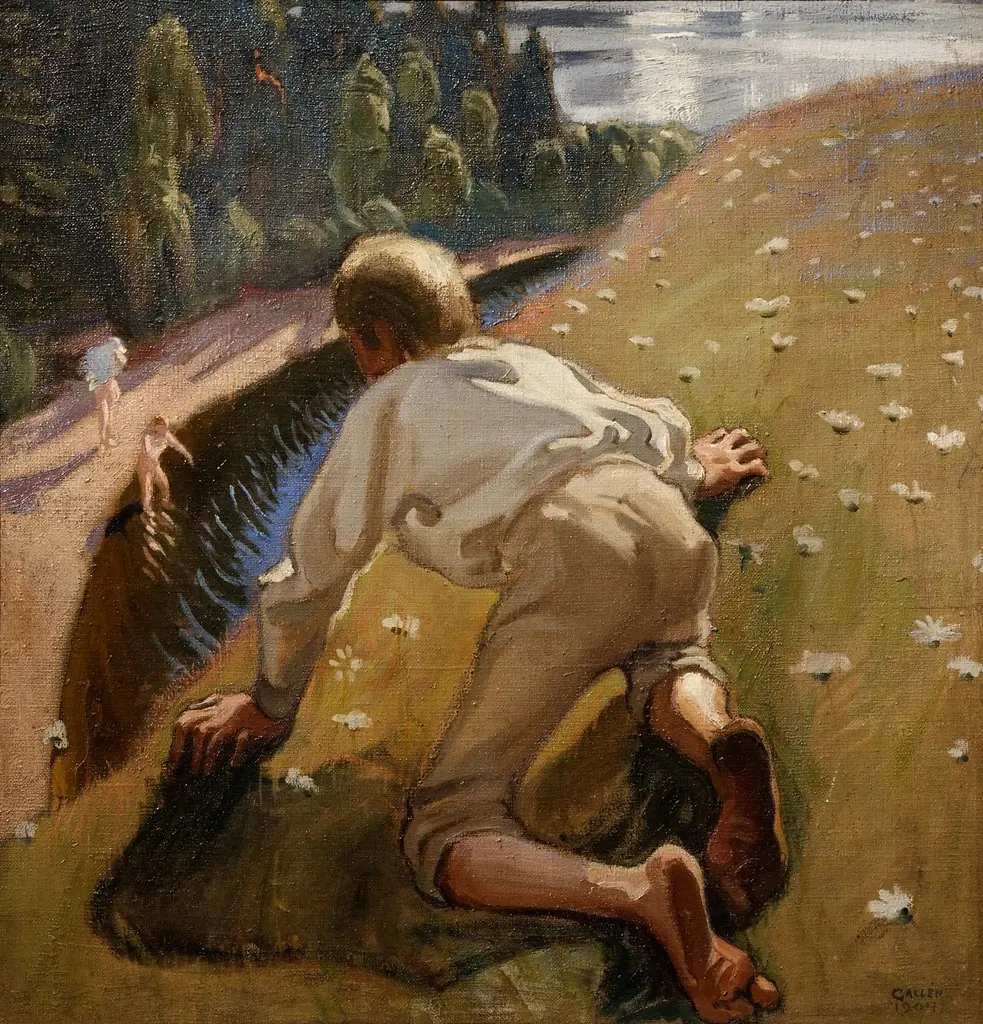
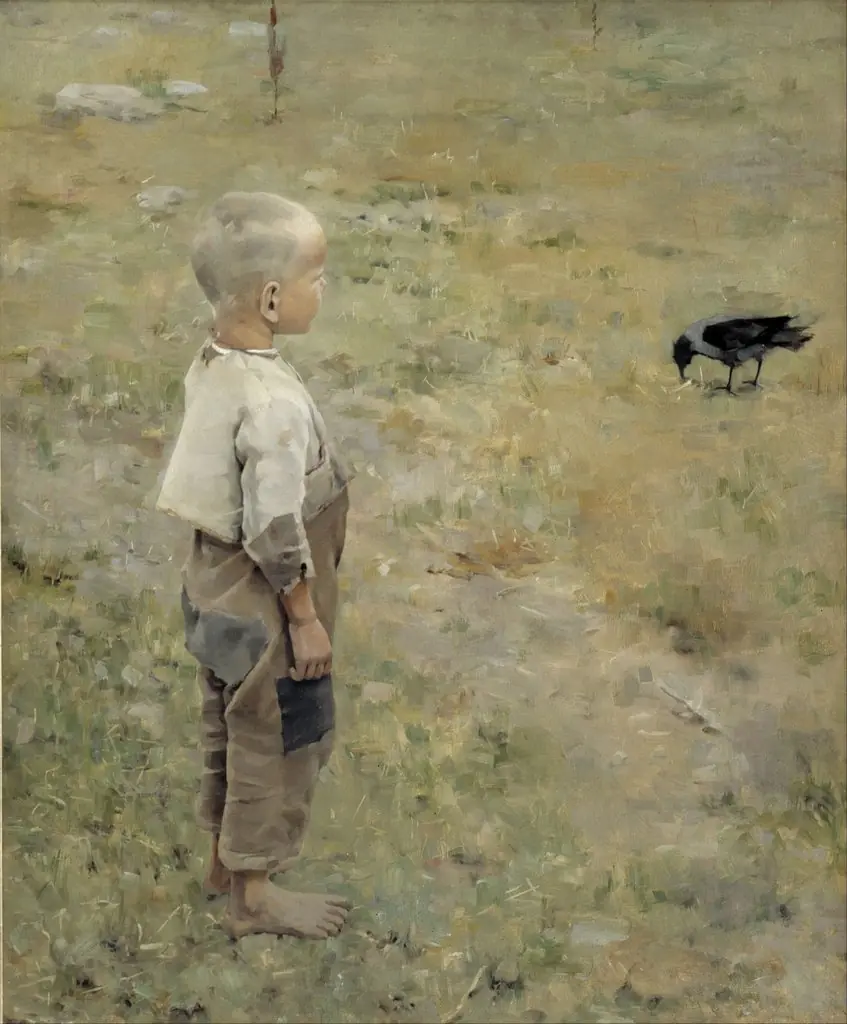
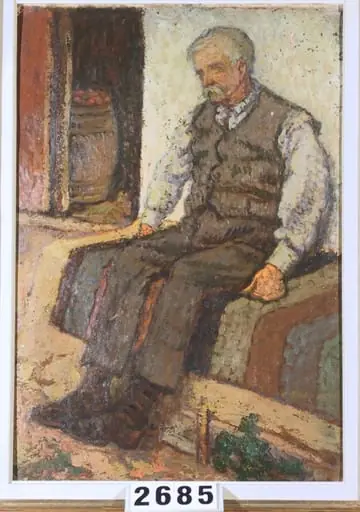
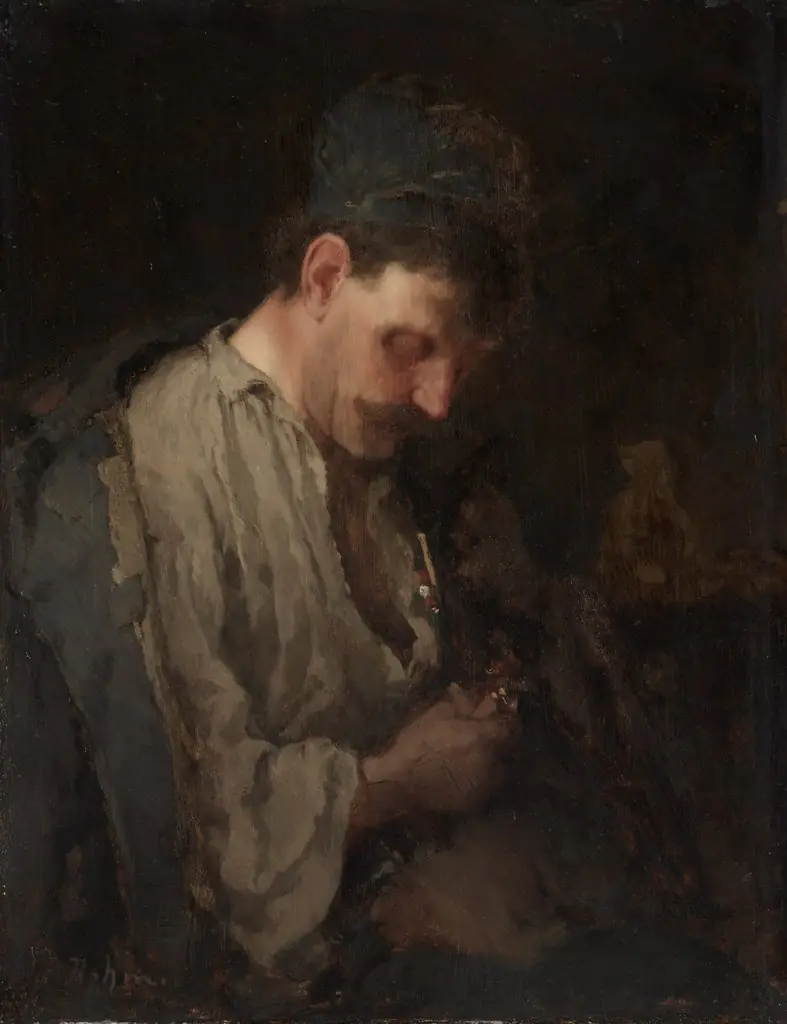
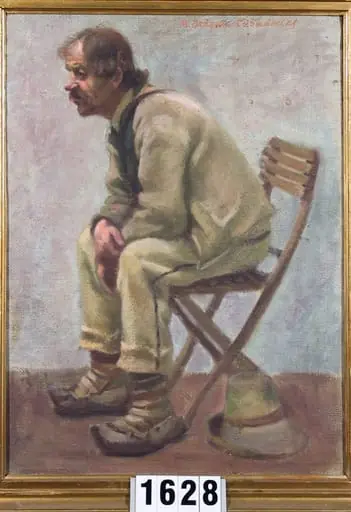
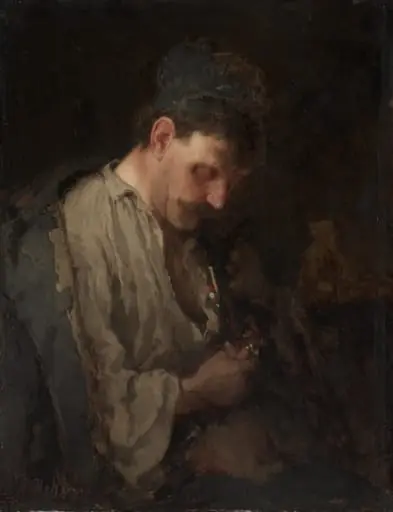
Vanki is an unspecified painting by Akseli Gallen-Kallela. It is held in the collection of the Gallen-Kallela Museum. This portrait presents a solitary male figure seated on a bench, rendered in subdued tones with minimal environmental detail.
About this work
Overview
This portrait presents a solitary male figure seated on a bench, rendered in subdued tones with minimal environmental detail.
This portrait presents a solitary male figure seated on a bench, rendered in subdued tones with minimal environmental detail. The composition centers on the subject’s stillness, emphasizing his inward focus. The dark, unadorned background isolates him visually, reinforcing a mood of quiet reflection. The work belongs to a series of introspective portraits by Akseli Gallen-Kallela, created during a period when he explored psychological depth through simplified forms and restrained palettes.
Subject & Meaning
The man’s clasped hands and downcast gaze suggest internal contemplation, possibly grief, resolve, or meditation. His dark attire and the absence of identifying markers render him anonymous, inviting viewers to project universal experiences of solitude. The painting does not narrate a specific event but evokes a state of being—quiet, deliberate, and emotionally restrained. It reflects a broader interest in the inner life of the individual, common in late 19th-century Nordic art.
Technique & Style
Gallen-Kallela employs a muted palette dominated by browns, grays, and blacks, with subtle variations in tone to define form. Brushwork is controlled and smooth, avoiding dramatic contrasts or decorative flourishes. The window behind the figure is barely suggested, its presence implied rather than detailed, contributing to the sense of enclosure. The figure’s posture and facial rendering are naturalistic yet softened, prioritizing emotional resonance over anatomical precision.
History & Provenance
Created in the late 1890s, this work emerged during Gallen-Kallela’s shift from national romantic themes toward more intimate, psychological subjects. It was likely painted in Finland or Sweden, where he spent much of his time. The painting remained in private collections for decades before entering a public institution. Its provenance is documented through exhibition records from the early 20th century, though its early ownership remains partially obscure.
Context
This portrait aligns with broader European trends in the 1890s that favored psychological realism over narrative spectacle. In Finland, artists like Gallen-Kallela were redefining national identity through personal, rather than mythological, imagery. The somber tone reflects influences from French and German Symbolism, as well as the introspective mood of fin-de-siècle culture, where inner life became a legitimate subject for serious art.
Legacy
Though less known than Gallen-Kallela’s mythological or landscape works, this portrait exemplifies his capacity for emotional economy. It influenced later Finnish artists who sought to depict inner states with restraint. The painting is now referenced in studies of Nordic modernism as an early example of psychological portraiture that prioritized atmosphere over detail, contributing to a quieter, more introspective strand in Finnish visual culture.
Artist & collection
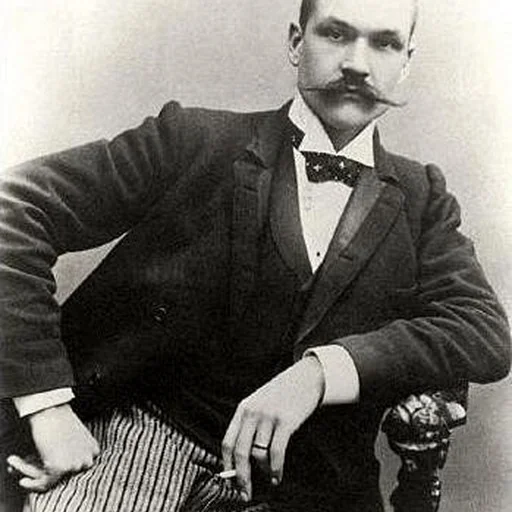
Artist
Akseli Gallen-Kallela (born Axel Waldemar Gallén; 26 April 1865 – 7 March 1931) was a Finnish painter and a leading figure of Finnish romantic nationalism around the turn of the 20th century.