Artwork
Porte d'Orleans
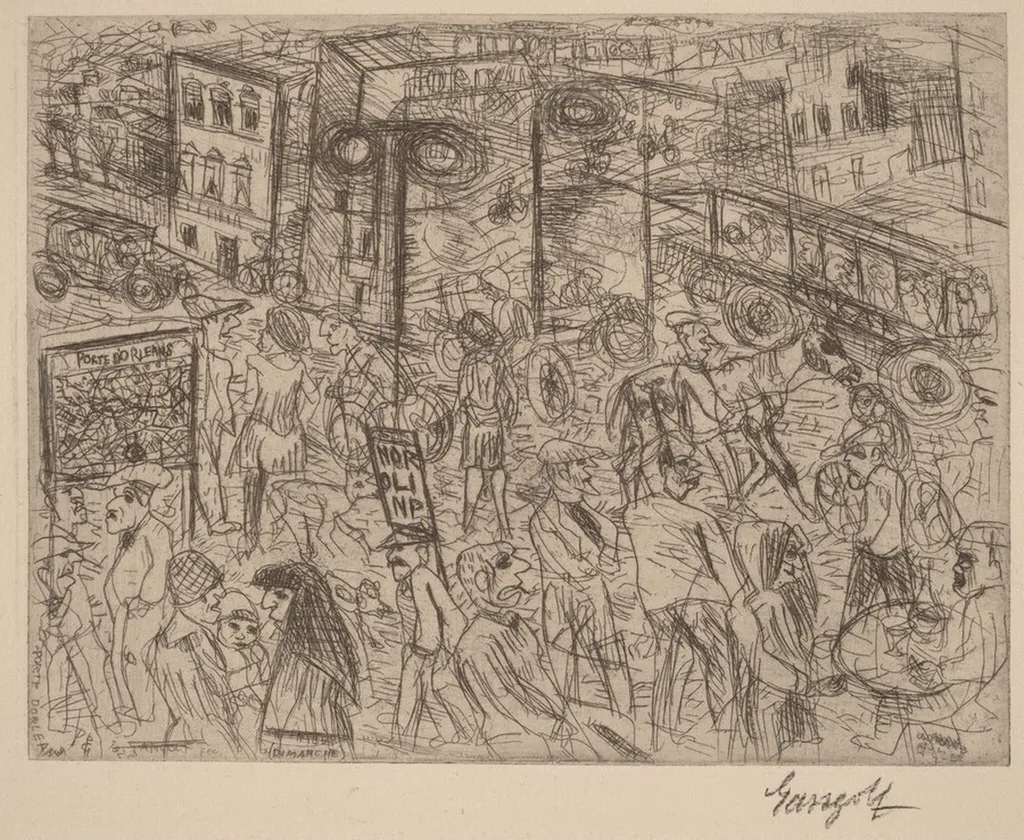
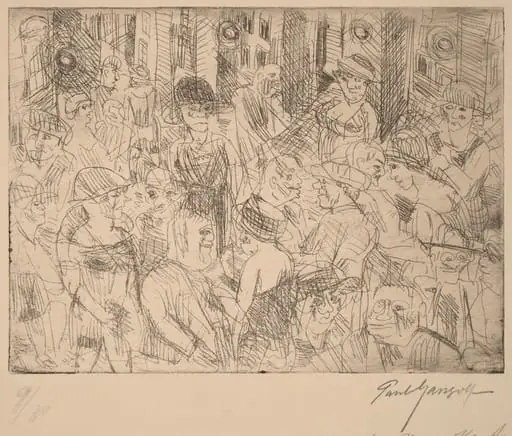
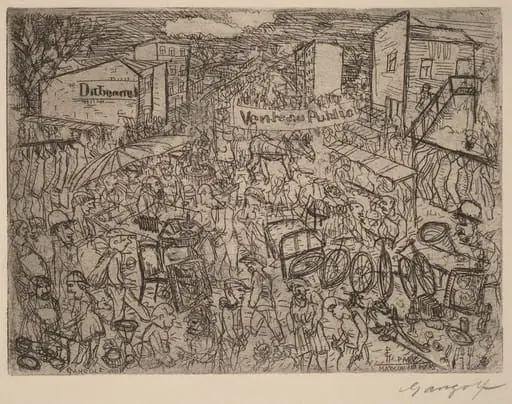
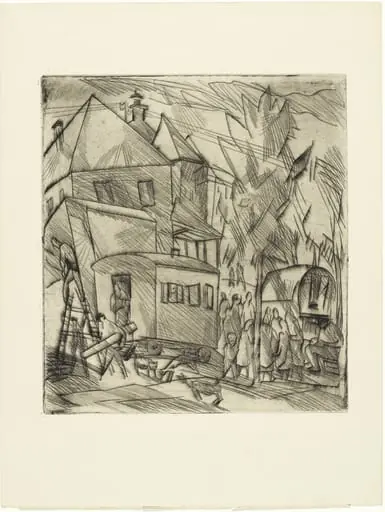
Porte d'Orleans is an ink print by Paul Gangolf. It dates from 1922 and is held in the collection of the National Gallery of Art.
About this work
Overview
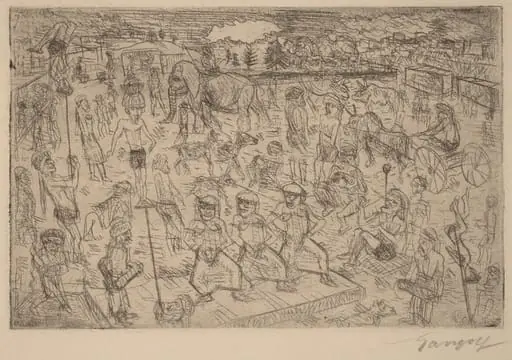
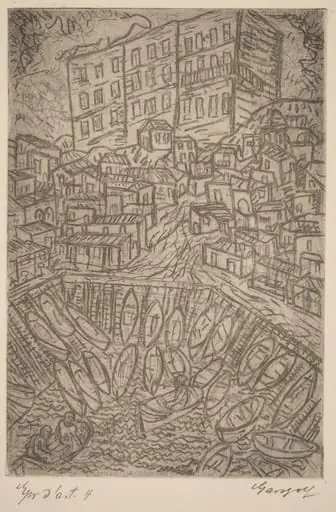
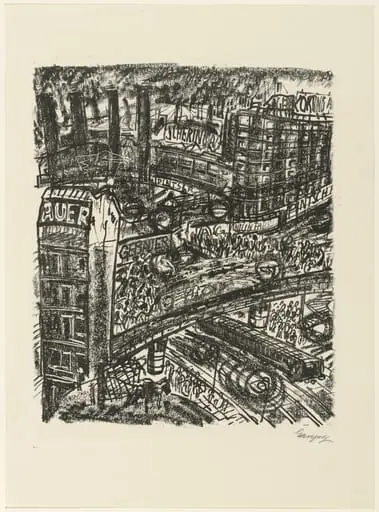
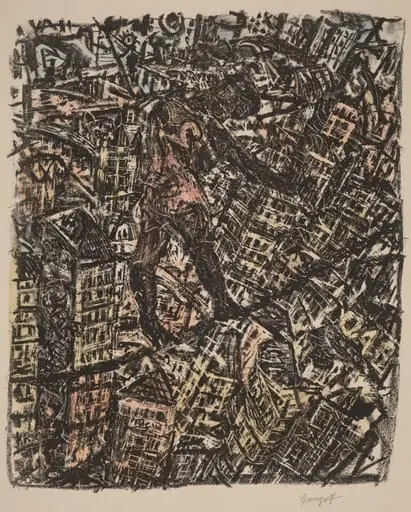
Porte d’Orleans is a 1922 etching on wove cream paper by Paul Gangolf. Executed as a print, the work presents an urban scene rendered in dense, overlapping lines that fill the entire surface, creating a sense of visual congestion.
Subject & Meaning
The composition depicts a bustling street view of the Porte d’Orleans area, populated by a crowd of indistinct figures and tilted architectural elements. The chaotic arrangement of buildings, doors, and windows suggests the flux of city life, evoking a fleeting, almost dreamlike impression of a metropolis observed through a veil of movement.
Technique & Style
Gangolf employed traditional intaglio etching techniques, incising a complex network of lines onto a copper plate before transferring the image onto cream-colored wove paper. The overlapping strokes and varied line weights generate a layered texture, while the occasional blurred or half‑erased forms convey a sense of immediacy and visual turbulence.
History & Provenance
Created in the early 1920s, the print reflects the post‑World War I interest in urban modernity. While specific ownership records are limited, the work has been catalogued among Gangolf’s prints from this period and appears in several collections focusing on early twentieth‑century French printmaking.
Context
The piece aligns with contemporary explorations of cityscapes by artists responding to rapid urban growth and the mechanized pace of modern life. Its dense, almost abstracted representation parallels the experimental tendencies of the École de Paris and the broader avant‑garde movement of the era.
Legacy
Porte d’Orleans exemplifies Gangolf’s engagement with the etching medium as a vehicle for capturing the frenetic energy of urban environments. The work continues to be referenced in studies of early twentieth‑century printmaking for its intricate line work and its contribution to the visual vocabulary of modern city imagery.
Artist & collection