Artwork
Untitled
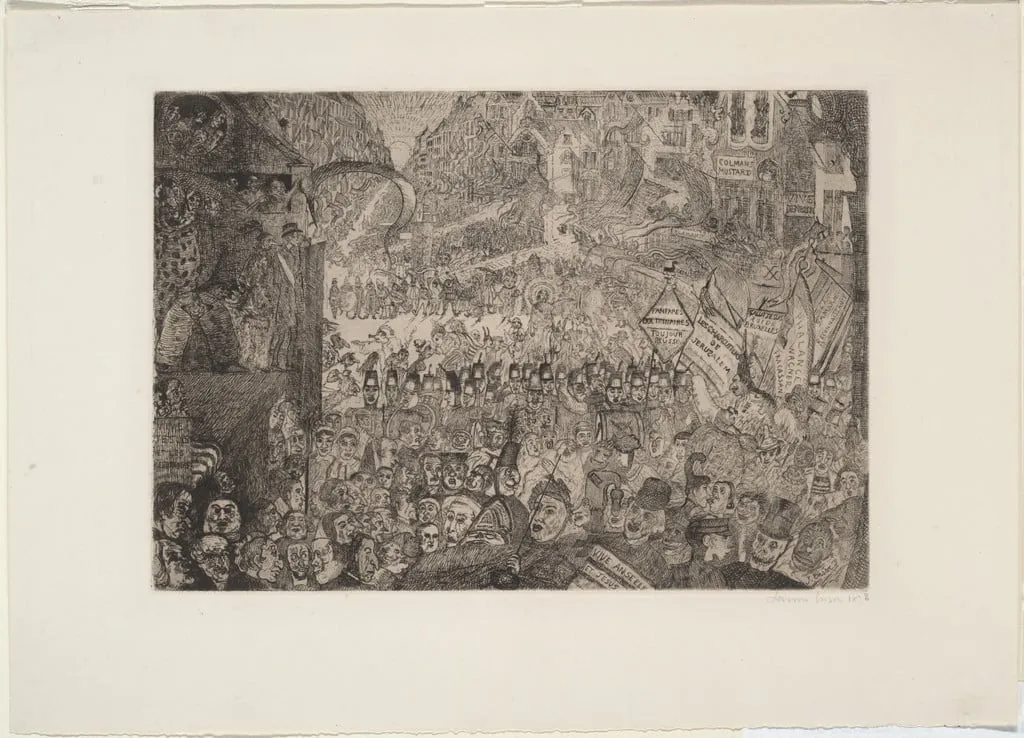
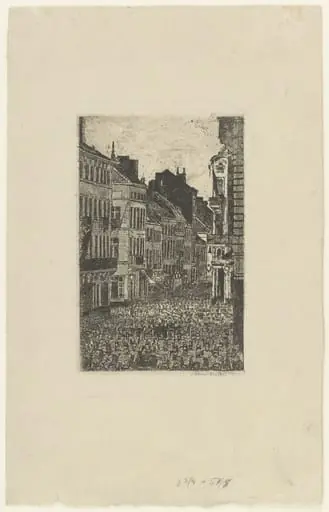
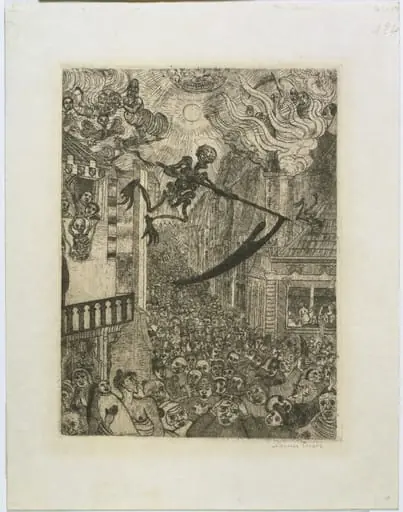
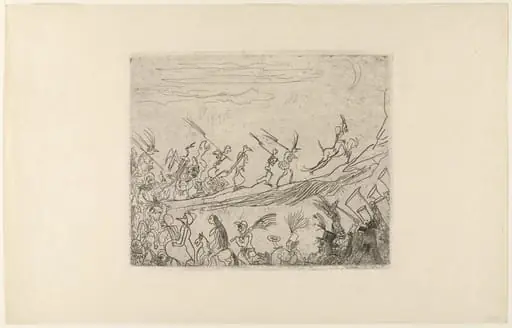
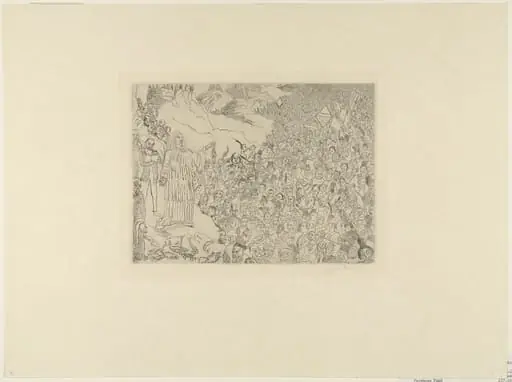
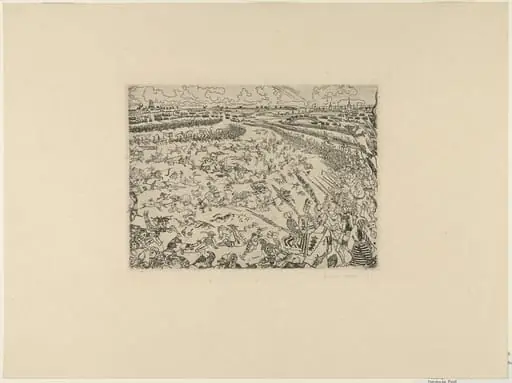
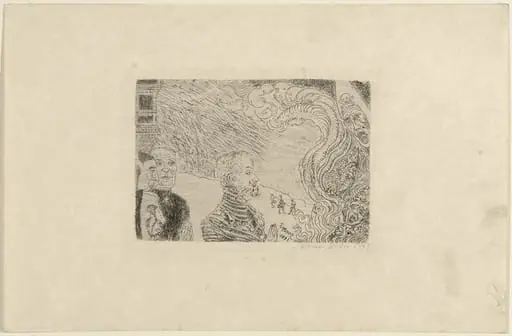
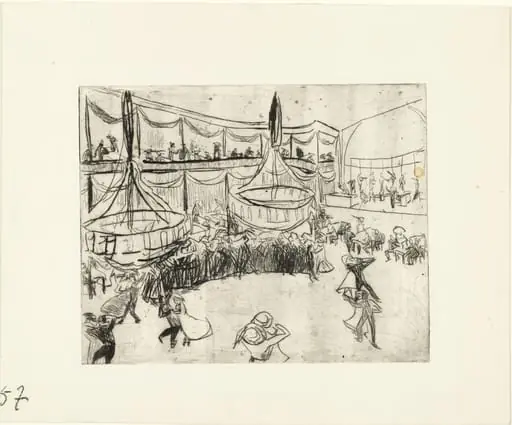
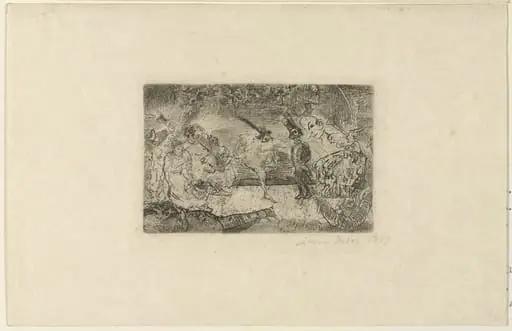
Untitled is an ink print by the Impressionist artist James Ensor. It dates from 1898 and is held in the collection of the Museum of Modern Art.
About this work
Overview
Executed on metal and printed in ink, it reflects Ensor’s sustained engagement with printmaking during a period of intense personal and artistic exploration.
Created in 1898, this print by James Ensor combines etching and drypoint to produce a densely layered image. Executed on metal and printed in ink, it reflects Ensor’s sustained engagement with printmaking during a period of intense personal and artistic exploration. Though untitled, the work carries the hallmarks of his mature style: crowded compositions, psychological tension, and a fascination with anonymity.
Subject & Meaning
The scene depicts a disorienting crowd of masked and hooded figures in a dim urban setting. Some hold ambiguous objects—banners, tools, or sticks—while others vanish into shadow. A commercial sign reading 'Colman & Co. Mustard' intrudes with mundane realism, contrasting the surreal atmosphere. The figures lack clear identity, suggesting themes of alienation, societal performance, or the erosion of individuality in modern life.
Technique & Style
Ensor employed etching to incise fine lines into a metal plate, then used drypoint to add rough, velvety textures through direct scratching. The result is a high-contrast image with deep blacks and sharp, jagged contours. The dense patterning of lines creates visual noise, amplifying the sense of claustrophobia. His hand is evident in the uneven pressure and deliberate abrasions, enhancing the work’s unease.
History & Provenance
Ensor lived and worked primarily in Ostend, where he produced most of his prints outside the mainstream art centers of Brussels or Paris. This piece emerged during his active years with Les XX, a progressive Belgian group that championed experimental art. Though not exhibited widely at the time, it entered private collections in Belgium and France, later gaining recognition through retrospective surveys of his graphic work.
Context
In the late 1890s, Ensor was distancing himself from academic norms and exploring themes of disguise and social decay. His work responded to rising nationalism, religious hypocrisy, and the commodification of daily life. The inclusion of a commercial brand hints at his critique of consumer culture. The print’s chaos mirrors broader European anxieties preceding World War I, though it avoids direct political commentary.
Legacy
This print exemplifies Ensor’s role as a precursor to Expressionism and Surrealism. His use of distortion, psychological depth, and symbolic clutter influenced artists like George Grosz and Max Beckmann. Though less celebrated than his paintings, his graphic works are now recognized for their innovation in conveying inner turmoil through print media, expanding the expressive potential of etching in modern art.
Artist & collection
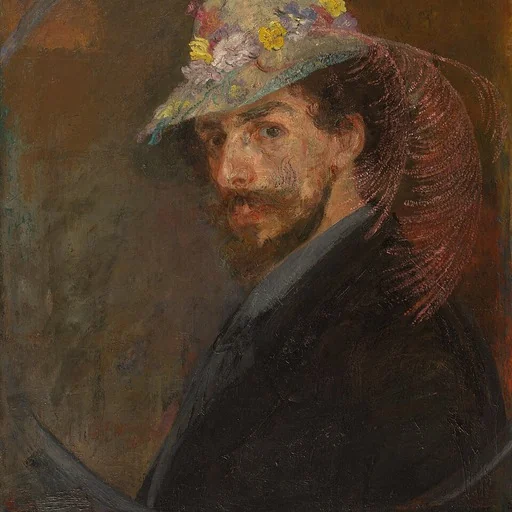
Artist
James Sidney Edouard, Baron Ensor (13 April 1860 – 19 November 1949) was a Belgian painter and printmaker, an important influence on expressionism and surrealism who lived in Ostend for most of his life.