Artwork
Plum Blossoms and Peonies

Plum Blossoms and Peonies is an unspecified painting by the Baroque artist Gao Fenghan. It dates from 1741 and is held in the collection of the Cleveland Museum of Art.
About this work
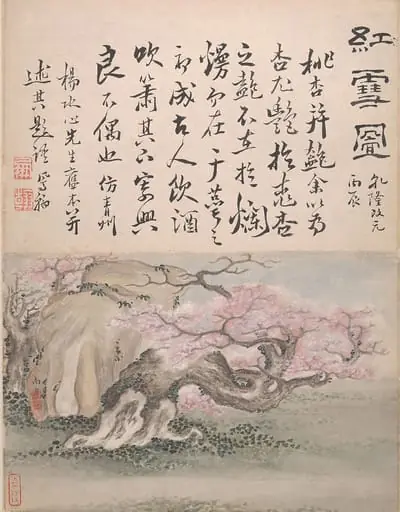
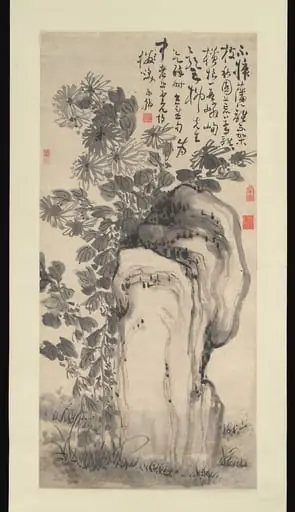
You see two tall scrolls side by side: the left one shows bare plum branches dusted with tiny white flowers, the right one a big, ruffled peony in pink.
You see two tall scrolls side by side: the left one shows bare plum branches dusted with tiny white flowers, the right one a big, ruffled peony in pink.
Gao painted this the year he left Yangzhou, so the flowers feel like a quiet goodbye. The plum blooms in winter, tough and plain; the peony is showy, summer-lush. Together they’re a year in two strokes—simple but full of feeling.
If you like this, look up the subject: china, qing dynasty (1644-1911).
Overview
Gao Fenghan’s diptych, created in 1741, presents two contrasting floral motifs on adjacent scrolls: a sparse branch of plum blossoms on the left and a luxuriant pink peony on the right. The work marks the artist’s departure from Yangzhou back to his native Shandong, and its composition reflects a personal farewell expressed through seasonal symbolism.
Subject & Meaning
The plum blossom, traditionally admired for its resilience in winter, occupies the first panel, while the peony—celebrated as the “king of flowers” for its opulent summer display—fills the second. Together they compress an entire year into a single visual statement, juxtaposing modest endurance with exuberant abundance.
Technique & Style
Executed with a loose, almost improvisational brush, the painting bears the hallmarks of Gao’s left‑handed practice after a 1737 injury to his right hand. The resulting strokes are intentionally crude and eccentric, diverging from the refined conventions of his contemporaries and emphasizing a raw, expressive quality.
History & Provenance
Painted in the year Gao left the artistic community of Yangzhou, the diptych likely served as a parting token. Its creation coincides with the artist’s relocation to Shandong, a move that marked the final phase of his career and personal life.
Context
Gao Fenghan belonged to the group known as the Yangzhou Eccentrics, a circle of Qing‑dynasty painters noted for unconventional subjects and lifestyles. Their work often challenged orthodox aesthetic standards, and this piece exemplifies that spirit through its unorthodox composition and emotive brushwork.
Artist & collection