Artwork
Hall of Lofty Pines

Hall of Lofty Pines is an unspecified painting by the Baroque artist Wang Hui. It dates from 1703 and is held in the collection of the Cleveland Museum of Art.
About this work
Overview
Wang Hui, a prominent painter of the early Qing orthodox school, created a hand‑scroll landscape titled Hall of Lofty Pines for Li Duna, a vice minister of justice under Emperor Kangxi. The work depicts a tranquil estate set among riverbanks, low hills and towering pines, inviting the viewer into an imagined retreat.
Subject & Meaning
The composition centers on a country manor surrounded by lofty pine trees, a visual metaphor for Li Duna’s reputed uprightness and endurance. The scroll shows the official twice: first arriving at the gate with two attendants, later seated in a secluded inner chamber, reading in quiet contemplation.
Technique & Style
Executed in the refined brushwork characteristic of the Qing orthodox tradition, Wang Hui balances delicate ink washes for distant hills with more defined, vigorous strokes for the towering pines that even extend beyond the painting’s borders. The scroll’s continuous narrative unfolds from right to left, guiding the eye through the landscape.
History & Provenance
Commissioned as a retirement tribute, the painting was linked to an imperial calligraphic inscription naming Li’s retreat. Li died before the work was finished and before receiving official permission to retire. The scroll eventually entered the collection of the Cleveland Museum of Art, where it is displayed today.
Context
In early Qing court culture, gifting a painted landscape accompanied by imperial calligraphy was a means of honoring high officials. Wang Hui’s work reflects the period’s emphasis on moral symbolism—here, the pine’s steadfastness representing the virtues expected of a senior minister.
Artist & collection


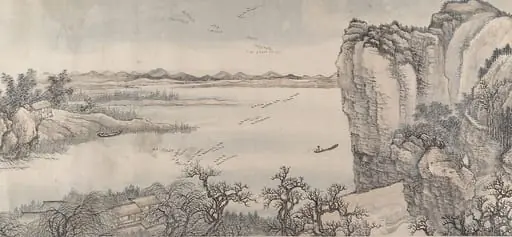 清 王翬 倣巨然燕文貴山水圖 卷|Landscape in the Style of Juran and Yan Wengui
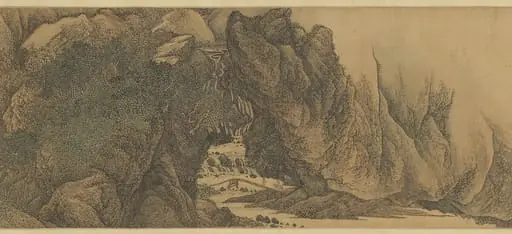 清 王翬 太行山色圖 卷|The Colors of Mount Taihang
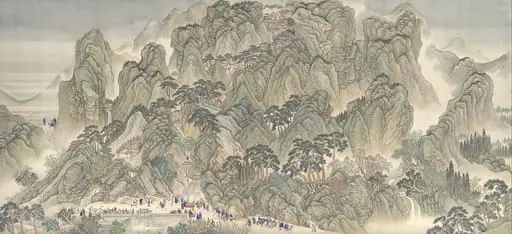 清 王翬等 康熙南巡圖 (卷三: 濟南至泰山) 卷|The Kangxi Emperor's Southern Inspection Tour, Scroll Three: Ji'nan to Mount Tai
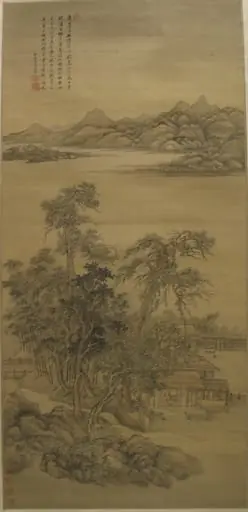 清 佚名 倣王翬 倣李公麟草堂圖 軸|Landscape in the Style of Li Gonglin
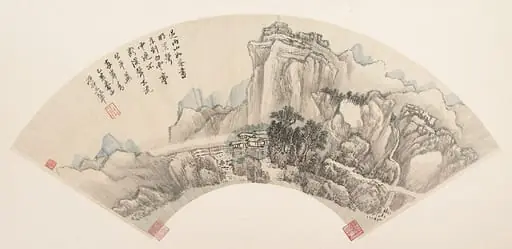 清 王翬 雨後晴巒圖 扇頁|Mountains after Rain
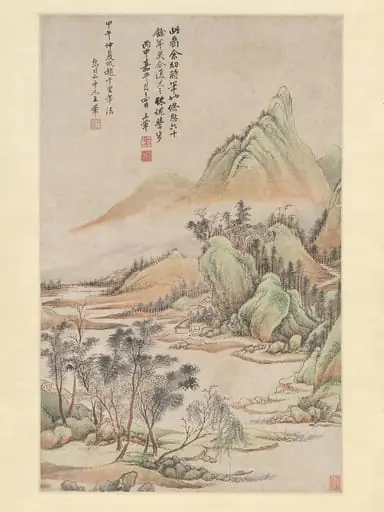 倣趙伯駒山水圖 軸|Landscape in the Style of Zhao Boju (Fang Zhao Boju shanshui)
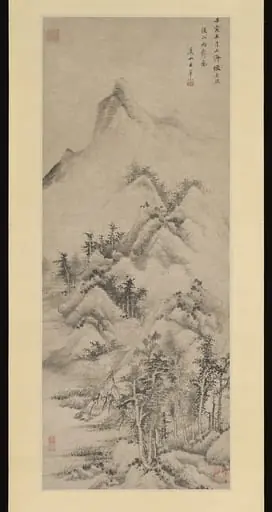 清 王翬 溪山雨霽圖 軸|Clearing after Rain over Streams and Mountains
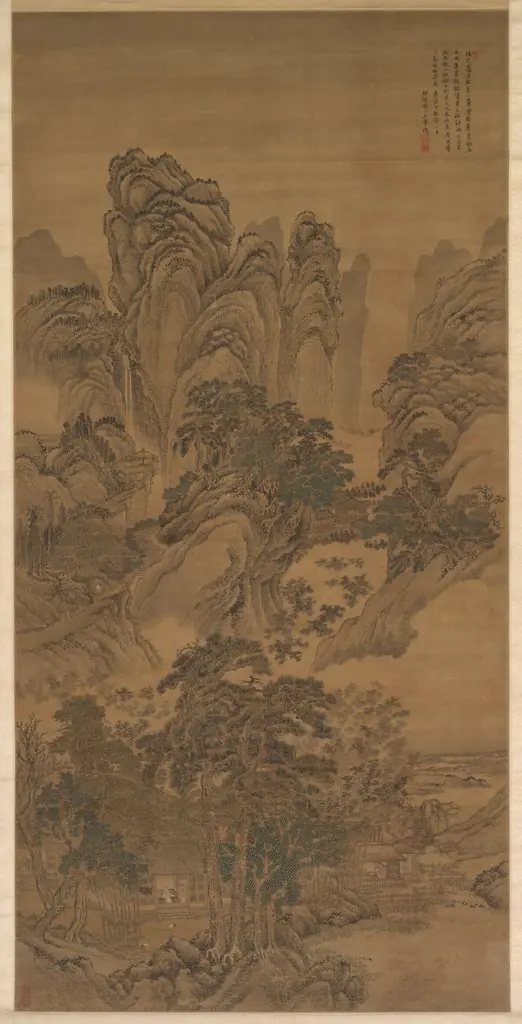 Landscape
 Returning to the Village in a Rainstorm
 Reviewing the Examination Results
 Dream Journey among Rivers and Mountains, no. 90
 Plum Blossoms and Peonies
 View from the Keyin Pavilion on Paradise (Baojie) Mountain
 Dwelling in the Fuchun Mountains (Ziming Scroll)
 A Hundred Sparrows in a Lofty Grove
 Oeyama Engi
 Shanglin Park
 Buddha's Conversion of Five Bhiksu
 Poetic Feeling in a Thatched Pavilion
 Five Pine Trees