Artwork
Netley Abbey, near Southampton
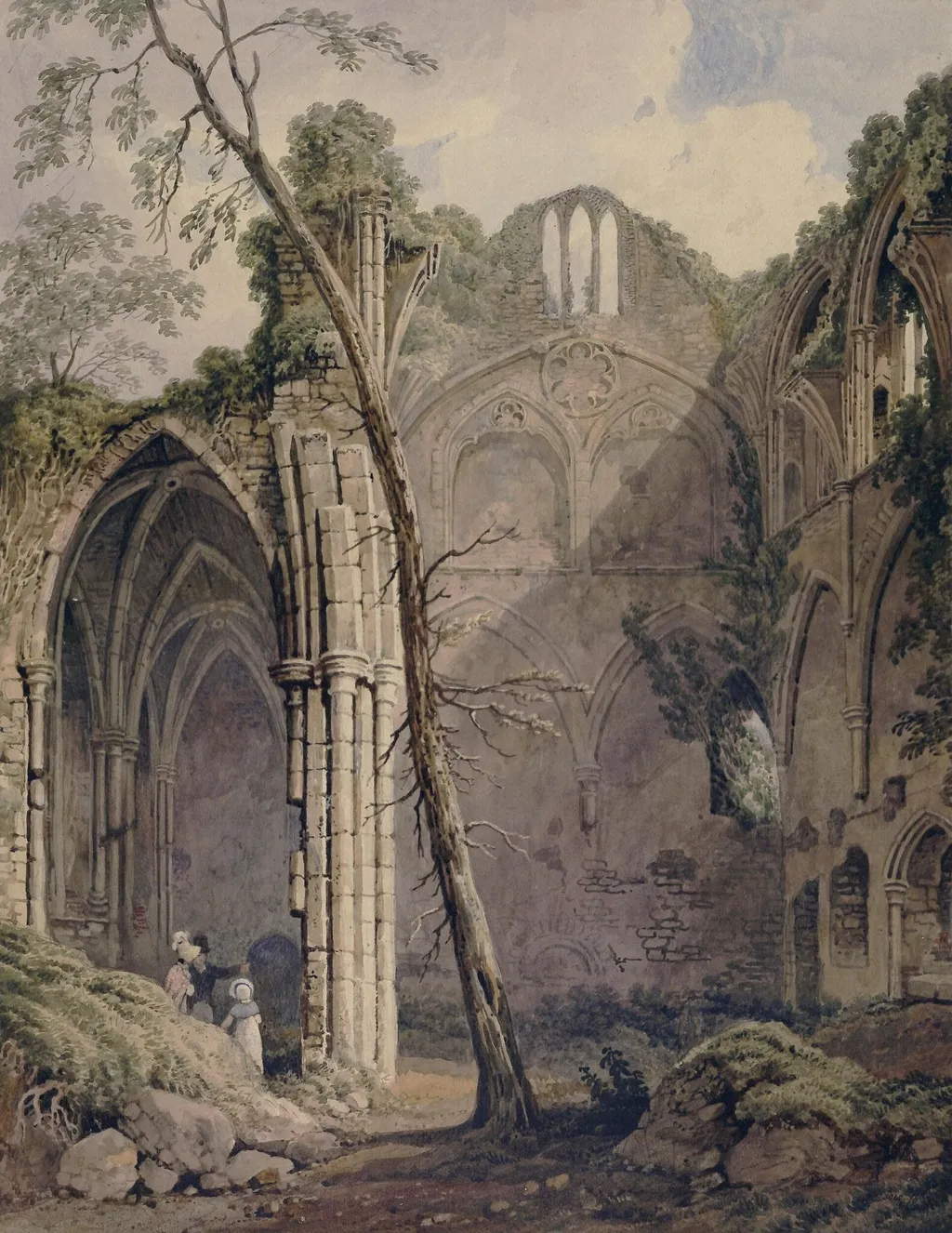
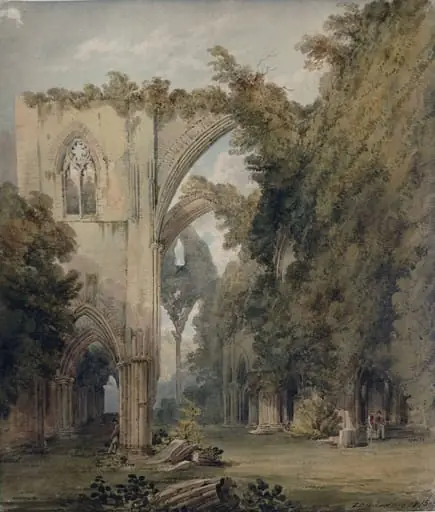
Netley Abbey, near Southampton is a watercolor work on paper by the British Romanticist artist Gastineau. It dates from 1815 and is held in the collection of the Victoria and Albert Museum.
About this work
Overview
Created in 1815, this watercolour by Gastineau depicts the ruins of Netley Abbey, a former monastic complex near Southampton. The work is part of the Victoria and Albert Museum’s collection and measures the passage of time through a quiet, atmospheric scene in which the decaying stone structure is intertwined with surrounding vegetation.
Subject & Meaning
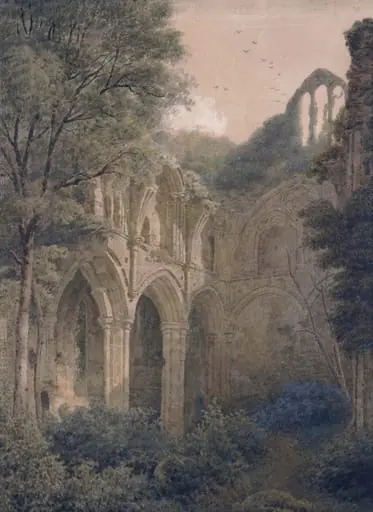
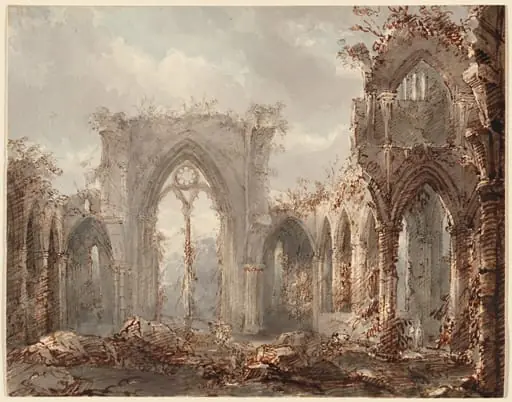
The composition centers on the dilapidated arches of the abbey, their stonework fractured and overtaken by trees and vines.
The composition centers on the dilapidated arches of the abbey, their stonework fractured and overtaken by trees and vines. Sunlight streams through the openings, illuminating patches of moss and highlighting the contrast between the built environment and the encroaching natural world. Two diminutive figures—a child and an adult—stand in the foreground, underscoring the human scale of the ruin and suggesting contemplation of history’s transience.
Technique & Style
Executed in delicate watercolour washes, the piece employs a muted palette of greens, greys and soft earth tones. Gastineau’s handling of the medium creates a luminous quality, allowing light to filter through the broken arches while rendering foliage with translucent layers. The subtle gradations of tone convey depth and atmosphere, characteristic of early‑19th‑century Romantic landscape approaches.
History & Provenance
The painting was produced during a period when interest in medieval ruins was heightened by Romantic sensibilities. After its creation, the work entered the collection of the Victoria and Albert Museum, where it remains on display. Its acquisition reflects the museum’s broader effort to document British architectural heritage through contemporary artistic interpretations.
Artist & collection

Artist
Gastineau painted quiet, delicate watercolors of British landmarks in the 19th century.