Artwork
Tintern Abbey
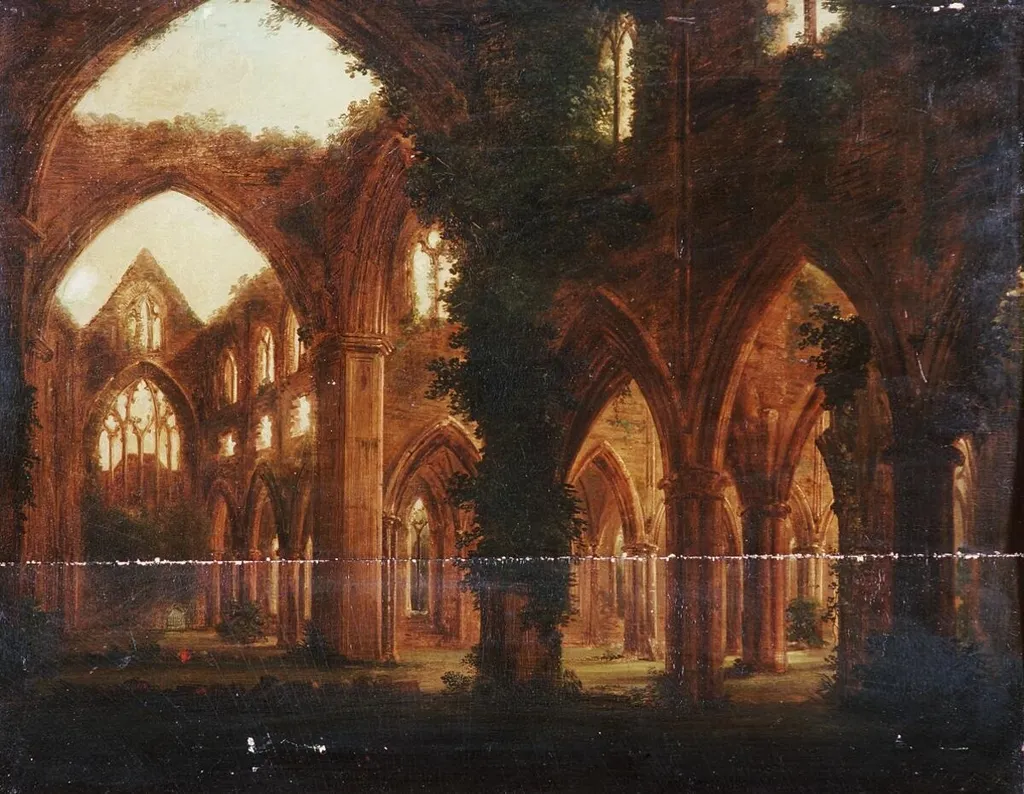
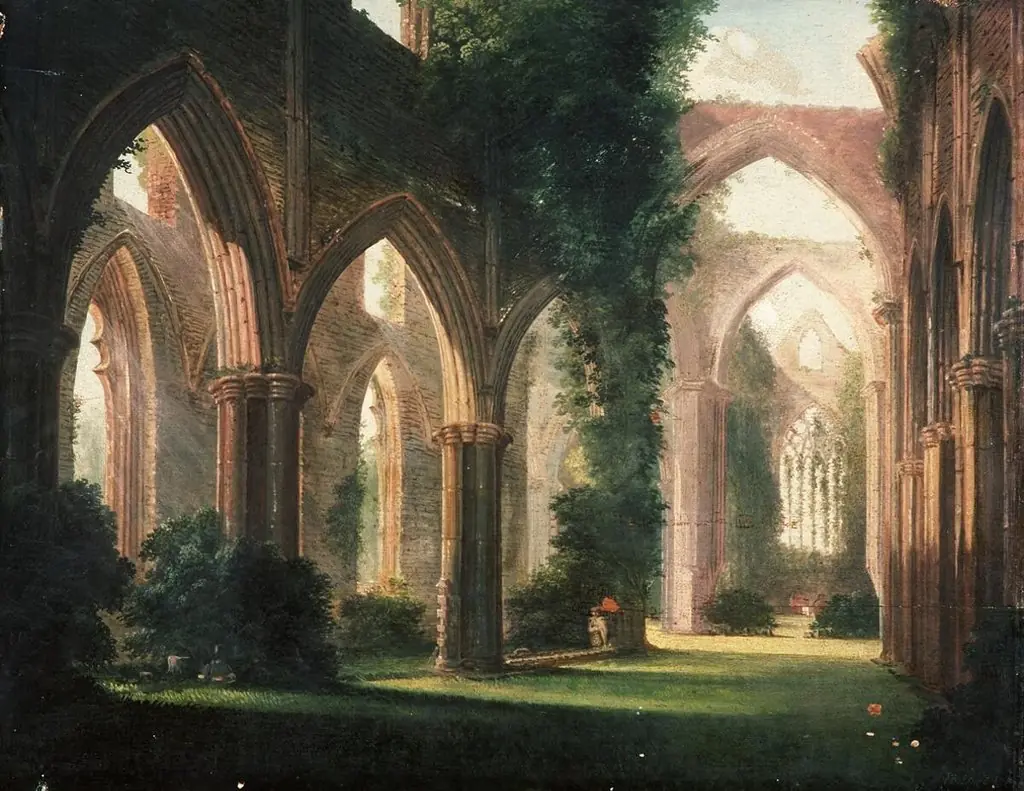
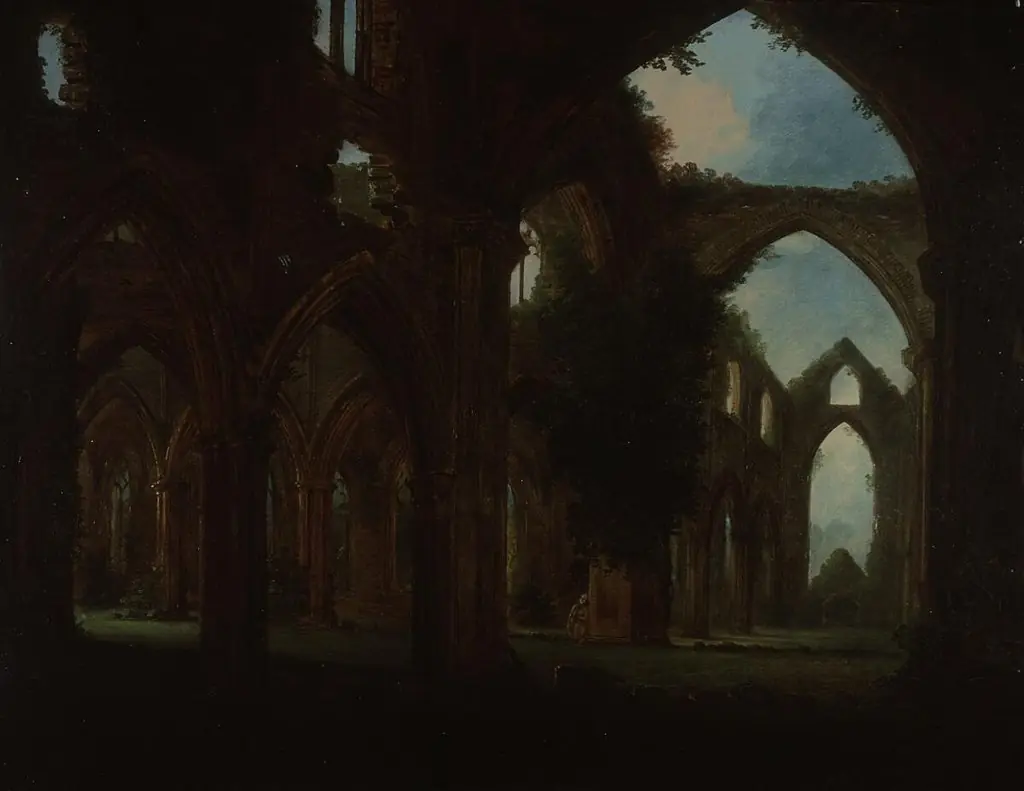
Tintern Abbey is an oil painting by the British Romanticist artist J. Ashford. It dates from 1800 and is held in the collection of the National Library of Wales. Painted in 1800 by J.
About this work
Overview
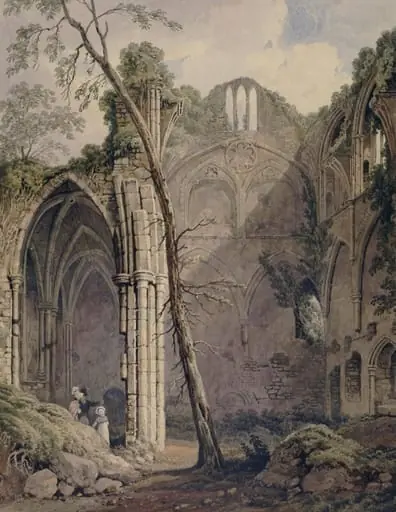
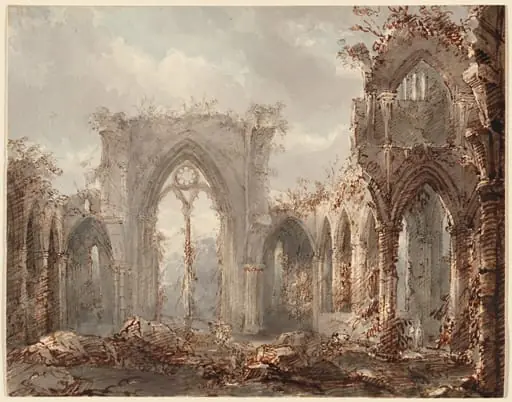
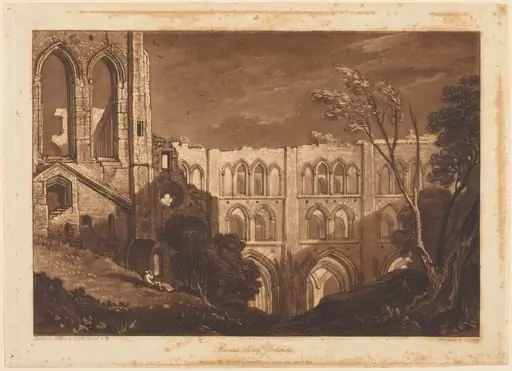
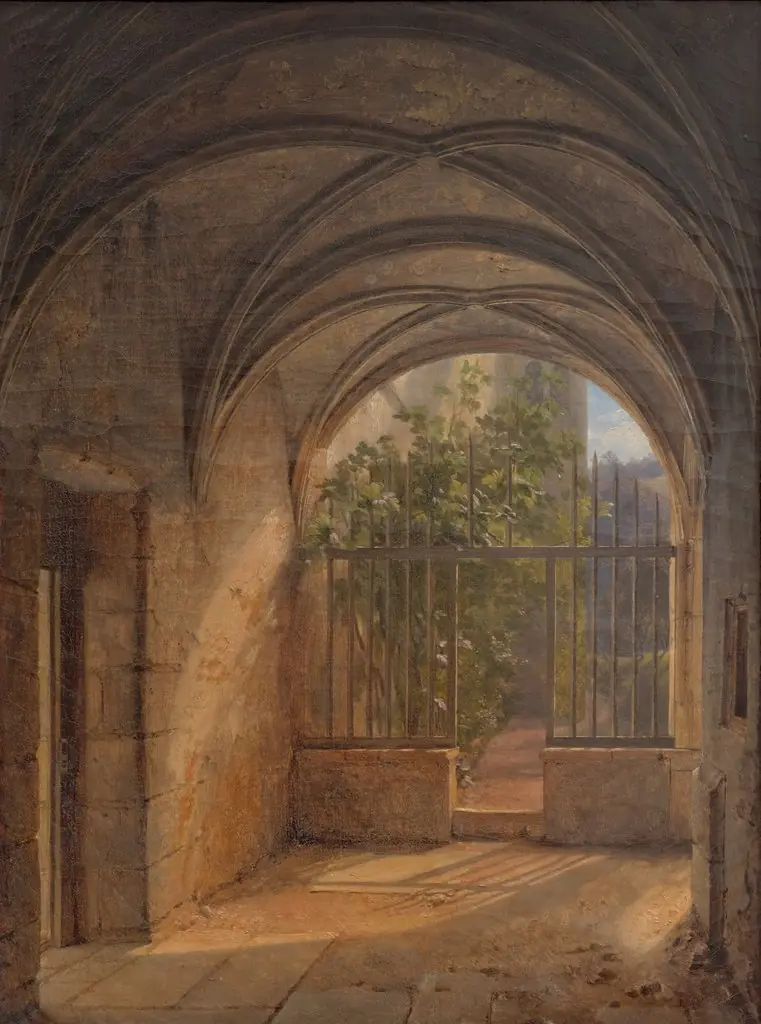
Painted in 1800 by J. Ashford, this oil-on-canvas work captures the ruins of Tintern Abbey in monastic Wales. The composition centers on the surviving Gothic architecture—arches, windows, and vaulted corridors—rendered in naturalistic light. The painting is part of the National Library of Wales collection, where it remains as a quiet record of early 19th-century interest in ecclesiastical decay.
Subject & Meaning
The scene presents Tintern Abbey not as a bustling religious site but as a silent, abandoned structure. The absence of figures and the gentle illumination suggest contemplation rather than narrative. The ruin becomes a vessel for reflection on time, faith, and nature’s reclamation—evoking a mood of serene solitude rather than grandeur or tragedy.
Technique & Style
Ashford employed soft, diffused lighting to model the stone surfaces, emphasizing texture over detail. Shadows stretch horizontally across the arches, enhancing depth without dramatic contrast. The brushwork is restrained, favoring atmospheric harmony over precise architectural rendering. Trees at the horizon subtly frame the ruin, integrating the structure into its surrounding landscape.
History & Provenance
The painting was completed in 1800, during a period when ruined abbeys attracted artists and travelers drawn to their romantic associations. It entered the National Library of Wales’s holdings at an early date, likely through local acquisition or donation. Its preservation reflects regional interest in documenting Wales’s medieval heritage during the early industrial age.
Context
In the early 1800s, the picturesque movement encouraged artists to depict ruins as subjects of emotional and aesthetic value. Tintern Abbey, already famous through poetry and travel writing, became a recurring motif. Ashford’s version aligns with this trend, offering a calm, unembellished view that prioritizes mood over historical reconstruction.
Legacy
While not widely reproduced, the painting contributes to a regional visual record of Tintern Abbey before modern conservation. Its restrained tone distinguishes it from more dramatic interpretations of the site. Today, it serves as a historical reference for how the ruin appeared to contemporaries, preserving a moment in its long transition from sacred space to cultural landmark.
Artist & collection
Artist
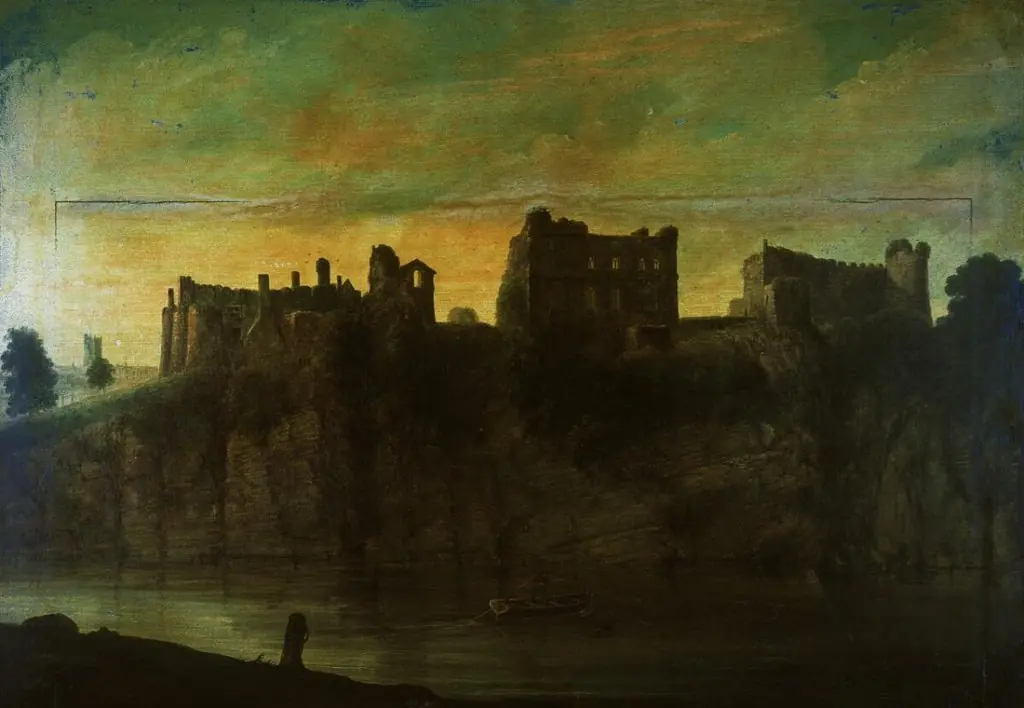
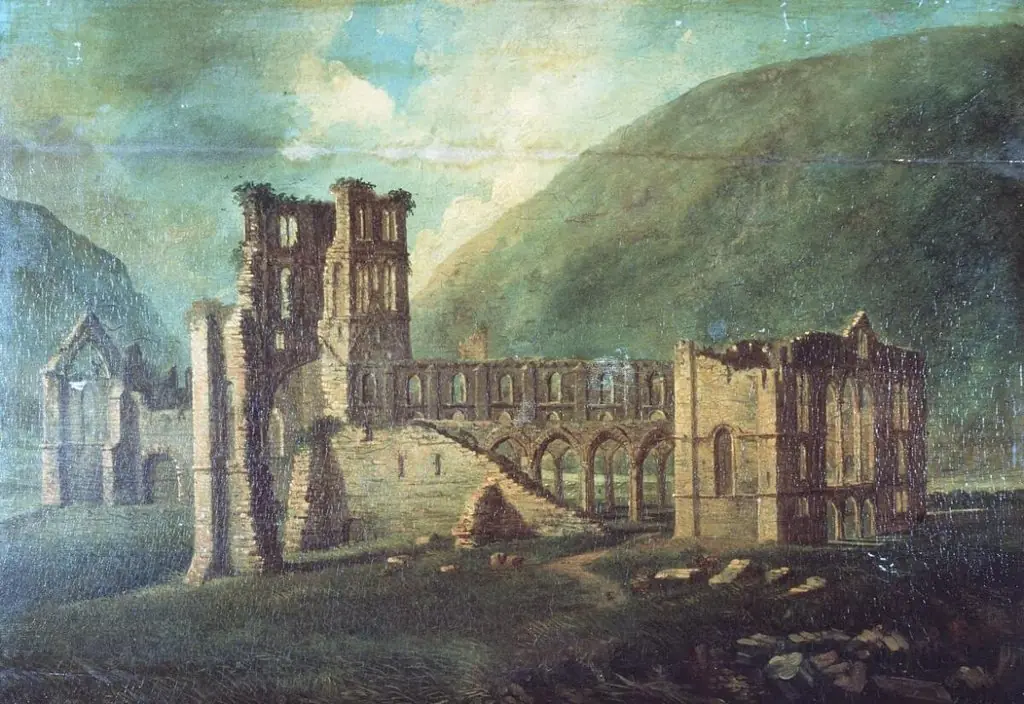
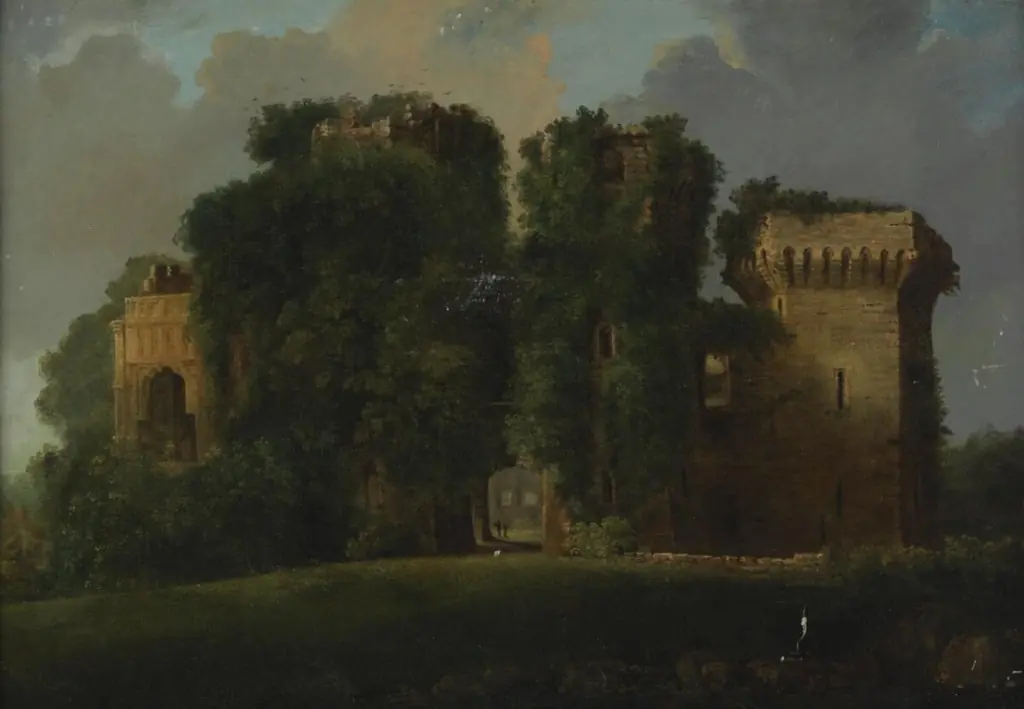
J. Ashford painted grand old castles in Wales during the early 1800s. Their oil paintings capture the crumbling towers and mossy ruins of Chepstow Castle, Tintern Abbey, and Raglan Castle, showing how stone and ivy mix…