Artwork
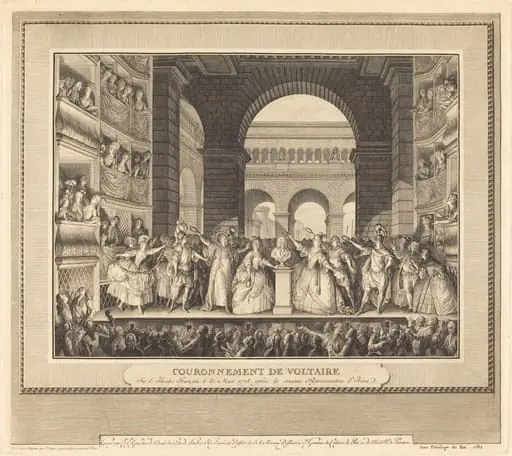
Couronnement de Voltaire (The Crowning of Voltaire)
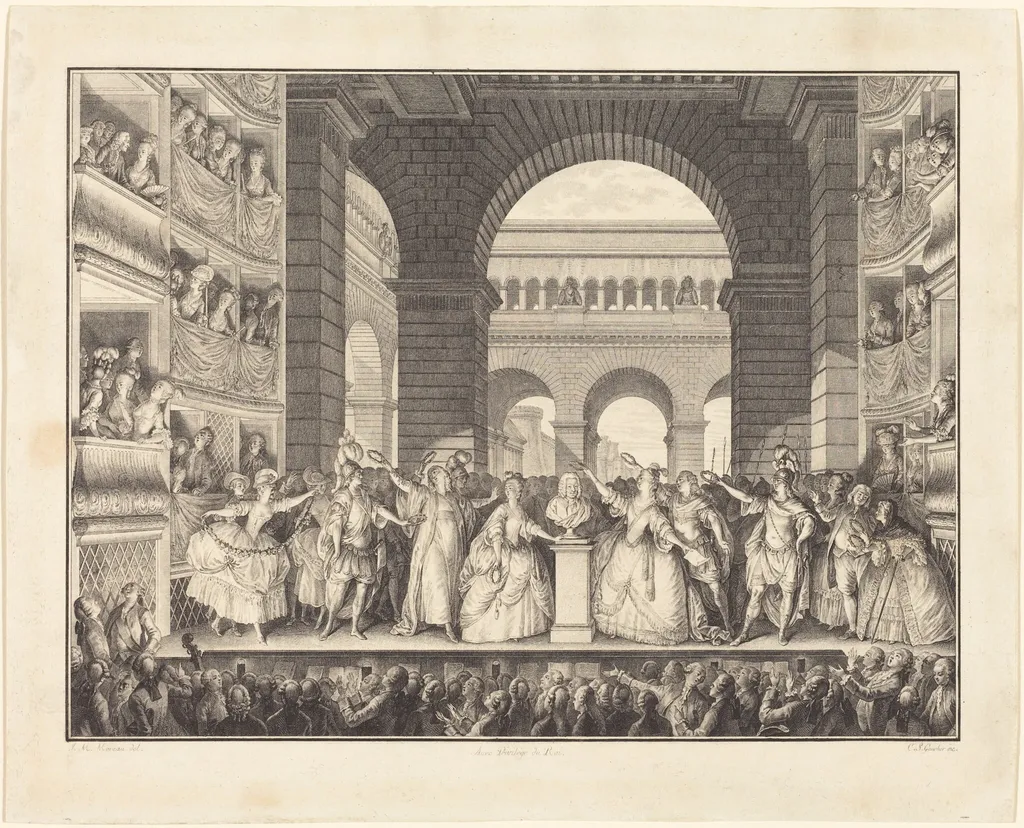
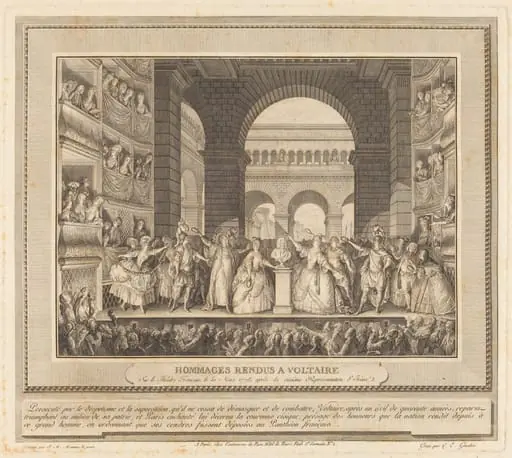
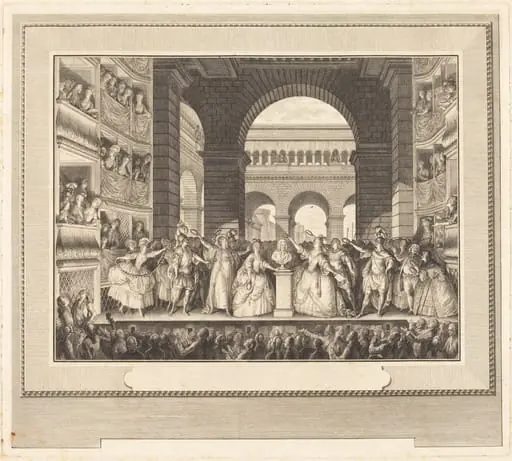
Couronnement de Voltaire (The Crowning of Voltaire) is an ink print by the Romanticist artist Charles-Etienne Gaucher. It dates from 1782 and is held in the collection of the National Gallery of Art.
About this work
Overview
Created in 1782 by Charles-Etienne Gaucher, this print depicts a ceremonial tribute to Voltaire, the French Enlightenment philosopher.
Created in 1782 by Charles-Etienne Gaucher, this print depicts a ceremonial tribute to Voltaire, the French Enlightenment philosopher. Executed in etching and engraving on laid paper, the work captures a public moment of homage, rendered with meticulous line work typical of 18th-century printmaking. The composition is densely populated, emphasizing collective reverence rather than individual portraiture.
Subject & Meaning
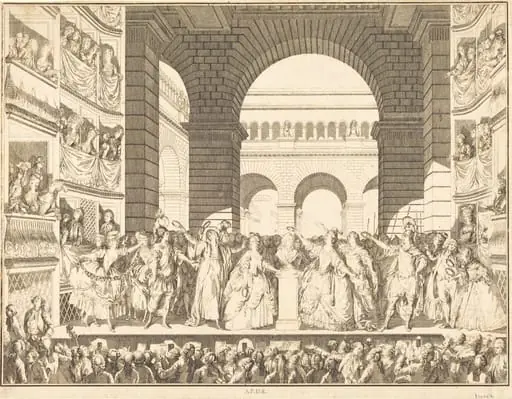
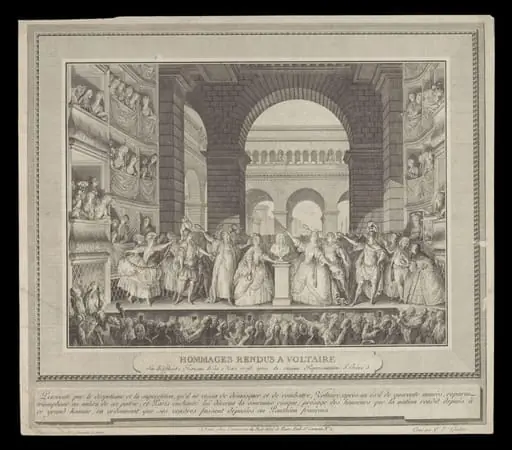
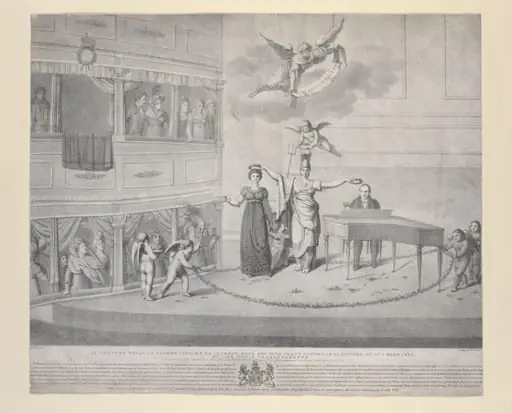
The scene portrays Voltaire being crowned with a laurel wreath by two female figures, symbolizing Poetry and Reason. Surrounding him, a diverse crowd of spectators fills an architectural space with arches and balconies, suggesting a public celebration of intellectual achievement. The imagery reflects the cultural elevation of Enlightenment thinkers, transforming philosophical influence into a quasi-religious ritual.
Technique & Style
Gaucher employed fine etched lines and engraved details to render textures—from the folds of garments to the varied expressions of the crowd. The precision of the technique allowed for intricate layering of figures and architectural elements, creating depth within a flat plane. The use of cross-hatching and delicate stippling enhances the sense of movement and volume, characteristic of academic printmaking of the period.
History & Provenance
Produced shortly after Voltaire’s death in 1778, the print emerged during a wave of public memorialization. It was likely circulated among intellectual circles and collectors who admired Voltaire’s legacy. While its early ownership is undocumented, its survival in museum collections today attests to its role as a visual artifact of posthumous reverence in late 18th-century France.
Context
The print reflects the broader cultural shift in post-Revolutionary France, where Enlightenment ideals were being formally honored. Voltaire, once a controversial figure, was now celebrated as a national icon. Such imagery aligned with efforts to construct a secular mythology around thinkers who challenged religious and monarchical authority, replacing traditional religious iconography with civic reverence.
Legacy
Though not widely reproduced today, the print remains a key example of how Enlightenment figures were visually mythologized through print culture. It illustrates the power of imagery to transform philosophical legacy into public ritual. Scholars continue to reference it as evidence of how intellectual authority was staged and consumed in the decades before the French Revolution.
Artist & collection