Artwork
Couronnement de Voltaire (The Crowning of Voltaire)
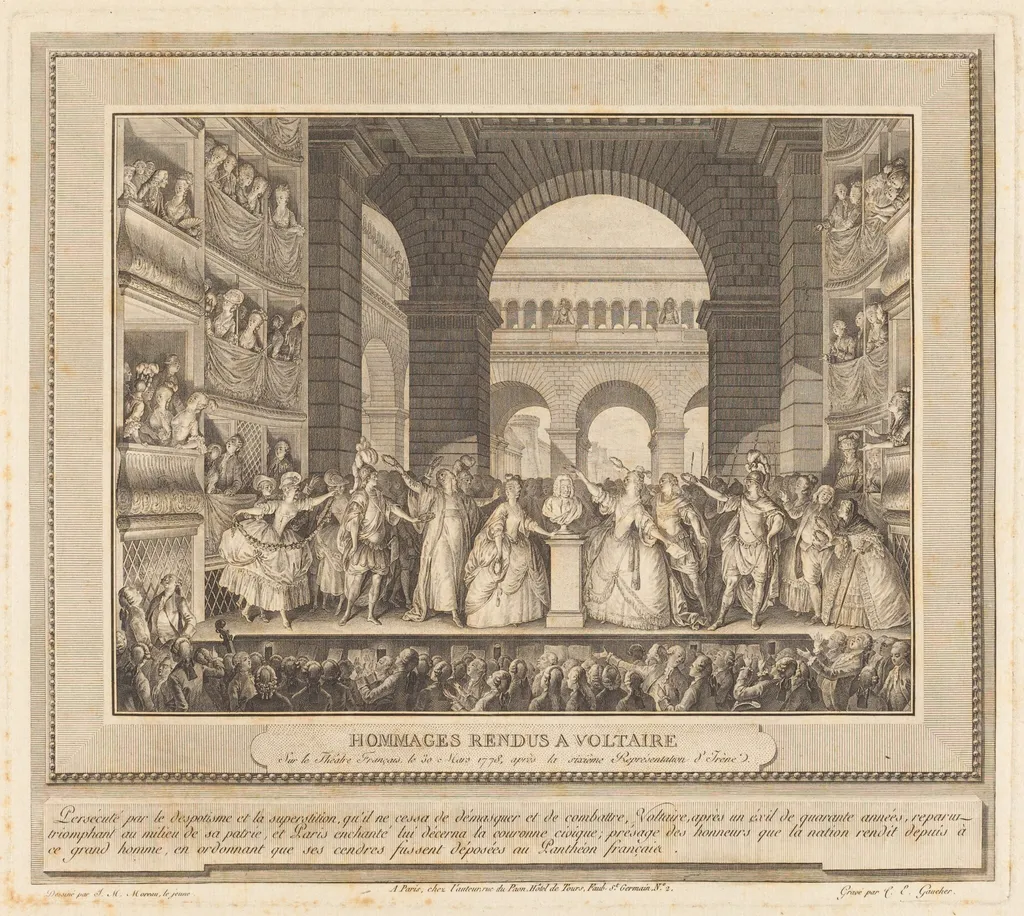
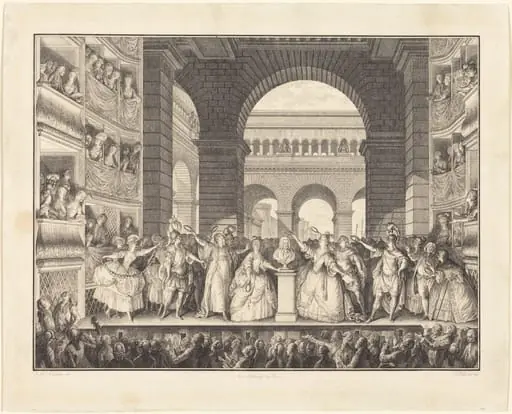
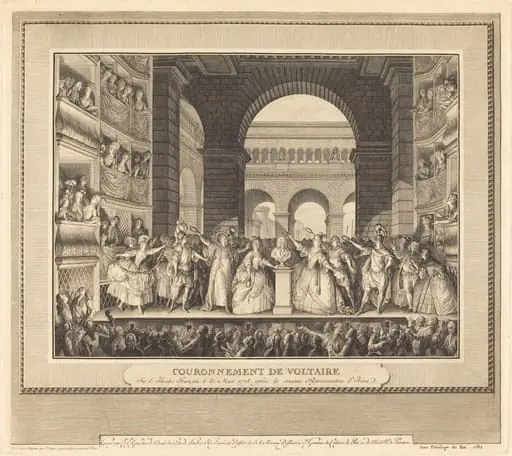
Couronnement de Voltaire (The Crowning of Voltaire) is an ink print by the Romanticist artist Charles-Etienne Gaucher. It dates from 1782 and is held in the collection of the National Gallery of Art. Charles‑Etienne Gaucher’s 1782 print, titled *Couronnement de Voltaire*, depicts a ceremonial gathering within an imposing stone hall.
About this work
Overview
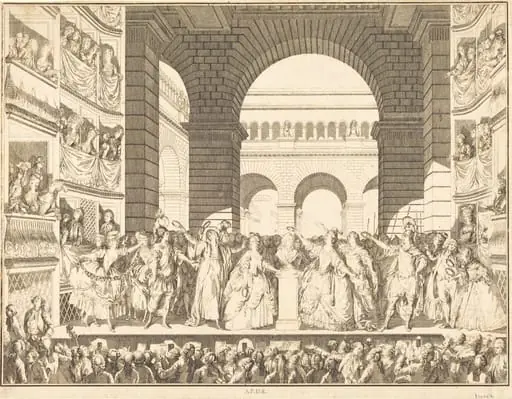
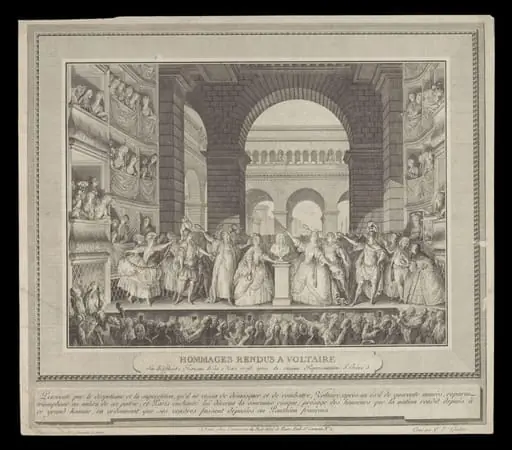
A central pedestal supports a male figure receiving a wreath from a woman positioned on a lower tier, while a formally dressed crowd observes the act.
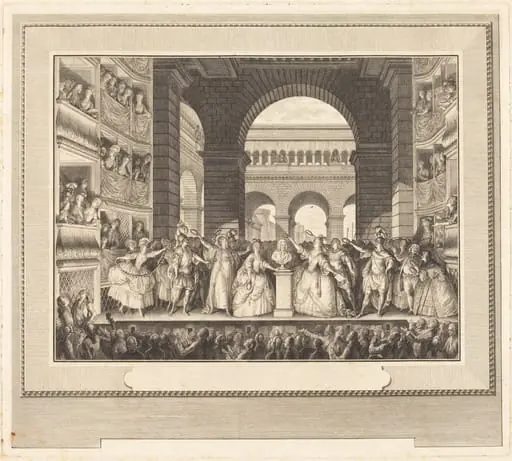
Charles‑Etienne Gaucher’s 1782 print, titled *Couronnement de Voltaire*, depicts a ceremonial gathering within an imposing stone hall. A central pedestal supports a male figure receiving a wreath from a woman positioned on a lower tier, while a formally dressed crowd observes the act. Architectural elements such as arches, columns, and a balcony frame the scene, lending it a sense of public celebration.
Subject & Meaning
The work commemorates the Enlightenment writer Voltaire, symbolically crowning him with a laurel wreath that signifies intellectual achievement and moral authority. The inclusion of both male and female spectators in classical attire reflects the broad cultural reverence for his ideas, suggesting a collective endorsement of his contributions to literature and philosophy.
Technique & Style
Executed as an etching and engraving, the print combines fine line work with tonal shading to render architectural depth and the textures of clothing. Gaucher’s handling of light and shadow creates a three‑dimensional effect, while the composition balances the central figure with the surrounding crowd, adhering to neoclassical conventions of order and harmony.
History & Provenance
Created in 1782, the print emerged during a period of heightened admiration for Voltaire in France, shortly after his death in 1778. It was likely produced for distribution among intellectual circles and collectors interested in Enlightenment iconography. Copies of the work have been documented in several European libraries and museum collections, attesting to its circulation in the late eighteenth century.
Artist & collection


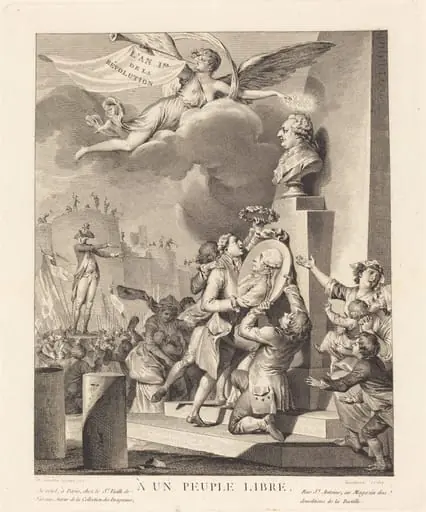 A un peuple libre
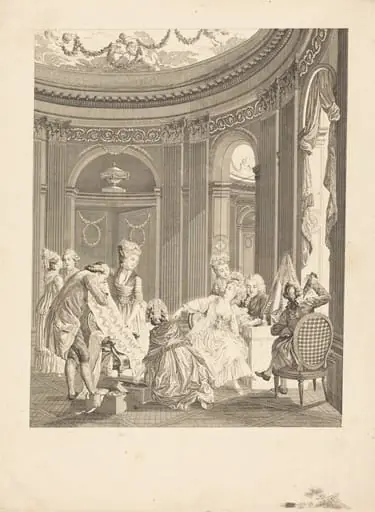 Qu'en dit l'Abbé?
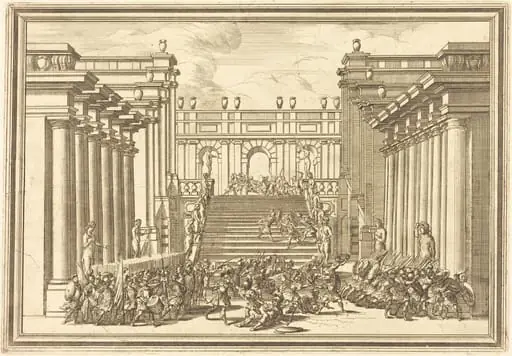 Il Greco in Troia: Plate 3
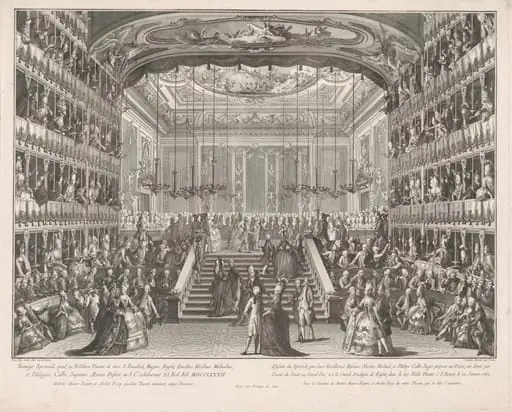 Spectacle in Honor of the Grand Dukes of Russia in the Theater of San Benedetto, 1782
 H Beard Print Collection
 The Seconda Macchina for the Chinea of 1769: A Building for Public Entertainment
 Royal Feast at the Hôtel de Ville, January 21, 1782