Artwork
A Head of Man with Hat, Seen from Behind; A Standing Woman [recto]
![A Head of Man with Hat, Seen from Behind; A Standing Woman [recto], by Paul Gauguin, ink, 1886](https://artifactworldgallery.com/img/paul-gauguin--a-head-of-man-with-hat-seen-from-behind-a-standing-woman-rec--2aa61ddf1796e9f0-w1024.webp)
A Head of Man with Hat, Seen from Behind; A Standing Woman [recto] is an ink drawing by the Impressionist artist Paul Gauguin. It dates from 1886 and is held in the collection of the National Gallery of Art.
About this work
This drawing is called A Head of Man with Hat, Seen from Behind; A Standing Woman.
It was made by Paul Gauguin between 1884 and 1888. Gauguin used a mix of crayon, graphite, pen, and brown ink on wove paper, which was a common practice during that time.
You can learn more about the styles that influenced this work by looking into the movement of Impressionism.
Overview
Paul Gauguin’s drawing titled *A Head of Man with Hat, Seen from Behind; A Standing Woman* dates from the mid‑1880s, a period when the artist was still establishing his visual language. Executed on wove paper, the work combines crayon, graphite, pen and brown ink to render two figures in a compact composition that anticipates his later preoccupations with form and symbolism.
Subject & Meaning
The sheet presents a male head, viewed from the rear and capped with a hat, alongside a standing female figure. The juxtaposition of the concealed male profile and the upright woman creates a quiet tension, inviting contemplation of presence versus absence and hinting at Gauguin’s early interest in the psychological undercurrents of everyday scenes.
Technique & Style
Gauguin employs a restrained palette of earth tones, allowing the crayon and graphite to define volume while the pen and brown ink delineate contour and texture. The drawing’s linear economy and emphasis on silhouette reflect a move away from the fleeting light of Impressionism toward the more abstracted, symbolic approach that would later characterize his mature work.
History & Provenance
Created between 1884 and 1888, the piece belongs to Gauguin’s formative years before his travels to Tahiti. It remained in private collections for much of the 20th century before entering a museum holding focused on 19th‑century French drawings, where it serves as an illustration of the artist’s transition from academic training to his own avant‑garde idiom.
Artist & collection
Artist
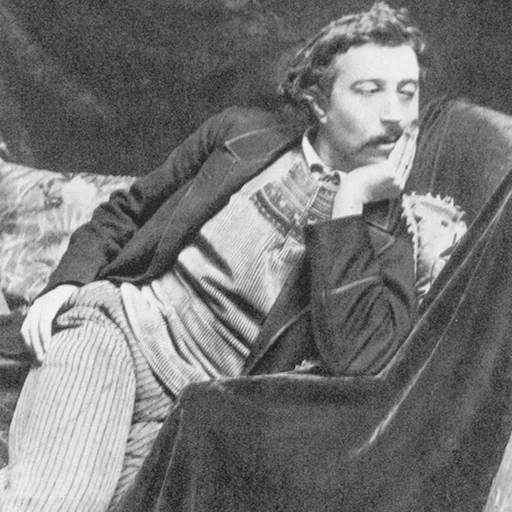
Eugène Henri Paul Gauguin (; French: ; 7 June 1848 – 8 May 1903) was a French painter, sculptor, printmaker, ceramist, and writer, whose work has been primarily associated with the Post-Impressionist and Symbolist movements.

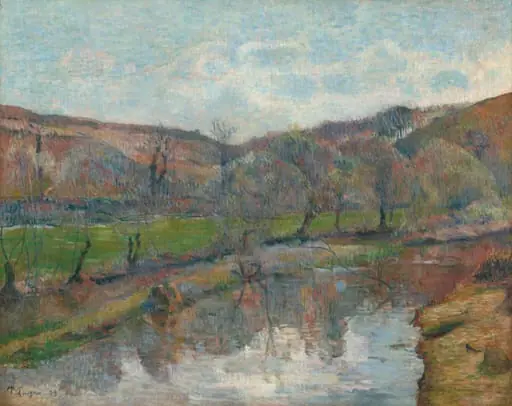
![Trees; Sketch of Breton Boy [verso], by Paul Gauguin](https://artifactworldgallery.com/img/paul-gauguin--trees-sketch-of-breton-boy-verso--ffac7faa10ac7e52-w320.webp) Trees; Sketch of Breton Boy [verso]
Trees; Sketch of Breton Boy [verso]![A Breton Woman Walking; Sketch with Stairs [verso], by Paul Gauguin](https://artifactworldgallery.com/img/paul-gauguin--a-breton-woman-walking-sketch-with-stairs-verso--5957dfa28320cc03-w320.webp) A Breton Woman Walking; Sketch with Stairs [verso]
A Breton Woman Walking; Sketch with Stairs [verso]![A Man Leaning on a Wall with Five Other Studies; Two Bearded Men Wearing Hats, and Five Other Studies [recto], by Paul Gauguin](https://artifactworldgallery.com/img/paul-gauguin--a-man-leaning-on-a-wall-with-five-other-studies-two-bearded--2df262058c2bfe48-w320.webp) A Man Leaning on a Wall with Five Other Studies; Two Bearded Men Wearing Hats, and Five Other Studies [recto]
A Man Leaning on a Wall with Five Other Studies; Two Bearded Men Wearing Hats, and Five Other Studies [recto]![Little Breton Boy; A Pig and a Washerwoman [recto], by Paul Gauguin](https://artifactworldgallery.com/img/paul-gauguin--little-breton-boy-a-pig-and-a-washerwoman-recto--e104e07b475c372e-w320.webp) Little Breton Boy; A Pig and a Washerwoman [recto]
Little Breton Boy; A Pig and a Washerwoman [recto]![Two Breton Figures and Studies of Two Geese; Man Wearing Hat [verso], by Paul Gauguin](https://artifactworldgallery.com/img/paul-gauguin--two-breton-figures-and-studies-of-two-geese-man-wearing-hat--f7cd3e5e03e12434-w320.webp) Two Breton Figures and Studies of Two Geese; Man Wearing Hat [verso]
Two Breton Figures and Studies of Two Geese; Man Wearing Hat [verso] A Man seen from Behind
![A Breton Woman and a Standing Man; Head and Hand of a Monkey [recto], by Paul Gauguin](https://artifactworldgallery.com/img/paul-gauguin--a-breton-woman-and-a-standing-man-head-and-hand-of-a-monkey--e35c46eb8cb6c297-w320.webp) A Breton Woman and a Standing Man; Head and Hand of a Monkey [recto]
A Breton Woman and a Standing Man; Head and Hand of a Monkey [recto] A cowherd and cow
![Soldiers; Four Soldiers and a Seated Figure [verso], by Paul Gauguin](https://artifactworldgallery.com/img/paul-gauguin--soldiers-four-soldiers-and-a-seated-figure-verso--03eb26713f1552e4-w320.webp) Soldiers; Four Soldiers and a Seated Figure [verso]
Soldiers; Four Soldiers and a Seated Figure [verso]