Artwork
The Washerwomen (Les laveuses)
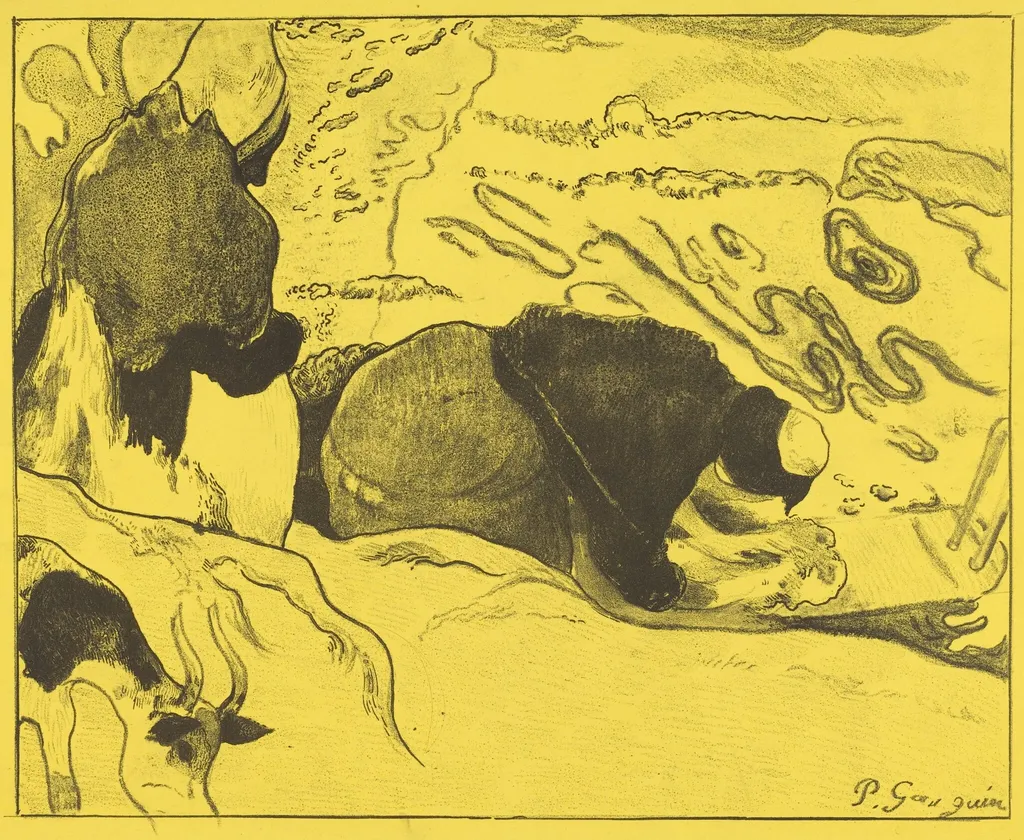
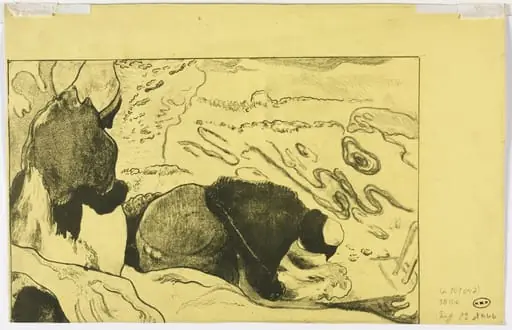
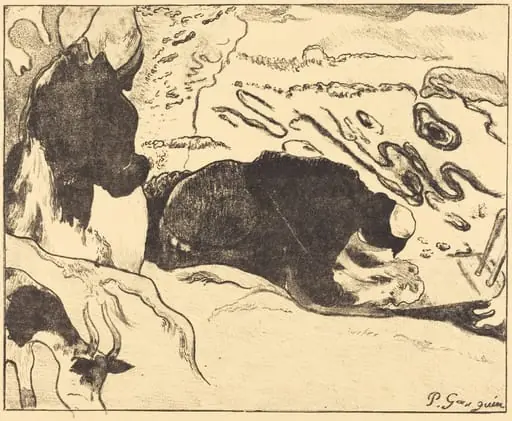
The Washerwomen (Les laveuses) is an ink print by the Impressionist artist Paul Gauguin. It dates from 1889 and is held in the collection of the National Gallery of Art.
About this work
Overview
Created in 1889, *The Washerwomen* is a lithographic print on yellow wove paper produced by Paul Gauguin. Executed on zinc, the work measures a modest size typical of the medium and presents a quiet scene of two women bent over a river as they wash laundry. The composition is rendered in Gauguin’s characteristic flattened forms and limited palette, offering a concise view of everyday labor.
Subject & Meaning
Their bodies are turned away, faces obscured, emphasizing the physicality of work rather than individual identity.
The image captures two female figures engaged in the routine task of washing clothes in a riverbank setting. Their bodies are turned away, faces obscured, emphasizing the physicality of work rather than individual identity. By focusing on a humble, communal activity, Gauguin highlights the dignity of labor and evokes a timeless, almost ritualistic quality that aligns with his interest in universal human experiences.
Technique & Style
Gauguin employed lithography on zinc, a process that allows for bold, flat areas of color and crisp line work. The print’s yellow wove paper background contributes a warm undertone, while the simplified silhouettes and exaggerated contours reflect his Synthetist approach, which favored expressive color over optical detail. This method produces a textured surface that guides the eye across the figures and surrounding foliage, reinforcing the work’s structural clarity.
History & Provenance
The lithograph was produced during Gauguin’s early foray into printmaking, a period when he was expanding beyond painting into reproducible media. It was issued as part of a limited series of lithographs that the artist marketed to collectors in Paris. Subsequent ownership records show the print entering European private collections before being acquired by a museum in the mid‑20th century, where it remains on view.
Context
Created at the close of the 1880s, the work sits at the intersection of Post‑Impressionism and Symbolism, movements that encouraged artists to move beyond naturalistic representation. Gauguin’s interest in non‑Western art and his desire to synthesize form and color are evident in the piece’s stylized figures and flattened space. The subject matter—rural labor—also reflects contemporary artistic trends that sought authenticity in everyday life.
Artist & collection
Artist
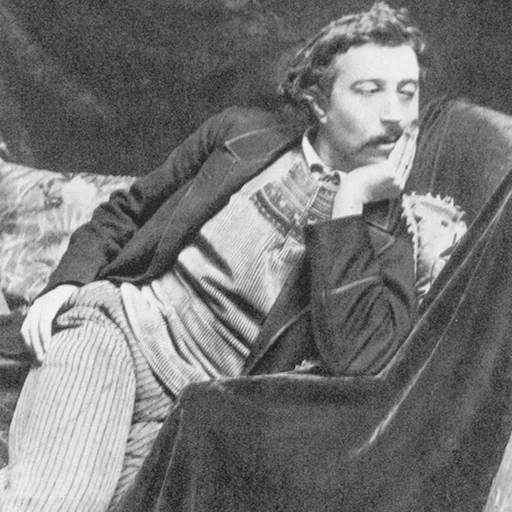
Eugène Henri Paul Gauguin (; French: ; 7 June 1848 – 8 May 1903) was a French painter, sculptor, printmaker, ceramist, and writer, whose work has been primarily associated with the Post-Impressionist and Symbolist movements.

 Volpini Suite: Women Washing Clothes (verso)
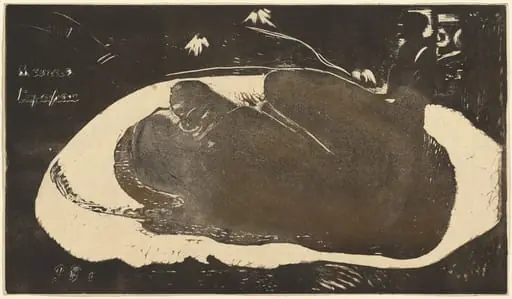 Manao Tupapau (She is Haunted by a Spirit)
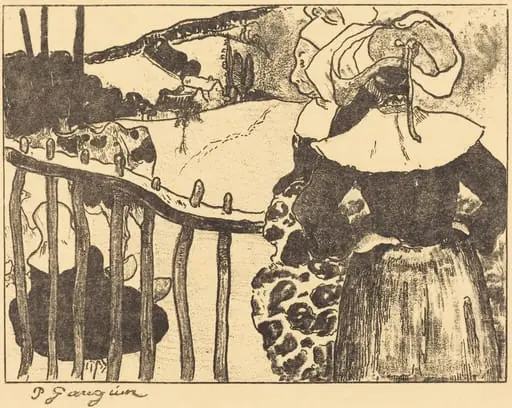 Breton Women beside a Fence (Bretonnes à la barrière)
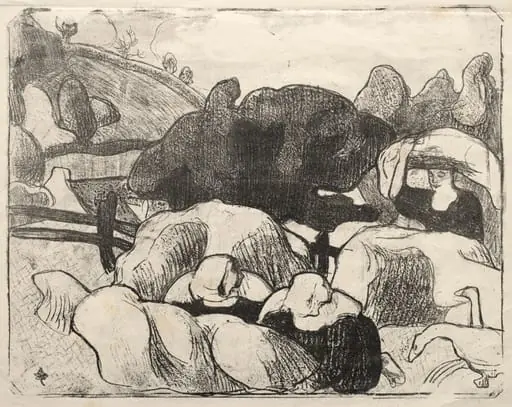 Les Bretonneries: Breton Women Making Haystacks (Bretonnes Faisant les Foins)
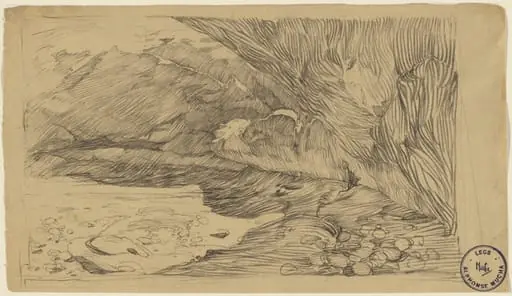 Untitled
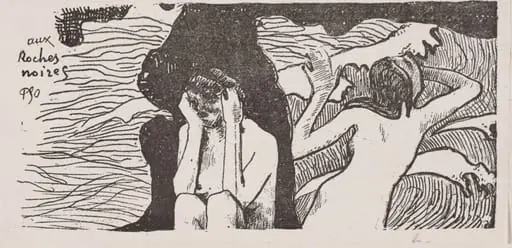 The Black Rocks
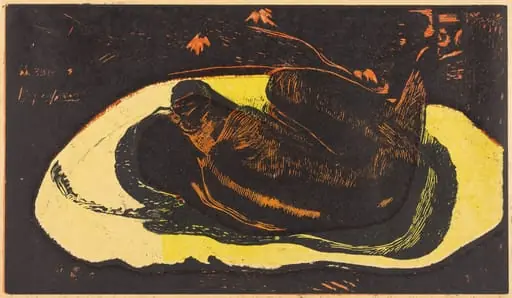 Manao Tupapau (She is Haunted by a Spirit)
 The Washerwomen (Les laveuses)