Artwork
The Washerwomen (Les laveuses)
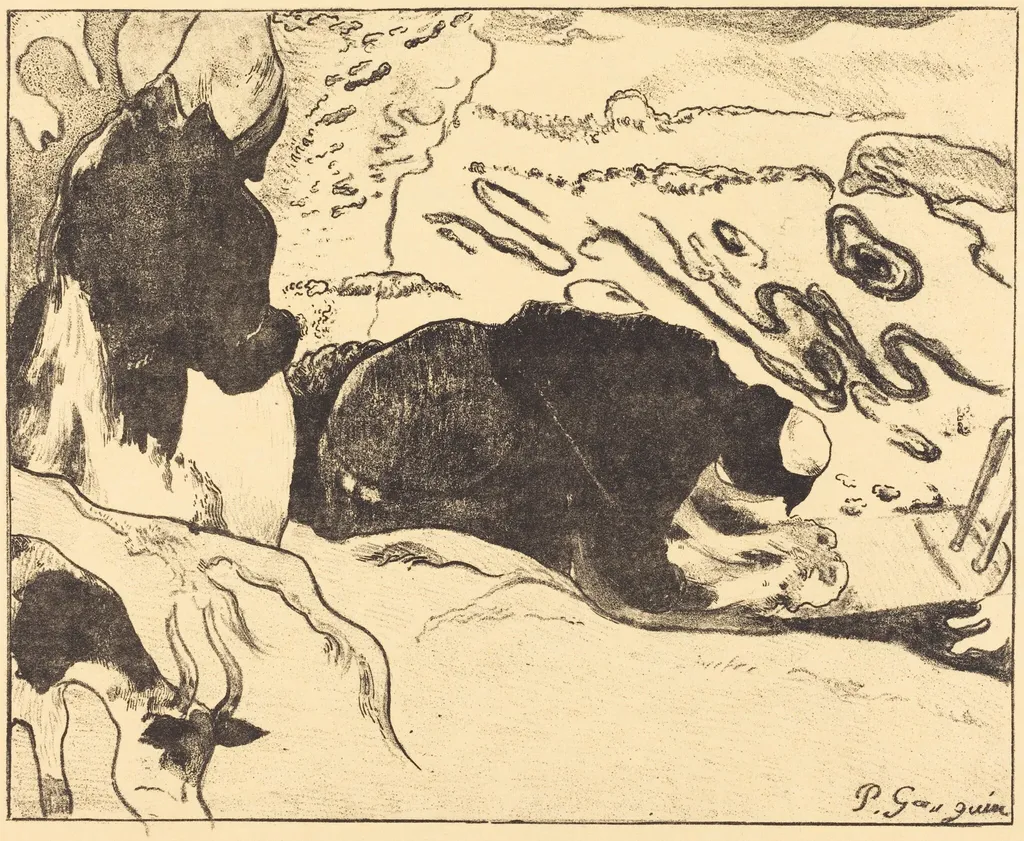
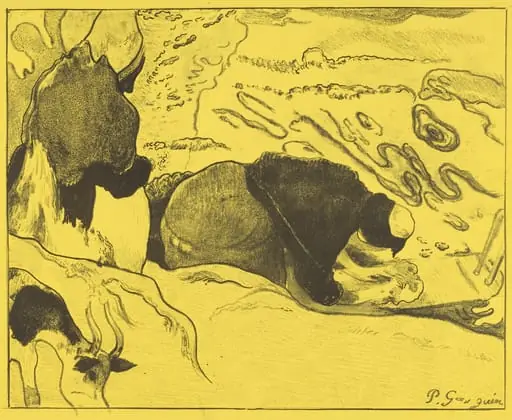
The Washerwomen (Les laveuses) is an ink print by the Impressionist artist Paul Gauguin. It dates from 1889 and is held in the collection of the National Gallery of Art.
About this work
Overview
Unlike his paintings, this print emphasizes texture and gesture over color, revealing his interest in non-Western and artisanal techniques.
Paul Gauguin produced *The Washerwomen* in 1889 as a lithograph on imitation Japanese paper, part of his broader exploration of printmaking during a period of artistic experimentation. Created after his first trip to Brittany and before his departure to Tahiti, the work reflects his shift away from naturalism toward simplified forms and emotional resonance. Unlike his paintings, this print emphasizes texture and gesture over color, revealing his interest in non-Western and artisanal techniques.
Subject & Meaning
The image depicts two women engaged in the laborious task of washing clothes by a river, their bodies bent in rhythmic motion. Gauguin presents them not as idealized figures but as embodiments of physical toil, grounded in everyday rural life. The absence of narrative detail and the flattened space suggest a symbolic rather than documentary intent, aligning with Symbolist tendencies to evoke inner states through simplified, repetitive actions.
Technique & Style
Using lithography on zinc, Gauguin exploited the medium’s capacity for soft, uneven lines that mimic the spontaneity of drawing. The ink sits unevenly on the plate, creating a grainy, tactile surface that enhances the sense of rawness. Background elements—hills or clouds—are rendered in loose, gestural strokes, contrasting with the more defined forms of the figures. This deliberate blurring of detail distances the scene from realism, favoring emotional atmosphere over precision.
History & Provenance
Created during Gauguin’s time in Pont-Aven, the print was likely made in small editions for private circulation among fellow artists and collectors. It was not widely exhibited during his lifetime but gained recognition later as part of his broader print oeuvre. The use of imitation Japanese paper reflects his fascination with ukiyo-e prints, though the subject and execution remain rooted in Breton rural life rather than Eastern aesthetics.
Context
In 1889, Gauguin was distancing himself from Impressionist naturalism, embracing Synthetism—a style that prioritized flat planes, bold outlines, and symbolic content. *The Washerwomen* aligns with this shift, echoing the simplified forms seen in his contemporaries like Émile Bernard. The work also responds to broader 19th-century interests in labor and rural authenticity, though Gauguin filters these through a personal, almost mystical lens.
Legacy
Though less known than his paintings, *The Washerwomen* exemplifies Gauguin’s innovative approach to printmaking as a medium for expressive abstraction. Its influence can be traced in later Expressionist and modernist printmakers who valued emotional texture over technical refinement. The work remains a quiet testament to his belief that art should convey inner truth, not external appearance.
Artist & collection
Artist
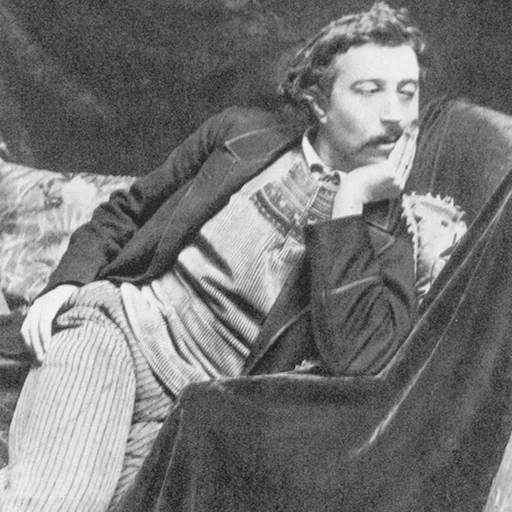
Eugène Henri Paul Gauguin (; French: ; 7 June 1848 – 8 May 1903) was a French painter, sculptor, printmaker, ceramist, and writer, whose work has been primarily associated with the Post-Impressionist and Symbolist movements.

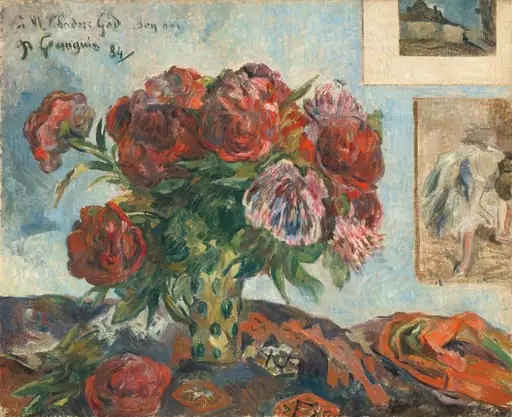
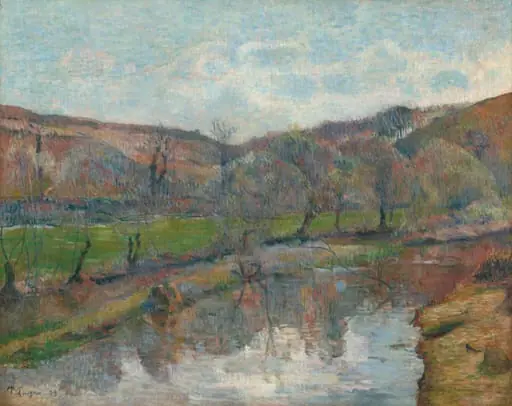
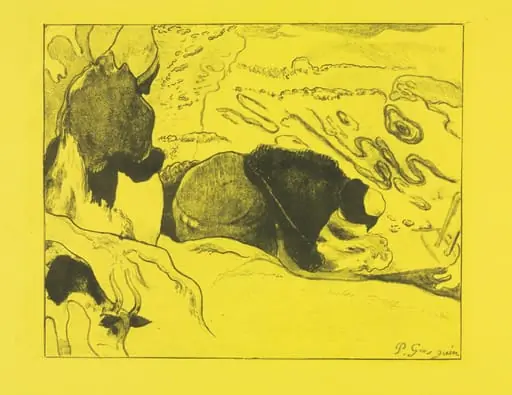 Volpini Suite: Laundresses (Les Laveuses)
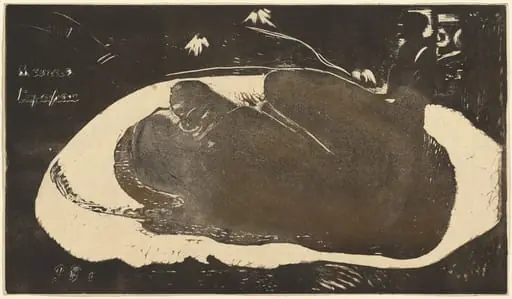 Manao Tupapau (She is Haunted by a Spirit)
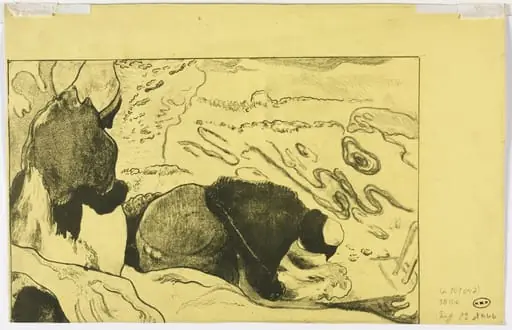 Volpini Suite: Women Washing Clothes (verso)
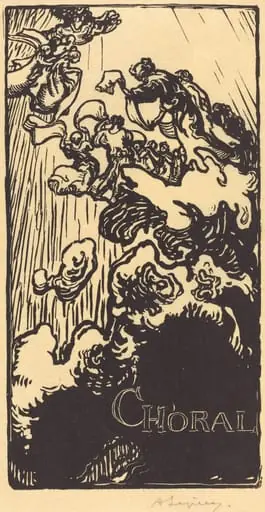 Choral
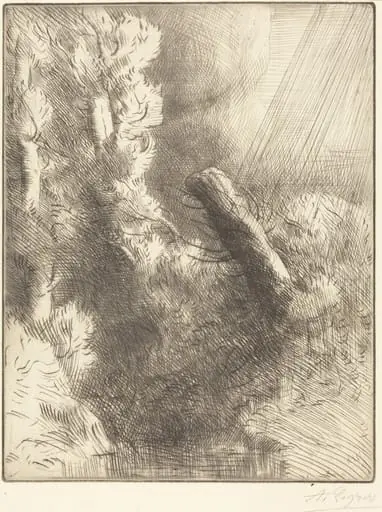 Memories of Fountainebleau in the Rain (Souvenir de Fountainebleau (Effet de pluie))
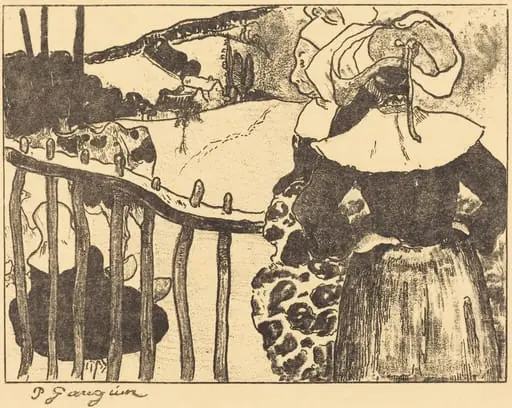 Breton Women beside a Fence (Bretonnes à la barrière)
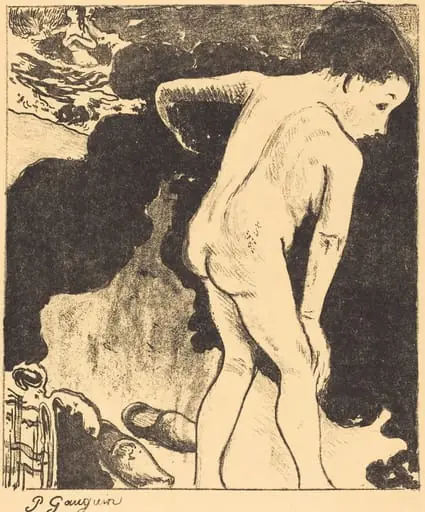 Breton Bathers (Baigneuses Bretonnes)
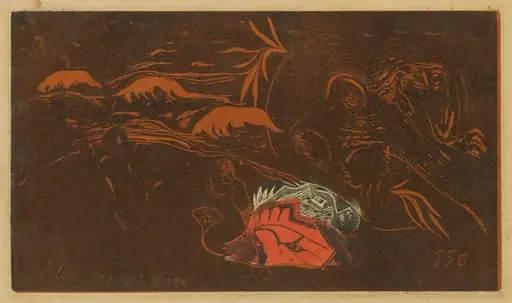 The Universe is Created (L'Univers est cree)
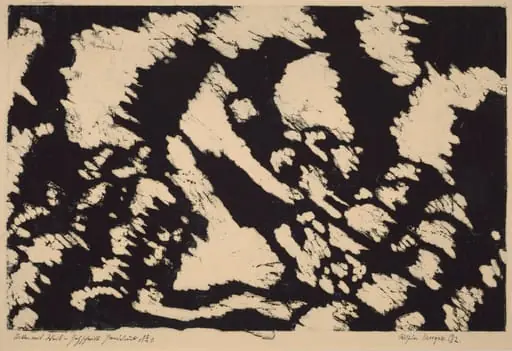 Acker mit Weib (Woman in a Field)
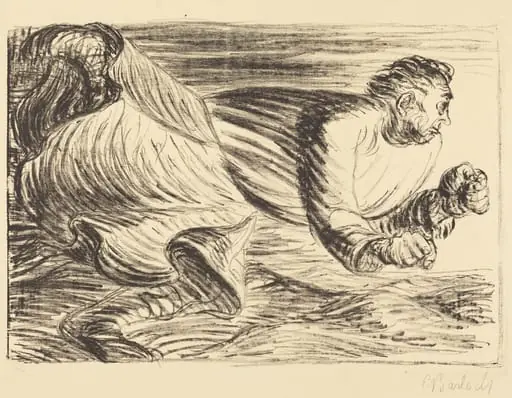 The Raging Barbarian
 Plate with the Head of a Horned Devil (Planche au diable cornu)
 The Washerwomen (Les laveuses)