Artwork
Two Cows; A Seated Breton Woman [verso]
![Two Cows; A Seated Breton Woman [verso], by Paul Gauguin, crayon, 1886](https://artifactworldgallery.com/img/paul-gauguin--two-cows-a-seated-breton-woman-verso--e4a7eb7a31307828-w1024.webp)
Two Cows; A Seated Breton Woman [verso] is a crayon drawing by the Impressionist artist Paul Gauguin. It dates from 1886 and is held in the collection of the National Gallery of Art.
About this work
Overview
Created in 1886, this crayon drawing on wove paper is attributed to Paul Gauguin. Executed during the artist’s early post‑Impressionist phase, the work pairs two separate studies on a single sheet: a brief rendering of two cows on the left and a seated Breton woman on the right. The piece exemplifies Gauguin’s interest in rural life and his experimentation with simplified line work.
Subject & Meaning
The left-hand study presents two bovines rendered with minimal contour, their forms suggested rather than fully defined.
The left-hand study presents two bovines rendered with minimal contour, their forms suggested rather than fully defined. Opposite them, a Breton woman is shown seated, her facial features indistinct and her hands folded in her lap. The juxtaposition of animal and human figures reflects Gauguin’s fascination with everyday provincial scenes and may hint at a contrast between the natural world and human presence.
Technique & Style
Gauguin employed a dry crayon on light‑colored wove paper, allowing for swift, gestural strokes. The lines are loose and rapid, conveying a sense of immediacy, as if drawn from memory or a fleeting observation. The drawing’s economy of detail aligns with the Synthetist approach that would later characterize his work, emphasizing overall shape and tonal contrast over meticulous rendering.
History & Provenance
The drawing is dated to the same year Gauguin returned from his first stay in Brittany, a period when he produced numerous sketches of local subjects. It bears the handwritten inscription "Les vaches rouges" at the top, although the animals are rendered in dark tones rather than red. The work has remained within the artist’s early oeuvre, passing through private collections before entering a museum holding.
Context
In the mid‑1880s, Gauguin was moving away from the naturalistic conventions of Realism toward a more symbolic, color‑driven language. While still grounded in observation, his sketches from this time display a deliberate reduction of form, anticipating the bold simplifications that would define his later Symbolist paintings. The Breton setting, a frequent source of inspiration for French artists, situates the drawing within a broader cultural interest in regional folk life.
Artist & collection
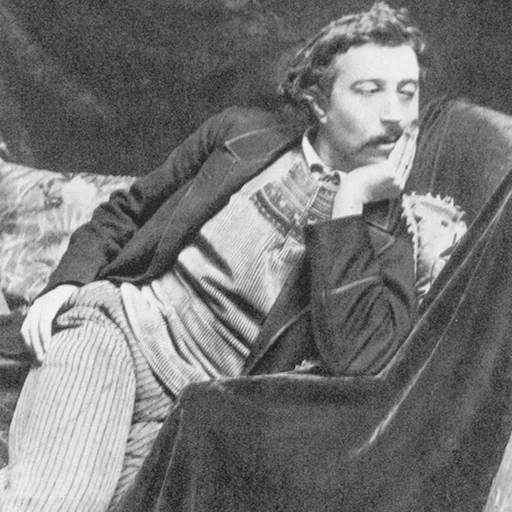
Artist
Eugène Henri Paul Gauguin (; French: ; 7 June 1848 – 8 May 1903) was a French painter, sculptor, printmaker, ceramist, and writer, whose work has been primarily associated with the Post-Impressionist and Symbolist movements.

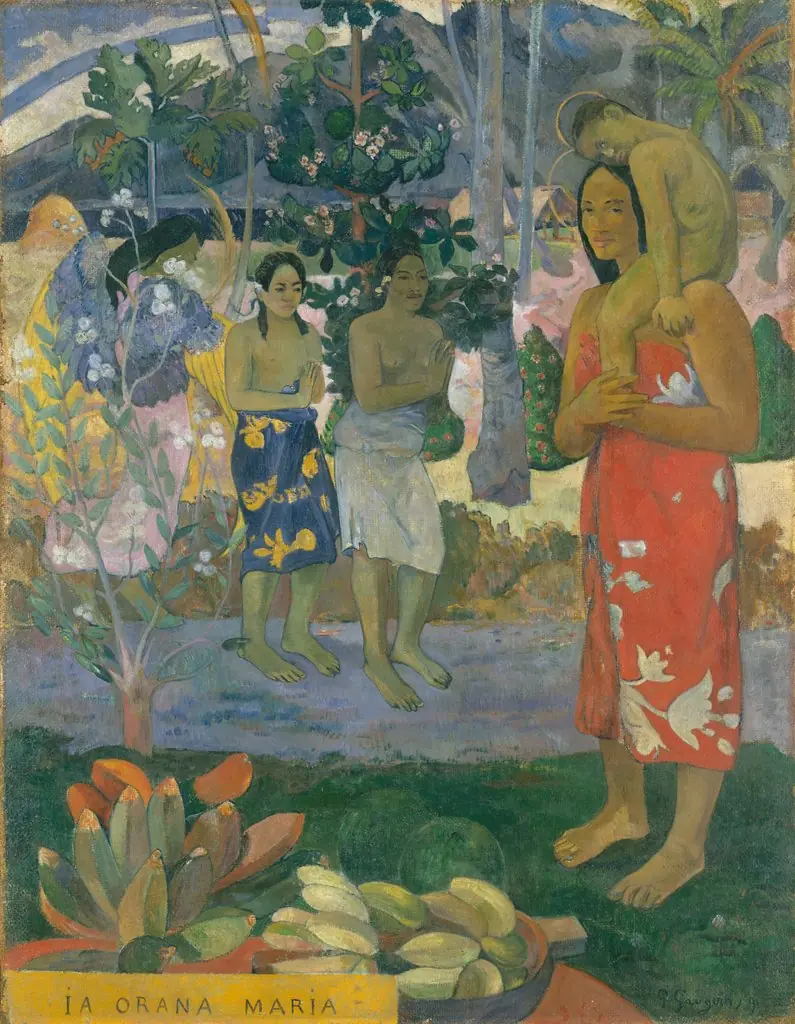
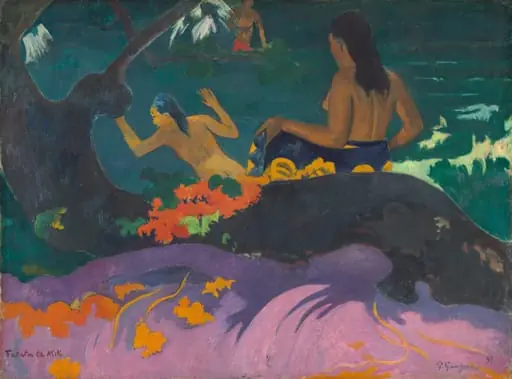
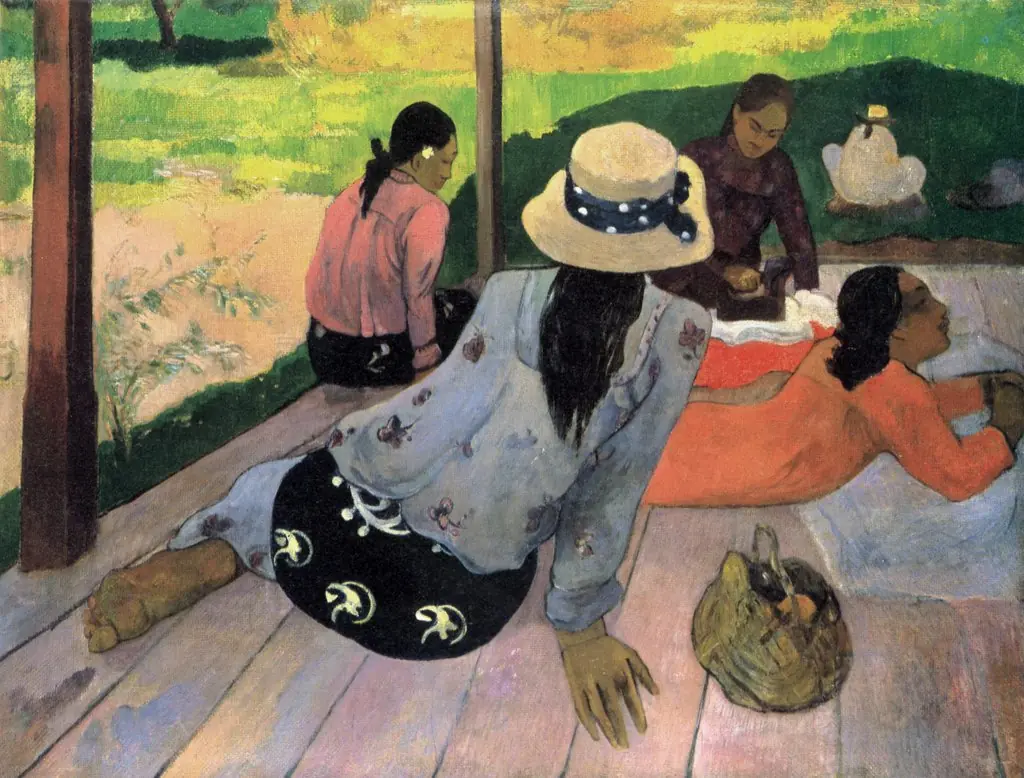
![A Breton Woman Walking; Sketch with Stairs [verso], by Paul Gauguin](https://artifactworldgallery.com/img/paul-gauguin--a-breton-woman-walking-sketch-with-stairs-verso--5957dfa28320cc03-w320.webp) A Breton Woman Walking; Sketch with Stairs [verso]
A Breton Woman Walking; Sketch with Stairs [verso]![A Man Leaning on a Wall with Five Other Studies; Two Bearded Men Wearing Hats, and Five Other Studies [recto], by Paul Gauguin](https://artifactworldgallery.com/img/paul-gauguin--a-man-leaning-on-a-wall-with-five-other-studies-two-bearded--2df262058c2bfe48-w320.webp) A Man Leaning on a Wall with Five Other Studies; Two Bearded Men Wearing Hats, and Five Other Studies [recto]
A Man Leaning on a Wall with Five Other Studies; Two Bearded Men Wearing Hats, and Five Other Studies [recto]![Soldiers; Four Soldiers and a Seated Figure [verso], by Paul Gauguin](https://artifactworldgallery.com/img/paul-gauguin--soldiers-four-soldiers-and-a-seated-figure-verso--03eb26713f1552e4-w320.webp) Soldiers; Four Soldiers and a Seated Figure [verso]
Soldiers; Four Soldiers and a Seated Figure [verso]![Group of Human Forms; A Man Seated [recto], by Paul Gauguin](https://artifactworldgallery.com/img/paul-gauguin--group-of-human-forms-a-man-seated-recto--4584f2f2117fc923-w320.webp) Group of Human Forms; A Man Seated [recto]
Group of Human Forms; A Man Seated [recto]![Four Heads and Two Figures [verso], by Paul Gauguin](https://artifactworldgallery.com/img/paul-gauguin--four-heads-and-two-figures-verso--c2dab012b6be4f36-w320.webp) Four Heads and Two Figures [verso]
Four Heads and Two Figures [verso]![Five Studies of Soldiers and a Woman's Face; Two Figures [recto], by Paul Gauguin](https://artifactworldgallery.com/img/paul-gauguin--five-studies-of-soldiers-and-a-woman-s-face-two-figures-rect--9d09632e7e517067-w320.webp) Five Studies of Soldiers and a Woman's Face; Two Figures [recto]
Five Studies of Soldiers and a Woman's Face; Two Figures [recto]![A Pig; Breton Peasant Kneeling [verso], by Paul Gauguin](https://artifactworldgallery.com/img/paul-gauguin--a-pig-breton-peasant-kneeling-verso--7b9f71fc8b8672db-w320.webp) A Pig; Breton Peasant Kneeling [verso]
A Pig; Breton Peasant Kneeling [verso]