Artwork
Group of Human Forms; A Man Seated [recto]
![Group of Human Forms; A Man Seated [recto], by Paul Gauguin, crayon, 1886](https://artifactworldgallery.com/img/paul-gauguin--group-of-human-forms-a-man-seated-recto--4584f2f2117fc923-w1024.webp)
Group of Human Forms; A Man Seated [recto] is a crayon drawing by the Impressionist artist Paul Gauguin. It dates from 1886 and is held in the collection of the National Gallery of Art.
About this work
Overview
Group of Human Forms; A Man Seated is a crayon drawing on wove paper created by Paul Gauguin in 1886, exemplifying his shift beyond Impressionist boundaries.
Subject & Meaning
The drawing features simplified, expressive human figures, emphasizing form and line in a way that conveys emotional depth and psychological introspection, characteristic of Gauguin's exploration of Symbolism.
Technique & Style
Gauguin's use of crayon on wove paper in this work showcases his evolving Post-Impressionist and Symbolist style, marked by bold, expressive lines and simplified forms that deviate from the detailed realism of Impressionism.
History & Provenance
Created in 1886, the piece is part of Gauguin's body of works on paper from this period, reflecting his transitional phase towards more expressive and symbolic artistic expressions.
Context
This drawing was produced during a pivotal moment in Gauguin's career, as he was distancing himself from Impressionist techniques and embracing the more expressive qualities of Post-Impressionism and Symbolism, influenced by his interests in folk art and non-Western cultures.
Legacy
Group of Human Forms; A Man Seated contributes to Gauguin's legacy as a pioneer of Post-Impressionism and Symbolism, influencing subsequent artists with its innovative use of line, form, and emotional expression.
Artist & collection
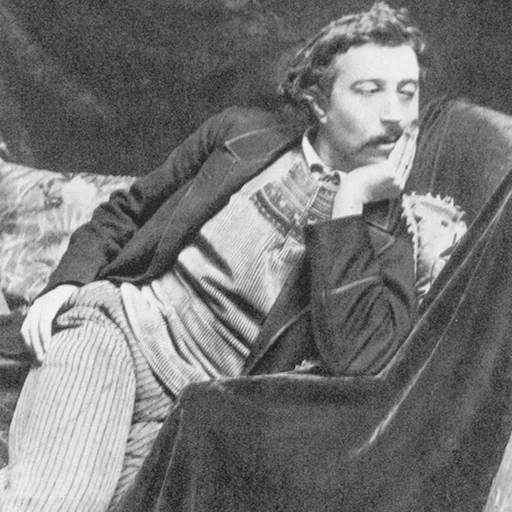
Artist
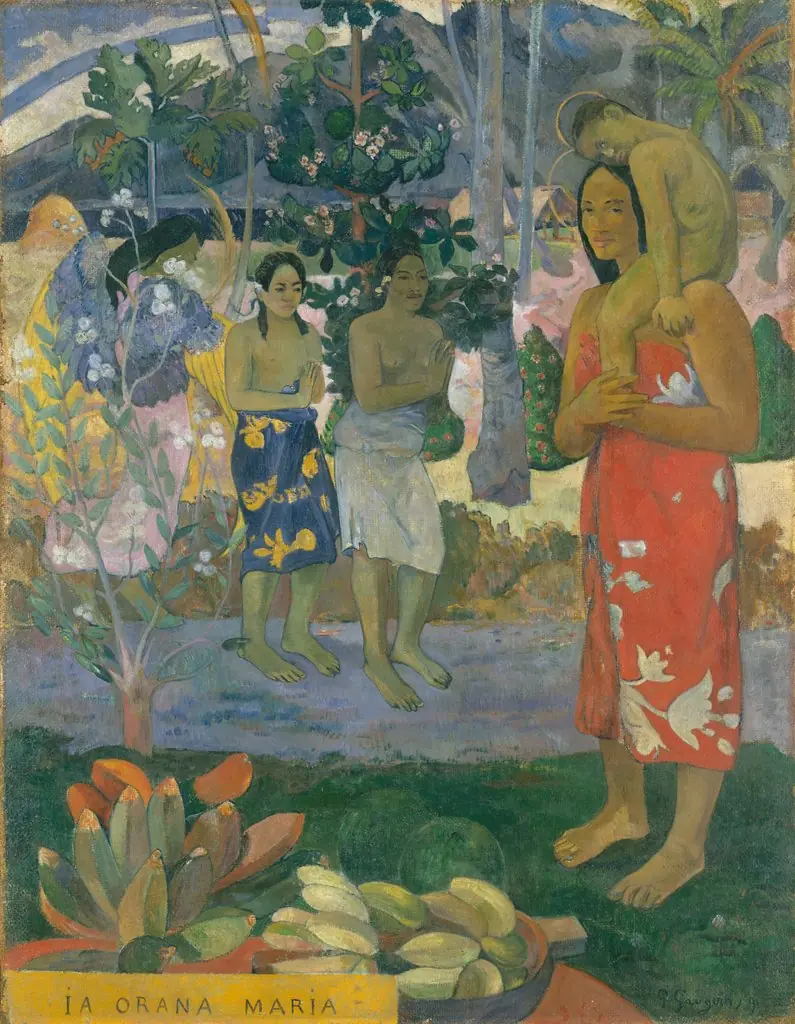
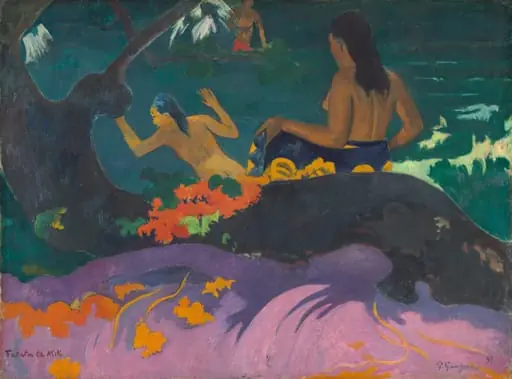
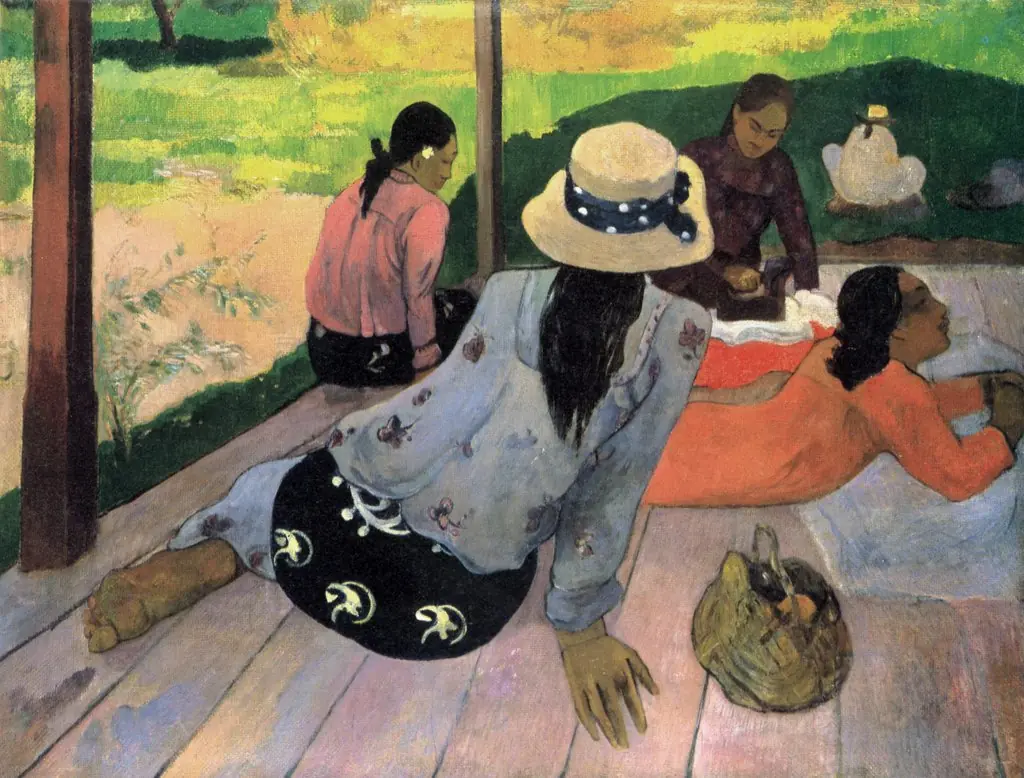
Eugène Henri Paul Gauguin (; French: ; 7 June 1848 – 8 May 1903) was a French painter, sculptor, printmaker, ceramist, and writer, whose work has been primarily associated with the Post-Impressionist and Symbolist movements.

![Soldiers; Four Soldiers and a Seated Figure [verso], by Paul Gauguin](https://artifactworldgallery.com/img/paul-gauguin--soldiers-four-soldiers-and-a-seated-figure-verso--03eb26713f1552e4-w320.webp) Soldiers; Four Soldiers and a Seated Figure [verso]
Soldiers; Four Soldiers and a Seated Figure [verso]![A Breton Woman Walking; Sketch with Stairs [verso], by Paul Gauguin](https://artifactworldgallery.com/img/paul-gauguin--a-breton-woman-walking-sketch-with-stairs-verso--5957dfa28320cc03-w320.webp) A Breton Woman Walking; Sketch with Stairs [verso]
A Breton Woman Walking; Sketch with Stairs [verso]![Two Figures and a Bench; Three Studies of Men's Heads and One of a Hand [recto], by Paul Gauguin](https://artifactworldgallery.com/img/paul-gauguin--two-figures-and-a-bench-three-studies-of-men-s-heads-and-one--b308c9e6d9f9cfa9-w320.webp) Two Figures and a Bench; Three Studies of Men's Heads and One of a Hand [recto]
Two Figures and a Bench; Three Studies of Men's Heads and One of a Hand [recto]![Five Studies of Soldiers and a Woman's Face; Two Figures [recto], by Paul Gauguin](https://artifactworldgallery.com/img/paul-gauguin--five-studies-of-soldiers-and-a-woman-s-face-two-figures-rect--9d09632e7e517067-w320.webp) Five Studies of Soldiers and a Woman's Face; Two Figures [recto]
Five Studies of Soldiers and a Woman's Face; Two Figures [recto]![Figure Studies; Studies of Soldiers [verso], by Paul Gauguin](https://artifactworldgallery.com/img/paul-gauguin--figure-studies-studies-of-soldiers-verso--91eae8279e0a44e1-w320.webp) Figure Studies; Studies of Soldiers [verso]
Figure Studies; Studies of Soldiers [verso]![A Pig; Breton Peasant Kneeling [verso], by Paul Gauguin](https://artifactworldgallery.com/img/paul-gauguin--a-pig-breton-peasant-kneeling-verso--7b9f71fc8b8672db-w320.webp) A Pig; Breton Peasant Kneeling [verso]
A Pig; Breton Peasant Kneeling [verso]![Boy's Face; Two Sheep [verso], by Paul Gauguin](https://artifactworldgallery.com/img/paul-gauguin--boy-s-face-two-sheep-verso--dc41a7e795977a82-w320.webp) Boy's Face; Two Sheep [verso]
Boy's Face; Two Sheep [verso]![Studies of Jugs and Vases; A Man with Moustache and a Boy with a Hat [recto], by Paul Gauguin](https://artifactworldgallery.com/img/paul-gauguin--studies-of-jugs-and-vases-a-man-with-moustache-and-a-boy-wit--f45745e972a40252-w320.webp) Studies of Jugs and Vases; A Man with Moustache and a Boy with a Hat [recto]
Studies of Jugs and Vases; A Man with Moustache and a Boy with a Hat [recto]![Man Playing Piano; Two Sheep [verso], by Paul Gauguin](https://artifactworldgallery.com/img/paul-gauguin--man-playing-piano-two-sheep-verso--80f685776a7d92dd-w320.webp) Man Playing Piano; Two Sheep [verso]
Man Playing Piano; Two Sheep [verso]![Two Cows; A Seated Breton Woman [verso], by Paul Gauguin](https://artifactworldgallery.com/img/paul-gauguin--two-cows-a-seated-breton-woman-verso--e4a7eb7a31307828-w320.webp) Two Cows; A Seated Breton Woman [verso]
Two Cows; A Seated Breton Woman [verso]![Eye and Part of Face; A Breton Woman and Two Men [recto], by Paul Gauguin](https://artifactworldgallery.com/img/paul-gauguin--eye-and-part-of-face-a-breton-woman-and-two-men-recto--81c9125f35b9b9e6-w320.webp) Eye and Part of Face; A Breton Woman and Two Men [recto]
Eye and Part of Face; A Breton Woman and Two Men [recto]